
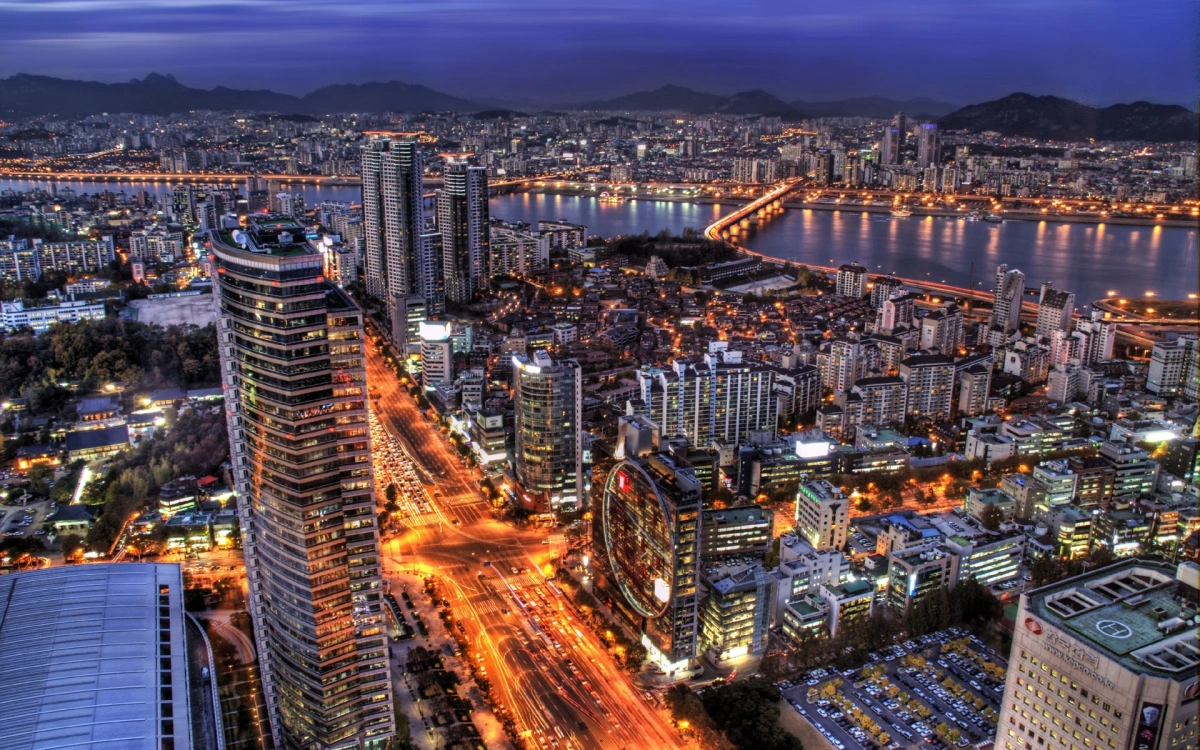
South Korea is one of Asia’s most complete production systems in a remarkably small footprint. Within a few hours by KTX high-speed rail (with Jeju reached by a short domestic flight) a production can move from the dense neon and palace heritage of Seoul, to the coastal port city of Busan, to the volcanic island of Jeju, and into the mountains of Gangwon, supported throughout by leading studios, a deep professional crew base built by the global rise of Korean film and television, and one of the most advanced virtual-production and post ecosystems anywhere. A line producer in Korea, often working alongside dedicated film fixers in Korea for location-level access, coordinates that compact geography while managing a permit system that runs through the national film body and a network of regional film commissions.
The KOFIC location rebate itself, the eligibility rules and the tiers are set out on our South Korea film incentives page; this page covers the crew, permits and on-the-ground execution that deliver it.
This guide treats Korea as a national production system rather than a single city. It covers the production regions and what each delivers on screen, why Korea has become a magnet for international and OTT work, how permits and incentives actually function, the country’s studio and virtual-production strength, and how productions move between regions. The India–Korea corridor (and the Korean-speaking coordination Indian productions often need) is covered as a supporting section rather than the centre of the page.
Production Regions: Seoul to Jeju
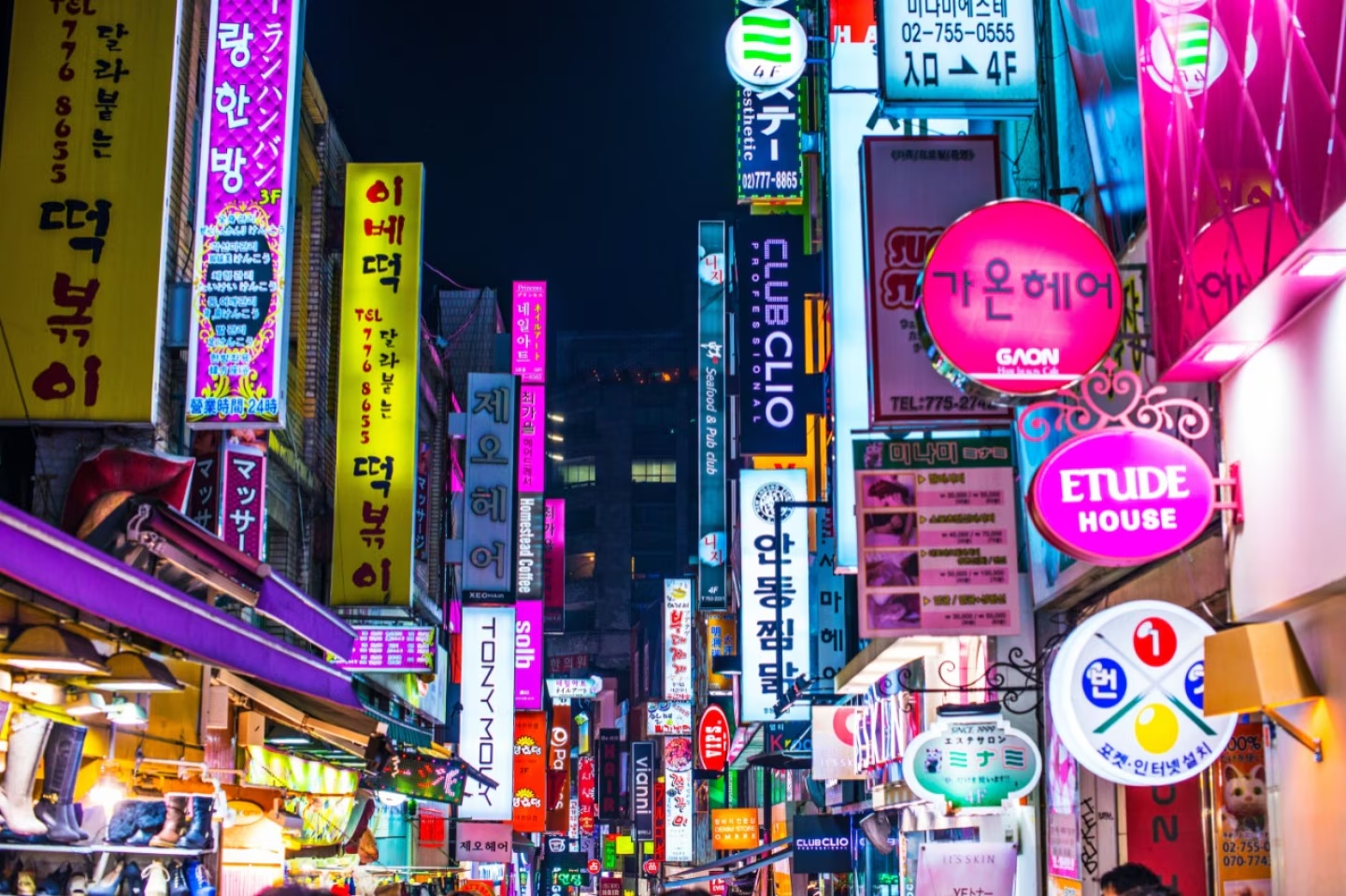
Korea’s location library is unusually varied for its size, and the regions sit close enough together that multi-zone schedules are routine. The table below summarises the main production regions; the sections that follow describe what each delivers and how it is reached.
| Region | Visual register | Permit / film commission | Access & base |
|---|---|---|---|
| Seoul / Incheon | Neon metropolis, palaces, Han River, Songdo futuristic | Seoul & Incheon Film Commissions | Seoul (Incheon airport gateway) |
| Gyeonggi | Studio belt (Paju), suburban, DMZ access | Gyeonggi Film Commission | Seoul-adjacent |
| Busan | Coastal port, beaches, markets, bridges | Busan Film Commission | Busan (KTX 2.5h from Seoul) |
| Jeju | Volcanic island, coast, Hallasan, lava tubes | Jeju Film Commission | Short flight from Seoul/Busan |
| Gangwon | Mountains, snow, forests, East Sea coast | Gangwon Film Commission | KTX to Gangneung |
| Gyeongju / Andong | Silla-era heritage, folk villages, Confucian Korea | Regional commissions + heritage authority | Via Busan / Daegu |
| Jeonju | Hanok (traditional house) heritage | Jeonju Film Commission | KTX from Seoul |
Seoul and Incheon: the metropolitan core
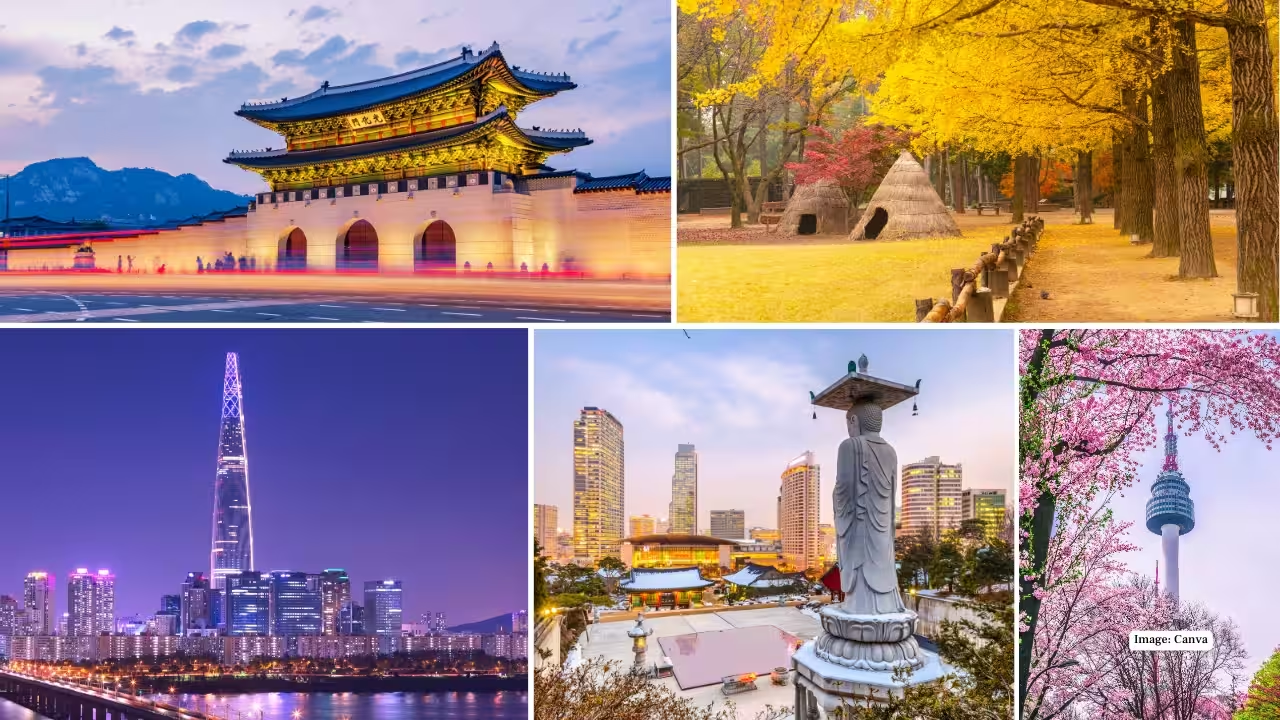
Seoul is the base for most Korean productions and the country’s deepest pool of crew, equipment and post. As a backdrop it spans contemporary skyscraper districts (Gangnam, Yeouido), youthful neighbourhoods such as Hongdae and Itaewon, the Han River and its bridges, and five Joseon-era royal palaces led by Gyeongbokgung, a rare city where ultra-modern and historical registers sit minutes apart. The Mapo Bridge and central boulevards carried the Seoul chase in Avengers: Age of Ultron (2015), a sixteen-day shoot that closed major roads. Neighbouring Incheon adds the international airport gateway and Songdo, a purpose-built smart city of glass towers that productions use for near-future and sci-fi work.

Gyeonggi: the studio belt and the DMZ
The province wrapping around Seoul holds much of the country’s stage infrastructure, anchored by the CJ ENM Studio Center in Paju, and it provides the suburban, industrial and rural-edge settings that a dense capital cannot. Gyeonggi is also the access point for the Demilitarised Zone and the Joint Security Area, a tightly controlled but unique location for productions covering the Korean division, requiring military coordination well beyond a standard film permit.
Busan: the coastal production city
Busan, two and a half hours from Seoul by KTX, is Korea’s second production hub and the home of the Busan International Film Festival (BIFF), Asia’s leading film event. It delivers a coastal-city register that Seoul cannot: the beaches and skyline of Haeundae and Gwangalli, the Gwangan and Diamond bridges, the tightly stacked colour of Gamcheon Culture Village, and the working bustle of Jagalchi fish market. Black Panther (2018) staged its celebrated car chase across Gwangalli Beach, Marine City and Jagalchi, part of the reason Marvel has repeatedly called Korea a favourite foreign location.
Jeju and Gangwon: island and mountains
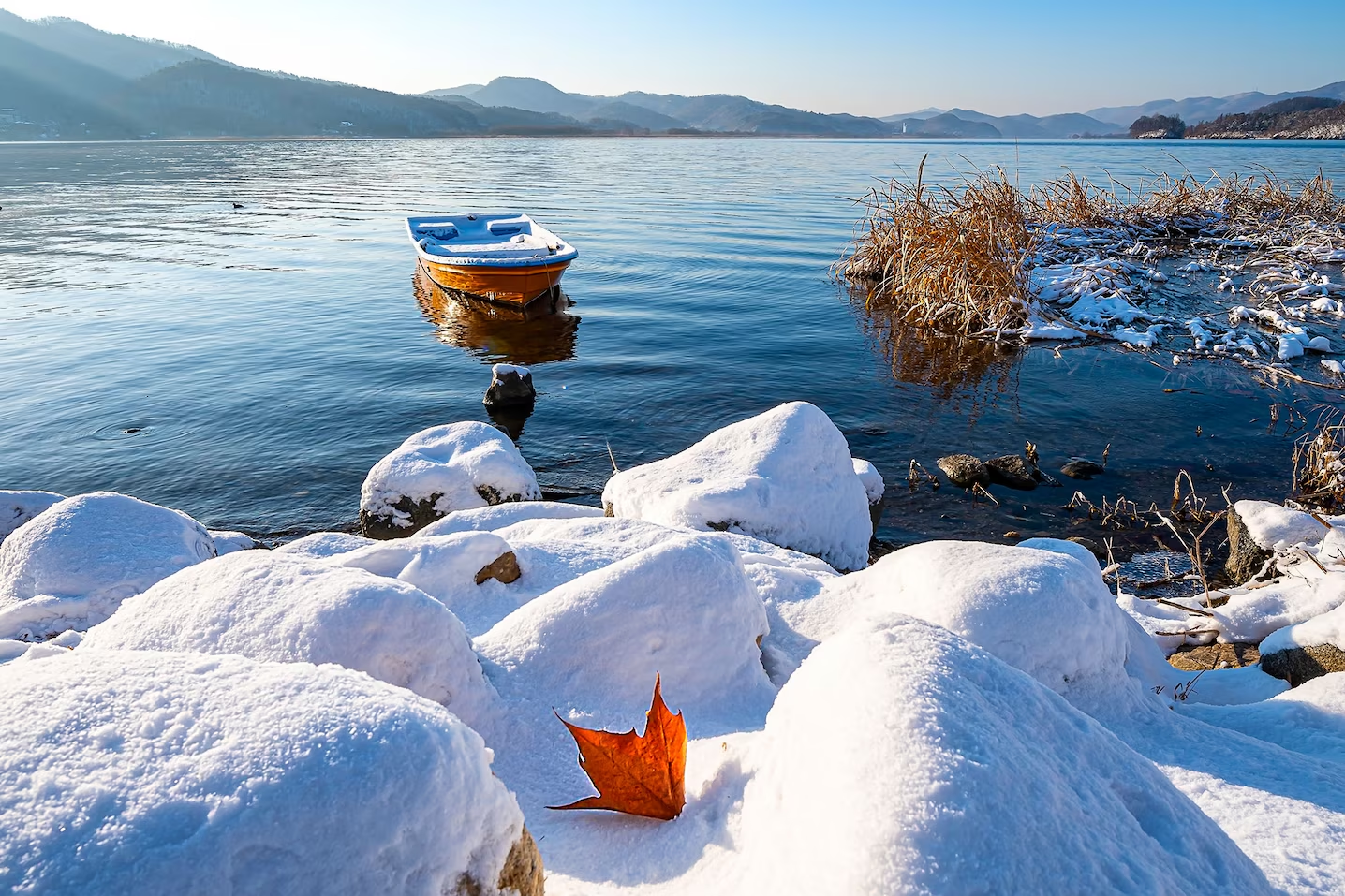
Jeju, a volcanic island a short flight south, brings a subtropical and elemental palette (black-rock coastline, the Hallasan volcano, lava tubes, oreum cinder cones and open pasture) distinct from anything on the mainland. To the east, Gangwon province carries Korea’s mountains, forests, ski country and the East Sea coast, giving productions snow and four-season landscape within KTX reach of Seoul at Gangneung.
Gyeongju, Andong and Jeonju: historical Korea
For pre-modern and heritage Korea, the southeast holds the richest ground. Daegu, Korea’s fourth-largest city, sits between Busan and Gyeongju and gives the region a larger urban production base. Gyeongju was the capital of the Silla kingdom for nearly a thousand years and carries UNESCO-listed temples, royal tombs and the Bulguksa complex. Andong’s Hahoe Folk Village preserves a living Confucian-era settlement, and Jeonju’s Hanok Village offers a dense quarter of traditional timber houses. All three involve heritage-access protocols alongside the standard permit, and lead times for protected sites run longer.

Industrial and Coastal Korea
Korea’s industrial belt rounds out the library. The shipyards and heavy industry of Ulsan, home to the giant Hyundai yard, the steelworks of Pohang, and the country’s ports and power infrastructure give productions a genuine large-scale industrial register that is hard to stage anywhere; the long East and West coasts add fishing harbours, tidal flats and cliff-and-lighthouse coastline. These are working environments rather than tourist sites, so access is negotiated with operators and local authorities, but they extend Korea well beyond its city-and-heritage image.
Why Korea: Studios, Crew and the OTT Engine
Korea’s pull is not scenery alone; it is the production machine behind it. A decade of globally successful Korean film and television (and very heavy streaming investment, with Korea the largest non-English content market for the major platforms) has built one of Asia’s deepest professional crew benches and a mature service industry used to international workflows. The same boom funded a studio and post-production base that few countries in the region match, and Korean technology companies have pushed the country to the front of virtual production. For an international production, the appeal is reliability and capability in one place: experienced crews, real stages, advanced post, and a government that treats inbound production as a strategic sector.
Two further factors weigh in Korea’s favour. The country’s four distinct seasons (winter snow, spring blossom, deep summer green and famous autumn foliage) let a production find a specific seasonal look that year-round tropical markets cannot offer. And the streaming boom has left a standing base of crews, stages and post kept busy by domestic work between international jobs, which keeps capability high and turnaround quick.

Permits: KOFIC and the Film Commissions
Permitting in Korea runs on two layers. At the national level, the Korean Film Council (KOFIC) supports inbound production and administers the location-incentive programme, and the Korea Film Commissions and Industry Network (KFCIN) connects the country’s regional and city film commissions. In practice, location permits are coordinated through the relevant municipal or provincial film commission (Seoul, Busan, Gyeonggi, Jeju and others each run their own) which is one of the reasons local execution authority matters: a multi-region schedule touches several commissions, each with its own process.
Heritage and restricted locations add a layer. Royal palaces, UNESCO sites such as those at Gyeongju, and protected cultural properties are cleared through the national cultural-heritage authority alongside the film permit, with longer lead times and conditions on access and conduct. The DMZ and military-adjacent locations require separate coordination again. Mapping these tracks at the script stage, rather than at prep, is the difference between a schedule that holds and one that slips.

Crew and Equipment
Korea has one of the deepest professional crew pools in Asia, the direct product of a high-volume domestic film and series industry. Heads of department work to international standards, and most inbound productions bring a small senior team and staff the rest locally. English-language fluency varies between departments, which is precisely where Korean-speaking coordination earns its place on an international shoot. The equipment-rental base (camera, lighting, grip) is concentrated in Seoul, with strong secondary capacity in Busan, and most productions source locally rather than importing. Rather than publish rate cards that date quickly, the practical point is that Korea sits as a mid-to-premium market regionally, with the budget modelled against current rates at breakdown.
Equipment and Crew Rates
Department depth is strongest in camera, lighting, grip, art and post, reflecting the genres Korean industry excels at (thrillers, action, period drama and effects-driven work) and aerial and specialist units operate within the country’s drone and aviation rules. The one consistent gap for foreign productions is English-language fluency across a full crew, which is exactly why a Korean-speaking production lead, rather than a single interpreter, is the difference between a smooth shoot and a stop-start one.
As a starting point, a lean commercial unit gives a realistic sense of Korean pricing. The package below is drawn from an actual 2025 quote for a three-day Busan commercial (an entry-level camera, lighting and crew unit) adjusted to commercial rates and shown in US dollars. Busan sits at the more affordable end; Seoul runs noticeably higher. It is indicative only: costs scale with production size, format and locations, and should be confirmed per project.
| Component (3-day commercial unit) | Indicative cost (USD) |
|---|---|
| Camera & lighting package | ~$1,440 |
| Sound gear | ~$120 |
| Camera van | ~$220 |
| Crew: 4 camera assistants, producer, sound operator | ~$1,485 |
| Total: lean 3-day commercial unit | ~$3,260 |
Studios and Virtual Production
Studios are one of Korea’s genuine strengths. The CJ ENM Studio Center in Paju, Gyeonggi, is a large multi-stage complex that includes a landmark virtual-production stage built with Samsung’s micro-LED “The Wall” display (among the largest real-time LED volumes of its kind, wrapping walls and ceiling for in-camera VFX) alongside conventional soundstages and a VFX facility carrying the largest LED wall in the country. The publicly run Studio Cube complex in Daejeon adds major soundstage capacity beyond the capital region. Beyond that flagship, Korea’s broader stage capacity, VFX houses and audio-post chain let a production shoot controlled interiors, run virtual-production work and finish the film without leaving the country. For projects weighing in-camera VFX, controlled environments or heavy post, Korea’s studio and technology base is often the deciding factor rather than its landscapes.
Behind the flagship stages sits a full finishing chain. Korea’s VFX houses have delivered for major domestic features and international series, its colour and online facilities work to international delivery standards, and its sound-post and scoring base can close a film in-country. For a production weighing a multi-territory Asian schedule, the ability to shoot controlled work and finish entirely in Korea is a consolidation few regional markets offer end to end.

Transport and Logistics
The country’s compactness is its logistical advantage, and one of Asia’s easiest settings for company moves, simply because the distances are short. Incheon International is the main gateway for crew and air-freighted equipment, with Gimpo handling additional domestic and short-haul traffic. The KTX high-speed network links Seoul to Busan in about two and a half hours and reaches Gangneung in the east and the southern cities, so much of the country is a day move rather than a flight. Jeju is a short hop by air, with frequent service from both Seoul and Busan. A typical routing runs Incheon into a Seoul base, out to the Paju studio belt in Gyeonggi, down to Busan by rail and across to Jeju by air, with Gangwon reached east by KTX, equipment moving by road and rail between zones and the schedule sequenced around it.
Equipment movement is straightforward by regional standards. Imported gear clears through Incheon, typically under a temporary-import or carnet arrangement, and the short internal distances mean most kit travels by road and rail rather than repeated air freight. The real planning question is less whether equipment can move than how to sequence commission permits and studio bookings against the travel days between regions.
Incentives: How the KOFIC Programme Works
Korea’s main inbound incentive is the KOFIC Location Incentive, a cash reimbursement rather than a tax credit. It reimburses a defined share of qualifying expenditure spent with Korean cast, crew and service providers under its published annual programme, for foreign feature films, television series and documentaries (commercials, variety and sports are excluded). It is conditional: productions generally need a minimum number of Korean shooting days and a minimum local spend to qualify, and the reimbursement is capped per project, with separate ceilings for fully foreign productions and international co-productions.
Two things matter more than the headline percentage. First, the programme is annually funded and application-based, it is a defined budget that productions apply into, not an automatic entitlement, so timing and availability are real factors. Second, several cities and provinces run their own location-support schemes on top of the national programme, with their own rates and conditions; Seoul’s metropolitan support, for example, has refunded a portion of in-city location costs. Because the figures, caps and city schemes change year to year, the incentive position should be confirmed directly with KOFIC and the relevant film commission for the specific production rather than assumed from a stacked percentage.

The India–Korea Corridor
For Indian productions specifically, the practical friction in Korea is language and coordination rather than capability. English-language fluency on Korean crews is variable, vendor relationships are local, and the permit network is dispersed across commissions, which is why Indian shoots benefit from Korean-speaking line-production support that can sit between the Indian production’s intent and Korean execution. That coordination layer handles the commissions, vendors and on-ground logistics in Korean while reporting to the production in a familiar workflow.

On the ground, that work is supported by a Korean film agency in India for the rights, co-production and remake side of the relationship, including the growing slate of Indian remakes of Korean movies that draw on Korean source material. The India–Korea corridor is busy in both directions: Indian crews shooting in Korea, and Korean content and talent feeding Indian projects, and it runs most smoothly when one line producer owns the plan rather than stitching together separate fixers, translators and agents.
When We Recommend Korea
Korea is the right call when a production needs studios, technology and a deep crew base alongside its locations, and when a contemporary, high-design Asian setting or genuine four-season landscape is part of the brief. Against Japan, Korea is generally more cost-effective and more incentive-supported while offering a comparable level of infrastructure; against Taiwan, it brings greater scale and a stronger studio and virtual-production base. Against the Southeast Asian service markets, Thailand, Vietnam and the wider Asia corridor, Korea trades the tropical-location library and the simpler flat-rebate of somewhere like Thailand for higher-end studios, technology and crew depth. For tropical and beach work on a tight rebate calculation, the Southeast Asian territories are often the better fit; for design-led, studio-heavy or technology-driven productions, Korea remains one of the strongest options in the region.
Engaging a Line Producer in Korea
Korean production runs cleanest when the line producer is engaged at script-breakdown. The reasons are specific to the country: the KOFIC incentive is application-based and capped, so eligibility and timing have to be assessed early; heritage and DMZ access carry long lead times; a multi-region schedule touches several independent film commissions that need coordinating in parallel; and Korean-language coordination has to be built into the plan rather than added late. A single-city Seoul shoot can engage closer to prep, but any production combining the capital with Busan, Jeju, the studio belt or the heritage southeast benefits from a single line producer owning the national plan from the first incentive application to the final permit.
For titles available for Korean remake rights and content syndication, see the catalogue.
