
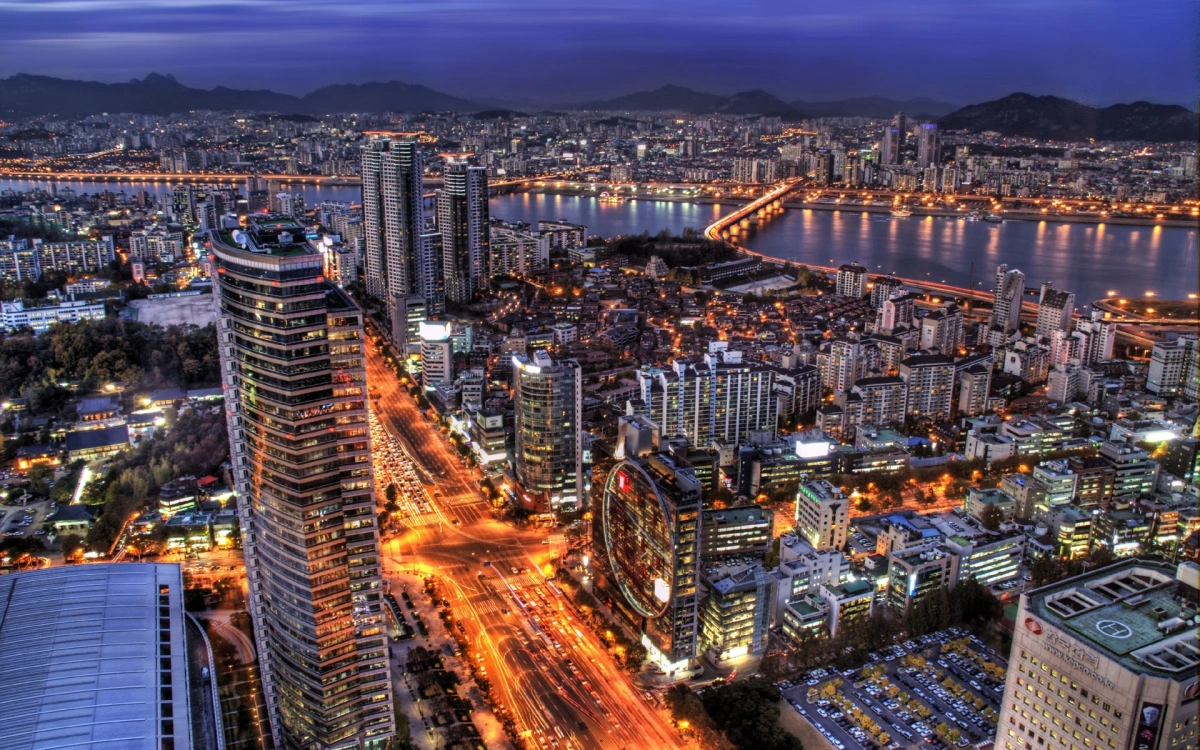
Indian production units entering Korea for the first time (whether for a commercial, a feature recce or a full series shoot) face the same structural challenge: the line producer in Korea they engage operates within a production ecosystem that functions differently from India in almost every operational respect. The permit structure is city-commission based, the labour norms are different, the cost reporting expectations are more granular, and the KOFIC rebate process requires documentation that most Indian accounting setups are not configured to produce without local guidance.
Getting the Korean line producer hire right from the start determines whether the shoot runs on budget and schedule, or whether the Indian production team spends the first week of principal photography resolving pre-production gaps that a properly structured hire would have closed in advance. This guide covers what Indian ADs, production executives and studio coordinators need to know before they engage a line producer Korea, from evaluating vendor credibility to understanding the actual cost benchmarks and the cross-border workflow that experienced Indo-Korean shoots use.
Korea has hosted Indian productions since the mid-2000s, with volume increasing significantly as OTT platforms began commissioning Indo-Korean co-productions and as Korean IP licensing accelerated the need for Indian teams to operate in Seoul, Busan and Jeju. The infrastructure exists. The challenge is knowing how to access it correctly.

Evaluating a line producer in Korea: what Indian units look for
Indian production teams evaluating Korean line producers and fixers consistently apply two filters: vendor credibility and operational efficiency. Both matter, but they measure different things. Credibility tells you whether the person has the relationships and track record to get things done in Korea. Efficiency tells you whether they can run a shoot at the pace and reporting standard that Indian productions require. A Korean line producer who is highly credible with Korean studios but who cannot produce daily hot-cost reports in a format the Indian accountant can read creates a different kind of problem to one who is operationally sharp but lacks KOFIC access.
The India–Korea production corridor has grown substantially since the mid-2000s, but institutional knowledge about how to hire correctly in Korea remains unevenly distributed among Indian production companies. The gap between what Indian teams assume about Korean line producers based on domestic production norms and what is actually required operationally on a Korea shoot is where most problems originate. Indian ADs who have completed a Korea shoot successfully consistently report that their preparation for the hire was more important than the hire itself, knowing what to ask, what to require contractually and what to verify independently before a single rupee of production fee is paid.
Vendor credibility: what to verify before signing
The credibility check for a Korean line producer or fixer should cover years of active experience in foreign-service production specifically (not Korean domestic drama, which is a different operational world) past experience with Indian or South Asian units, and their track record with KOFIC liaison work. Indian units that have had smooth Korea shoots consistently report that the line producer’s government and Film Commission relationships determined how quickly permits were approved and whether the rebate documentation was audit-ready at wrap.
| Criteria | Weight | How Indian teams verify |
|---|---|---|
| Years active in foreign service | 12 | Company registration + KoBiz profile |
| Past experience with Indian/South-Asian units | 15 | Direct references from 2–3 prior Indian clients |
| Government & KOFIC liaison strength | 8 | Track record of securing rebates ≥20% |
| Permit turnaround benchmark | 5 | Average 3–7 days for Seoul + regional permits |

Indian productions that have had difficult Korea shoots almost universally identify the same failure point: the line producer’s references were not checked beyond a name and a WhatsApp confirmation. A Korean line producer who has worked with one Indian production unit five years ago and who has been doing Korean domestic drama since then is not the same person as one who actively works international shoots year-round. The verification process should treat the reference check as a technical audit, not a courtesy call, specific questions about budget performance, permit timelines, KOFIC rebate completion and how the line producer handled a mid-shoot problem will surface the difference.
Operational efficiency: the metrics that matter during a shoot
Once credibility is established, operational efficiency is what separates a line producer who works for you from one who works around you. Indian production teams operating in Korea need hot-cost reporting at a frequency and granularity that most Korean domestic productions do not require. The line producer’s ability to produce itemised daily cost sheets, maintain a live logistics tracker and flag contingency risks before they become shoot-day problems is what the operational efficiency filter measures.
| Metric | Weight |
|---|---|
| Hot-cost reporting frequency | 15 |
| Logistics accuracy rate | 12 |
| Local crew sourcing reliability | 10 |
| Equipment & vendor markup transparency | 10 |
| Risk & contingency planning | 13 |
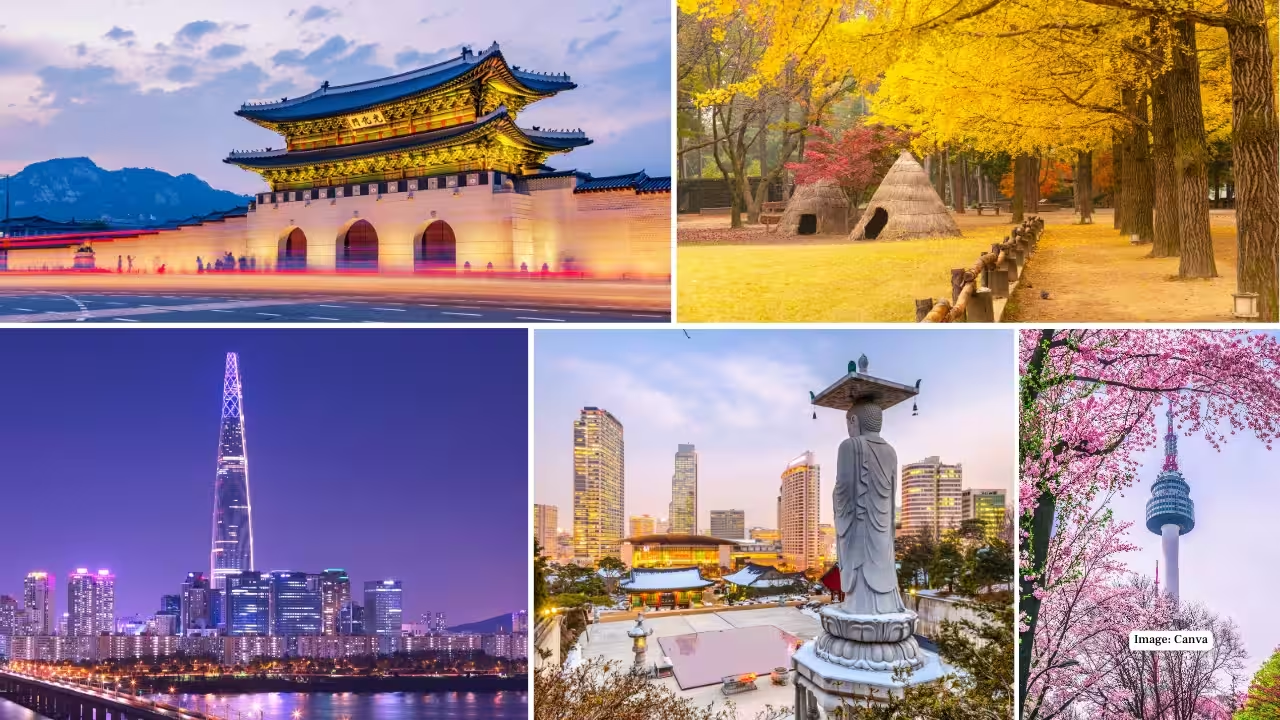
Benchmark parameters Indian units apply at contract stage
Before a contract is signed, Indian production executives typically validate their shortlisted Korean line producer against a set of benchmark parameters that cover communication norms, cost transparency expectations and location knowledge depth. The 200-plus pre-scouted location standard, for example, is not arbitrary, it reflects the reality that Indian directors often want to see multiple options for each setup, and a Korean LP who can pull location photos and permit history for a neighbourhood the director mentions in a brief call is operationally ahead of one who needs two weeks of recce to produce the same material.
| Parameter | Ideal Benchmark for Indian Units |
|---|---|
| English/Korean communication clarity | Daily Slack/WhatsApp updates + same-day email replies |
| Cost transparency | Itemized cost sheets with 8–12% service fee cap |
| Location knowledge depth | 200+ pre-scouted locations with photos & permit history |
| Risk management | Weather, crowd, and political contingency plans |
| Equipment rental network | Direct partnerships (no middleman markup >15%) |
| Rebate documentation accuracy | 100% KOFIC-compliant invoices & auditor-ready files |
Korean line producer costs: Indian budget reference rates
Korean production costs are denominated in Korean Won (KRW). Indian productions budgeting a Korea shoot typically work in INR internally and need accurate conversion benchmarks that reflect actual 2024–25 market rates rather than the theoretical rates that circulate in informal India–Korea production circles. The figures below represent current market rates for experienced foreign-service crew, not entry-level or domestic drama rates, which are meaningfully lower and not appropriate for international production standards.
One of the most persistent problems for Indian productions budgeting a Korea shoot is working from informal rate information that is either outdated or based on domestic Korean production norms rather than international-service rates. Korean domestic drama production operates on a compressed cost structure that has been built over years of high-volume output, the rates are lower, the crew expectations are different and the documentation standards are not designed for foreign audit processes. International-service rates reflect the additional overhead of English-language communication, foreign client management, KOFIC liaison work and the higher documentation standards that Indian finance teams require. Using domestic rates as a starting point for an international shoot budget will produce a figure that is structurally incorrect before pre-production has begun.
Rate card: Korean crew and vendor benchmarks in KRW and INR
Senior Korean line producers commanding the higher end of the range are typically those with active Film Commission relationships, documented KOFIC rebate experience and a roster of international clients. The gap between a ₹1.1L and ₹1.7L line producer day rate is not inflation, it reflects whether the person can own the rebate process, run the permit track and manage the Indian client simultaneously without dropping any of the three. Fixer rates vary significantly by whether the fixer is working as a glorified driver or as a genuine production supervisor with location knowledge and English fluency.
| Role/Item | Daily Rate (KRW) | Approx. INR | Notes |
|---|---|---|---|
| Senior Korean Line Producer | 1.8M – 2.8M | ₹1.1L – ₹1.7L | Full budget & schedule control |
| Korean Fixer / Supervising Producer | 800K – 1.5M | ₹48K – ₹90K | |
| Location Manager | 600K – 900K | ₹36K – ₹54K | |
| English–Korean Production Coordinator / Translator | 400K – 600K | ₹24K – ₹36K | |
| 12-seater van + driver | 250K – 350K | ₹15K – ₹21K | |
| 3-ton grip truck | 500K – 800K | ₹30K – ₹48K | |
| Camera package (Arri Alexa Mini LF basic) | 2.5M – 4M | ₹1.5L – ₹2.4L | Direct rental, no agency markup |
| Seoul location permit (public) | 300K – 2M | ₹18K – ₹1.2L | Varies by site |

Download the full Korean Film Production Rates guide for detailed breakdowns by city, equipment category and seasonal rate adjustments: Korean Film Production Rates 2025, PDF
KOFIC rebates and qualifying spend for Indian productions
The Korean Film Council (KOFIC) administers a cash rebate programme for foreign productions shooting in Korea. The rebate percentage and qualifying threshold change periodically, Indian production teams should verify current rates directly at koreanfilm.or.kr before building the rebate into their green-light budget. What does not change is the documentation requirement: KOFIC audits are granular, and Indian productions that have not maintained Korean-standard receipts and cost segregation throughout the shoot routinely find that a portion of spend that they budgeted as rebate-qualifying is disallowed at audit.
An experienced Korean line producer who has completed the KOFIC process for a foreign production before will typically set up cost segregation from day one of pre-production. One who has not will attempt to reconstruct it at wrap, which is both more expensive and less likely to produce a clean audit. This is one of the most underweighted factors in the Indian vendor evaluation process for Korea shoots.

On-ground execution: permits, locations and cross-border workflow
Korean filming permits operate through a city-commission structure rather than a national single-window system. Seoul Film Commission, Busan Film Commission and Jeju Film Commission each handle permits for their territory, with different processing timelines, documentation requirements and location access policies. Indian productions are sometimes surprised to find that a location that appeared straightforward in a recce requires a Film Commission notification that takes ten working days, which, on a compressed Indian production schedule, can mean a location change if it was not flagged in pre-production.
Equipment logistics is a separate challenge that Indian productions tend to underestimate when planning Korea shoots. Camera and grip equipment brought from India requires a carnet and Korean customs clearance, a process that the Korean line producer should be able to manage with the right freight agent, but which requires three to four weeks of lead time and documentation that the Indian production coordinator needs to prepare correctly. Productions that arrive at Incheon Airport with equipment and an incomplete carnet face delays that eat directly into pre-production time. Korean local hire for standard equipment is widely available and often more cost-effective than importing from India for shoots under three weeks, but the quality of local equipment varies by vendor, another area where a Korean line producer with established vendor relationships provides direct value.
Permit structure and Film Commission access for Indian productions
The Film Location Support System (FiLoc) managed by the Korean Film Council provides a searchable database of pre-approved filming locations with permit templates and contact information for local Film Commissions. Indian productions entering Korea with a Korean line producer who is actively using FiLoc are in a materially different position to those whose line producer is sourcing locations informally. FiLoc access is not restricted to Korean nationals, but navigating it efficiently requires Korean-language fluency and active Commission relationships, two things a qualified Asia film production corridor operator will have built before your shoot.
Seasonal restrictions affect several high-demand Korean filming locations. Jeju coastal locations carry weather and safety restrictions from November through February. Several Seoul landmark locations have peak-season visitor management rules that limit filming hours. A Korean line producer with current location knowledge will have this mapped before the recce, not discovered during it.

Cross-border workflow that experienced India–Korea shoots use
The workflow structure on a well-run India–Korea shoot separates clearly what the Indian side owns from what the Korean side owns, and specifies shared tools for the overlap. The most common failure mode is ambiguity in the middle layer, who is responsible for the live cost sheet, who approves location changes when the director is unreachable, and who owns the contingency decision. Indian productions that have established this structure in writing before principal photography begins consistently report fewer mid-shoot escalations. Acquisition teams working on this pipeline also track Korean short films from the Busan festival circuit, which represent an early-stage IP source that increasingly feeds the India–Korea remake pipeline.
| Phase | India Side | Korea Side | Shared Tool |
|---|---|---|---|
| Pre-production | Master budget & schedule | Location shortlist & permits | Google Sheets + Frame.io |
| Shoot | Daily approval via WhatsApp | Real-time hot-cost Google Sheet | Live dashboard (updated 2× daily) |
| Wrap & Post | Contingency reconciliation | Rebate documentation compilation | Auditor-shared Dropbox |

What a well-structured India–Korea shoot looks like
A well-managed India–Korea production is not one where the Indian team controls everything from Mumbai and the Korean line producer executes instructions. It is one where the Korean line producer owns the ground (permits, crew, locations, vendor relationships, KOFIC documentation) and the Indian team retains creative and budget authority without needing to micromanage the execution layer. That division of ownership only works if the Korean line producer was hired, briefed and contracted correctly before pre-production began.
The rate benchmarks, evaluation criteria and workflow structures in this guide reflect what experienced Indo-Korean productions have learned from shoots that worked and from shoots that did not. The difference between the two is rarely creative. It is almost always structural, a permit that was not applied for in time, a cost category that was not segregated correctly for the KOFIC audit, or a communication gap between the Indian AD and the Korean LP that the shared tool structure was supposed to prevent.
How the Indian team and Korean LP divide ownership on set
Indian production units building a Korea shoot for the first time will find that the Korean production ecosystem is well-organised and genuinely welcoming of foreign productions. Navigating it well requires a Korean line producer who has done it before, a contract that is specific about workflow and reporting, and an Indian production team that understands what it is buying, and holds the Korean LP accountable to it throughout the shoot.
A shoot that functions well in Korea typically runs on daily production reports shared by 7 pm KST, a consolidated vendor invoice structure reviewed weekly, and a KOFIC rebate file that is updated in real time rather than assembled retrospectively after wrap. Indian producers who build these habits into the contract from the start (rather than requesting them mid-production) consistently report fewer disputes, cleaner audits, and a Korean crew that treats the Indian production unit as a serious repeat client.
The groundwork for a well-executed Korea shoot is laid in pre-production, not on set. Location scout reports, vendor shortlists, permit timelines and budget breakdowns should all be in place before the first flight is booked. Productions that arrive in Seoul having done this work find that Korea delivers, on schedule, on budget and with the production value that drew them to the country in the first place. That result does not happen by accident. It is the outcome of every structural decision described in this guide, made correctly and early enough to actually matter. The structural discipline that makes Korean shoots executable connects directly to the craft framework of Korean storytelling science, the same narrative precision that drives consistent adaptability across Indian remake markets.
