
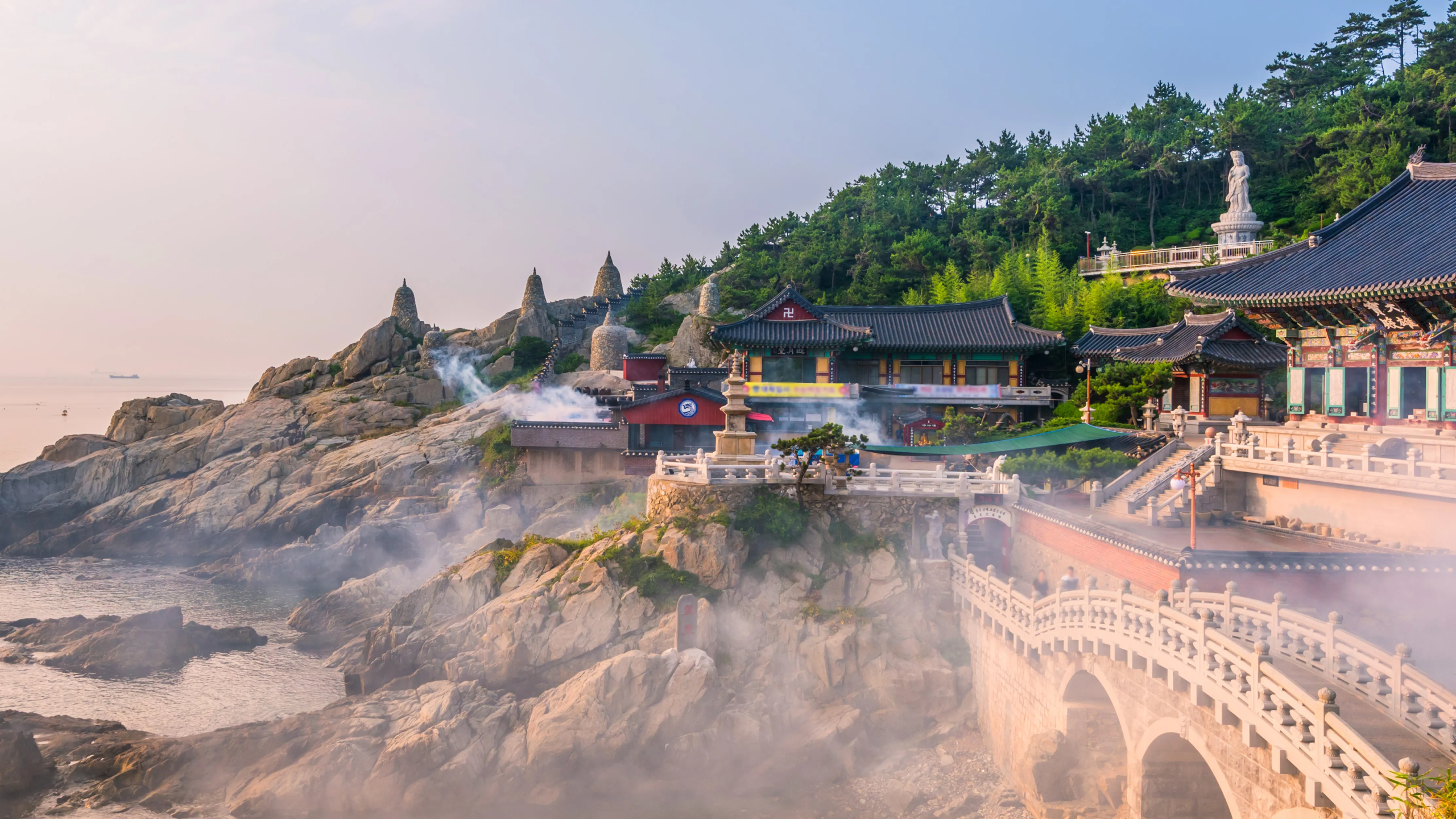
South Korea’s production ecosystem has become a first-choice destination for international commercial and OTT work, with a fast-growing pipeline from India, but navigating it without on-ground expertise creates avoidable delays, permit failures, and cost overruns. Most requests start the same way, a film fixer in Korea for a Seoul shoot, or a fixer in Seoul who can move on permits and crew at short notice. Film fixers in Korea are the operational layer between an international production’s intent and Korean execution reality, managing real-time logistics, regulatory compliance, language barriers, and vendor relationships in a country where systems are highly organised but operate primarily in Korean.
This guide covers what a Korea-based location fixer actually does, how filming access works across Seoul, Busan, Jeju and Gyeonggi, and the practical workflow for international production units engaging a fixer for a shoot in South Korea.
What a Film Location Fixer in Korea Does
The fixer role in Korea is distinct from line production and from location management. It is a real-time, on-ground execution function, the person physically present on-location throughout the shoot, resolving the gap between what the director wants and what Korean law, weather, and logistics will allow.
Role Definition and Core Scope
A film location fixer in Korea is responsible for live problem resolution at the location level. This includes managing filming windows permitted by municipal authorities, coordinating traffic control and pedestrian management in public zones, handling last-minute permit amendments when access conditions change, and serving as the direct interface with Korean police liaisons, district offices, and heritage site administrators.
Core daily functions include: confirming location access on shoot morning, managing crowd control in high-footfall areas, coordinating with the transport team for unit moves, liaising with local vendors on delivery timing, and escalating permit-related blockers to the production office before they cause schedule disruption. In Korea’s high-efficiency production culture, fixers are expected to anticipate problems 24 to 48 hours ahead, reactive problem solving is considered a professional failure, not a standard practice.
For a full production services overview, see line producer Korea, line producer services, permits, crew rates and KOFIC incentives.
Fixer vs Location Manager: Where Each Role Begins and Ends
The distinction matters operationally. A location manager in Korea handles macro-level pre-production: full location mapping, long-lead permit applications, authority negotiations at the planning phase, and location agreements. They work primarily in offices and on recce trips weeks before the shoot.
The fixer, by contrast, is a shoot-day role. They arrive before the crew, verify access conditions, manage the immediate environment, handle anything that changes between the permit approval and the actual shoot day, and stay on-site until the unit wraps and leaves. On productions where the location manager is also the fixer, schedule compression becomes the main risk, the pre-production administrative load and shoot-day execution load are incompatible at the same time.
For productions shooting in Korea, engaging separate location manager and fixer functions (even if both are handled by the same service company) creates cleaner accountability and prevents the same person from being pulled in two directions during live production.
Language, Protocol and Cultural Mediation
Korean production culture operates through a formal honorific-based communication hierarchy. Authority figures (municipal officers, heritage site administrators, police liaisons) expect structured, formal engagement. A fixer who communicates casually or without appropriate protocol will lose cooperation quickly, regardless of how straightforward the permit request is.
For international productions, the value of a Korean-speaking fixer who also works in English is operational rather than merely linguistic. Director instructions delivered in Hindi need to reach Korean crew members accurately and instantly, without passing through a two-step translation chain that introduces lag and interpretation errors. Vendor negotiations, location conflict escalations, and authority communications all carry different tone requirements that a trilingual fixer handles without needing to recalibrate between conversations.
A fixer who understands Bollywood workflow (call sheet culture, star management protocols, the difference between a producer’s instruction and a director’s instruction) reduces the friction specific to Indian shoots operating in a Korean production environment.
Key Filming Locations and What Each Requires
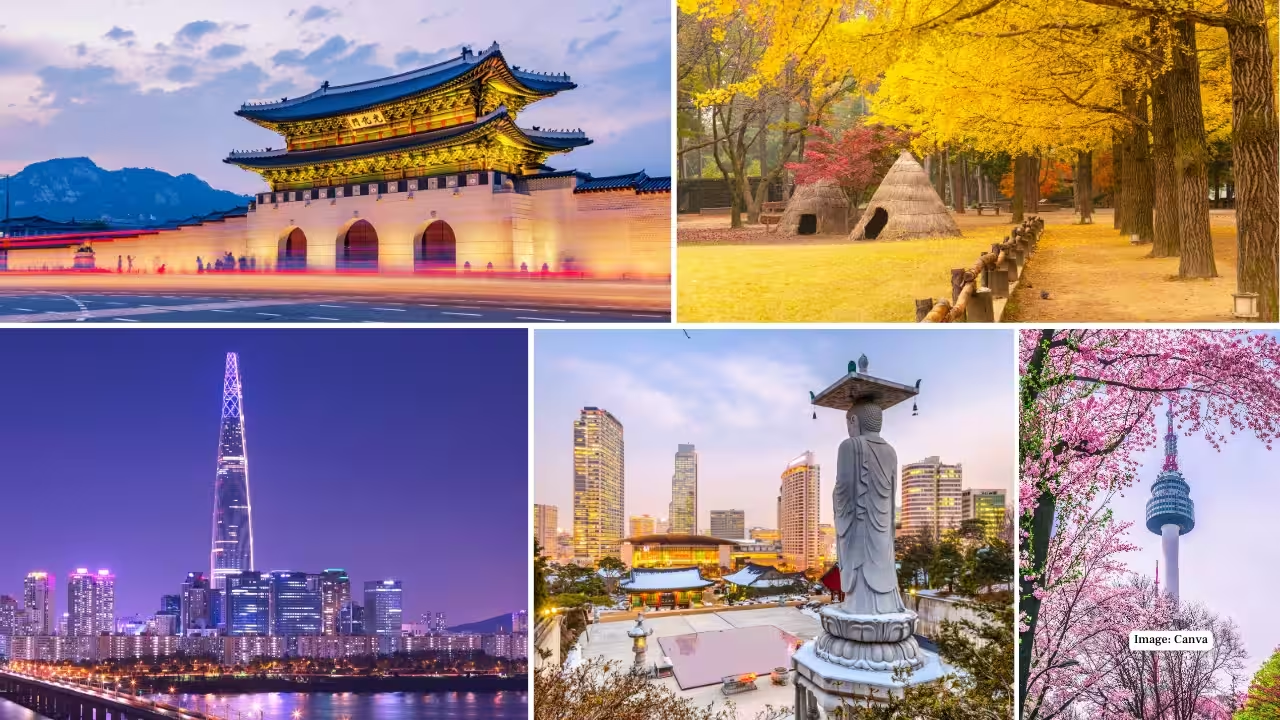
Korea’s filming geography divides into four distinct production zones, each with its own permit authority, access logic, and operational constraints. A film location fixer needs working knowledge of all four, not interchangeable general knowledge, but location-specific understanding of which district office handles approvals, what lead times apply, and where unofficial restrictions exist that don’t appear in any permit document.
Seoul: Urban Districts and Filming Windows
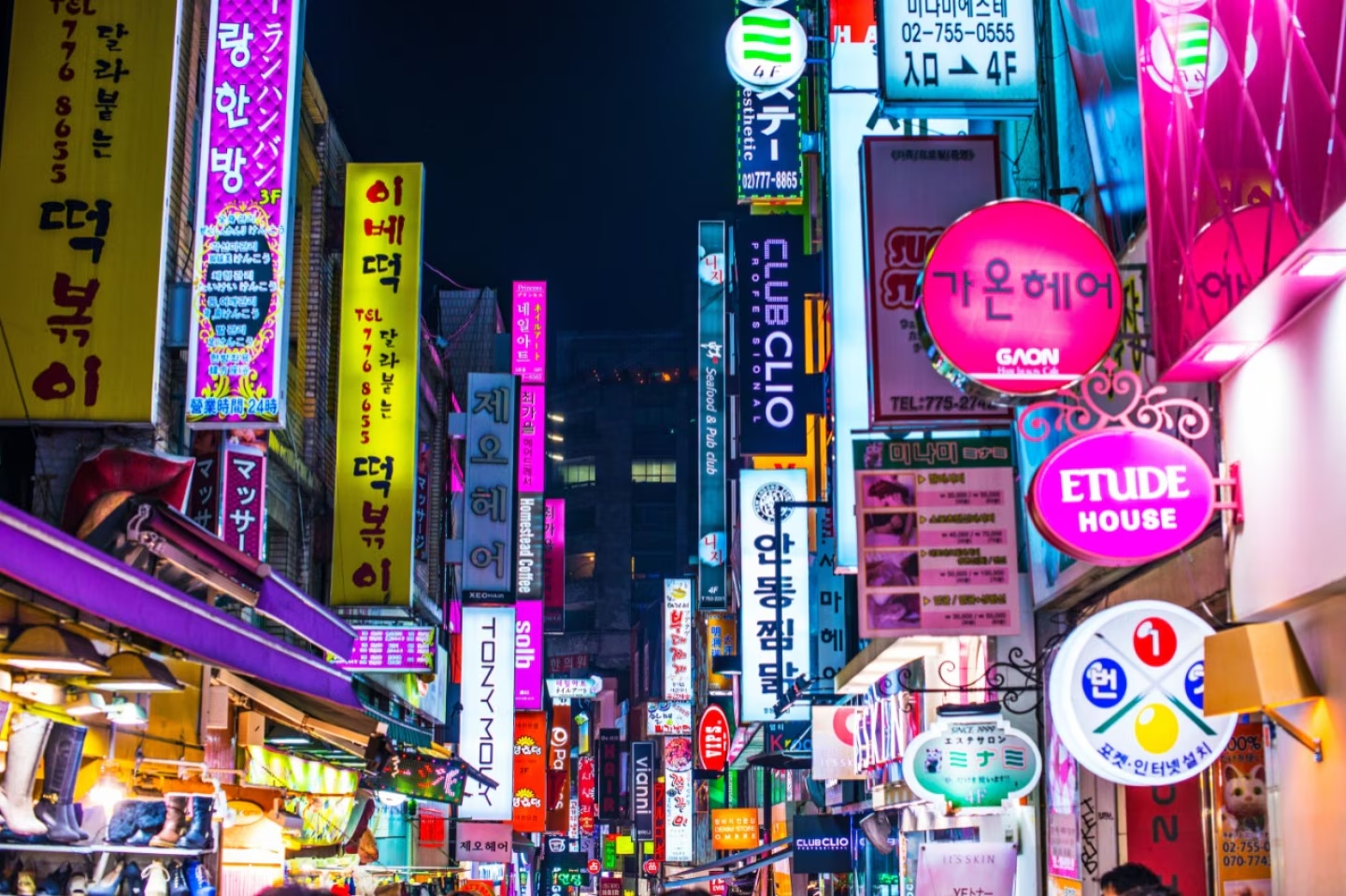
Seoul’s primary filming districts (Gangnam, Myeongdong, Itaewon, Jongno, and the Han River corridor) are managed through the Seoul Film Commission, which operates a consolidated permit system covering most municipal locations. Standard lead time for a commercial-grade street shoot is 10 to 15 business days. For locations involving road closures or significant pedestrian management (Myeongdong during peak hours, for example), police coordination adds a parallel approval track that runs alongside the film commission process.
Filming windows in Seoul’s commercial districts are typically restricted to early morning or late evening for shots requiring clear street backgrounds. Midday shoots in high-traffic zones are operationally difficult without significant crowd management resources. The fixer’s role here is managing the gap between what was permitted at the approval stage and what the actual environment looks like on shoot day. Unexpected market events, construction activity, and weather-related pedestrian density all require real-time adjustment.
Han River park zones, Namsan Tower approaches, and rooftop shoots in Itaewon each carry separate approval requirements managed by district-level offices rather than the central film commission. A fixer with prior relationships in these specific districts helps a production submit correctly the first time and avoid the back-and-forth that delays approval, rather than shortening the statutory review period itself.

Busan, Jeju Island and Regional Extensions
Busan operates through the Busan Film Commission, which is well-resourced given the city’s position as host of the Busan International Film Festival. Busan is also generally easier to work than Seoul, fewer traffic restrictions, simpler parking and more straightforward unit moves. Haeundae Beach, Gamcheon Culture Village, Jagalchi Market, and the BIFF Piazza are all regularly permitted for commercial and OTT shoots. Lead times are generally shorter than Seoul, 7 to 12 business days for standard locations, and the commission is well set up for international productions through the Busan International Film Festival circuit.
Jeju Island, managed through the Jeju Film Commission, is well set up for inbound shoots and a popular extension for coastal and volcanic work shot on the island. Hallasan National Park requires an additional environmental permit managed separately from the film commission. Seongsan Ilchulbong (the sunrise peak) and black-sand beach locations carry conservation restrictions that limit equipment size and crew numbers, the fixer’s role here is managing equipment access and ensuring the production’s technical requirements stay within the environmental compliance boundary.
Regional extensions (vineyard and countryside shoots in South Gyeongsang province, historical hanok village shoots in Jeonju, or coastal cliff sequences in Gangwon) require the fixer to coordinate with local authorities outside the main film commission network. These locations offer significantly better access and lower crowd management requirements than Seoul or Busan but need longer lead times for permit research.
Gyeonggi Province and Studio Infrastructure
Gyeonggi Province, surrounding Seoul, contains Korea’s primary studio and controlled-environment production infrastructure. CJ ENM Studio in Paju, Netflix’s Yongin Stage, and multiple independent stage facilities are all within 60 to 90 minutes of central Seoul. For productions requiring controlled environments (LED volume shoots, period sets, or technical sequences that can’t be managed in live locations) Gyeonggi is the operational base.
The fixer’s role in Gyeonggi differs from urban location work. Studio environments require vendor coordination (catering, equipment, transport logistics to and from Seoul accommodation), management of Korean crew who expect specific break structures and overtime protocols, and liaison with the studio facility management on equipment import procedures for internationally shipped camera packages.
Paju Premium Outlets, Everland theme park, and the DMZ buffer zone areas in northern Gyeonggi each carry distinct access and security requirements. DMZ-adjacent shoots require Ministry of National Defense coordination in addition to standard permit processes, lead time minimum is 30 days and the approval is not guaranteed regardless of production scale.
Permits, Compliance and Vendor Access
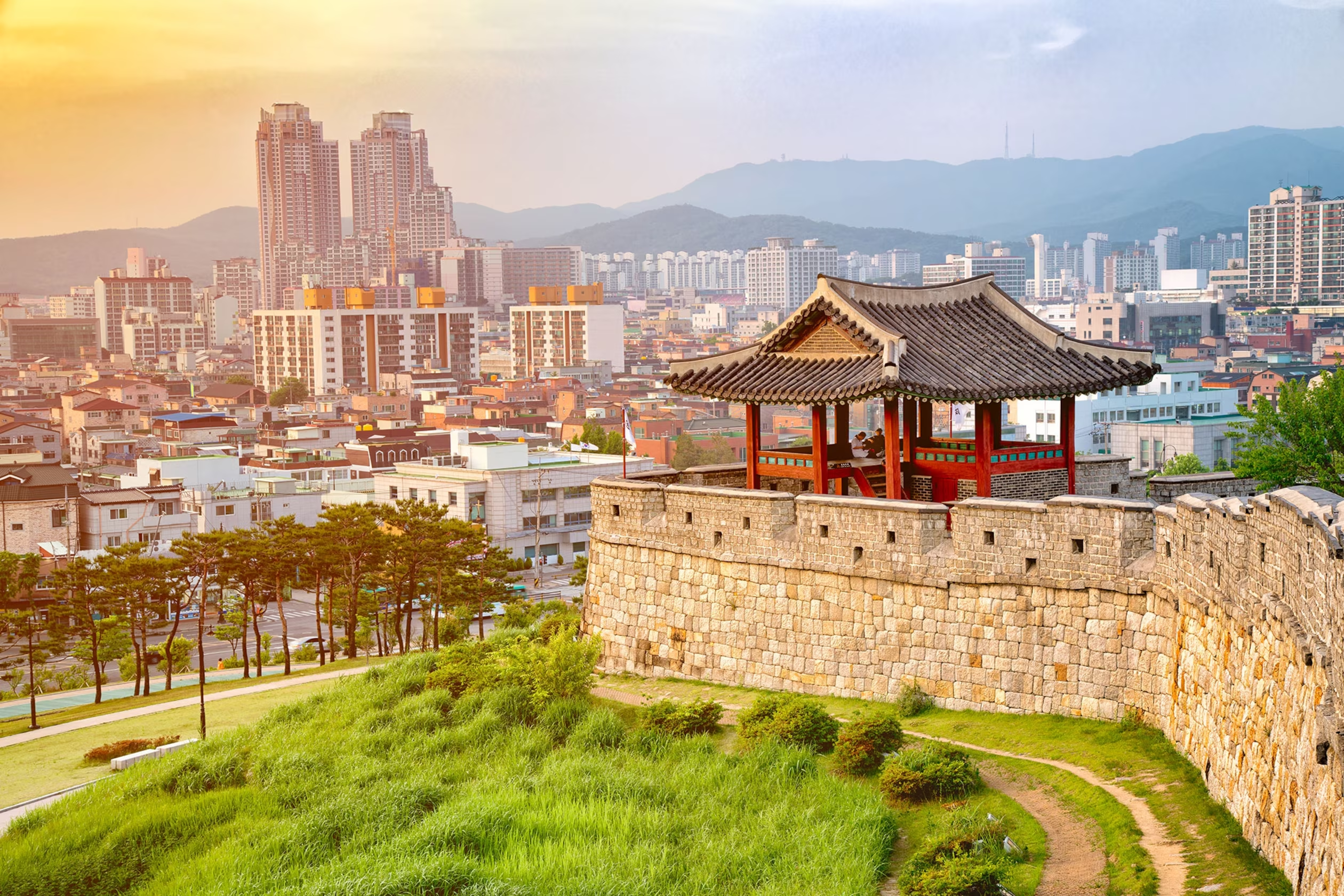
Korea’s filming permit system is structured, predictable, and rigorously enforced. The advantage for international productions is that the rules are clear and consistently applied, the challenge is that the system operates almost entirely in Korean, with minimal English-language guidance for foreign applicants operating without a local production service company.
Municipal Permit Framework
Korea operates through a network of regional and municipal film commissions (Seoul, Busan, Jeju, Gyeonggi and others) coordinated nationally through the Korea Film Commissions and Industry Network (KFCIN) and the Korean Film Council (KOFIC), which handles national incentive applications and supports inbound shoots. Each commission issues location-specific filming permits covering public spaces, parks, and heritage sites within their jurisdiction.
Standard permit applications require: production company registration documents, shoot schedule and location list, crew size and equipment manifest, insurance certificates meeting Korean public liability requirements, and a location deposit for sites requiring post-shoot restoration. Applications submitted in English are accepted by Seoul Film Commission but processed more slowly, Korean-language applications move through the queue faster and with fewer clarification requests.
National parks and heritage sites managed by the Cultural Heritage Administration (CHA) require a separate permit track that runs parallel to the film commission process. CHA approvals for grade-1 heritage sites carry a 21-day minimum processing period and may require a cultural impact assessment for shoots involving significant lighting or equipment installation.
Drone, Coastal and Night Filming Restrictions
Drone operations in Korea are regulated by the Ministry of Land, Infrastructure and Transport. Seoul’s urban airspace requires prior approval from the Seoul Regional Aviation Administration, with a minimum 5-business-day processing period. Flying within 3km of military installations (which are more prevalent in Korea than most production teams anticipate) requires Military Aviation Authority clearance in addition to civil aviation approval.
Coastal filming along Jeju and the South Sea coastline falls under Maritime Safety Act restrictions in areas designated as maritime protected zones. These restrictions apply regardless of whether the production is shooting on land or water, a drone operated from the beach over a restricted coastal zone requires maritime clearance, not just aviation approval.
Night shooting in residential districts requires noise level compliance certificates and in some cases advance notification to the district’s residential affairs office. Sound equipment above a threshold decibel level needs sign-off from the local environmental authority, which adds a parallel approval track to the standard film commission process.

Vendor Network and Production Rates
Korea’s production vendor ecosystem is technically advanced and well-organised, with pricing structured around day rates established by the Korean production industry’s professional associations. Camera, grip, and lighting packages are available from major rental houses in Seoul and Busan at rates competitive with other established Asian production markets and below Japanese equivalents.
For international productions, the most significant vendor coordination challenge is the payment and invoicing structure: Korean vendors expect Korean-won invoicing, advance deposits of 30–50% for equipment packages, and purchase orders in Korean. A fixer with established vendor relationships can negotiate deferred deposit arrangements for production companies with a track record in the Korean market.
For current crew day rates, equipment rental benchmarks, and vendor evaluation criteria, download the Korean film production rates reference, an indicative budgeting reference to confirm per project.
Problems a Korea Fixer Solves on the Day
Permits and vendors are the predictable part of the job. What actually separates a fixer from a coordinator is the unscripted problem, the thing that goes wrong between an approved permit and a rolling camera, when a decision has to be made in Korean, on the spot, without losing the day.
The examples are familiar to anyone who has shot in a dense Asian city: last-minute construction appearing at an approved location; rain forcing a same-day swap to a covered or alternate setup; police arriving to change the agreed traffic management; a crowd building around recognisable talent; an authority inspection that has to be translated in real time; a piece of equipment failing and needing emergency replacement from a local rental house; a background artist dropping out on the shoot morning; or a neighbourhood complaint during a night shoot that must be resolved before it stops the unit. None of these appear on a permit document, and all of them fall to the fixer to solve on the ground while the line producer protects the wider budget and schedule.
How International Production Units Work with a Korea Fixer
The engagement model for international productions working with a Korea-based fixer differs from standard international crew hiring. The fixer is not a freelance hire booked through a casting platform, they are typically embedded within a Korean production service company that provides the legal entity, vendor relationships, and institutional knowledge the fixer draws on to function effectively.
Pre-Production Workflow and Remote Scouting
Engagement typically begins 6 to 8 weeks before the shoot date. The fixer’s pre-production function covers location feasibility audits, permit research for the specific location list, vendor identification and rate confirmation, and remote scouting, providing photographic documentation, video walkthroughs, and logistical analysis for locations the production team has not yet visited. In practice, most international producers engage a fixer before they hire crew, so this scouting and feasibility work can shape the schedule rather than react to it.
Remote scouting reports prepared by an experienced Korea fixer should include: permit category and estimated approval lead time per location, access constraints for the specific equipment the production intends to use, time-of-day windows available for the required shot, crowd management requirements and associated cost, and known risk factors (seasonal weather probability, competing events, construction activity) that could affect the shoot.
The fixer also coordinates the initial vendor outreach, identifying which rental houses carry the specific camera packages and grip inventory the production requires, confirming availability windows, and obtaining preliminary rate cards for the production’s budget process.
On-Ground Coordination for Indian Crews
During the shoot, the fixer functions as the production’s local authority, the person who knows the actual rules for each location, has the phone numbers for the permit-issuing contacts, and understands the specific pressure points where Korean authorities are strict versus where flexibility exists.
For larger productions, the fixer manages the practical friction points that arise from crew size and cultural differences. Large Indian commercial productions often arrive with crew numbers that Korean permit authorities categorise as requiring additional crowd management resources. The fixer handles this at the pre-production stage, ensuring the permit reflects the actual crew count rather than a smaller number that creates compliance problems on shoot day.
Indian catering requirements (kitchen tie-ups for cast-specific dietary needs, Indian meal availability for crew) are managed through hotel liaison and catering vendor coordination that the fixer handles as part of the logistical scope. This is now standard for Korean hotel groups working with international productions, particularly in Gangnam and central Busan.
Frequently Asked Questions
Do Indian crews need a fixer if a line producer is already present in Korea?
Yes. The line producer manages macro logistics, budget, schedule, vendor contracts, KOFIC applications. The fixer manages real-time execution at the location. On larger productions the two roles are usually separated, because one focuses on planning while the other stays on location throughout principal photography.
Can a film location fixer in Korea negotiate directly with Korean authorities?
Yes, for site-specific permissions at the district and municipal level. KOFIC national incentive applications require a registered Korean production service company as the applicant, the fixer facilitates rather than leads that process.
How important is Korean language fluency for production?
Essential. Vendors, municipal offices, film commission staff, and Korean crew operate primarily in Korean. A non-Korean-speaking fixer creates a dependency chain that introduces delays and interpretation errors at the worst possible moments.
Can a fixer help with remote scouting before the team arrives?
Yes, and for productions shooting in Korea for the first time, a remote scouting package from an experienced fixer is strongly recommended before any location list is finalised. Permit feasibility, time-of-day constraints, and access logistics need to be assessed before the production commits to a schedule.
International production units operating within the Asia film production corridor (spanning Korea, Japan, and Southeast Asian markets) consistently cite a Korean-speaking fixer as the most operationally significant hire on a Korea shoot. The role combines location fixer expertise with the cultural fluency that purely Korean-national fixers cannot provide for cross-border crew workflows.
