
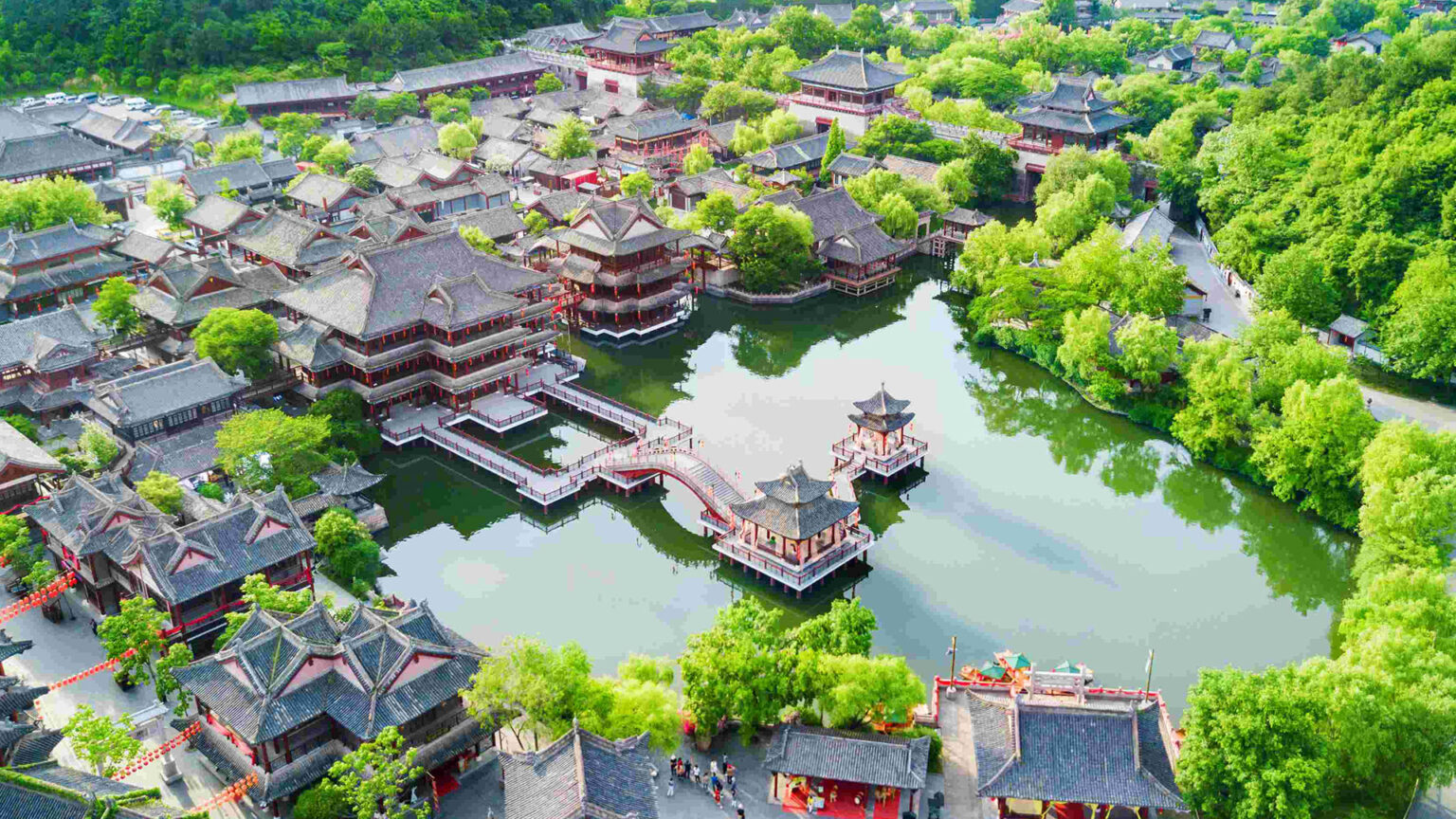
Southeast Asia as the High-Volume Execution Layer
The Asia film production corridor begins in Southeast Asia for the same reason that most international productions begin their Asian planning there — the combination of location diversity, competitive cost structures, English-language production fluency, and established fixer networks that have been built through decades of continuous international production engagement. Thailand, Philippines, Indonesia, Vietnam, Cambodia, and Malaysia collectively constitute the highest-volume execution layer in the corridor, processing more international production days annually than East Asia and South Asia combined.
What distinguishes the Southeast Asian layer is not any single territory’s capabilities but the way the territories function as a connected system. A production based in Bangkok can extend into Vietnam for specific visual requirements without rebuilding its logistics infrastructure. A Philippines-based shoot can reach Indonesia’s Komodo Island or Sulawesi for distinctive environmental sequences with a domestic flight and a logistics staging operation rather than a full international production reset. The cost of filming in the Philippines, broken down by crew rate and island logistics, is what makes it a viable regional base rather than a one-off location. Cambodia provides a controlled extension point for productions already operating in Thailand, offering Angkor-era heritage environments and a frontier landscape register that Thailand’s more developed production environment cannot replicate. The corridor logic of Southeast Asia is precisely this — each territory supplements the others rather than competing with them for the same production requirements. Local film fixers in Vietnam hold the permits and locations for that leg.
How Southeast Asia Functions as the Corridor’s Execution Foundation
Thailand anchors the Southeast Asian layer operationally. Bangkok’s production infrastructure — established studios, major equipment rental houses, a crew market with forty years of international co-production experience, a film commission that operates with international orientation — provides the base from which regional operations are coordinated. Productions that use Thailand as their Southeast Asian anchor have access to crew carnet frameworks, regional air freight routing through Bangkok’s logistics hub, and vendor relationships that extend across the regional network.
The Philippines adds the English-language fluency and island geography that Thailand cannot provide. Indonesia adds the scale and environmental diversity of the world’s largest archipelago. Vietnam adds the structured permit environment and the visual register — Ha Long Bay, the Mekong Delta, Hoi An’s heritage streets — that has driven a rapid increase in international production volume since 2018. Together these four territories cover the full range of Southeast Asian visual environments within a logistics framework that a regional Asia production services operation manages as a connected system rather than a series of independent territory engagements.

Why Southeast Asia Attracts International Production Volume
The cost differential is the primary commercial driver — forty to sixty percent below Western European and North American equivalents across below-the-line crew and location costs for comparable production quality. But cost alone does not explain the consistency of international production volume into the region. Thailand, Philippines, Indonesia, and Vietnam have each invested in the institutional infrastructure that makes international production operationally reliable: film commissions, permit systems with documented timelines, crew training programmes, and the accumulated knowledge of how international productions work that comes from decades of sustained engagement.
The corridor’s expansion into Cambodia, Myanmar, and Malaysia reflects the same logic operating at an earlier stage of institutional development. These territories offer visual distinctiveness and cost competitiveness at frontier levels, but without the permit predictability and crew market depth of the anchor territories. Productions that use them do so as controlled extensions from an anchor territory base rather than as standalone production environments.
How Vietnam, Cambodia and the South Asia Anchor Structure the Corridor
The middle tier of the Asia production corridor — Vietnam and Cambodia in Southeast Asia, and the South Asian anchor that connects the corridor to the Indian subcontinent — operates on different principles from the high-volume Southeast Asian layer. These territories are not competing with Thailand and the Philippines for the same international production volume. They are providing specific capabilities that the anchor territories cannot deliver and that the corridor requires to function at full range.
Vietnam’s specific value within the corridor is the visual register of its northern landscapes — the limestone karst formations of Ha Long Bay and Ninh Binh, the terraced rice fields of Sapa and Mu Cang Chai, the French colonial architecture of Hanoi — combined with a permit system that, while more structured and slower than Thailand’s, is predictable for productions with adequate lead time. Vietnam handles the visual requirements that the corridor’s anchor territories cannot fulfil and routes that creative demand through a government permit process that international productions with a Vietnamese production service company can navigate reliably.
Vietnam and Cambodia as Corridor Extension Points
Cambodia’s Angkor complex represents the most specifically irreplaceable visual asset in the Southeast Asian corridor. No other territory in the region offers Khmer-era heritage architecture at the scale and condition of Angkor Wat, Bayon, and the Ta Prohm temple complex. Access to these environments for commercial film production is tightly controlled through the APSARA Authority — the Cambodian heritage body — and requires production partner relationships and permit lead times that productions approaching Cambodia without prior corridor experience consistently underestimate.
Beyond Angkor, Cambodia provides the visual register of a frontier Southeast Asian environment — river systems, rural landscapes, and urban environments that have not yet been developed into the recognisable production backdrops that Thailand’s repeated international production use has made familiar. For productions seeking visual environments that do not carry the visual memory of previous international productions, Cambodia offers this freshness at a logistics cost that is manageable from a Thailand-anchored regional base.

How the South Asia Anchor Extends the Corridor
South Asia — and specifically the line producer Japan parallel in terms of how precision infrastructure anchors a sub-region — extends the corridor into the Indian subcontinent’s production geography. The South Asian anchor is not simply about India’s domestic production volume. It is about the specific visual environments, cultural heritage contexts, and production capabilities that the subcontinent provides to international productions that cannot be found within Southeast Asia’s geographic range. The Himalayan corridor from Ladakh through Nepal to Bhutan, the colonial heritage environments of India’s major cities, and the diverse landscape register from Rajasthan’s desert to Kerala’s backwaters each represent production assets that sit outside the Southeast Asian corridor’s geographic reach but within the connected Asia production network.
East Asia — Japan, Korea and China in the Corridor
East Asia integrates into the Asia production corridor on different terms from Southeast Asia. The high-volume execution logic that drives production decisions in Thailand, Philippines, and Vietnam does not apply here. Productions choose East Asian territories for reasons that have nothing to do with cost competitiveness — the visual environments, the technical standards, the OTT co-production pipelines, and the creative collaboration possibilities that Japan, Korea, and China each offer are unavailable anywhere else in the corridor. The cost premium relative to Southeast Asia is accepted because what these territories provide cannot be substituted by a cheaper alternative.
The operational consequence is that East Asia requires different pre-production preparation from the same production team that handles Southeast Asian work routinely. The institutional formality is higher. The permit systems are more structured. The expectations around production protocol alignment are more explicit. A production that arrives in Tokyo or Seoul with the operational looseness that works in Bangkok or Manila will encounter friction that is not hostile — it is simply the expression of a production culture that has developed its own precise and efficient internal logic.
Japan — Reliability, Urban Precision and the Tokyo Production Environment
Japan is the most operationally reliable production territory in the Asia corridor. Schedules are honoured exactly. Crew show up at the called time. Equipment is maintained to standards that productions accustomed to Western European or North American gear recognise as equivalent or superior. Location permits, once issued through the relevant Tokyo Metropolitan Government or prefectural authority, are honoured by the institutions that issued them without the day-of renegotiation that characterises permit environments in less institutionally stable territories.
Accessing Japan’s production reliability requires protocol alignment before the cameras roll. The Japanese production system’s internal logic — how decisions are made, how approval is sought, how schedule changes are communicated — operates on conventions that differ significantly from Western production cultures. Productions that adapt to these conventions experience the reliability Japan genuinely delivers. Productions that impose external working methods without first understanding the local protocols experience the friction of a well-optimised system resisting incompatible inputs. The adaptation is not complex. It requires advance briefing, a local production partner who manages the interface between international and Japanese working methods, and realistic lead times for the approval processes that the Japanese system runs correctly but on its own timeline.
Tokyo’s urban visual environment — the density of Shinjuku, the historic temples of Asakusa, the hypermodern waterfront of Odaiba, the residential textures of Yanaka — offers a visual register of extraordinary richness that has been underused by international productions relative to its creative potential, partly because Japan’s permit system rewards producers who invest in pre-production relationship building rather than those who approach location access as a transactional permit application.

Korea — OTT Pipeline, Crew Depth and Precision Infrastructure
Korea’s production infrastructure transformation over the past decade has made it one of the most sought-after co-production partners for international streaming platform productions globally. The crew market that produced Parasite, Squid Game, and the sustained output of Netflix Korea originals operates at international production standards across every department — not as a cost-effective alternative to Western crew but as a creative and technical collaborator whose contributions are part of what the production is seeking. A line producer Korea managing an international co-production is working within an industry that has absorbed international production standards deeply enough to have developed its own sophisticated version of them.
Korea’s OTT co-production pipeline — structured through Netflix, Disney+, and Apple TV+ partnerships with Korean studios and production companies — provides international producers with a defined pathway into Korean co-production that has institutional support from both the platform side and the Korean content industry. Productions structured within this pipeline access Korean crew, Korean locations, and Korean post-production facilities within a framework that has been navigated by dozens of international co-productions and whose contours are understood on both sides of the negotiation.
Indian production units structuring Korea as a primary shoot territory will find specific guidance on vendor evaluation, KOFIC rebate documentation, and cross-border production workflow at line producer Korea for Indian production units.
China — Scale, Control and the Selective Integration Logic
China’s integration into the Asia production corridor is selective for reasons that are both regulatory and creative. The content approval system — all scripts intended for Chinese theatrical or streaming release require NRTA review — and the co-production partner requirement for productions seeking Chinese distribution create a framework that international productions must understand clearly before committing to Chinese production involvement. Productions that approach China without a line producer in China and this understanding encounter regulatory requirements that cannot be resolved by the same relationship networks that accelerate processes elsewhere in the corridor.
Outside the distribution-targeting context, China’s specific visual environments — Inner Mongolia’s steppe landscapes, Yunnan’s mountain terrain and minority culture environments, Zhangjiajie’s sandstone pillar formations, the desert landscapes of Xinjiang and Gansu — are accessible to international productions through established service company relationships that manage the regulatory framework without requiring the production to seek Chinese distribution for its content.
For many international productions the practical entry to Greater China is Hong Kong, whose free-port logistics, English-language administration and Mainland co-production routes make it a common first base. Film fixers in Hong Kong handle the location access, permissions and customs handling that a Mainland leg then builds on.
Permissions, Incentives and Compliance Across the Corridor
The Asia corridor’s permit and compliance landscape is more varied across its breadth than almost any comparable global production region. Between Japan’s highly formalised institutional permit system and Cambodia’s relationship-network-based access logic, the corridor encompasses the full spectrum of production governance approaches. A regional production services operation that manages this range does not apply a single permit management methodology across all territories — it maintains territory-specific knowledge of each system while understanding how those systems interact when a production moves between them.
The most common corridor compliance failure is the assumption that permit structures transfer between territories. A production that has successfully navigated Thailand’s film commission system and assumes that the same approach will work in Vietnam discovers that Vietnam’s government approval process requires different documentation, different lead times, and different institutional relationships. A production that has managed Indonesia’s LGU-based permit system and assumes that Cambodia operates similarly discovers that Cambodia’s APSARA Authority for heritage locations operates on entirely different principles from any LGU system.

Why Regional Permit Planning Produces Better Outcomes Than Territory-by-Territory Management
The operational advantage of a regional permit planning approach becomes most visible in multi-territory shoots where permit timelines across territories must be coordinated rather than managed sequentially. A production planning to shoot in Vietnam, Thailand, and Korea within a single schedule cannot treat each country’s permit timeline as independent — the Vietnam government approval process that requires eight weeks of lead time determines when the full production schedule can begin, regardless of how quickly Thailand and Korea process their respective applications.
Regional permit planning maps all territory timelines simultaneously at the pre-production stage, identifies the critical path permit — the one with the longest lead time or the highest rejection risk — and structures the pre-production sequence to ensure that critical path permit is initiated first, with sufficient time for revision cycles if the initial application requires amendment. This approach, which filming compliance for foreign productions covers in the context of multi-jurisdiction production management, consistently produces more reliable shooting schedules than territory-by-territory permit management applied sequentially.
Incentives as a Sequencing Tool Across the Corridor
Asia’s incentive landscape — Thailand’s BOI investment promotion framework, the Philippines’ FDCP support mechanisms, Korea’s location rebate system, Japan’s content incentive programmes — varies enough across territories that productions evaluating where to base their Asia operations have genuine financial decisions to make based on incentive structure rather than simply on location aesthetics or cost comparison. The production that evaluates incentive eligibility across the full corridor at the pre-production stage, before the shooting schedule and production structure are fixed, consistently achieves better financial outcomes than the production that engages incentive optimisation after creative and logistical decisions have already been made.
The sequencing logic applies most clearly when a production has flexibility about which territory anchors the shoot. If two territories offer comparable visual environments but one offers a qualifying incentive rebate that the other does not — or offers a rebate on a different category of qualifying spend — the financial argument for one territorial structure over another can be significant. A regional production services operation that holds incentive knowledge across the corridor provides this comparative analysis as a pre-production service rather than a retrospective accounting exercise.

How the Asia Corridor Handles Restricted Territory Production
Some international productions require visual environments in territories that are either operationally inaccessible or carry regulatory complexity that makes direct filming impractical. Pakistan, Afghanistan, and parts of Central Asia fall into this category for most international productions. The Asia corridor has developed a systematic response to this demand. It does not treat restricted territory production as an exceptional problem. It treats it as a routing exercise — identifying which corridor territories can deliver the required visual register within manageable operational parameters.
This stand-in logic operates on a clear principle. The visual requirement is separated from the geographic requirement. A script that requires arid mountain terrain with a Central Asian architectural register does not necessarily require filming in Central Asia. It requires a location that delivers those visual characteristics reliably and within an operational framework the production can manage.
Pakistan, Afghanistan and Central Asia — Corridor Stand-In Strategy
The primary stand-in territories for Pakistan and Afghanistan within the Asia corridor are Ladakh and the broader Himalayan belt, Rajasthan’s desert environments, and parts of Iran-adjacent Central Asian visual registers available through Georgia and Azerbaijan. Each delivers specific elements of the required visual language. None delivers all of them. The corridor production services function identifies which combination of territories delivers the full visual range most efficiently.
Nepal occupies a specific stand-in position. It provides Himalayan terrain, Buddhist monastery architecture, and frontier South Asian environments. It operates under permit frameworks that international productions with Kathmandu-based production partners can navigate. The combination makes Nepal a controlled extension point. Productions access it from an Indian subcontinent anchor rather than treating it as a standalone production environment. On the ground, film fixers in Nepal coordinate permit navigation, monastery access and local crew.
China Stand-In Logic and Regulatory Sensitivity
China’s visual environments — Inner Mongolia’s steppe, Yunnan’s mountain villages, Zhangjiajie’s karst formations — are sought by productions that need those specific visual registers. The regulatory pathway divides cleanly into two scenarios. Productions targeting Chinese theatrical release must engage the NRTA content approval system. Productions using Chinese locations for visual purposes without Chinese distribution intent use service company pathways that bypass content review.
The stand-in calculation runs the other direction too. China’s environments stand in for Mongolia, Tibet, and parts of Central Asia in international productions that cannot access those territories directly. This is a routine corridor routing decision. It requires the correct service company relationship and realistic permit timelines. It does not require exceptional circumstances.

Managing Compliance Across Restricted Territory Production
Multi-territory shoots involving stand-in locations carry a specific compliance complexity. Insurance must cover each territory separately. Crew contracts must reflect the employment jurisdiction of each country where work is performed. Equipment customs documentation must anticipate the specific border crossings the production will make rather than assuming a generic Asia corridor carnet.
Productions that treat restricted territory routing as a creative decision without simultaneously treating it as a compliance architecture decision consistently encounter problems at the border or the insurance validation stage. The corridor works when both are designed together from the outset.
Conclusion
The Asia film production corridor works because its parts are complementary. Southeast Asia’s volume execution capacity and East Asia’s precision infrastructure do not compete. They serve different production requirements within the same regional system. The stand-in strategy that routes restricted territory visual requirements through accessible corridor locations adds a third operational capability. No other production region offers this range within a connected logistics framework.
Productions that engage the corridor as a system extract more value than productions that engage each territory independently. Multi-territory permit tracks run in parallel. Incentive structures are evaluated across the full corridor before territory decisions are made. Logistics are designed for the specific border crossings the production will make. Crew and equipment move through a network that has been used by international productions for decades.
The corridor’s complexity is real. It is also manageable — when the pre-production framework is designed for it rather than adapted to it mid-shoot. Productions that arrive with the corridor’s operational architecture already in place find that the region delivers on its commercial and creative promise consistently.
