
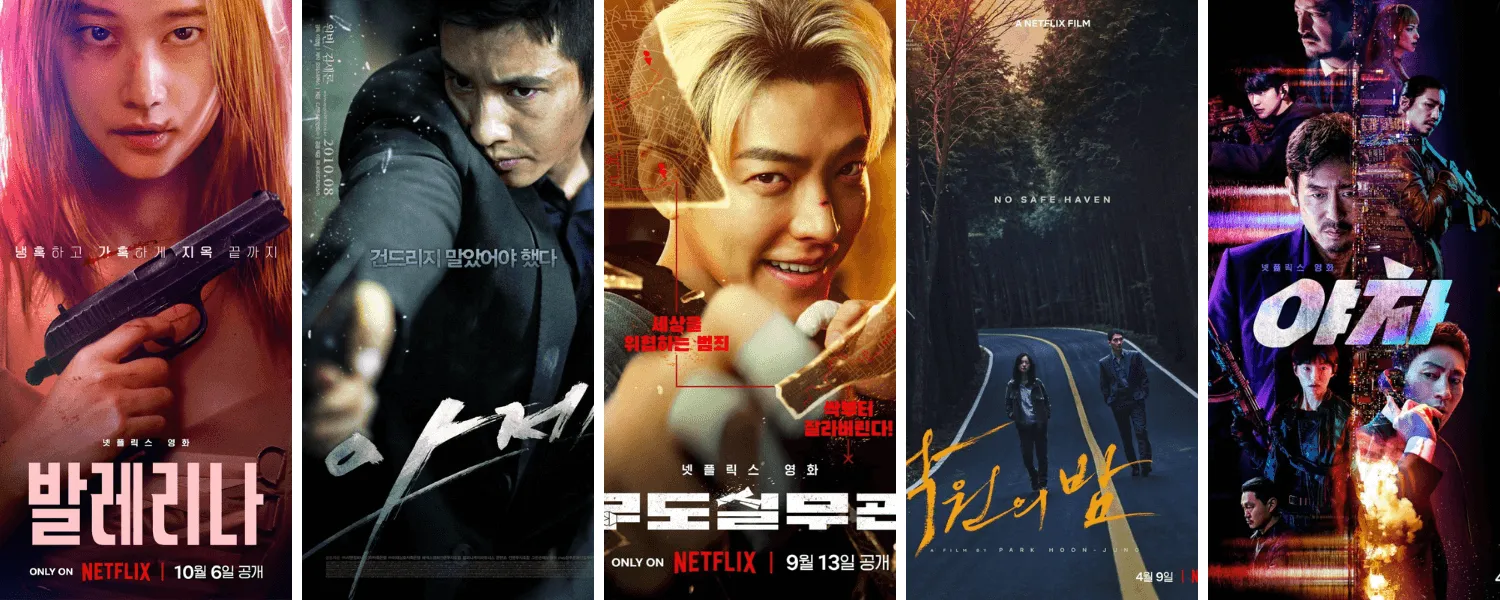
Korean storytelling science explains why K-dramas feel emotionally precise, strangely familiar and structurally addictive, even to viewers who have never been to Korea and have no prior connection to the culture. The answer is not novelty. It is craft, a repeatable set of narrative decisions that Korean writers and directors have developed over decades of high-volume drama production, refined through audience response and exported globally through streaming platforms that removed the last barrier between the content and the world.
That craft has directly driven the global demand for remake rights India and internationally, making Korea one of the most active source markets in today’s IP licensing ecosystem. Bollywood studios, OTT platforms across Southeast Asia, Japanese broadcasters and Turkish production houses all compete for rights to Korean originals. The stories travel because the emotional logic underneath them is designed to travel.
This article examines what Korean storytelling science actually consists of, how it produces content that adapts across cultural markets, and what Indian producers and international studios need to understand about the Korean production infrastructure when they move from licensing a story to putting it on screen. Legal Checklist for Remake Rights India covers the rights acquisition process in detail for producers taking their first step into the Korean IP market.

How Korean storytelling science hooks global audiences
Korean storytellers operate from a set of principles rooted in emotion rather than plot. The story begins with character psychology, what does this person want, what do they believe about the world, and what would have to change for them to get what they need. Plot mechanics are built around that question, not the other way around. This structural inversion is what gives Korean drama its particular texture: events feel like consequences of who characters are, not devices to advance a timeline.
Emotional design: layered conflict and character psychology
Korean storytelling achieves narrative transportation (the state in which a viewer becomes genuinely absorbed) through specific craft decisions rather than production value alone. Crash Landing on You establishes its entire emotional premise in the first twenty minutes: a wealthy South Korean woman accidentally crosses into North Korea, and the decision of whether to protect her or report her falls on a North Korean officer trained his entire life to do exactly the latter. The conflict is not action-based. It is a question about what kind of person the character is, and whether that identity can change under pressure.
Layered emotions, not flat melodrama
A typical Korean romance layers personal longing against social insecurity, family obligation against class tension, and professional ambition in direct conflict with emotional honesty. Itaewon Class builds a love story across five years of business rivalry and class resentment. The romance is real, but it only carries weight because of the structural pressures around it. Remove the class conflict and the revenge narrative, and the love story has no load-bearing walls. Korean writers understand that emotion needs architecture to be credible rather than sentimental.
Character empathy and oxytocin
Character empathy in Korean drama is generated through visible internal conflict, not through likability. It’s Okay to Not Be Okay drew clinical psychology commentary internationally because its portrayal of emotional damage felt accurate rather than dramatised. When viewers recognise something true about experience in a character, the brain produces neurological responses (including oxytocin release) associated with real social contact. Korean storytelling science exploits this reliably by keeping characters visibly burdened and growing slowly enough to be credible.

Cultural specificity with universal resonance
The second structural pillar is the combination of intense cultural specificity with emotional universality. Korean dramas show specific foods, the particular weight of military service, the social mechanics of Korean workplace hierarchy. This specificity is not an obstacle to international audiences, it is part of what makes the stories feel real rather than generalised. Reply 1988 is set in a precise Seoul neighbourhood in 1988 with a level of local detail that should, by conventional export logic, limit its reach. Its international viewership consistently reports the opposite: the specificity made them think of their own childhood streets, not a foreign one.
Local detail makes stories feel real
Research on K-drama viewership shows that audiences actively engage with Korean daily life through the texture of drama, the specific rituals, the way seniority operates in an office, the cultural weight of particular festivals. This texture establishes authenticity, and authenticity is what separates content that travels from content that merely translates. Cultural specificity is an export asset, not a liability.
Universal themes travel easily
Korean writers build their stories around tensions that exist in every society: family duty against individual freedom, tradition colliding with personal desire, social status in direct conflict with emotional honesty. What travels across cultures is not the Korean context of these tensions but the recognition that they are unresolved everywhere. Korean storytelling science combines maximum local specificity at the surface with maximum universality in the emotional core, and the result is content that feels both foreign and deeply familiar simultaneously.
Korean storytelling science also operates at the level of pacing. Korean writers use silence and restraint in ways that most Western drama formats do not. A scene in which two characters sit together without speaking, or one in which an important revelation arrives in the last three seconds of an episode with no dialogue, creates a psychological pressure that the next episode must release. This withholding is deliberate and structural. It is one of the reasons K-dramas are experienced as addictive rather than merely entertaining, the emotional need they create is not satisfied at the same rate it is generated.
Why Korean stories become global remakes
The spread of streaming platforms gave Korean drama a global stage it could not have reached through traditional broadcast distribution. Netflix, Prime Video and regional services removed the access barrier, but distribution alone does not explain sustained global success. Korean storytelling science supplies the narrative engine. Platforms supply discoverability. Together they created a flywheel: more views generate more subtitle availability, which opens new markets, which generates licensing interest from producers in those territories who want local versions of what is already working. Korean dramas now attract brand partnerships, location tourism and soundtrack streaming revenue in ways that individual hit films rarely sustain, studios licensing Korean formats are acquiring a proven emotional blueprint with documented audience response data across multiple cultural markets.
Narrative architecture built for adaptation
The most consistently adaptable Korean stories share a structure that remake writers describe as modular: a clear, emotionally strong premise that can be summarised without plot machinery; a central relationship with built-in conflict that cannot resolve without genuine change on both sides; and a setting that can be relocated while preserving the emotional logic underneath. My Love from the Star works as a Japanese remake because the emotional premise (an alien who cannot touch the woman he loves without losing his powers) is culturally portable. The internal rule is not Korean. Only the setting is.
- Temptation of Wife spawned remakes in China, the Philippines, Vietnam and Malaysia, each emphasising betrayal and revenge in local settings.
- Coffee Prince was remade in China and influenced gender-bending romance formats across Southeast Asia.
- Marry My Husband secured a Japanese remake for streaming, keeping its time-travel revenge hook while adjusting character backgrounds.

Korean remake statistics and the global IP market
The scale of Korean IP licensing has grown significantly across tracked markets. Japan accounts for the largest share (consistently above thirty percent of recorded official remake deals) followed by China, then Thailand, Vietnam and Indonesia. The next acquisition wave centres on festival-validated short-form IP: Korean short films from the Busan 2025 circuit have grown in strategic value as Bollywood studios and OTT platforms compete for emerging catalogue titles simultaneously, rather than waiting for one market to move first.
Global streaming platforms have compressed the timeline between a Korean drama airing and an international remake deal being signed. Pre-sale agreements (signed before a series completes its run, based on early episode performance) have become a standard feature of the high-volume Korean format market. A 16-episode Korean drama often adapts into a 10-episode local version with minimal narrative loss. The tight arc, contained premise and clear genre rules mean writers rooms can adapt rather than rebuild from scratch. Romantic thrillers, time-travel revenge dramas and workplace romance formats lead remake volume across markets, these genres carry the clearest emotional logic and the most portable character archetypes.
Streaming Platforms and the Acceleration of Korean IP Licensing

The concentration of Korean remake activity in specific markets also tells a production story. Japan and Korea share enough cultural architecture (the workplace hierarchy dynamics, the family obligation frameworks, the particular emotional register of restrained romance) that Korean formats translate with minimal localisation. In India, the challenge and opportunity is different: Indian audiences have absorbed Korean storytelling logic through years of original K-drama viewership on streaming platforms, which means they often recognise when an Indian remake has failed to preserve the emotional contract. The benchmark for Indian remakes of Korean IP has been set by the originals, not by previous Indian remakes.
The craft inside Korean storytelling science
Understanding why Korean stories travel is useful. Understanding how they are built is what separates producers who license Korean IP and remake the surface from those who preserve what actually works. The craft choices Korean writers make are specific, consistent and learnable, which is why Korean storytelling science is a transferable model rather than a national style that cannot be replicated outside its cultural origin.
Genre rules, episode rhythm and the psychological pull
Korean dramas mix romance, thriller, fantasy and workplace drama within a single series. What keeps this coherent is internal rule-setting. My Love from the Star establishes its fantasy logic immediately and holds to it. Guardian: The Lonely and Great God builds its romance around a premise that makes every emotional development consequential: completing the hero’s ancient curse requires the death of the person he loves. The internal rule is not a plot device. It is the emotional architecture of every scene.
Episode structure reinforces the pull. Each episode re-establishes emotional stakes, applies pressure at a mid-point that changes the situation, and closes on an unresolved question that makes the next episode a necessity. Crash Landing on You follows this rhythm precisely across sixteen hours. Reply 1988 uses the same structure at lower dramatic temperature (ending on emotional revelations rather than cliffhangers) and the pull is identical. The rhythm is designed for streaming: short resolution cycles that satisfy the brain’s reward system while keeping the larger emotional question open.
Viewer Psychology: Emotional Processing and Parasocial Connection
Viewers use Korean drama for stress relief, emotional processing and parasocial connection. Korean storytelling science supports all three because it does not resolve trauma quickly or cleanly. Characters carry their damage visibly and grow slowly enough to be credible. For producers adapting Korean IP, this matters practically: the remake must preserve the emotional contract, characters who are authentically burdened, relationships under real pressure, resolutions that earn their weight. Understanding this creative architecture is why engaging a film fixers in Korea with active knowledge of Korean creative expectations matters as much as the rights agreement itself.
The practical lesson for producers adapting Korean IP or commissioning work in the Korean tradition is that character psychology must be established before the story structure is designed. A plot outline that begins with events rather than with character belief systems will produce a technically correct remake that feels emotionally hollow. Korean storytelling science asks a harder question first: what does this character believe about themselves that is wrong, and what will it cost them to find out? Everything else (the genre, the location, the episode count) is built to make that question unavoidable.
Filming in South Korea: production infrastructure for Indian producers
South Korea offers a well-developed film and television production ecosystem built on years of high-volume drama output. Seoul, Busan and Jeju Island provide varied location options, dense urban shoots, coastal drama sequences and mountainous forest landscapes used extensively in historical and fantasy productions. The Korean Film Council (KOFIC) administers cash rebate programmes covering a percentage of qualifying local spend for foreign productions, making Korea financially viable for international shoots alongside its established creative credibility.
Korean drama production schedules are intensive by international standards. Series shoot across compressed timelines with simultaneous script development, which has built a deep pool of experienced local crew, equipment rental infrastructure and post-production facilities oriented toward global delivery. Productions entering Korea for the first time benefit from local line production expertise that can navigate studio norms and location permit procedures without the delays that come from unfamiliarity.
Co-Productions and Location Recces: The Indian Entry Point

For Indian production companies pursuing co-productions, location recces or adaptation shoots alongside Korean creative partners, navigating KOFIC applications, permit structures, local labour norms and studio relationships requires active local industry knowledge. A film location fixer in Korea brings the granular knowledge of regional filming conditions, access fees, seasonal location restrictions and permit lead times that a line producer coordinates at the executive level. Indian crews on recce in Korea benefit particularly from a local fixer who knows which locations carry restrictions during peak drama production season and which remain accessible year-round.
The practical question for Indian studios acquiring Korean IP is how much of the original production infrastructure (locations, creative consultants, visual references, post-production workflows) to replicate versus localise. That decision is best made in pre-production with Korea-based expertise involved, not on shoot day under time pressure. Co-production agreements between Indian and Korean studios have consistently shown that pre-production decisions about location authenticity versus localisation have a direct impact on whether the final product satisfies both the Korean IP holder and the Indian audience.

Conclusion: the future of Korean storytelling science
Korean storytelling science sits at the intersection of craft, culture and cognitive science. Korean writers and producers build emotionally rich stories shaped by local realities yet open to global audiences, because the underlying emotional logic is universal, not despite the cultural specificity but partly because of it.
The remake rights ecosystem that has grown around Korean IP is institutional validation of the methodology. When multiple countries compete for the same story within weeks of each other, it confirms that the underlying narrative design is genuinely portable. Korean storytelling science is not a regional style that succeeded through novelty. It is a tested methodology that produces internationally viable content consistently across genre types and production scales.
For producers, writers and rights teams working across borders, the practical takeaway is consistent: study not just what Korean dramas contain but how they are built. The emotional logic, the character architecture, the episode rhythm and the genre discipline are transferable principles. Adapting a Korean format successfully requires understanding these at the craft level, not just the surface level of plot summary and setting swap. Indian cinema carries its own deep storytelling traditions. The most productive space is where those traditions meet Korean craft principles: not imitation, but informed creative dialogue between two storytelling cultures that both prioritise emotional resonance over spectacle.
