
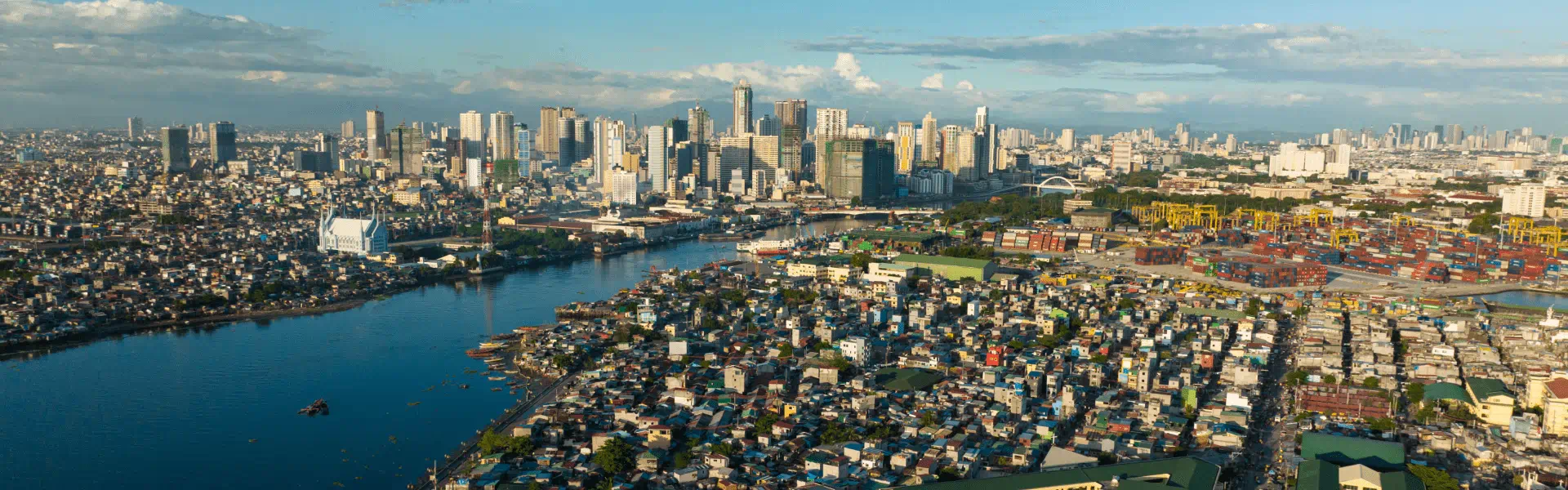
Why US Productions Are Routing Into Southeast Asia
The cost logic is simple enough that it barely needs stating: a principal photography day in Los Angeles or New York runs $80,000 to $150,000 in crew, facility, and permit costs before above-the-line is touched. The equivalent day in Bangkok, Manila, or Bali comes in at $12,000 to $30,000 depending on scale and department requirements. That ratio has held for three decades. What has changed is the infrastructure sitting underneath it.
Southeast Asia no longer functions as a cost-reduction gamble. It functions as a parallel production system — with studio facilities, established vendor ecosystems, trained department heads, and government bodies that have processed international production paperwork long enough to operate predictably. Thailand’s Film Office has issued permits for US productions since the early 1990s. The Philippines Film Development Council has an international production desk that coordinates between MMDA, local government units, and national agencies. Vietnam’s Cinema Department has a dedicated foreign production unit. These are not improvised systems.
For US line producers, the practical question is no longer whether Southeast Asia can handle American production standards. It can. The question is which territory handles which production requirement, and how pre-production is structured from US-based offices across a twelve-hour time zone gap.

The Corridor — Territory by Territory
The corridor — Indonesia and Bali, Vietnam, Thailand, the Philippines, with Cambodia as a secondary location market — shares certain baseline characteristics. Labour costs run 15 to 25 percent of US union equivalent. Equipment rental is available at scale in Bangkok and Manila, and at adequate scale in Ho Chi Minh City and Denpasar. English is the working language of international production in all four primary markets. But each territory is operationally distinct, and treating the corridor as interchangeable is how US productions run into schedule problems. Understanding the full scope of production services in Asia is the starting point for any US-side pre-production plan.
Download the Cambodia Filming Checklist — Choosing Between Thailand, Vietnam and Laos for a side-by-side breakdown of permit lead times and crew availability across mainland Southeast Asia.
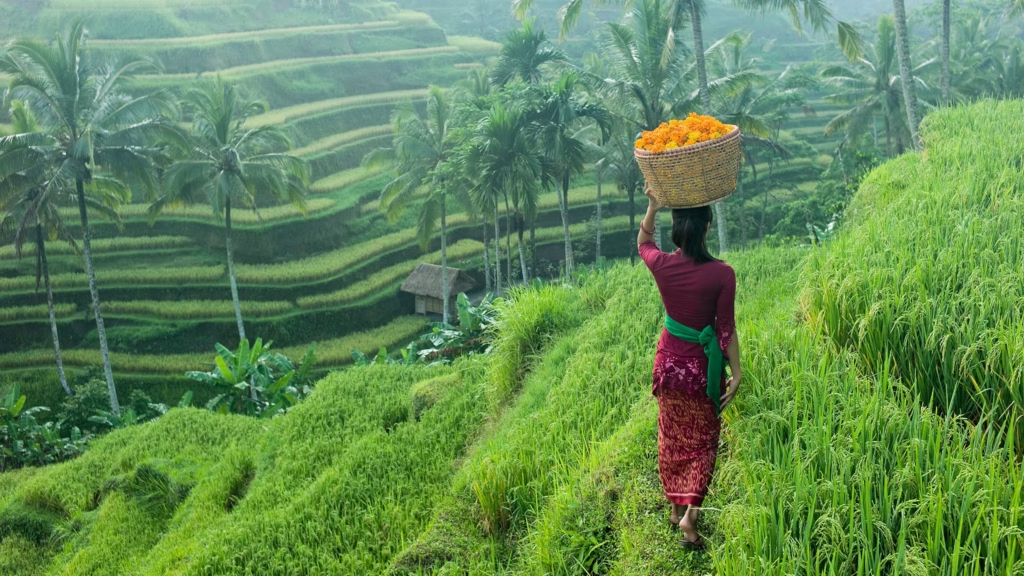
Bali — Visual Identity and What US Productions Use It For
Bali does not look like anywhere else. The Hindu-Balinese cultural landscape — terraced rice paddy systems, compound temple architecture, the dense ceremonial life embedded in everyday space — produces a visual register unavailable in Thailand, Vietnam, or the Philippines. When a US production needs that specific visual signature, there is no substitute within the corridor.
That distinctiveness comes with constraints. Certain temple precincts require separate permit applications through the Majelis Desa Pakraman, the village council authority, independent of the PTSP Bali One Stop Service permit that covers most commercial location use. Badung Regency, which covers Kuta, Seminyak, and the airport zone, processes film permits through its own investment board. Ubud, where much of the visual character that defines Bali on screen is concentrated, falls under Gianyar Regency with a separate application chain. A US production coming into Bali with the assumption that a single permit covers the island will lose two to three weeks discovering otherwise.
Permit Lead Times and the Two-Regency Problem
Bali permit timelines run four to eight weeks for standard commercial and feature work. Productions using multiple regency locations should budget eight to twelve weeks pre-production. The Indonesian national-level permit for foreign commercial production — issued through the Indonesian Film Council under the Ministry of Education and Culture — is a prerequisite for any location-level approvals, and it is not fast. US productions that have tried to compress this process by arriving early and fixing paperwork on location have universally extended their shoot calendars.
Crew Base and Tourism Infrastructure
The crew base is adequate for mid-scale commercial and documentary production. Grip, electric, and art department can be sourced locally for shoots up to twenty days. For longer schedules or larger productions, Bangkok or Jakarta crew are typically flown in to supplement Bali locals, adding a logistics layer that needs to be priced into the budget before the estimate goes to the client. Tourism infrastructure does substantial heavy lifting — the hotel and villa stock in Seminyak, Canggu, and Ubud is built to international standard because it has been serviced by European and Australian production for fifteen years. For the full operational picture of line producer and fixer in Bali, including current permit contacts and crew rate benchmarks, the territory guide covers this in detail.

Vietnam — Infrastructure Depth and the Locations US Productions Use
Vietnam’s locations range from Ha Long Bay’s limestone karst seascape — which appeared in US productions including Kong: Skull Island — to the French colonial streetscapes of Hanoi’s Old Quarter and the lantern-lit waterways of Hoi An. The country offers urban, coastal, and interior environments within compressed geography: a production can move from Hanoi to Ninh Binh to Ha Long in a single production week without logistical collapse.
The permit structure is centralised through the Vietnam Cinema Department under the Ministry of Culture, Sports and Tourism. Foreign productions require a script submission, a production company registration, and — for content involving Vietnamese locations in a dramatic context — a content review. The content review timeline is the variable that most affects US production scheduling: straightforward commercial and documentary content moves through in three to five weeks. Drama with script dependency can take six to ten weeks. Productions that have not budgeted for the content review window have been caught short.
Ho Chi Minh City as a Production Base
Ho Chi Minh City is the operational centre for most US productions working in Vietnam. Studio infrastructure here runs to soundstage capacity suitable for mid-scale commercial work. The crew base is larger and more experienced than Hanoi’s, and the vendor ecosystem — camera rental, post facilities, transport — is fully serviced. Most US productions base logistics in Ho Chi Minh City and schedule location shoots in Hanoi, central Vietnam, and the north as separate travel legs.
Labour Rates and Weather Windows
Labour costs in Vietnam run lower than Thailand and the Philippines. Day rates for skilled Vietnamese crew — camera operators, gaffers, art directors who have worked with US productions before — run $180 to $350 per day depending on department and experience level. Production coordinator and first AD equivalent roles, where English fluency and international production literacy matters, tend to be sourced from a small community of operators who work repeatedly with foreign productions. Weather windows matter more in Vietnam than elsewhere in the corridor: the north runs October to April for optimal production conditions; Ho Chi Minh City shoots November to April; Ha Long Bay is most stable from March to May and September to November. Full scheduling detail and current permit contacts are in the line producer Vietnam.
Thailand — The Established US Production Corridor
Thailand has thirty years of US and European production behind it. That history produces infrastructure that no other Southeast Asian market can match: permanent soundstage facilities in Bangkok, a trained crew base with department heads who have worked on US features and episodic television, an equipment rental ecosystem that can supply Panavision, ARRI, and Red packages without a freight shipment from Los Angeles, and a government incentive structure refined specifically to attract international production.
The Thailand Film Office operates under the Tourism Authority of Thailand and runs a one-stop service for foreign production permits. Standard commercial permits process in seven to fourteen days. Feature and TV drama permits run two to four weeks.
The BOI — Board of Investment — administers a cash rebate of up to 20 percent on qualifying Thailand production spend for productions meeting minimum spend thresholds. The rebate process requires a registered Thai production entity as a counterpart, which is standard operating procedure for any US production working in Thailand at scale.

What the Thailand Crew Base Delivers
Department heads in Bangkok who have worked twenty or more US productions are not unusual. That depth of experience means a US line producer arriving in Thailand does not need to educate local HODs on American production norms — they already know them. It also means the crew base is correspondingly priced: a Thai gaffer or DP who has worked with major US clients charges more than a Vietnam equivalent.
The cost advantage in Thailand is real but less dramatic than it appears in basic day-rate comparisons once experienced crew rates are factored in. Locations run from Bangkok urban environments — the Chao Phraya riverfront, Chinatown on Yaowarat Road, the glass towers of Silom — to Chiang Mai, beach environments in Samui and Phuket, and the historic city of Ayutthaya for period work. The full breakdown of locations, BOI qualification criteria, and current permit timelines is in the Thailand line producer and production locations guide.

The Philippines — English Language Production and Manila Scale
The Philippines has a structural advantage no other Southeast Asian market shares: English is a first language for the production-literate workforce. A US line producer can conduct pre-production, vendor negotiations, talent casting, location scouting, and department head briefings entirely in English without translation friction. That eliminates a layer of communication overhead that every other corridor territory carries.
Manila is a large city with major urban production infrastructure. The variety of visual environments within Metro Manila — Makati’s financial district, Intramuros’s colonial fortress architecture, the waterfront of Manila Bay, the urban density of Tondo — gives US productions a range of distinct looks within commutable distance. Palawan, three hours by air from Manila, provides pristine tropical coastal environments without the permit complexity of the Balinese regency system. The Film Development Council of the Philippines — FDCP — is the coordinating body for foreign productions. Permit turnaround for straightforward commercial work runs two to three weeks. Typhoon season runs June through November, with August and September the most active months.
Crew Infrastructure Outside Manila
Outside Metro Manila and Cebu, the crew base thins significantly. Palawan and the Visayas regions have local crews experienced in documentary and commercial work, but features requiring full department HOD coverage need to fly Manila crew out, which changes the cost structure for remote Philippines production. The flight time from Manila to Puerto Princesa in Palawan is just over an hour — manageable for a production planning it from the start, less so when discovered mid pre-production. The Philippines line producer and production locations guide covers FDCP application requirements, co-production agreement structures, and regional crew availability in detail.

How US Line Producers Structure Southeast Asia Shoots
Pre-production for a US production shooting in Southeast Asia typically runs from a US-based production office, with a parallel in-territory coordinator operating in the same time zone as the shoot location. The twelve-hour offset between US Pacific and Southeast Asian time means the US-side office is running on the opposite half of the clock from the territory. That gap is managed, not eliminated: the standard structure is a daily handoff at the US end of the working day that becomes the opening brief for the territory team’s morning.
Budget Structuring Across Two Labour Systems
Budget structuring for SE Asia shoots from a US base requires a separate cost matrix for the territory. Union agreements — IATSE, SAG-AFTRA — apply to US-engaged crew regardless of where they are shooting. Non-US crew working on the same production are covered by local labour agreements, which in Thailand, the Philippines, Vietnam, and Indonesia are substantially different from US guild structures. The line producer carrying both sets of obligations simultaneously needs to have done it before, or have a specialist producing partner who has.

Description: Visual reference illustrating film tax rebates and incentive mechanisms used to improve cost efficiency and cash flow for international and domestic productions.
Incentive Capture and Its Paperwork Overhead
The rebate and incentive structures across the corridor — Thailand BOI, Philippines FDCP incentives, Indonesia film incentive framework — all require documentation assembled during production rather than reconstructed afterwards. A US production that wants to capture a Thai or Philippine rebate needs its in-territory production entity, its spend documentation, and its qualifying expenditure log running from day one of pre-production in-country. Retrofitting the paperwork after the shoot has closed is a consistent source of lost incentive money on US productions working across Southeast Asia.
Equipment Shipping and Customs Timelines
The logistics of shipping camera, lighting, and grip equipment from the US to Southeast Asia follow the same carnets-based temporary import framework across all four primary markets. Thailand and the Philippines have dedicated production customs clearance tracks that can move equipment from airport to stage in forty-eight hours. Vietnam and Indonesia run slower — standard clearance runs five to seven working days, and productions shooting tight turnarounds between equipment arrival and principal photography day one have been caught by this repeatedly. Download the Airport Cargo and Customs for Film Equipment guide for a territory-by-territory breakdown of carnet requirements and production customs timelines across Asia.
US line producers structuring their first Southeast Asia production should work with a US line producer — this is a distinct operating specialism, not a standard line producer function extended to a different geography. The vendor relationships, in-territory production entities, incentive documentation infrastructure, and cross-Pacific pre-production systems that make Southeast Asia work for US productions take years to build. Engaging a partner who has already built them is the most reliable way to protect a first-territory schedule.
Southeast Asia has not been an emerging production destination for some time. It is a functioning production system that US productions have used at scale for decades, with territory-specific infrastructure, government permit bodies, crew bases, and incentive frameworks that have been refined through repeated international production. The question for a US line producer in 2026 is not whether to use it, but how to structure the specific project — which territory, which permit timeline, which crew configuration, and how to run pre-production across the Pacific time offset without losing weeks to communication lag.
Bali delivers visual character unavailable elsewhere in the corridor. Vietnam delivers location range at competitive cost. Thailand delivers infrastructure depth and the most mature incentive structure in the region. The Philippines delivers English-language production fluency and urban scale. Each serves a distinct project type, and each requires a pre-production approach calibrated to its specific permit system and crew base. Treating the four territories as interchangeable is the single most common error US productions make in the initial budgeting phase — and it is the error that shows up most reliably in schedule overruns and incentive money left uncaptured.
