
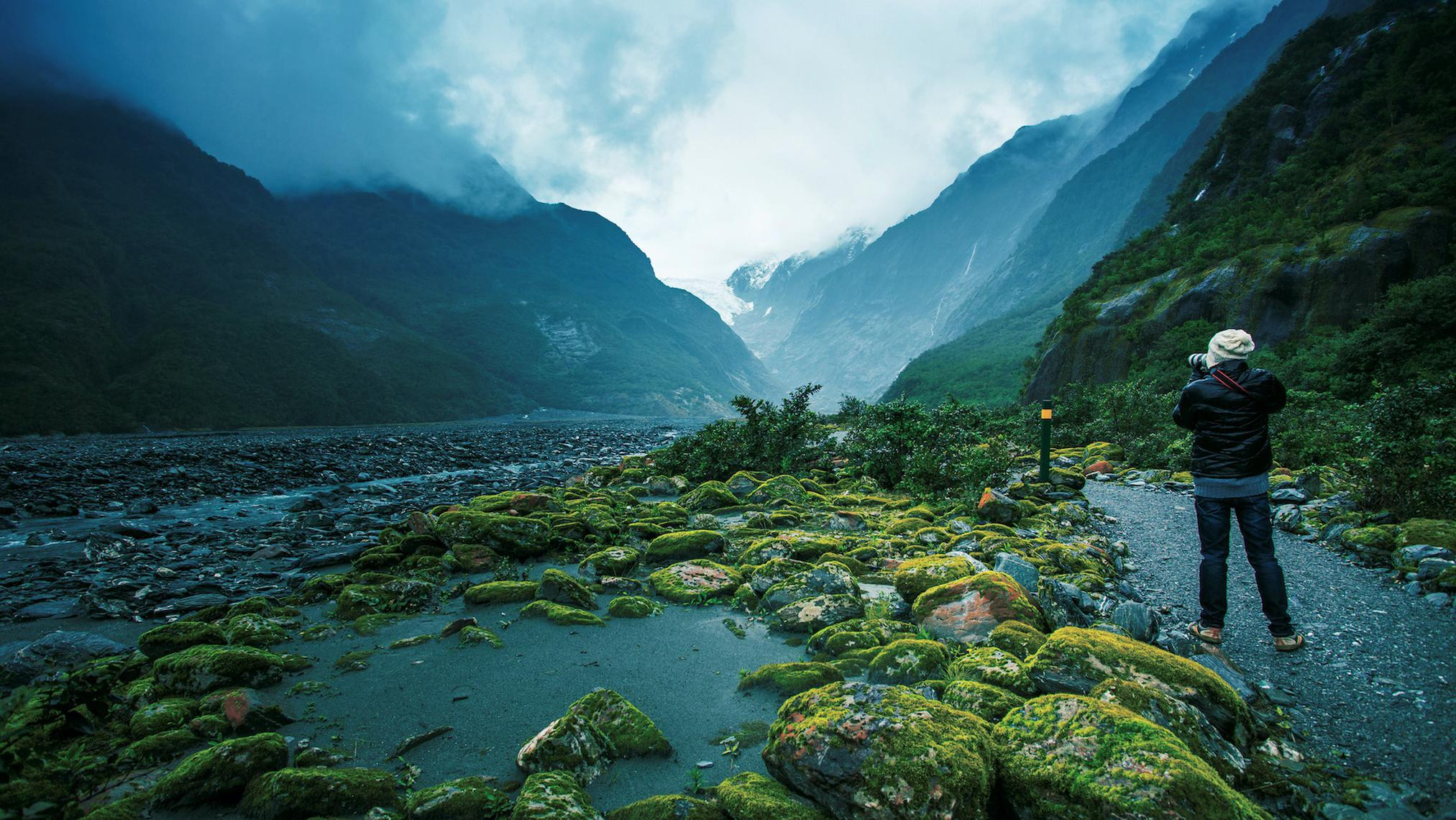
A location fixer for films is the person who confirms whether a location can actually be filmed and then helps make it workable for the proposed shoot. Not the striking view in a photograph, but the real question underneath it: can trucks reach it, can the crew work there safely, will the owner and the authorities allow it, and what will it cost to shoot on the day. A fixer answers those before a production commits, and then holds the ground so the shoot goes as planned.
It is worth saying what a location fixer is not. A fixer is not a permit agent who only files paperwork; not a line producer who runs the whole production; and not simply someone who “knows people.” A fixer is the local-knowledge and access layer of a shoot, sitting between the producer, the line producer, the authorities, the communities, the owners and the vendors. This guide sets out what a fixer actually does between the first script breakdown and the first shoot day, and it is one part of the service that line producers in India run.

What a Location Fixer Is
A location fixer is the local specialist a production relies on to turn a place into a workable set. The role is defined by access and knowledge rather than by a job title on the call sheet: the fixer knows which owner or authority controls a location, what a shoot is and is not allowed to do there, who to talk to, and what the place will demand of a unit. On a foreign or out-of-town shoot, that local knowledge is the difference between a location that looks right and one that can actually be delivered.
The fixer sits at the centre of a web of relationships. Above are the producer and the line producer who need the location signed off and costed; around are the authorities, the location owners, the residents and communities affected by a shoot, and the local vendors who supply the ground. The fixer is a connecting point that links those, translating what the production wants into what the location and its custodians will actually permit, a role distinct from the line producer’s and the location manager’s that the line producer, fixer and production-services boundaries set out.
What the fixer sells is not a list of places but judgement about them: which location will hold a unit, which owner is realistically open to filming, and which permission will come through in time. That judgement is built from working a territory over years, which is why a good fixer is engaged for a place rather than parachuted into a project, and why the role cannot be replaced by a database of locations.
What a Location Fixer Actually Does
The clearest way to see the role is by phase, from the first read of the script to the handover after wrap. At each stage the fixer carries a specific, concrete responsibility rather than a vague brief to “help with locations.”
| Phase | Fixer responsibility |
|---|---|
| Script breakdown | Identify candidate locations against the scenes |
| Research | Preliminary feasibility and shortlist |
| Scout | Physical inspection of each candidate |
| Access | Secure owners, authorities and community consent |
| Recce | Technical planning with the crew |
| Shoot | Local coordination and on-ground control |
| Wrap | Restoration, sign-off and handover |
Seen in sequence, the job is to remove uncertainty one step at a time. Each stage confirms something about the location until the remaining risks are known, priced or planned for. That is the value a fixer adds, and why the role is engaged during pre-production rather than added shortly before the shoot.

Scouting Is More Than Finding Beautiful Places
The common misunderstanding is that scouting is about finding good-looking places. Aesthetics are the easy part; the fixer’s scout is an operational assessment. It weighs whether trucks and equipment can reach and turn, where crew parking and a unit base can sit, how the sunlight falls across the shooting hours, whether generators are needed or power exists, what the sound environment is, how public movement can be controlled, what the safety and emergency picture is, whether the necessary permissions can be secured in time, and what the backup option is if the first choice falls through.
A location that fails any one of those can be un-shootable however photogenic it is. On the scout, the job is to surface those failures early, while the production still has time and lower-cost options to change the plan, rather than discover them on a shoot day when the whole unit is standing on the location.
The Location Scouting Workflow
Assembled in order, the path from script to shoot runs as a defined workflow. Appointing the fixer early is what lets each step de-risk the next rather than collide with it. The sequence below is how a location normally moves from script to shoot; each stage hands the next one something concrete, a brief, a shortlist, a photo deck, a permit.
- Script and scene breakdown
- Location brief agreed with the director and producer
- Desktop research and shortlist
- Preliminary authority, ownership and access check
- First physical scout
- Photo deck and options presented
- Budget and schedule impact assessed
- Producer shortlist or provisional approval
- Technical recce with the crew
- Permit application and location agreement progressed
- Final recce before the shoot
- Shoot, with the fixer coordinating on the ground
The sequence matters because a location committed before it has been costed, or a permit assumed before access has been confirmed, forces expensive rework. The workflow exists so that by the time a location is locked, the principal access, permission, cost and operational questions have already been answered or assigned a contingency.
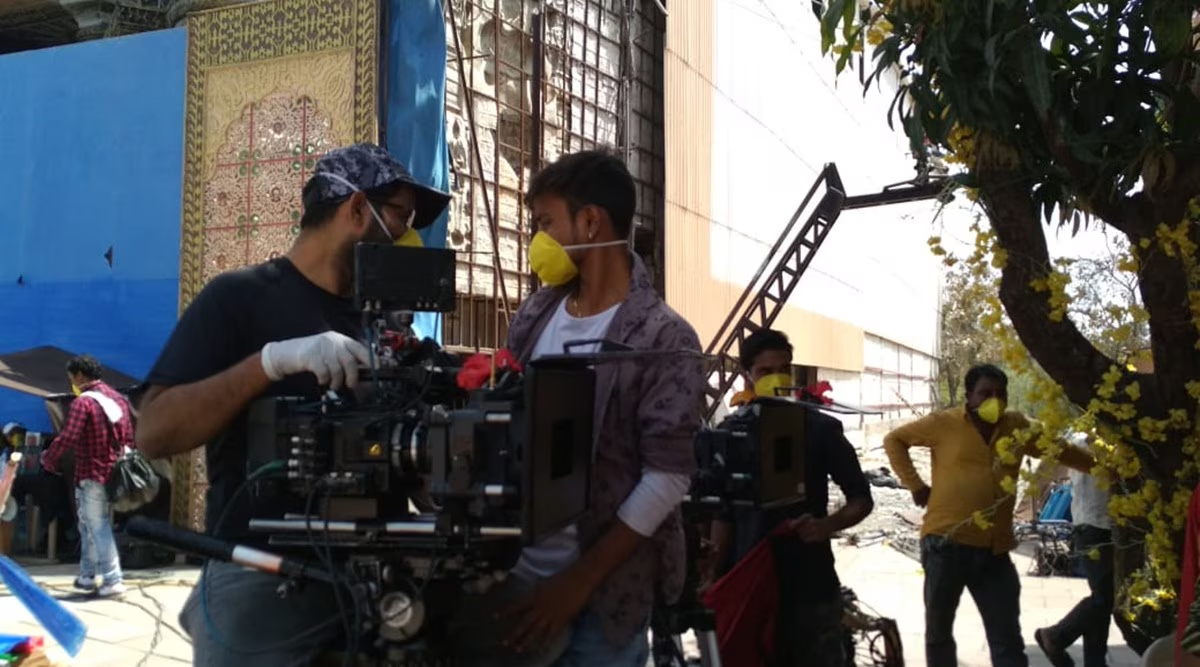
What a Location Fixer Looks For on a Scout
A disciplined scout is not a walk-around; it is a checklist applied consistently to every candidate location. That allows visually different options to be compared on the same operational terms rather than on how each one photographs, and it is what turns a scout into a decision the producer can approve with confidence.
| Area | What the fixer checks |
|---|---|
| Access | Can trucks and equipment reach and turn |
| Control and availability | Who owns or controls the site, whether the dates are free and whether exclusivity is possible |
| Parking and base | Space for crew parking and a unit base |
| Light | Sun direction across the shooting hours |
| Noise | Aircraft, traffic and ambient sound |
| Community | Residents, traders and who is affected |
| Safety | Emergency access and medical provision |
| Power | Existing supply or generator requirement |
| Communications | Mobile coverage, radio range and emergency contact reliability |
| Sanitation and welfare | Toilets, shade, drinking water and crew holding |
| Restoration | What must be returned to its original state |
Answered honestly for each option, this checklist is what turns a scout into a decision. It also produces the record the fixer hands the production: not a set of pretty photographs, but an operational read on whether each location can carry the shoot.
Location Fixer, Line Producer and Location Manager
The roles around a location are easy to confuse, and productions often expect one person to do all of them. They are distinct, and knowing the boundary is part of hiring correctly and of not paying one role to do another.
| Role | Core responsibility |
|---|---|
| Location fixer | Local intelligence, access and on-ground reality |
| Location manager | Manages and runs the approved locations |
| Line producer | The entire production, budget and schedule |
| Production coordinator | Daily logistics and communication |
On a small shoot one person may cover several of these; on a larger one they are separate jobs. The fixer supplies the ground knowledge, access and relationships that establish whether a location is viable. The location manager then manages the approved location within the production structure, often with the fixer continuing to support local access and stakeholder coordination.
Location Fixer or Permit Consultant
A location fixer and a permit consultant are also different, and the distinction is sharper than it looks. A permit consultant advises on or coordinates the formal permission process. A fixer tests whether the permitted location is operationally usable and whether access will hold under real shooting conditions: that the location behind the permit is reachable, workable and safe, and that the conditions attached to it fit the shoot. A permit to film a road is worth little if the fixer has not established that the road can be closed, that the trucks can reach it and that the residents will accept it. The permit route itself is covered in film permission in India; the fixer is what makes the permitted location real.

The Problems a Location Fixer Prevents
Most of a fixer’s value shows up as problems that never happen. An inaccessible approach road, a hidden restriction on a heritage site, a community that objects once the unit arrives, a political event or a religious festival that closes the area on the shoot date, a market or a school whose timings clash with the schedule, a truck ban on the only route in, a weather or security condition that was never checked, or construction that has changed the location since the recce, each of these can lose a shoot day, and each is the kind of thing a fixer catches in advance.
The pattern is always the same: the constraint is local, invisible from a desk and a photograph, and cheap to design around if it is known early. Knowing it early is the job. A production that skips a fixer is not saving the fee; it is carrying every one of these risks unpriced into the shoot.
None of this is exotic; it is the ordinary texture of shooting in the real world. A road that was open on the recce is dug up for the shoot, a temple that allowed a camera withdraws consent the week before, a market day the schedule ignored fills the street with a thousand people. A fixer’s advantage is not foresight but presence: they are in the territory, watching how it actually behaves, when the desk-bound plan cannot be.
When a Production Needs a Location Fixer
Not every shoot needs a dedicated fixer, but the threshold is lower than producers expect. Commercials, feature films, OTT and streaming productions, documentaries and international shoots all use fixers where the location is unfamiliar or controlled. The need rises sharply with public spaces, heritage and government sites, private estates, and any drone or aerial layer, because those are exactly the locations where access is conditional and local knowledge decides whether the shoot happens. On those, the fixer is usually engaged within the film production services a production commissions.
The deciding factor is rarely the size of the production. It is whether the crew already knows the location and controls it. A commercial inside a familiar studio may not need a dedicated fixer at all. A small documentary filming in an unfamiliar village, heritage property or government site almost certainly will.

Working With International Productions
Foreign productions rely on local fixers more heavily than domestic ones, because the fixer bridges the language, local access, authority relationships, transport conditions and vetted local vendors that a visiting crew cannot carry with it. Customs, equipment import and national production compliance normally sit with the line producer or production-services company, with the fixer supporting the local location layer. On an international shoot the fixer is often among the first local specialists brought into the scouting process, whether contracted directly or through the line producer or production-services company, and the quality of that local knowledge often determines whether the first shooting day starts smoothly or begins with delays.
In the Middle East that means film fixers in Jordan; in Southeast Asia, a film fixer in Bali.
In southern Africa the same role falls to a film fixer in Cape Town. Each knows their own market in a way no visiting crew and no single global contact can, which is why a fixer is the one production hire that is never generic.

Location Fixers Across India
Because location knowledge is regional, productions engage fixers by territory rather than nationally. A film fixer in Delhi knows Delhi and the NCR, while a production fixer in Ajmer and Rajasthan understands the desert and heritage west in a way no national list can substitute for.
The same principle applies elsewhere. Location fixers in Hyderabad work within the southern studio ecosystem, while a filming fixer in Bengaluru focuses on the city’s technology, corporate and commercial-production environment. The value is local familiarity rather than a database of locations, which is why productions choose fixers for the territory they know rather than for the project alone.
What a Location Fixer Delivers Before the Shoot
The output of the fixer’s work is a defined package the production receives before it commits, not a verbal assurance. It is the document a producer actually signs a location off from, so it is specific and operational rather than a set of impressions, and it is delivered per location so competing options can be compared like for like. Anything missing from it is a question the shoot will have to answer later, usually at greater cost. A complete pre-shoot delivery from a fixer typically includes:
- A photo deck of each option, shot for production not for beauty
- GPS locations and access routes
- Risk notes on each location
- The permit route, responsible authorities and indicative lead-time assumptions
- Local contacts, owners and authorities
- Parking and unit-base plan
- A working schedule impact
- Cost notes for each location
- Known restrictions and conditions
- Backup options where the first choice is fragile
Reviewed together, that package is what lets a producer lock a location knowing what it will actually take, rather than approving a place from a photograph and discovering the conditions later.

Hiring a Location Fixer
Engaging a location fixer works best when the production shares enough for a real feasibility read, not just a location name. Send the script or the scene breakdown, a moodboard or reference for the look, the crew size, the shoot dates, the equipment plan and the budget band, and a location fixer for films can return a shortlist tested for access, a permit and access path, cost notes and the risks on each option. Where a shoot spans several territories or needs the coordination that sits above any single fixer, the global line producers guide covers that layer. The scope of location fixer services is normally agreed against the number of locations, scout days, permit complexity and the level of shoot-day support required, so the engagement reflects the work actually being done.
Handled that way, the fixer turns a location from a hopeful photograph into a confirmed, costed and operationally assessed place to shoot. That is the real product: not a view, but a defensible plan for filming it when the unit arrives.
