
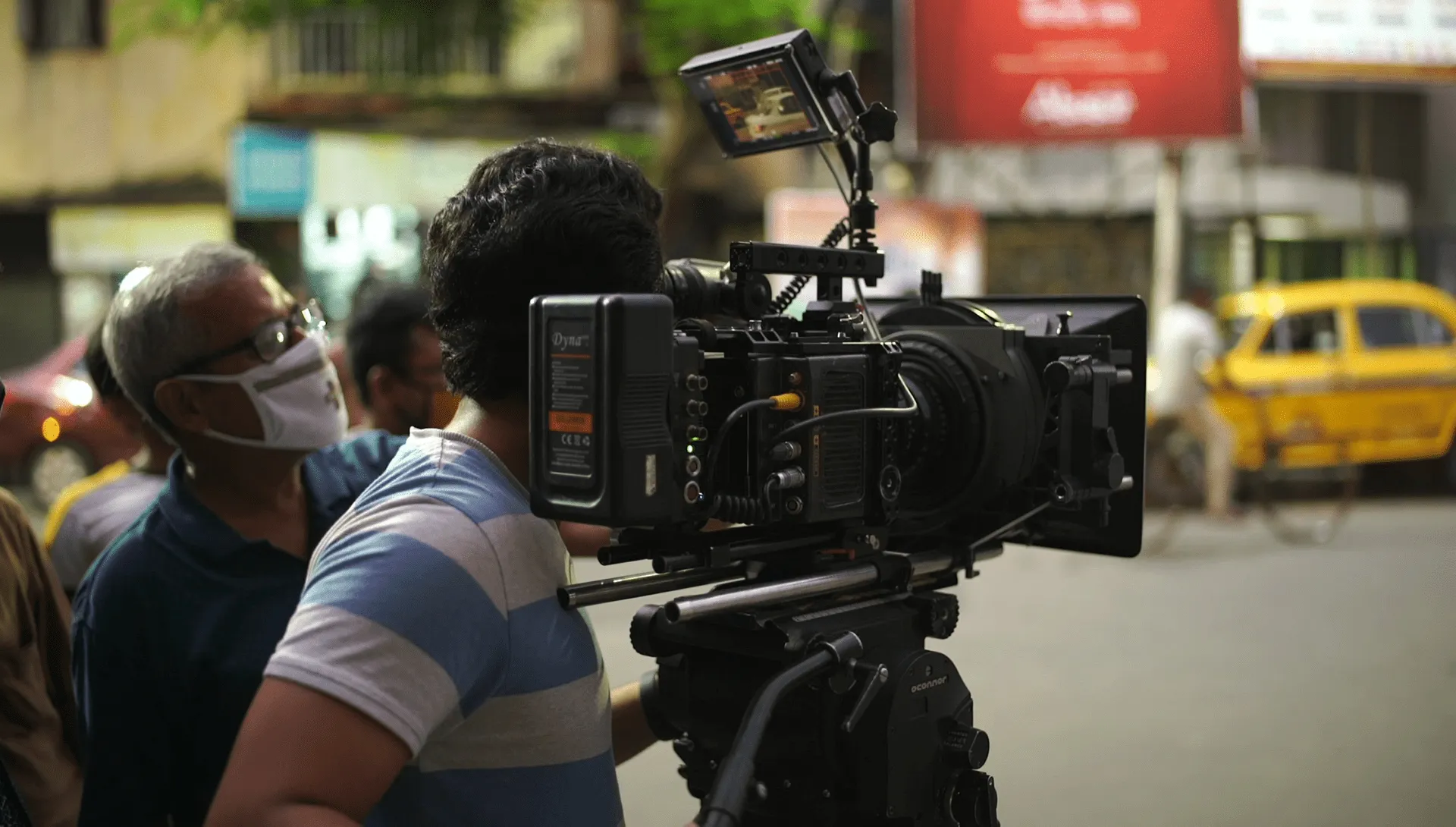
Kolkata gives an international production a look almost nowhere else in India carries: a dense colonial core, the Hooghly riverfront, the tram network and a living heritage city, supported by a Bengali film industry clustered around the Tollygunge studios. A line producer Kolkata is what turns that raw material into a permitted, budgeted and deliverable shoot. This page covers the city operation itself, with the wider state locations and the North Bengal hills handed to their own specialist guides rather than crowded into one article.
Line Producer and Film Fixer in Kolkata: Two Complementary Roles
The line producer and the fixer cover two different parts of the same shoot, and a production that understands the split spends its budget better. The line producer is the financial and logistical control: they cost and track the budget, hold the vendor and location contracts, arrange production insurance, file the permits and carry accountability for delivering the schedule. On a heritage-heavy Kolkata schedule that means municipal and police coordination, the location-owner agreements and the compliance file all sitting under one accountable plan rather than a set of separate arrangements that only meet on the shooting day.
That control function is what a producer is really buying when they engage a line producer in Kolkata. The role runs the production office, sets the reporting rhythm the financier or studio expects, manages the cash flow across a schedule that mixes lower-cost local days with expensive imported ones, and keeps the paperwork trail that an international production, and any later audit, needs. It is the difference between a shoot that is coordinated and one that is merely arranged.

What the Film Fixer Adds
The film fixers in Kolkata who work alongside the line producer are the access and coordination layer: location-owner contacts, local crew registers, ground transport within the city, community liaison in residential and religious areas, and the on-the-day problem-solving that keeps a schedule moving when a street closure or a crowd shifts the plan. The two roles are complementary, not alternatives. The fixer establishes what is reachable on the ground and in what window; the line producer sequences that against the schedule, the budget and the permit filings, and holds the contracts that make the shoot accountable.
Most international projects engage both inside a single structure rather than choosing one over the other. A fixer working without production control can open a door and still leave a schedule exposed, because access is only useful once it is costed, contracted and slotted into a viable order; a line producer without local access on the ground is filing into a city they cannot read. Engaging a film fixer in Kolkata under the line producer’s structure is what lets a foreign production treat access and control as one job rather than two loosely connected ones.
Filming Locations in Kolkata
Kolkata’s location profile is denser than its size suggests. Inside the city a production moves between colonial heritage zones, active river ghats, the Tollygunge studios, contemporary urban districts and transitional industrial landscapes, each with its own access conditions and filing route. Because most of these are living public or private spaces rather than preserved sets, a Kolkata schedule is built as a series of location-specific operating windows assembled into one plan, not as a continuous studio run. A film fixer in Kolkata confirms the access route and operating window for each location before it is committed to the director.
Colonial Heritage Zones and North Kolkata
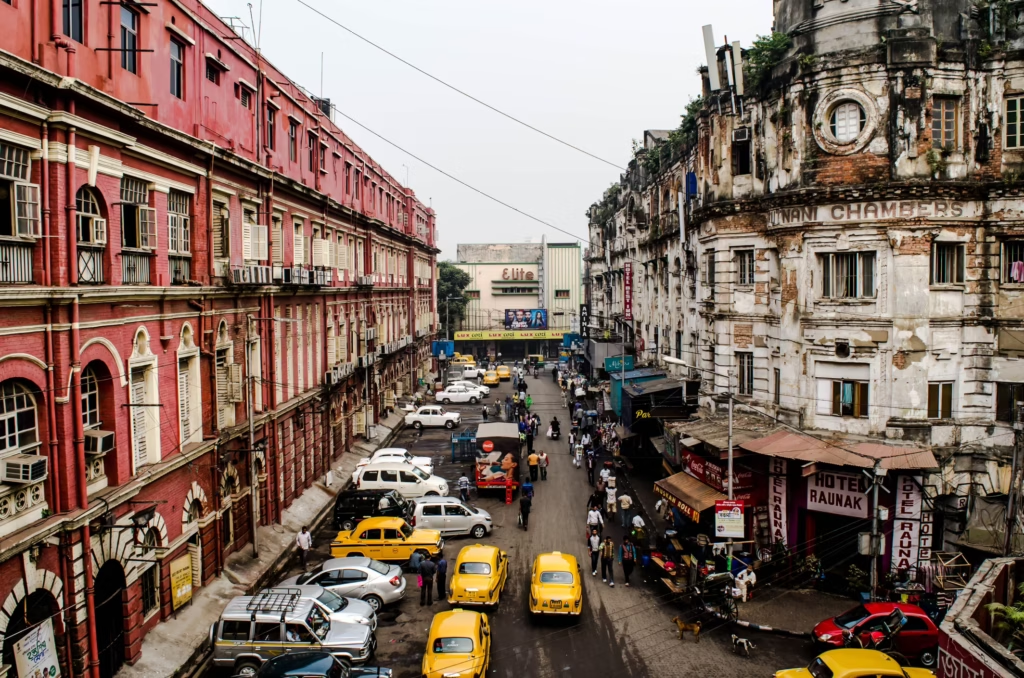
The colonial belt runs from Chitpur Road and Kumortuli in the north, through the Maidan and the Victoria Memorial, to the Park Street zone in the south, and it photographs as distinctly eastern Indian rather than generically South Asian. North Kolkata’s heritage core, the palatial mansions of Shyambazar, the potters’ quarter of Kumortuli, the Chinese-origin Tiretti Bazaar and the interiors of houses such as Marble Palace, is the most visually distinctive part of the city and the most operationally demanding. These are active residential and commercial spaces under private or family ownership, so access is arranged by direct agreement with the owner and by community liaison in the surrounding lanes, not through a public application counter.
The practical consequence is lead time and etiquette rather than a form. A heritage interior may be available on terms specific to that family or trust, with constraints on crew size, rigging and hours, and the schedule has to be built around those terms rather than assuming a standard permit window. The heritage core is also the tram and market fabric that gives the city its texture, which means a period exterior often carries live traffic, vendors and residents into the frame and a corresponding layer of municipal and police coordination.

The Hooghly Riverfront and the Ghats
The Hooghly is one of Kolkata’s principal production assets. Princep Ghat, Babughat and the Millennium Park waterfront give water-adjacent environments with the scale of a major river system. Dawn is the prized window, when the light off the river and the morning rituals produce the texture cinematographers come for, and it is also the most constrained: the Hooghly is tidal, so the shot has to align tide, light and permitted hours at once.
Authority at the ghats is not a single line. A given sequence may involve the municipal authority for the ghat structure itself, the state’s inland water transport arrangements for anything on the river, and police coordination for crowd management and for equipment such as a crane or jib on the steps. The blanket assumption that one body covers the whole ghat is where day-of problems come from, so the split is confirmed ghat by ghat and the applications filed together. Larger rigs add a structural check on the steps and a further police permission on top.
Studios, Contemporary and Industrial Kolkata
Beyond the heritage core the city carries two other registers a schedule often needs. The Tollygunge studios provide a controlled interior base for the parts of a shoot that should not be exposed to street conditions, while Salt Lake and New Town give the clean contemporary architecture and glass that a present-day or corporate scene requires, a counterpoint to the colonial fabric within the same production base. The old dockside and mill landscapes along the river add a transitional industrial texture. Holding period, contemporary and studio environments inside one city is what lets a production shoot a layered story without splitting the unit between cities. The mix also gives the schedule its own weather cover, because studio interiors absorb the days when river or street conditions turn, which is part of why a single Kolkata base can carry a story that ranges across periods and registers.
Permit Routes for a Kolkata Shoot
West Bengal does not run a single film-permit gateway, and treating one body as the source of every clearance is the most common planning error here. The West Bengal Film Development Corporation is the state’s film-development and Rupayan laboratory institution, not the universal permitting authority. Municipal shooting permissions inside the Kolkata Municipal Corporation area are handled online through the state’s Urban Development and Municipal Affairs system, while state-level facilitation for outside productions is listed by India Cine Hub through Nandan, the government cultural centre whose CEO is the West Bengal nodal contact. Individual locations keep their own authority on top of that, so a real Kolkata schedule runs several parallel filings rather than one master permit.

Foreign Productions: the National Route
Foreign projects begin nationally rather than at state level. The application goes to India Cine Hub and the Ministry of Information and Broadcasting, and a complete application normally takes no more than three weeks to process, longer where Home Affairs or External Affairs consultation is needed. India Cine Hub handles defined formats, feature films, TV and web shows and series, and reality shows, while documentaries, AV commercials and music videos follow the applicable Ministry of External Affairs route. The I&B permission letter then supports the location-specific permissions obtained afterwards, some of which are dealt with directly with the local authority. There is no requirement to route through a corporation with special credentials; the precise applicant arrangement, whether a service company or a co-producer carries the filing, depends on the format and how the production is structured on the ground.
Location-Specific Authorities
From there the authority follows the location. The Howrah Bridge, Rabindra Setu, is administered by Syama Prasad Mookerjee Port, Kolkata, not a railway, so filming on or around it is arranged with the port rather than a rail office. The Victoria Memorial is a central-government cultural institution with its own application route. Railway filming, including the UNESCO-listed Darjeeling Himalayan Railway, which sits within Northeast Frontier Railway, is permitted by officers authorised by the railway administration rather than by any society or club. Where a monument falls under the Archaeological Survey of India, its own permission applies. Drone work runs on the national DGCA and DigitalSky framework with district police coordination alongside.
Because these authorities do not share a queue, the discipline that keeps a Kolkata schedule intact is filing them in parallel from the start of prep rather than one after another. Structured film permit services in India coordinate the parallel tracks, expose dependencies early and reduce avoidable sequencing delays.
Local Crew, Studios and Equipment
Kolkata’s production infrastructure has been built through a century of continuous Bengali film industry work, a depth that distinguishes it from cities whose crew markets grew mainly out of advertising. Established local departments include cinematography, art direction and costume, shaped by a visual tradition that runs from the Ray, Sen and Ghatak era into current Bengali filmmaking and translates directly into competence with natural light, practical locations and period detail. That heritage as a filming subject is covered separately in our Kolkata film production page; on a working shoot its value is a crew culture that treats character-driven and literary formats as a discipline, which is what OTT and co-production work increasingly asks for.

Crew Depth and Language
Below the line, grips, gaffers, floor crew, transport and catering are available in sufficient depth for single-unit drama and mid-scale commercial work, with English functional at head-of-department level and Bengali and Hindi both operating fluently below it. Very large multi-unit productions supplement senior technical crew from Mumbai through the national network, which the logistics chain supports without much friction. Art direction carries a particular advantage for period and literary work, because the city itself is the reference environment for much of the colonial and early-independence aesthetic and its designers work from that vocabulary directly rather than from research alone.
Tollygunge Studios and Equipment
The Tollygunge studio cluster is the physical centre of Kolkata’s production infrastructure, with sound stages, backlot space and post facilities built up over decades of Bengali film work, concentrated closely enough that a production can source much of its requirement within a compact geography. Equipment availability is best quoted against the final camera and lighting package, with current-generation systems obtainable given reasonable lead time and specialty gear not held locally sourced through established channels, some of it from Mumbai. The fixer network for specialty requirements reaches period vehicles from private collectors, river craft for Hooghly sequences, narrow-gauge access for North Bengal, and agricultural vehicles for the interior, none of which keep a public production-facing counter and all of which are reached through the local coordination layer.
Budget and Schedule Control
The economics can work in Kolkata’s favour, and that is much of what line producers in Kolkata offer an international budget. Local quotations can come below equivalent Mumbai or Delhi packages, but every department and equipment package should be re-quoted for the final brief, so the saving is treated as an indicative planning advantage rather than a fixed rule. A line producer staffs the standard departments locally and imports only the specialist layer, the specialist equipment or senior technical roles that are unavailable locally for the confirmed dates, from a line producer Delhi or line producer Mumbai base sitting on top of a below-the-line that still lands under a fully metro-sourced shoot.
That saving is real but conditional on planning. The specialist import has to be identified in prep, because pulling it in late erodes the advantage, and the transport of that gear and crew into the city has to be costed against the schedule rather than assumed. Modelled properly, the structure is a local core carrying the bulk of the shooting days with a thin, deliberately scheduled specialist layer on top, and that structure is the core of what production services in Kolkata offer a cost-conscious international budget.
Seasonal Windows and Tide
Schedule control is the other half of the budget. The common planning window runs from October through February for clear light, moderate temperature and manageable humidity; the monsoon from June to September restricts the ghats as water rises and degrades regional road access. Dawn river sequences carry tide-table coordination as a primary scheduling constraint, not an afterthought, and heritage and crowd locations carry police coordination that has to be filed early. A line producer builds these constraints into the shooting order so the schedule that looks viable on paper survives contact with the ground, sequencing the exposed river and street days where the window is reliable and holding studio and interior work as the weather cover.
Routing Beyond the City: West Bengal and the East
Kolkata is also the base from which the wider region is reached, but each leg has its own owner rather than being folded into the city proposition. The statewide location spread, from the Sundarbans delta to the terracotta temple towns and the coast, sits in the West Bengal filming locations guide. North Bengal and the hills are run from the same Kolkata logistics base but executed on the ground by a line producer Darjeeling, and a North Bengal leg should be modelled against the current Darjeeling film production costs before the unit leaves the city.

Further out, Kolkata is the historic air and sea gateway to the islands, where a line producer Andaman Nicobar handles clearances an island shoot may require, restricted-area, forest, defence or other location-specific approvals depending on nationality and the confirmed island route. Within the national picture the city is the eastern node of a network that connects to a line producer India structure for multi-state work, with Mumbai carrying post and above-the-line talent and the northeastern states reached onward from here. Handing each leg to its own owner keeps this money page focused on the city while still routing a production cleanly to the rest of the corridor.
Engaging a Line Producer: Brief and First Steps
An engagement here starts from a short brief: the locations or looks the production is chasing, the shoot window and rough schedule, the unit size and camera package, whether any foreign crew or equipment is coming in, and the budget band. Lead time is not a fixed figure; it depends on the locations, the format, whether central-government monuments, port or railway property or dawn river work are involved, and any foreign-crew requirement, so a heritage-and-river schedule needs more of it than a contained city shoot.

From those inputs the line producer’s first deliverable is a feasibility map: which locations are reachable in the proposed schedule, the filing route and cost against each, and where the order needs adjusting to hold the budget. It names the authority behind each location, flags the ones with real lead time, and turns the creative wish list into a schedule that can actually be permitted and paid for. What a line producer Kolkata brings to that map is preparation and specific local knowledge over volume and speed, because the permit authorities are several and location-specific, the crew culture is its own, and the river and the heritage core impose constraints that reward being read correctly before a single day is committed.
