
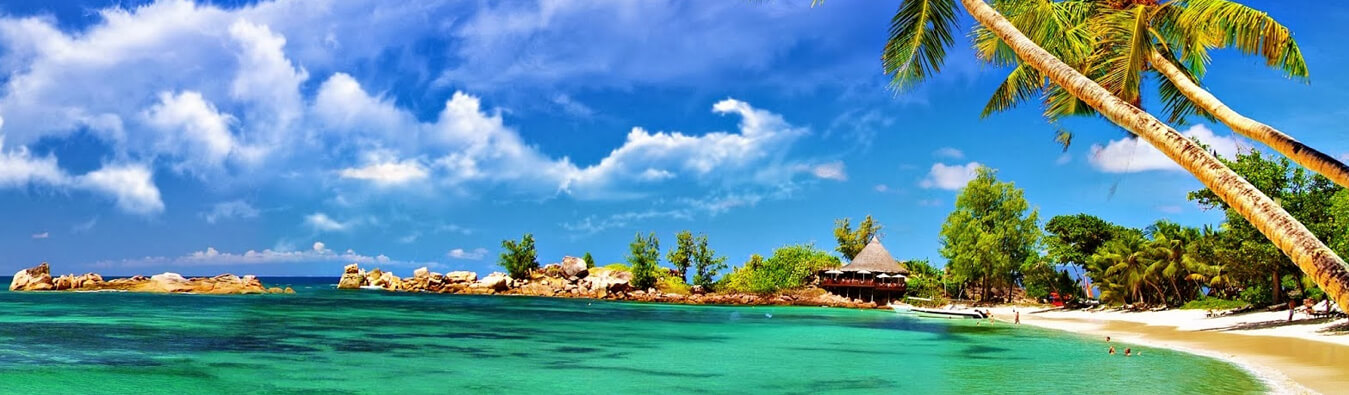
Filming in the Andaman & Nicobar Islands offers some of the most pristine beaches, rainforest and marine environments in India — alongside some of the country’s most controlled access. Engaging a line producer in the Andaman & Nicobar Islands turns a remote, multi-permit, defence-sensitive archipelago into a workable shoot, with a single point of control over clearances, logistics and crew.
These islands are not an open location. The territory is a notified Restricted Area, large parts are reserved forest, marine national park or tribal reserve, and the archipelago hosts the tri-service Andaman & Nicobar Command — so almost every frame sits behind a permit. The flip side is exclusivity: the islands are barely filmed, so the look is fresh on screen rather than recycled. Experienced film fixers in the Andamans hold the relationships across the island administration and the forest, defence and tribal departments that decide whether a shoot runs on schedule or stalls before it starts.

Why the Andaman & Nicobar Islands Need a Line Producer
Few Indian locations combine this much visual reward with this much administrative and logistical friction. The value of a line producer here is not creative — it is the difference between a confirmed, compliant shoot and a unit stranded by a missing clearance or a cancelled ferry. Every decision, from which island to base on to when gear flies in, has a permit or a weather window attached to it. The islands have to be approached as a protected area first and a location second — that mindset is what keeps an Andaman schedule intact.
A Restricted-Area, Multi-Permit Territory
The Andaman & Nicobar administration runs a single-window system through its Directorate of Information, Publicity and Tourism, which screens the script and coordinates approvals. But the single window does not replace the underlying clearances. A typical shoot still needs separate No Objection Certificates from the Forest Department for reserved and protected forest, biosphere and marine zones; from the Andaman & Nicobar Command for any defence-adjacent area; from the Art & Culture wing for sites of historical importance; and from the Tribal Welfare department wherever a route touches a reserve. Mapping which of these a schedule actually triggers, and starting them in parallel rather than in sequence, is the line producer’s first job.
Remote Logistics and Limited Local Crew
Port Blair sits over 1,200 kilometres from the mainland, reachable only by air through Veer Savarkar International Airport or by passenger ship. The local crew base is small and built around documentary, tourism and event work, so most departments, specialist technicians and equipment are flown in from Chennai, Kolkata or Mumbai. A line producer plans that movement — crew rosters, air-freight or excess-baggage gear, inter-island transfers and accommodation across several islands — as carefully as the permits, because almost nothing can be sourced at scale once a unit is on the islands and a forgotten item is a flight away, not a phone call.

The Andamans as a Tropical Stand-In
Beyond their own identity, the Andamans give Indian and international productions a domestic stand-in for tropical settings that would otherwise mean an overseas shoot. White-sand beaches, turquoise water, coral reefs and dense rainforest can double convincingly for the Maldives, Thailand, the Seychelles or a generic Pacific island — without international customs, foreign-unit costs or a separate carnet for the bulk of an Indian production.
The trade-off is the permit and logistics barrier this page describes: the islands are cheaper than a foreign tropical shoot in fees and rupee terms, but more demanding in lead time and movement. For productions that plan for that, the Andamans deliver a look most audiences have not seen a hundred times, with coordination handled in English and Hindi and crew drawn from the mainland. Getting that balance right — when the islands are worth it and when a more accessible coast will do — is exactly the judgement a line producer brings.
Permits and Clearances for Filming in the Andamans
Permission in the Andamans is layered rather than singular. The administration’s single window is the entry point, but the substantive control sits with the forest, defence and tribal authorities, and foreign crews carry an additional immigration layer on top. Detailed national guidance on the underlying process sits in our film permission in India guide; the islands add their own clearances on top of it.
| Clearance | Department / authority | When it is required |
|---|---|---|
| Film shooting permission (single window) | Directorate of Information, Publicity & Tourism | Every shoot — entry point and script screening |
| Restricted Area Permit (RAP) + visa | Immigration / Ministry of Home Affairs | All foreign nationals and crew |
| Forest NOC | Forest Department | Reserved/protected forest, biosphere, marine park, underwater |
| Coastal (CRZ) compliance | Coastal / environment authority | Coastal and shoreline filming where CRZ applies |
| Defence NOC | Andaman & Nicobar Command | Defence-adjacent areas; certain aerial and drone work |
| Historical-site clearance | Art & Culture wing | Cellular Jail and other monuments |
| Tribal-area NOC | Tribal Welfare department | Any route touching a tribal reserve (e.g. the Andaman Trunk Road) |
Lead times are the real constraint, and they stack rather than overlap. As an indicative guide, allow for the following before a confirmed shoot date:
| Clearance | Indicative lead time |
|---|---|
| Single-window film application | 2–4 weeks |
| Forest NOC | 3–6 weeks |
| RAP + visa (foreign crew) | Several weeks |
| Defence clearance | Variable |
| Marine / underwater approvals | 4–8 weeks |
The Single-Window System and Script Screening
The Directorate of Information, Publicity and Tourism is the nodal department for film shooting permission and operates the single-window clearance for the islands. Applications include the script or a synopsis for screening, crew and equipment lists, the shoot locations and dates, and an undertaking to follow island regulations. The window coordinates the other departments, but the timeline is set by the slowest NOC in the chain, not by the window — so a production that submits a complete, accurate application early avoids the most common cause of delay, which is rework on an incomplete file.
Restricted Area Permit (RAP) for Foreign Crews
The Andaman & Nicobar Islands are a notified Restricted Area. Foreign nationals must hold a valid visa and a Restricted Area Permit, generally issued for thirty days and extendable, and may only visit islands open to foreign tourists. Foreign film crews must operate strictly within the RAP conditions, declare equipment, and stay clear of closed zones, and large parts of the Nicobar group are barred to foreigners altogether. Because the RAP, the film permission and the equipment plan all interlock, an international production builds this timeline first and lets the rest of pre-production follow it.
Forest, CRZ and Marine NOCs
Most of the land area is reserved or protected forest, with biosphere and marine national park status over large zones, and the entire coastline falls under Coastal Regulation Zone rules. Filming in these areas — and any underwater work in the Mahatma Gandhi Marine National Park or comparable protected waters — requires a Forest Department NOC carrying conservation conditions on movement, lighting, generators, waste and crew numbers. Even a straightforward beach setup sits under CRZ, so construction, vehicles and night lighting are constrained. Marine and reef shoots are achievable, as our forest and wildlife filming framework sets out, but only within these ecological limits and usually within a defined season.
Defence and Tribal-Area Restrictions
The islands are strategically sensitive and home to the tri-service Andaman & Nicobar Command, so filming near any defence establishment needs a command NOC, and drone and aerial work is heavily restricted across much of the territory. Tribal reserves add a strict, non-negotiable layer. The Jarawa reserve along the Andaman Trunk Road runs under a timed convoy system with no stopping and a complete ban on photographing or filming residents; North Sentinel Island is closed entirely and patrolled; and videography in tribal areas is prohibited by regulation. A line producer routes the schedule to avoid these zones, secures Tribal Welfare clearance wherever a road or sea route passes one, and briefs the unit so a single careless shot does not jeopardise the whole permit.
Filming Locations Across the Andaman Islands
Almost every Andaman location is a protected or regulated site, which is exactly why local execution matters. The headline locations fall into three clusters: the Port Blair base, the resort islands, and the marine and cave sites that need the heaviest coordination.
Port Blair and the Cellular Jail
Port Blair is the production base and the gateway for everything else. Its signature location is the Cellular Jail National Memorial — the colonial “Kala Pani” prison, now a monument that requires Art & Culture clearance and hosts the evening light-and-sound show. Nearby, Ross Island (Netaji Subhash Chandra Bose Island) offers colonial ruins reclaimed by forest, while Corbyn’s Cove, Chatham and the harbour give accessible coastal and industrial-heritage frames close to base, useful for establishing and dialogue scenes that do not justify an inter-island move.

Havelock, Neil and the Beaches
Havelock Island (Swaraj Dweep) is the most filmable of the resort islands, home to Radhanagar Beach — long rated among Asia’s finest — along with Kalapathar and the Elephant Beach reef, and the islands’ main cluster of dive operators for underwater units. Neil Island (Shaheed Dweep) adds Bharatpur and Laxmanpur beaches and the Natural Bridge rock formation. All are reached by government or private ferry and sit under CRZ control, so coastal setups carry CRZ and forest conditions where they apply, and resort accommodation has to be blocked well ahead in season.

Baratang, Marine and Underwater Sites
Baratang Island holds the limestone caves and the mud volcano, but the road there runs through the Jarawa reserve on the Andaman Trunk Road, with all its convoy and no-filming rules; a sea route is the alternative. Underwater and reef work centres on the Mahatma Gandhi Marine National Park and sites such as Jolly Buoy, where access is seasonal, plastic is banned, and a Forest Department NOC plus a qualified dive and safety team are mandatory. These are the locations where a fixer’s coordination — boats, tides, dive cover and clearances aligned to a single day — earns its budget.
Nicobar and the Closed Islands
For most productions, “Andaman & Nicobar” means the Andaman group in practice. The Nicobar Islands — including Car Nicobar and Great Nicobar with Indira Point, India’s southernmost tip — are largely restricted by a combination of tribal protection for the Shompen and Nicobarese, defence sensitivity and limited civilian access, and are closed to foreign nationals. Filming there is exceptional and case-specific, so a realistic Andaman schedule is built around the Andaman group and treats the Nicobar islands as effectively off the table unless a project has a specific, sanctioned reason to be there.
Production Logistics, Crew and Equipment
On the islands, logistics is the production. Distance, weather and limited capacity mean the schedule has to be built around movement windows rather than against an ideal shooting order, and the line producer’s plan is judged on how well it absorbs the things that will go wrong.
Getting Crew and Gear to the Islands
Crew and equipment reach the Andamans by air through Port Blair, principally from Chennai and Kolkata. Camera, lighting and grip packages travel as air freight or excess baggage, which caps how much gear can move on any given flight and rules out last-minute additions. International productions clear their equipment through the mainland gateway before flying it on, so carnet and customs handling happens at Chennai or Kolkata rather than on the islands. Redundancy — backup gear, buffer days for weather, and a plan for flight cancellations — is built into every travel and equipment schedule rather than added as an afterthought.
Inter-Island Movement and Marine Shoots
Once on the islands, units move by government and private ferries, chartered boats and occasional aviation services subject to availability, all working within tidal and weather windows that no production can override. Marine and underwater sequences add boats, dive teams and safety cover, and depend on sea conditions the calendar cannot guarantee, so they are scheduled with alternatives ready. Crew and gear flow into the Andamans through mainland hubs, which is why a line producer in Chennai often sits upstream of an islands shoot, staging crew and equipment before the final leg.

Season, Connectivity and Accommodation
The reliable shooting window runs from October to May. The south-west monsoon between roughly May and September brings rough seas and ferry disruption that can strand a unit between islands, and even in season a passing system can close the water for a day. Accommodation concentrates in Port Blair and the Havelock and Neil resorts and fills in peak tourist season, so a line producer blocks crew rooms and unit space far ahead rather than assuming availability, and keeps the schedule flexible enough to reorder around a lost ferry day.
Costs, Lead Times and Engaging a Film Fixer
The Andamans invert the usual cost logic. The permit fees themselves are modest; the real budget sits in moving people and equipment to a remote archipelago and absorbing the schedule risk that weather and clearances introduce.
Budgeting an Andaman Shoot
The main cost drivers are crew and equipment travel and freight, marine and boat hire, accommodation across multiple islands, and a genuine contingency for weather. Lead times — not fees — are the binding constraint: forest, defence and tribal NOCs and foreign RAPs take weeks, so a location confirmed late can cost a whole leg of the schedule. The discipline on an Andaman budget is to fund the logistics and the lead time honestly, and to treat the permit line as the easy part. Set against a comparable overseas tropical shoot, the islands often come out ahead in rupee and customs terms — but only once the lead-time and weather contingency are funded honestly.
What a Film Fixer in the Andamans Handles
A film fixer in the Andamans runs the shoot end to end: the single-window application and every stacked NOC across forest, defence, Art & Culture and tribal welfare; RAP and visa coordination for foreign crew; location recces; marine and dive coordination; inter-island transport; accommodation; local labour; on-set safety; and environmental compliance. That single thread of control, held by someone who already works with the island authorities week to week, is what makes an Andaman shoot deliverable rather than aspirational. Wider national context sits in our line producer in India guide.
Planning a Shoot in the Andaman & Nicobar Islands
The pattern is consistent: the locations are extraordinary and entirely achievable, but only for productions that treat permits and logistics as the first creative constraint rather than an afterthought. Built into the schedule from the first recce — with the right clearances mapped, RAPs and NOCs in hand, and movement planned around weather and ferries — the Andamans’ beaches, rainforest and marine sites are among the most distinctive backdrops available in India. With the right line producer and film fixers in the Andamans, that potential becomes a confirmed, compliant shoot rather than a logistical wall.
