
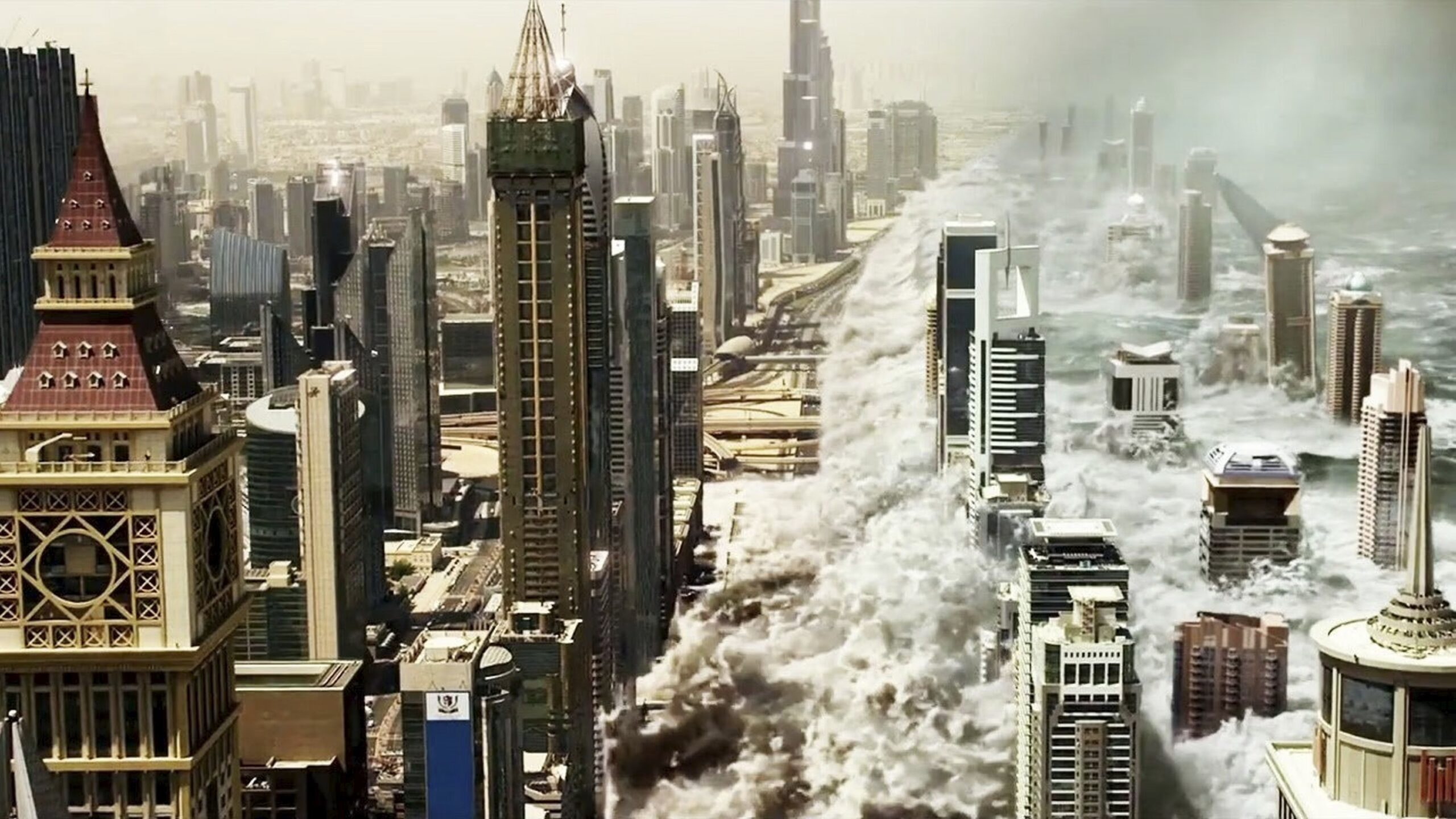
Dubai is where many international productions in the Gulf assemble crew, book equipment and plan imported camera packages before moving into a wider regional schedule. A line producer Dubai desk is the operational anchor for that: filming permits, crew, equipment, customs clearance and transport all run through one accountable desk. Working as film fixers in Dubai, the same team handles location access and government liaison for visiting productions, from a single commercial day to a multi-week feature. Dubai is also the entry point for the wider line producer Middle East corridor, the base most MENA productions move crew and equipment through.
What follows is written for productions that already know what line production is and want to know how it works here: how Dubai permits are issued, what crew and equipment the city holds, how customs and equipment entry clear, and how a Dubai base extends across the UAE and the GCC. The aim is to help you budget and schedule a Dubai shoot, not to explain the role in the abstract.
Production Services for Filming in Dubai
A Dubai shoot draws on a connected production-services base that the line producer holds together: filming permits, equipment, crew, customs planning and transport. Most of these are concentrated in the city itself, which is why many productions across the UAE staff and supply out of Dubai even when shooting in another emirate. Every one of those services affects the schedule, which is why they are budgeted together rather than procured separately.
Permits run through the Dubai film authority, with separate approvals where a location sits inside a free zone, a private development or a different authority. Each application carries the locations, crew size, equipment list and dates, and the timeline has to be planned back from the shoot day rather than assumed. Streets, beaches, highways and commercial districts each bring their own permission and notice period.
Equipment, Crew and Customs Clearance
Equipment is a Dubai strength. The main rental houses for camera, lighting and grip are concentrated here, so a production can build a full package locally instead of flying one in. When equipment comes from abroad, the customs route should be fixed before shipment. Standard temporary admission normally requires a refundable customs deposit or guarantee, while qualifying professional equipment covered by an ATA Carnet follows the carnet procedure without that deposit. The freight forwarder and Dubai Customs broker confirm the equipment list, port of entry and re-export documentation before dispatch.
What is reliably available locally and what still gets flown in is worth knowing early. Dubai’s rental houses carry the mainstream digital cinema bodies, lensing, lighting and grip most shoots need, along with cranes, technocranes and stabilised remote heads. Highly specialised or newest-generation kit, or a specific package a DP insists on, may still travel with the production, and that decision feeds straight into the equipment entry and customs plan.
Crew is hired the same way. Department heads may travel with the production while the technical and support crew are engaged locally, and building those crew and vendor structures is the core of structured film production services. On most UAE jobs the crew is drawn from the Dubai pool even when the camera turns over in another emirate, which keeps day rates and call logistics consistent across a regional schedule.
Dubai as a Global Film Production Hub
Dubai’s pull as a production base comes from infrastructure that is unusually deep for the region, which is what a film fixer is really selling when they pitch the city. The city runs several studio complexes with sound stages, production offices and post facilities, alongside rental houses that meet international standards and a major air-cargo hub that moves equipment and crew in and out quickly.
Dubai Studio City and the Media City zones give productions controlled stage space for set builds, contained lighting and effects work. Editing, sound and VFX facilities inside the media zones let a production keep parts of post in the city rather than relocating, which matters on a schedule that has to wrap and deliver without moving territory again.

Why Studios Keep Choosing the Base
For incoming studios the appeal is predictability: stable administration, strong security, fast connections to Europe, Asia and North America, and an established central filming-permit system. Within about an hour’s drive the same base reaches skyline, desert, coast and industrial backdrops, so productions often clear several looks from a single Dubai unit instead of relocating between countries.
That connectivity is also why a line producer will treat Dubai as the launch point for a regional tour. A production can assemble its core unit in Dubai and coordinate onward movements from one base while completing the separate customs, visa and permit requirements in every destination. This reduces duplicated planning and vendor setup, but each country retains its own clearance requirements. On a multi-country schedule that saves both time and the repeated customs and visa load.
Dubai as the UAE and GCC Production Hub
For productions working beyond the UAE, Dubai functions as the practical base for the wider Gulf, which is why a line producer will hold the regional schedule from here. The established film production companies in Dubai hold deep crew, equipment inventory and customs experience, which is why many projects shooting in Saudi Arabia, Qatar, Oman, Bahrain or Kuwait are staffed and serviced out of Dubai. Productions entering Saudi Arabia in particular often stage through Dubai, where the regional production accountants, payroll and equipment logistics are already anchored. Our Saudi Arabia Film Production Guide covers the Kingdom-side rebate, permits and customs a Dubai-based unit needs to plan for.
This is what makes a Dubai-based line production company useful as a regional anchor rather than a single-city vendor, because the film production services Dubai offers reach across the UAE and the GCC. That reach is why film fixers in the UAE are usually booked through a Dubai desk rather than emirate by emirate. A line production company in the GCC has to coordinate across different permit systems, customs regimes and working-week calendars, and Dubai’s connectivity and administrative predictability make it the lowest-friction place to centre that coordination. For an incoming production, local line production in the GCC effectively means a Dubai core that extends outward, with on-ground fixers and partners in each neighbouring market.

Running a Multi-Country Gulf Schedule
Treating Dubai as the GCC base also keeps budgets and schedules under one line of control. Rather than rebuilding a crew and vendor network in every Gulf state, a production runs the spine of the operation from Dubai and adds local support where the shoot lands. A frequent pattern is to base in Dubai and run the rebate-eligible leg through the Abu Dhabi film rebate, keeping one team across both emirates. That structure is what lets a single line producer hold a multi-country Gulf schedule together without losing financial or logistical visibility across borders.
The practical test of a regional base is what happens when a schedule changes. A unit built and supplied from Dubai can usually absorb a location swap or an added Gulf leg without rebuilding from zero, because the crew contracts, the equipment accounts and the customs paperwork already run through one desk. That continuity is the real reason productions centre Gulf work here rather than treating each country as a standalone shoot.
Production Logistics and Crew Coordination in Dubai
Many international UAE shoots draw heavily from Dubai’s crew and equipment pool, including projects filming in other emirates, so film fixers working in the UAE are often Dubai-based crews and coordinators servicing those emirates on the day. The experienced camera, lighting, grip and art crews are based in the city and travel out to the location, so the line producer is usually building one Dubai-anchored crew and moving it, not assembling a fresh team in each emirate. Equipment follows the same pattern, drawn from the Dubai rental houses and trucked to the unit.
The usual crew shape is a senior spine that travels with the production, a director, DP and key creative heads, sitting on top of a local Dubai crew that fills the departments. That keeps the imported headcount, and the cost and visa load that comes with it, as low as the job allows, while the people who know the locations, the vendors and the permit rhythm are the ones already based here.

Transport, Customs and Accommodation
Transport is where a Dubai schedule is won or lost, and it is the first thing a line producer pressure-tests. On a three-location commercial, the difference between finishing on the day and losing half a day is usually routing between locations rather than camera speed, so vehicle movements for cast, crew and equipment are planned around the city’s traffic windows and the order locations are shot in. Getting that wrong is the most common way a comfortable Dubai day turns tight.
Incoming equipment follows the temporary-import route agreed before dispatch. Qualifying professional equipment covered by an ATA Carnet follows the carnet procedure without the normal customs deposit, while standard temporary admission may require a refundable customs guarantee. International cast and crew need the applicable entry and work permissions, travel and accommodation. For a wider Gulf schedule, the Dubai desk coordinates the equipment, payroll and vendor files while local counterparts complete each destination’s required clearances.
Crew Basing and Accommodation
Accommodation is planned as part of the schedule, not after it. Crew is usually based in hotels close to the location cluster for the week to protect call times and cut dead travel, and on a shoot that moves across the city or out to the desert the base shifts with it. Per diems, transport rotations and rest hours are built into the plan so a long schedule holds up rather than degrading by the second week.
Seasons, Working Week and Scheduling
The Dubai production calendar is shaped by heat. The comfortable window for exterior and desert work runs roughly from October to April, and the peak of the international shooting season sits inside it. Summer shoots are entirely possible, but exteriors get planned around early mornings and late afternoons, with the middle of the day moved indoors or onto stages. A line producer schedules desert and street days against that reality rather than fighting it.
The working week matters for approvals and crew. Government approvals generally operate on the UAE’s Monday-to-Friday calendar, with shorter working hours on Friday and possible delays around weekends and public holidays. A schedule that ignores it can lose a day waiting on an approval that was never going to clear over the weekend, so crew calls and submission timing are planned around the week, not against it.

Filming Locations in Dubai
A film fixer earns their fee on location choice, and Dubai carries an unusually wide range of looks in a compact area: glass-tower skylines and luxury architecture, expansive desert and dune roads, beaches, marinas and waterfront developments, and industrial and port zones for action and scale. Highways connect them closely enough that a production can schedule several environments inside one shooting period. Many of these sites are controlled by private developers rather than government alone, so access depends as much on the right commercial sign-off as on a city permit.
In practice the recurring looks are well defined. Downtown, DIFC and the Sheikh Zayed Road corridor give the glass-tower skyline; Palm Jumeirah, Dubai Marina and the JBR waterfront cover luxury coast and marina; Al Fahidi and the Creek hold the older, low-rise Dubai; the desert reserves and dune roads outside the city carry the open landscape; and Jebel Ali with the industrial and port zones supplies scale. Hatta’s mountains and Expo City add range without leaving the emirate, and each look comes with its own access owner, which is the first thing the fixers establish.
Scheduling Locations and Access
A Dubai location schedule is built around traffic windows, permit timings and location clusters rather than straight geographic distance. Two locations a few kilometres apart can cost more to move between at the wrong hour than two on opposite sides of the city at the right one, so the line producer and the fixers cluster the day by access and permission, not by the map.
Location fixers and film fixers carry the access side: which sites need a private developer’s sign-off, which are managed by a free zone, and where the realistic notice period sits. Dubai also works as the base for shoots that spill into neighbouring emirates, with regional film fixers in Abu Dhabi covering the larger-scale and incentive-backed leg when a project needs additional landscapes or facilities.

Permits, Compliance, and Film Authority Coordination
Filming permits are administered through Dubai’s official filming-permit system. A production submits its locations, equipment, crew size and dates, after which the relevant authorities coordinate the approvals required for the spaces involved. Timing still depends on location ownership and any municipal, police, transport, aviation or other NOCs.
Layered Approvals and Location NOCs
Layered on top of that central permit are the approvals specific to where and how you shoot. Filming in a free zone still falls under Dubai’s central filming-permit system, although the production may also need an NOC or location approval from the relevant free-zone or property authority. Public infrastructure such as parks, beaches and transport hubs can need separate municipal sign-off, and filming that involves road closures, traffic control or large crowds requires an operational plan with safety and crowd-management measures attached.
In a typical week that can mean the Dubai film authority for the core permit, Dubai Municipality for public-realm locations, the Roads and Transport Authority for anything touching roads or the Metro, Dubai Police for traffic and crowd control, the relevant free-zone authority for a location inside a media or studio city, and the civil-aviation track for any aerial unit. The line producer runs these in parallel rather than in sequence, because each carries its own lead time and the slowest one sets the date the location is actually available.
Contracting and Aerial Work
Alongside the permits sits the question of who is contracting on the ground. International productions usually work through a locally licensed production company, often based in a free zone such as DMCC or one of the media zones, which is what lets the shoot contract crew, hold vendor accounts and invoice cleanly inside the UAE. Free-zone licensing and corporate administration are part of setting that structure up, and a line producer who already operates through it saves a production from standing up an entity of its own.

Aerial work is its own track. Drones, helicopters and aerial rigs are tightly regulated in the UAE and need advance airspace authorisation with defined operating parameters, which is arranged before the unit is on location, not on the day. Police coordination applies to traffic and crowd work, and productions carry liability insurance and the safety documentation the authorities expect for controlled or public locations.
Lead Times and Line-Producer Oversight
Lead times are the part producers most often underestimate. A straightforward location with a single owner can clear quickly, but road closures, night shoots, drone work, stunts, weapons or anything involving the Metro, the airport or a government building carry longer review and sometimes additional sign-off. Those are flagged at the budgeting stage so the schedule is built around the approval, not the other way round.
A fuller operational breakdown of the application process, location approvals and filming permissions is set out in the Dubai filming permits and location approvals handbook, which walks through the procedural workflow productions follow across the city.
In practice all of this sits with the line producer, who holds the permits, the aviation and police approvals and the insurance against the shooting schedule so nothing on the day waits on paperwork. Where a permit has a notice period, it is requested early enough that it is never the thing holding the unit.
Dubai Film Incentives and Rebates
Dubai runs no film-specific cash rebate. Its advantages are operational rather than refundable: a central filming-permit system, established production free zones, deep crew and equipment capacity, studio infrastructure and international cargo connections. These efficiencies can reduce production risk, but they are not incentives and should be priced into the project budget accordingly.
Where a project qualifies, Abu Dhabi offers a 35% standard cashback rebate, with eligible productions potentially reaching 50% under the enhanced points system, set out in the Abu Dhabi film incentives and rebates scheme. The practical model is to base suitable crew and logistics in Dubai and schedule the incentive-eligible production leg in Abu Dhabi through a qualifying ADFC structure, keeping one line-producer team across both emirates. Abu Dhabi’s cashback terms are published by the Abu Dhabi Film Commission.
What a Dubai Budget Is Built Around
Dubai is not the cheapest place to shoot in the region, and its value is not a headline cash rebate. What it offers is efficiency: a deep local crew and equipment base, established cargo and customs infrastructure, strong infrastructure and a predictable permit system, which together take cost and risk out of a shoot that would be slower and less certain elsewhere. A Dubai budget is built around sourcing locally, routing the days tightly, and keeping the unit small and senior rather than large and imported. Accommodation is another budget lever, with crew generally based around the week’s location cluster rather than commuting across the city each day. Current UAE film production crew rates by role, and the equipment and location bands that sit on top of them, are set out separately.
Where a production specifically needs an incentive, the usual move is to base in Dubai and run the rebate-eligible leg through Abu Dhabi, which operates the emirate-level production rebate. That is why the two are planned together: Dubai for crew, equipment, logistics and efficiency, Abu Dhabi for the incentive-backed portion, both under one line producer so the spend is tracked cleanly across the whole schedule.

Film Fixers in Dubai: Location Access and Government Liaison
A film fixer in Dubai coordinates location access, government liaison, property permissions and the local arrangements required before the unit reaches set. Much of this permit and access work is what film fixers in Dubai handle on the ground: securing location sign-offs, liaising with the film authority and the emirate’s departments, and clearing the practical obstacles a production hits between the permit and the shoot day. On a Dubai shoot the line producer and the fixers are usually the same desk, so the approvals, the access and the on-day problem-solving stay under one point of accountability.
What the Line Producer Dubai Desk Covers
A Dubai line producer brief carries the whole on-ground operation: the budget, the crew, the equipment, the permits and the schedule, run as one accountable line rather than a set of separate vendors. The format shapes the build. A feature carries a large crew and a long, departmental schedule; a commercial runs short and fast, often several locations in a day, where transport routing and permit timing decide whether it finishes clean; an OTT series runs long across locations and needs consistent crew and logistics over weeks; a documentary needs a smaller, more flexible unit that can still clear access and compliance.
How the Engagement Works
The engagement usually starts with a recce and a budget rather than a quote in the abstract. The line producer reads the script or the brief against real Dubai locations, prices the crew, equipment, permits and transport the plan actually needs, and flags where a notice period, a road closure or an aerial unit will shape the schedule. From there the same team carries the shoot through to wrap and the closing paperwork, so accountability does not change hands mid-production.
Where a project combines Dubai with another territory, the same desk coordinates outward, including to partners such as a line producer India, so a multi-country shoot stays under one budget and schedule. The point of basing in Dubai is that the crew, equipment, customs and accounting are already here and already connected; the production adds local support where the shoot lands instead of rebuilding the spine each time.
Whether Dubai is the entire shoot or the staging base for a wider UAE and GCC schedule, we budget and run the production as one operation. What keeps a Dubai shoot predictable is not that the city is easy, but that everything it needs is held in one place and planned back from the day: permits, crew, equipment and transport stay under a single line of control from the first recce to delivery. That is what line production services in Dubai deliver: one accountable structure across the whole shoot.
