
Line Producer Japan and Film Fixers in Japan: International Shoot Coordination
International shoots in Japan depend on early coordination across permits, police liaison, locations, crew and suppliers. A line producer in Japan holds the budget, schedule, contracts and reporting, while film fixers in Japan coordinate location access, authority liaison and daily logistics. For an Indian production, both functions are established before travel because permissions and vendor bookings are location-specific.
The clearest illustration is money. Japan’s headline incentive is a government subsidy of up to 50% of eligible spend, administered under the Ministry of Economy, Trade and Industry (METI) IP360 programme through the Japan Arts Council. It can only be applied for by a Japanese company; a foreign producer cannot claim it directly. The Japanese production company holds the application, while an overseas producer participates through a qualifying co-production or entrustment structure. A line producer in Japan coordinates the budget and supporting documentation with that applicant but does not hold the subsidy application unless it is also the eligible Japanese company.

What Ground Execution in Japan Actually Involves
Line production services in Japan cover four things a producer cannot run from abroad: the incentive, the permits, the crew and the budget that ties them together. Each is a point where a shoot either holds its schedule or quietly loses it, and each is where an experienced line producer earns the fee.
The Incentive, Structured So It Is Recoverable
The incentive is worth understanding precisely, because it shapes how the whole shoot is built. Under the current IP360 programme the subsidy covers up to 50% of eligible production and post-production spend incurred in Japan after a project is selected, capped at ¥1.5 billion per project. It targets large live-action productions: selection requires at least ¥800 million of domestic production expenditure, a Japanese applicant with qualifying past-project sales of at least ¥1 billion, committed financing of at least 50% of that domestic spend, and planned overseas distribution and localisation. Applications open in scheduled calls rather than on demand, and the second 2026 call, which closed on 21 July 2026, was the final new call for the 2026 fiscal year, so timing a selection to a shoot is itself a planning exercise. Current rates, applicant rules, assessment criteria and application calls are maintained in our Japan film incentives under IP360 guide.
Qualified spend is broad but rule-bound. It covers production and post-production costs incurred inside Japan after selection, which means anything committed before approval does not count, and the accounting must trace cleanly to Japanese vendors, crew and facilities. Post-production carried out in Japan can qualify alongside the shoot, which occasionally shifts where an edit or grade is done. Because the programme runs on scheduled calls, a slate planning a Japanese leg has to plan against the next confirmed call rather than assume a standing entitlement. Japan’s 50% is among the higher headline rates published by a major market.
Timing and the Local-Entity Rule
Selection is competitive and subject to the available programme budget, which raises the stakes on getting an application right the first time. Intake runs in scheduled calls rather than a rolling queue; the 2026 calls have closed, and the next call must be confirmed with the Japan Arts Council, so a project that misses a call waits for the next announcement. For an Indian producer that turns the incentive from a box to tick into a fixed point the whole schedule is planned around, and it is the strongest argument for engaging a line producer at the feasibility stage rather than after the shoot is locked.
A line producer’s first job is to tell an Indian producer honestly whether a project clears those thresholds, and if it does, to structure the Japanese spend so the subsidy is genuinely recoverable rather than theoretically available. Miss the application call, or fail the local-entity requirement, and a 50% subsidy becomes a line in a deck that never reaches the budget. Eligibility and the call-by-call timing that decides whether the money actually arrives are set out in that guide.
The Co-Production Route
Both a genuine co-production and an entrustment arrangement may qualify when they satisfy the current IP360 requirements. The appropriate structure depends on creative control, contracting, rights, cost booking and the responsibilities assigned to the Japanese applicant.

Film Fixer Japan: Permits, Police and Location Coordination
The second control is permits, and this is where Japan’s reputation for difficulty is earned. The Tokyo Film Commission and Tokyo Location Box act as a one-stop advisory service, but they do not file permits on a production’s behalf; they point the production to a local coordinator or film fixer in Japan who does. Approval is decentralised. A single street scene can require sign-off from the ward office, the neighbourhood police station and, for any shoot on a public road, a road-use permit issued by the police. Each of those bodies makes its own call, and a permit granted in one ward carries no weight in the next.
Working With Regional Film Commissions
Beyond Tokyo, the Japan Film Commission operates as a national network, with regional commissions that maintain location databases and broker introductions to local authorities. These bodies are genuinely helpful, but their support is advisory; they smooth the path rather than walk it. The filing, the negotiation and the on-the-day liability still rest with the production’s own coordinator, which is why a line producer’s relationships across these regional commissions carry real weight the moment a shoot moves outside the capital. Within Tokyo itself, that filing and liaison load is what a dedicated Tokyo film fixer or line producer absorbs.
Our office uses ten to fourteen weeks as a planning allowance for feature-film permit coordination where a schedule combines public roads, ward authorities and private locations. Actual lead times depend on the location, activity, authority and completeness of the application, and on the units we run it is that allowance, not the shoot date, that dictates when Japanese pre-production begins. A worked example makes it concrete: a two-day Tokyo shoot with a road scene and a rooftop typically needs the coordinator filing with the ward and the police station weeks ahead, a separate road-use application to the police chief, private permission from the building owner, and a contingency in case one station declines because the type of shoot has no local precedent. None of these run in parallel by default. A line producer sequences them so a refusal in week six does not collapse the schedule in week ten.

Crew, Equipment and a Budget That Reconciles
Crew is the third control. Japan has experienced technicians, while bilingual availability, studio space and specialist departments must be confirmed for the production dates. Where international crew are required, the production plan accounts for the applicable entry status, travel, accommodation and local liaison. A line producer decides which roles to fill locally, which to bring in, and how to bridge the two so a mixed unit works as one team rather than two.
Equipment and transport sit alongside crew. Camera and grip packages either come in under an ATA carnet or are sourced locally, and each route trades cost against customs time and the familiarity a visiting cinematographer needs. Moving a unit between Tokyo, Kyoto and a regional location means booking around tight studio availability and coordinating vehicle-access permits that differ by city. These are unglamorous decisions, but they are where shoot days are won or lost.
Underneath all of it is budget discipline, because Japan is not a low-cost destination. Japan budgets reflect crew, overtime, location supervision, transport, translation, permits and any imported personnel or equipment. The line producer reconciles those costs with the permit schedule and, where applicable, the Japanese applicant’s subsidy documentation. In our experience that budget is the one document where the permit timeline and the crew mix are reconciled into a number a producer can actually commit to. It is also where film production services in Japan are priced honestly, premium included, rather than sold as a bargain they are not.
What Line Producers in Japan Coordinate
Line production in Japan begins before travel, with feasibility, permits, crew and vendor planning built backward from the shoot dates. A line production company in Japan coordinates the operational budget, schedule, contracts and reporting, while line production services in Japan continue through production and final reconciliation. Where the scope is lighter, film production services in Japan may cover crew, equipment, locations and local logistics without the full incentive or co-production structure.
Behind all of it sits a single point of accountability. When a location moves, a permit comes back with conditions, or a vendor slips, a producer abroad needs one person answerable for the whole picture, not a scatter of coordinators each holding a fragment of it. That accountability, more than any single task on the list, is what separates a managed Japanese shoot from a hopeful one, and it is the reason the role exists at the scale it does. Read that way, the fee is closer to insurance on a large budget than a cost to be shaved before the shoot begins.

Key Filming Locations in Japan for Indian Productions
A Line Producer Japan brief treats locations as choices for exactness, not volume, a handful of high-impact days rather than long schedules, which is precisely how Indian productions have used the country for decades. The 1966 classic Love in Tokyo shot across Tokyo Tower, Ginza, Ueno and Hiroshima; more recently Tamasha closed on the atrium of the Tokyo International Forum. Indian audiences have seen more of Japan than they may realise, from the bullet-train corridors to the neon of Shinjuku, and the through-line is always the same: a few unmistakable frames rather than a full schedule. How a market like this is weighed against alternatives is the subject of our PDF guide, How Global Productions Choose Locations in 2026.
Tokyo: Contemporary Density With Discipline
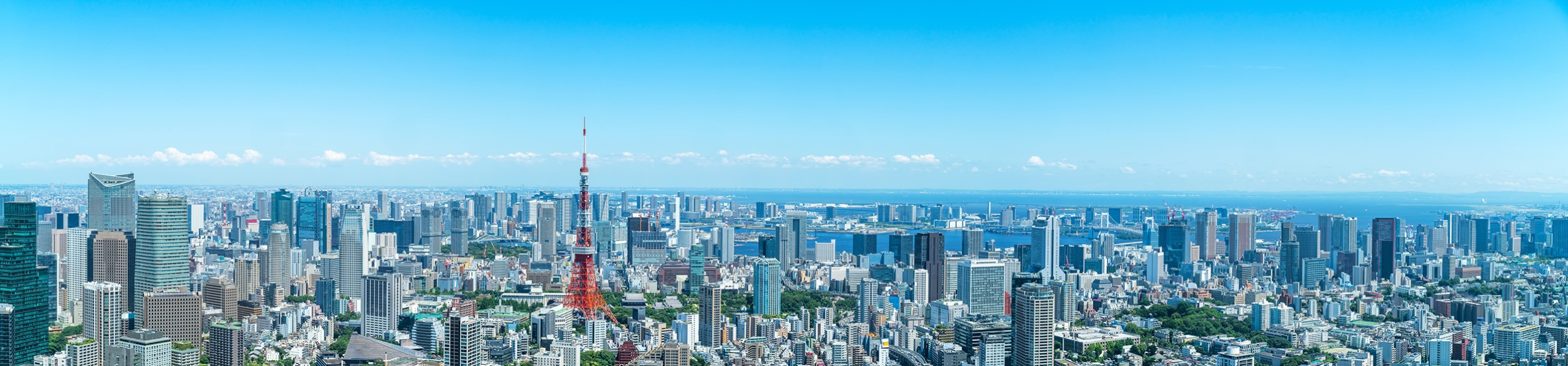
Tokyo is the country’s contemporary face: neon density, corporate and tech-driven backdrops, and night cityscapes that hold up on screen because crowd control is disciplined rather than chaotic. It suits short, tightly scripted sequences where visual authenticity matters more than the number of setups, and it is where most international shoots concentrate their Japanese days. A dedicated line producer in Tokyo manages the ward-by-ward permit load that a city this size demands, and keeps a night schedule from unravelling when one location runs long.
Kyoto: Heritage Access Earned Through Relationships
Kyoto is historic Japan without set dressing, and also the most relationship-dependent place to shoot. Temple and shrine filming usually needs private approval negotiated directly with temple administrations, frequently for early-morning slots before tourists arrive, and always with cultural tact. This is the location where a line producer’s local standing, not a permit form, decides whether a scene happens at all, and where an inexperienced or rushed approach can close a door permanently for every production that follows.

Osaka and Hokkaido
Osaka brings grit and energy, youth, nightlife and music-led stories, with more flexible street access, faster municipal coordination and lower supervision costs than Tokyo, which makes it the pragmatic choice for mid-budget work that still needs an urban Japanese face.
Hokkaido offers predictable seasonal snow, low population density and cooperative regional commissions, and it doubles convincingly for Europe, Russia or Northern Asia when a script needs winter the rest of Japan cannot reliably supply, which is why automotive and winter brand films gravitate there.

Hiroshima and Okinawa
Hiroshima carries emotional and historical weight for human drama and reconciliation themes, with a restrained urban backdrop that avoids megacity scale, and it rewards documentary-led and character-driven work more than spectacle. Okinawa is tropical Japan, beaches, island narratives and resort campaigns, a Southeast Asian look without Southeast Asian congestion, with easier access and fewer crowd-management challenges. Read together, these locations reward one approach: Japan enters a larger shoot as a high-value visual layer, its days few but decisive, with flexibility-heavy scenes executed elsewhere in the region.

Season is a planning axis in Japan as much as location. Cherry blossom and autumn colour are narrow, heavily contested windows that can define a film’s look yet compress a schedule into days; Hokkaido’s snow is dependable but seasonal; Okinawa’s tropical light runs on a different calendar again. A line producer builds the shoot around these windows rather than against them, because a scene written for blossom and scheduled a week late simply does not exist.
Japan vs Korea for Indian Productions
For Indian producers weighing East Asia, Japan and South Korea are less competitors than complementary tools, and the choice between them starts with what a scene demands. Japan rewards a finalised creative vision: short, high-value, controlled sequences where visual exactness outweighs volume. Korea suits the opposite, directors who need interpretive freedom, scenes that evolve on set, and dialogue or staging that adjusts during execution.
Their operating realities differ just as sharply. Korea’s more centralised film commissions, particularly in Seoul and Busan, simplify multi-location scheduling, police coordination and crowd control, and Korea sits in a mid-cost zone with competitive crew rates, efficient overtime and faster permit turnaround. Japan asks for more lead time and a higher budget but returns discipline and visual credibility that are difficult to match. On genre, Japan excels in premium commercials, corporate and technology narratives and minimalist storytelling, while Korea performs in OTT series, romance and thriller genres and high-output content pipelines.
Communication, Culture and the Per-Sequence Call
Language and crew culture shape both countries in ways a budget line cannot capture. Japanese sets run on precision, hierarchy and quiet efficiency, and a visiting team that respects those norms is rewarded with reliability, while one that pushes against them loses goodwill quickly. A line producer who operates bilingually, or who staffs the key liaison roles with people who do, is what keeps a cross-cultural unit from stalling on small misunderstandings that compound across a schedule.
In practice the decision often resolves per sequence, not per project. A brand film might shoot its hero product moment against a controlled Tokyo backdrop for two days, then move its dialogue and lifestyle coverage to Korea for a week, with a single line producer holding the budget and the cross-border logistics so the two legs read as one production. Choosing Japan for everything, or Korea for everything, usually means overpaying for discipline a scene did not need or under-resourcing the precision it did.
Within the Asia Film Production Corridor, then, Japan functions as the premium visual layer and Korea as the flexible narrative engine. Coordinating the two, so equipment, crew continuity and post-production stay aligned across borders, is exactly the cross-border planning a line producer exists to run, and it is the reason most Indian productions end up using both countries rather than forcing a single choice.

Where Japan Fits in an Asia Production Strategy
Japan rewards preparation. Without an experienced line producer, or the film fixers in Japan who run the same function, permits, police coordination, crew scheduling and costs are harder to hold to plan. With one, permissions are aligned to the schedule, the shoot is better placed to finish on time, and the country becomes an asset on the slate rather than a risk.
The failure mode is always the same shape. A production treats Japan like a market it can negotiate on arrival, discovers that permits and temple access run on lead times and relationships it does not have, and tries to compress a ten-week process into three. The result is scenes lost, budget burned on rush fixes, and missed IP360 timing or documentation can place the subsidy at risk. Every one of those outcomes is avoidable, and avoiding them is the whole job.
Engaging Japan well starts earlier than most producers expect. The sequence that works is a candid feasibility read against the incentive thresholds, a permit-and-location plan built backward from the shoot date, a crew structure that fixes the local-versus-imported split, and a single budget that carries all three. Done in that order, Japan stops being the intimidating part of an Asian schedule and becomes its most predictable leg.
When Japan Is the Right Call
Japan is the right call in specific situations, not as a default: when the look depends on authentic Tokyo density or a four-season range no stand-in reproduces, when a client requires an audit-ready execution standard, when a shoot must clear strict permit and heritage-site protocols, or when an East-Asia base genuinely strengthens distribution. Where those conditions hold, Japan’s premium is justified and approved IP360 support can reduce accepted eligible production and post-production expenditure. Where a shoot is high-volume and cost-led, a cheaper Asian market is the better call. It is a question of fit, not prestige.
For an Indian production planning regionally, a line producer in Japan plugs the country into the line producer Asia network, with Korea production services for scale and India-based line production for budgeting and compliance behind it. Handled that way, Japan becomes one coordinated layer of a regional strategy rather than an isolated and expensive experiment.
