
Line Producers Mumbai Delhi Rajasthan Kerala Guide

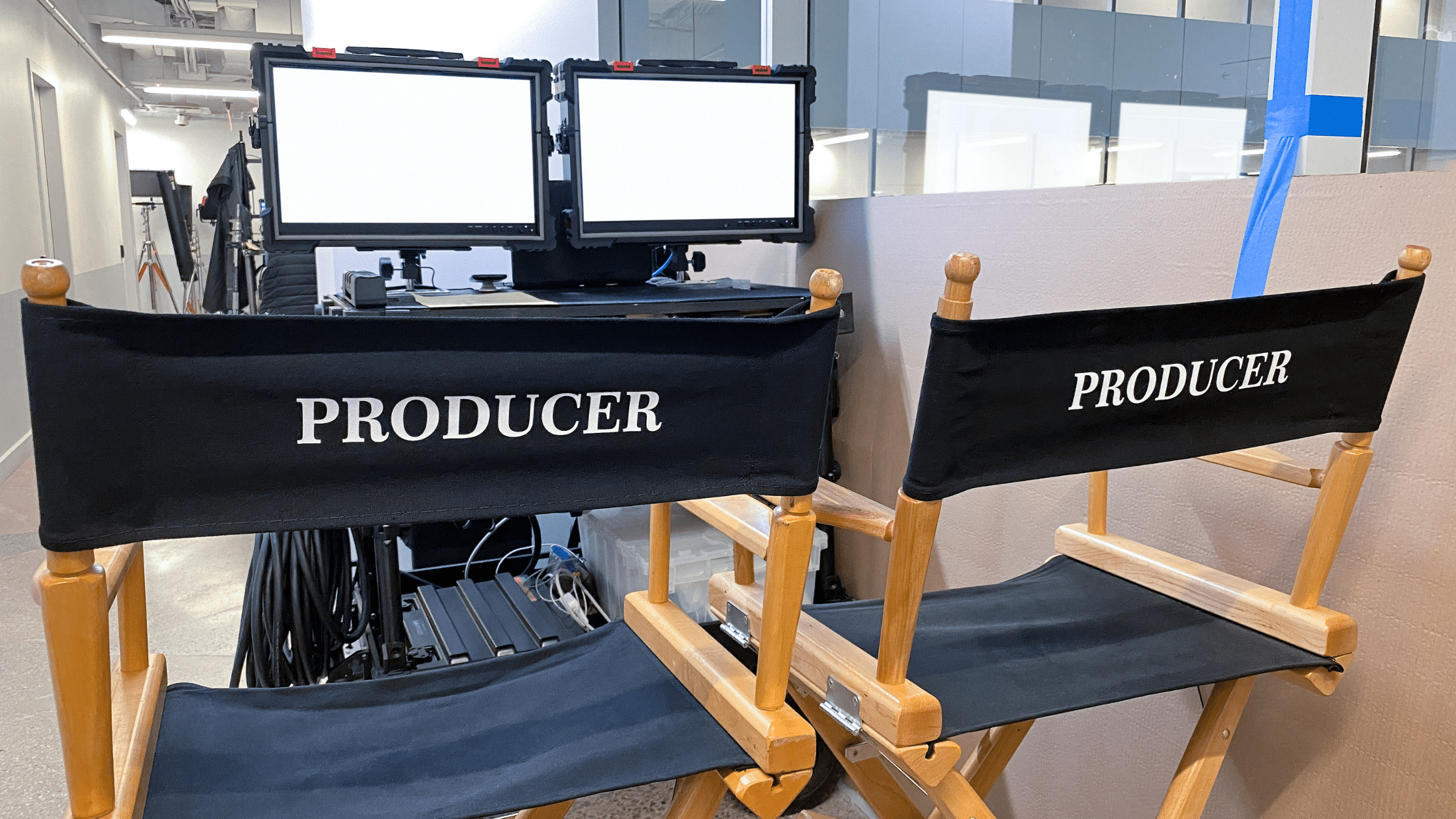
Empty director chair on a film set representing executive line producer role in production environmen

film set with a producer’s chair, representing executive-level oversight, coordination, and decision authority in film production environments in India.

India production clusters map — Mumbai, Delhi, Rajasthan and Kerala line producer network

Film production decisions are rarely driven by aesthetics alone. Instead, location selection emerges from a structured evaluation of execution feasibility, cost control, regulatory access, and narrative requirements. Producers assess how a location performs operationally under pressure, not just how it appears on screen. This shifts the conversation from “where it looks best” to “where it works best.”

In practical terms, every location must function as a system. It must support crew movement, equipment deployment, permit timelines, and continuity across shooting days. When these elements align, the location becomes an enabler of production efficiency. When they do not, even visually strong environments introduce delays, cost overruns, and execution risk.

Strategic location selection therefore operates at the intersection of creative intent and operational logic. It requires balancing visual ambition with real-world constraints, ensuring that production flow remains uninterrupted while maintaining the desired cinematic output.

Execution Priorities vs Visual Decision-Making

The most common mistake in location planning is prioritizing visual appeal over execution viability. While striking environments attract attention during pre-production, they often fail under logistical scrutiny. Accessibility, crew accommodation, transport routes, and permit complexity frequently determine whether a location is usable at scale.

An execution-first framework reverses this approach. Producers begin by evaluating infrastructure, local crew availability, regulatory clarity, and timeline predictability. Only after these factors are validated does visual potential become relevant. This ensures that the chosen location can sustain continuous filming without operational friction.

For example, a visually perfect site may require multiple permissions across authorities, restricted access hours, or complex equipment handling. In contrast, a slightly less dramatic location with streamlined approvals and better logistics may deliver higher overall production value due to uninterrupted shooting schedules.

This framework does not eliminate creative ambition—it refines it. Directors and producers collaborate to identify locations that meet both narrative and execution criteria, allowing visual storytelling to unfold within a controlled and efficient production environment.

Geography, Cost and Production Control

Geography plays a decisive role in shaping production outcomes because it directly influences cost structures, logistical control, and scheduling flexibility. Locations with dense infrastructure reduce travel time, enable faster setup transitions, and allow parallel workflows across units. This increases output per shooting day and stabilizes production timelines.

Conversely, geographically fragmented locations introduce inefficiencies. Long-distance movement between sets, limited vendor access, and unpredictable local conditions can disrupt schedules and inflate budgets. These factors accumulate quickly, especially in multi-day or multi-location shoots.

Control is another critical variable tied to geography. Locations that allow structured access, predictable permitting, and coordinated local support give production teams greater authority over execution. This reduces dependency on external variables and minimizes disruptions during filming.

Output, ultimately, is a function of how well cost and control are managed. A location that enables consistent shooting conditions, efficient crew deployment, and adaptable scheduling will always outperform one that offers visual appeal but lacks operational coherence. Geography, therefore, is not just a backdrop—it is a determining factor in how successfully a production is executed.

Mumbai and Delhi — India’s Film Production Entry Points

Mumbai functions as the execution core of India’s film industry, where infrastructure, workforce density, and institutional familiarity combine to reduce production uncertainty. Unlike regions that are selected primarily for visual outcomes, Mumbai is chosen for control. It is the city where production decisions can be implemented immediately, without waiting for ecosystem alignment. This makes it the default base for projects that require precision, speed, and continuity across multiple stages of filming.

The ecosystem operates as a unified system rather than fragmented layers. Pre-production, casting, equipment sourcing, studios, logistics, and post-production exist within a tightly connected network. This integration reduces coordination overhead and allows production teams to operate with fewer dependencies. As a result, Mumbai stabilizes not only filming but the entire production lifecycle, making it the starting point for complex and multi-location projects.

Mumbai high-density urban filming environment — commercial production hub for India

Mumbai — Crew Infrastructure, Studio Ecosystem and Commercial Density

The Mumbai line producer network covers studio access, crew contracting, permit coordination with BMC and police, and full commercial-to-feature production management across the city and its satellite zones.

Mumbai sustains the highest concentration of production activity in India, creating an environment where crews are continuously engaged across formats. Advertising films, OTT series, feature productions, and branded content operate simultaneously, ensuring that technical teams remain active and experienced. This continuity eliminates the inefficiencies associated with assembling new teams, as professionals are already functioning within established workflows.

Crew infrastructure is both specialized and collaborative. Departments such as camera, lighting, art direction, costume, and assistant direction are structured within networks built on repeated collaboration. These relationships reduce communication gaps and enable faster execution on set. Productions benefit from teams that understand not only their own roles but also how they integrate with adjacent departments.

Vendor ecosystems reinforce this operational density. Equipment rental houses, set construction units, casting agencies, and post-production facilities operate within close proximity and established relationships. This allows productions to respond quickly to changes, including equipment failures, creative revisions, or schedule shifts. The ability to adapt without delay is a defining advantage of Mumbai’s system.

Studio Facilities and High-Speed Execution

Mumbai’s strength lies in predictability rather than cost reduction. Budgeting becomes more accurate because pricing structures are consistent across projects, supported by historical data and repeat engagements. Producers can forecast expenses with greater confidence, reducing the risk of financial overruns caused by unknown variables.

Workforce depth further strengthens execution. Multiple crews are available for similar functions, ensuring that production does not stall due to availability issues. This redundancy is critical for maintaining timelines in high-budget productions, where delays translate directly into financial impact.

The city also supports rapid scaling. Productions can expand crew size, increase equipment requirements, or extend schedules without disrupting the overall system. This flexibility is particularly valuable for international projects operating under tight deadlines.

Because execution risk is lowest in Mumbai, productions anchor their planning through a line producer mumbai, using the city as a base before extending into other regions.

Film City studio Mumbai — controlled environment for commercial and feature production

Mumbai’s studio infrastructure is designed for continuous throughput. Facilities such as Film City and private soundstages support multiple productions simultaneously without operational conflict. These studios integrate set construction, lighting systems, storage, and technical support within a single environment, allowing productions to transition efficiently between controlled and on-location shoots.

Mumbai Crew Depth and Specialist Department Availability

Permitting involves multiple governing bodies, including municipal authorities, police departments, fire safety divisions, and local administrative offices. While structurally complex, the system follows defined procedures. Experienced teams understand how to sequence approvals, manage documentation, and coordinate across agencies, enabling permits to be secured within predictable timelines.

High-risk filming scenarios require layered approvals across multiple agencies. These include action sequences, large public setups, night shoots, and drone operations in dense urban areas. The High Risk Filming Permissions Guide – Mumbai outlines these compliance requirements, helping productions structure approvals before execution and avoid disruptions.

Logistics integration is equally critical. Mumbai serves as a primary international entry point for equipment and crew. Customs clearance, carnet handling, and temporary imports follow standardized workflows, supported by experienced logistics partners. The Airport Cargo Customs for Film Equipment — Master Checklist Document provides a framework for managing inbound logistics efficiently.

Internal transport planning is optimized around known constraints such as traffic density and time-based movement restrictions. Equipment transfers, crew mobility, and location shifts are scheduled strategically to maintain continuity. This level of logistical control allows Mumbai to deliver high-speed execution despite operating within a dense urban environment.

The combination of studio infrastructure, compliance familiarity, and logistics synchronization enables productions to compress timelines without compromising safety or quality.

Delhi — Government Access, Regulatory Zones and Logistics Gateway

The Delhi line producer network manages government-zone access, institutional space permits, security-controlled location coordination, and the full logistics pipeline for productions entering India through the capital.

Delhi operates as India’s primary regulatory and institutional filming environment, where access is defined less by infrastructure and more by governance. Unlike Mumbai, which is driven by execution density, Delhi is shaped by administrative control, political geography, and layered permissions. It is the city where productions interact directly with state power, heritage institutions, and national-level authorities. This makes Delhi critical for projects that require authenticity in governmental, diplomatic, or historically significant environments.

The city’s value lies in access rather than speed. Filming here involves navigating controlled zones, restricted areas, and bureaucratic frameworks that demand precision in planning. Productions must align creative intent with administrative feasibility, ensuring that every location, movement, and setup complies with regulatory expectations. Delhi does not reward improvisation—it requires structured execution.

Delhi Raj Bhavan government zone — institutional filming with clearance and security coordination

Security Clearances and Controlled-Zone Protocols

Delhi offers access to locations that are not replicable elsewhere in India. Government buildings, diplomatic enclaves, historical monuments, and institutional campuses provide visual authenticity that cannot be recreated through set design. However, these spaces operate under strict control, where filming permissions are governed by multiple authorities with defined jurisdiction boundaries.

Locations such as Lutyens’ Delhi, central administrative zones, and heritage complexes fall under high-security or protected categories. Filming here requires detailed applications, including script disclosures, crew lists, equipment declarations, and security clearances. These processes are not optional—they are enforced at multiple levels, often with overlapping authority structures.

Institutional spaces such as universities, public offices, and cultural centers also require formal approvals, though the complexity varies depending on ownership and governance. Each location operates within its own administrative framework, requiring tailored approaches rather than standardized applications.

The Delhi Line Production Checklist provides a structured overview of how to approach these permissions, outlining documentation requirements and sequencing strategies. It ensures that productions enter controlled zones with clarity rather than uncertainty.

Because access is the primary constraint in Delhi, productions rely on a line producer delhi to navigate institutional frameworks, align documentation, and secure approvals without delays.

Controlled-Zone Access: Lutyens Delhi and Administrative Corridors

Delhi’s filming environment is defined by its political significance. As the capital of India, the city contains high-security zones, diplomatic missions, and sensitive administrative areas. Filming within or near these zones requires security clearances that extend beyond standard permits, often involving coordination with law enforcement and government agencies.

Political geography directly impacts filming feasibility. Certain areas are subject to restrictions based on proximity to government buildings, security installations, or diplomatic zones. These restrictions are not always visible but are enforced through clearance processes. Productions must understand these invisible boundaries before planning locations.

Security clearances involve multiple layers, including background verification of crew members, approval of equipment usage, and validation of filming intent. Any deviation from approved plans can result in immediate suspension of permissions. This makes adherence to declared documentation critical.

The India Filming Compliance Checklist outlines broader compliance requirements that apply across such environments, ensuring that productions align with national-level regulations.

Access logic in Delhi is therefore not linear. It is conditional, based on the nature of the project, the sensitivity of the location, and the clarity of documentation. Productions that treat permissions as procedural succeed; those that rely on flexibility encounter delays.

CISF security presence at Delhi government filming zone — line producer manages clearance

Large-Scale Urban Production and Delhi Logistics

Delhi’s urban scale presents both opportunity and complexity. The city offers wide roads, diverse architectural styles, and dense public environments that are suitable for large-scale shoots. However, executing such productions requires coordination across multiple administrative layers, including traffic police, municipal bodies, and local authorities.

Large-scale filming—such as crowd scenes, roadblocks, or extended outdoor shoots—requires advance planning that integrates logistical and regulatory considerations. Traffic diversions, public safety measures, and local permissions must be aligned before execution. Unlike smaller setups, these productions operate under public visibility, increasing scrutiny from authorities.

Despite these challenges, Delhi remains essential for projects that require scale combined with institutional authenticity. Its complexity is manageable when approached with structured planning, clear documentation, and experienced coordination.

In this context, Delhi is not an execution-driven market but a control-driven environment, where success depends on navigating governance systems with precision and discipline.

Production teams working in Mumbai can access supporting reference documentation: the High Risk Filming Permissions Guide – Mumbai (BMC, Police and Fire coordination) and the Airport Cargo and Customs Checklist for Film Equipment.

Gurgaon skyline Delhi NCR — urban filming environment used as international stand-in location

Reference documentation for Delhi-based production: the Delhi Line Production Checklist and the India Filming Compliance Checklist.

Delhi as Air Logistics Gateway — Equipment Routing and Northern India Access

Delhi also serves as the primary air logistics gateway to the Union Territory of Ladakh. Productions planning high-altitude shoots route specialist equipment through Indira Gandhi International Airport cargo terminals before onward movement to Leh Kushok Bakula Rimpochhe Airport, which operates under civil-military coordination and imposes strict weight and volume limits per flight. The line producer Ladakh network manages Inner Line Permit (ILP) applications, Protected Area Permits for restricted zones such as Nubra Valley and Pangong Tso, Army liaison for shoot access near controlled boundaries, and DGCA Digital Sky drone compliance at altitude — all of which are initiated and coordinated from Delhi during pre-production, weeks before crew deployment reaches Leh.

Rajasthan — Heritage Scale, Desert Locations and Multi-City Production

The Rajasthan line producer hub coordinates across the state’s multi-city landscape — Jaipur as the operations centre, Jodhpur for desert-and-fort production, Udaipur for lake-and-palace environments, and Jaisalmer for large-scale Thar Desert shoots.

Rajasthan functions as India’s most expansive visual production region, where geography directly translates into cinematic scale. Unlike execution-driven cities, Rajasthan is selected for its ability to deliver large-format imagery—palaces, forts, deserts, and historic urban clusters that cannot be replicated through set construction. The state operates as a distributed production environment, where multiple cities contribute distinct visual identities while remaining operationally connected.

Its value lies in controlled access to heritage combined with spatial freedom. Productions can move between cities without losing continuity in visual tone, enabling large narratives to be executed within a single regional system. This makes Rajasthan critical for projects requiring historical authenticity, visual grandeur, and geographic diversity without cross-country movement.

Rambagh Palace Jaipur — heritage filming location in Rajasthan production ecosystem

Jodhpur, Udaipur and the Jaipur Production Hub

Rajasthan’s production strength is not concentrated in a single city but distributed across multiple hubs, each offering a distinct cinematic language. Udaipur provides lakeside palaces and reflective water-based compositions, Jodhpur offers dense blue cityscapes and fortress architecture, while Jaipur delivers structured urban planning combined with royal heritage. Together, these cities form a cohesive filming ecosystem.

This multi-city structure allows productions to achieve visual diversity without logistical fragmentation. Distances between major hubs are manageable, enabling efficient movement of crew, equipment, and production units. Unlike international shoots that require cross-border coordination, Rajasthan allows varied backdrops within a single administrative region.

Production planning in Rajasthan is route-based rather than location-based. Shoots are sequenced across cities to optimize travel, light conditions, and permit timelines. This reduces idle time and ensures that each location contributes to a continuous production flow rather than isolated shooting blocks.

Infrastructure has evolved to support this model. Local crews, equipment vendors, and logistics providers are available across major cities, reducing dependence on a single base. However, coordination remains critical to ensure consistency in execution.

Because of this distributed ecosystem, productions rely on a line producer rajasthan to unify operations across cities, ensuring that scheduling, logistics, and permissions align within a single production framework.

Line producer Ajmer Rajasthan — production fixer coordinating heritage and desert locations

Heritage Permits, ASI Frameworks and Global Stand-In Value

Rajasthan’s primary filming advantage—heritage access—is also its most regulated component. Many locations fall under the jurisdiction of heritage authorities, including the Archaeological Survey of India (ASI), royal trusts, and state departments. Each of these bodies governs access through defined approval systems, requiring detailed documentation and compliance alignment.

Filming in forts, palaces, and protected monuments involves multiple layers of permissions. These include location-specific approvals, heritage conservation guidelines, and restrictions on equipment usage. Productions must ensure that their activities do not damage or alter protected structures, which often limits heavy setups, rigging, or modifications.

The Line Producer Rajasthan Guide outlines how these permissions are structured, including application processes, timelines, and operational constraints. It provides a clear framework for navigating heritage access without causing delays or compliance issues.

Control layers extend beyond permissions. On-ground supervision, restricted access zones, and time-bound shooting windows are common in heritage locations. Productions must align their schedules with these constraints, often working within fixed hours or limited access periods.

Despite these controls, Rajasthan remains accessible when approached with structured planning. The system is predictable for teams that understand documentation, sequencing, and authority coordination.

ASI Clearance Process and Heritage Monument Permit Timelines

ASI filming permission India — Archaeological Survey clearance for heritage monument shoots

Rajasthan functions as a global stand-in region, capable of replicating visual environments across multiple geographies. Its desert landscapes can double for Middle Eastern or North African settings, while its palaces and forts can represent historical Europe or Central Asia. This adaptability reduces the need for international travel, allowing productions to achieve global visuals within a single region.

This positioning is reinforced by cost advantages and incentive structures. Compared to international locations, Rajasthan offers lower production costs while maintaining high visual output. The Filming Incentives in India and Statewise Incentives India documents outline how state and national policies support productions through rebates and financial benefits.

In this context, Rajasthan is not just a visual destination but a strategic production region—one that combines heritage, scale, and adaptability into a system capable of supporting global filmmaking requirements.

The Line Producer Rajasthan Guide covers state-level permit procedures, multi-city logistics, and incentive application steps for Rajasthan shoots.

Madhya Pradesh — Heritage Corridors, Wildlife Environments and Central India Production Base

Madhya Pradesh occupies a distinctive position in India’s production geography: a central corridor state whose filming value lies in the combination of UNESCO World Heritage architecture, large-scale wildlife environments, and a state incentive framework administered through the Madhya Pradesh Film Tourism Development Corporation (MPFDC). Unlike Rajasthan’s internationally established heritage circuit, MP offers production access to locations that remain relatively undiscovered by global studios, making stand-in value and exclusive visual access easier to negotiate. The state’s MPFDC single-window approval mechanism reduces the multi-agency complexity that characterizes permissions in Delhi or Mumbai, and growing fixer infrastructure now supports productions ranging from heritage-focused international features to natural history and wildlife documentaries.

Madhya Pradesh connects geographically and logistically with both Rajasthan and Uttar Pradesh, making it a natural extension of the northern heritage circuit for productions already routing through Jaipur or Agra. Equipment access from Bhopal’s Raja Bhoj Airport or the Jabalpur rail corridor feeds directly into the Khajuraho and central forest clusters without requiring separate logistics planning from a Mumbai base.

Line production in Madhya Pradesh at Khajuraho temples showcasing heritage architecture as a filming corridor
Khajuraho in Madhya Pradesh as a structured heritage filming corridor supported by professional line production services

Khajuraho and the Central India Heritage Belt

The line producer Madhya Pradesh network coordinates heritage access across the state’s primary filming corridors — the Khajuraho temple cluster and the Orchha belt — managing MPFDC permits, ASI clearances for protected monuments, and on-ground logistics from a Bhopal operations base.

Khajuraho’s UNESCO World Heritage western group — which includes Kandariya Mahadeva and Lakshmana Temple — offers intricately carved sandstone architecture that can double for ancient Southeast Asian, Central Asian, or broader South Asian historical environments. Filming permissions within the complex are structured through ASI Central Zone with defined commercial rates and access windows that allow full-crew setups without tourism conflict. The Duladeo Temple on the eastern circuit, less exposed to high-footfall tourism infrastructure, allows more contained, privately coordinated shoots with shorter setup times.

Location fixer assessing filming access at Duladeo Temple, Khajuraho, Madhya Pradesh
A location fixer evaluates access, restrictions, and ground conditions at the Duladeo Temple in Khajuraho for production planning

Orchha — Riverside Palaces and State Heritage Access

Orchha, located near Jhansi in the northern Vindhya belt, provides a different visual register: fortified riverside palaces, cenotaphs along the Betwa River, and densely forested approaches that create atmospheric period environments. Several Orchha monuments fall under state heritage jurisdiction rather than ASI Central Zone, providing slightly different — and often more flexible — approval routes compared to the Khajuraho complex. The combination of both corridors within a single production route allows 3–5 days of distinctive heritage shooting without significant travel overhead between locations.

Film fixers in Madhya Pradesh handle equipment transport from Bhopal or Jabalpur, crew accommodation clusters in both filming zones, and the informal coordination layer with local monument authorities that operates alongside the formal MPFDC single-window process. This dual-track approach — formal permit compliance combined with established fixer relationships on the ground — defines how productions successfully move through MP’s heritage belt without schedule friction.

Pench, Kanha and Wildlife Environment Production

Madhya Pradesh holds more national parks and tiger reserves than any other Indian state, and its wildlife filming corridor spans Pench, Kanha, Bandhavgarh, and Satpura across a connected belt in the eastern and central zones. Pench carries strong international recognition from its association with Rudyard Kipling’s source material for The Jungle Book — its sal and teak forests, river-fed grasslands, and mixed scrub terrain have been used in natural history, documentary, and dramatic productions. For OTT and commercial productions seeking authentic forest environments without the access complexity of international wildlife filming destinations, the MP corridor offers a structured pathway with established NTCA compliance infrastructure.

Pench National Park forest landscape in India that inspired the filming environments for The Jungle Book
Pench National Park in India, whose forests inspired the setting for The Jungle Book film

Wildlife filming in MP operates under Forest Department and National Tiger Conservation Authority (NTCA) permits, which are separate from standard production permissions. These require individual applications, species and habitat impact assessments for larger setups, and strict restrictions on vehicle movement, noise levels, and artificial lighting within core and buffer zones. Productions working in wildlife corridors should plan permit timelines of four to eight weeks in advance, coordinating through the Divisional Forest Officer for each reserve. Buffer zone shooting, which permits more flexible setup configurations while maintaining proximity to forest environments, is the operational model most frequently used for commercial and series productions.

MPFDC Incentive Framework and State Production Support

Madhya Pradesh’s film incentive structure is administered under the MP Film Tourism Policy, providing cash subsidies for qualifying productions filming within the state. Additional weightings apply for productions featuring MP heritage locations, hiring local crew above defined thresholds, or demonstrating state tourism endorsement value in the content. Applications are processed through MPFDC and require pre-shoot registration, audited local expenditure documentation, and post-production compliance reporting before disbursement. Productions combining Rajasthan and MP within a single route can often structure both sets of incentive applications simultaneously, with a single line producer managing the cross-state compliance documentation.

The Statewise Incentives India reference document covers MP’s current policy structure alongside other central and northern Indian states, providing a comparative framework for productions evaluating MP against Rajasthan or Uttar Pradesh for heritage-heavy or incentive-structured shoots.

Kerala — Natural Environments, Backwaters and Cost-Efficient Production

The Kerala line producer network covers backwater and houseboat location access, coastal shoot management, forest and wildlife zone permits, and the state’s production incentive application process for qualifying productions.

Kerala operates as a controlled natural production environment, where landscape consistency, lower production density, and cost efficiency combine into a stable filming ecosystem. Unlike Rajasthan’s scale or Mumbai’s execution density, Kerala offers visual cohesion—lush greenery, backwaters, coastal stretches, and tropical environments that maintain continuity across locations. This makes it particularly effective for narratives requiring environmental realism rather than constructed sets.

The region’s advantage lies in balance. It provides access to visually rich environments without the administrative complexity of high-control zones or the cost pressures of large production hubs. Productions entering Kerala benefit from a system that is less saturated, more predictable, and easier to manage within controlled budgets. This positions Kerala as both a primary shooting destination and a complementary region within multi-city production pipelines.

Kochi village filming location — Kerala line producer and production fixer on location

Coastal, Backwater and Tropical Production Environments

Kerala’s defining strength is its natural visual system. Coastal belts, backwater networks, dense forests, and plantation landscapes create a unified aesthetic that is difficult to replicate elsewhere in India. Unlike fragmented geographies, Kerala offers continuity—locations transition smoothly from one environment to another without visual disruption.

Backwaters provide a distinctive cinematic layer. Houseboats, narrow canals, and water-based settlements enable compositions that integrate movement, reflection, and depth. These environments are particularly valuable for slow narrative pacing, atmospheric storytelling, and visually immersive sequences. Coastal regions, on the other hand, offer open horizons, fishing communities, and maritime textures that support both commercial and narrative filmmaking.

Tropical density is another key advantage. Green landscapes remain visually consistent across seasons, reducing dependency on narrow shooting windows. This allows productions to plan schedules with greater flexibility compared to regions where seasonal variation significantly alters visual output.

Infrastructure supports access to these environments without heavy modification. Roads, waterways, and local transport systems enable movement across locations with minimal disruption. Productions can shift between coastal, inland, and forest environments within short timeframes, maintaining efficiency.

Backwater Logistics: Houseboat Infrastructure and Water-Based Filming

Because these visual systems are naturally integrated, Kerala reduces the need for artificial set construction. This lowers production costs while enhancing authenticity, making it a preferred choice for projects prioritizing realism.

Kerala backwaters houseboat filming location — line producer manages water-based production logistics

Kerala’s lower production density creates a fundamentally different operational environment compared to Mumbai or Delhi. Fewer concurrent shoots mean reduced competition for locations, permits, and crew resources. This translates into smoother scheduling, faster approvals, and fewer conflicts during execution.

Cost structures in Kerala are more controlled. Location fees, crew costs, accommodation, and logistics are generally lower, allowing productions to allocate budgets more efficiently. This does not imply a lack of capability but reflects a market that operates without the pricing pressures of high-density production hubs.

Kochi beach filming location — Kerala coastal production with line producer coordination

Incentives, Routing and International Production Integration

Financial optimization is further supported by state and national incentive frameworks. The South India Film Incentives Guide 2025 outlines region-specific rebates and policy structures that reduce effective production costs. Additionally, the Incentive Guide Indian Film Productions Edition 2 provides a broader overview of how productions can structure budgets to maximize financial returns.

Crew availability in Kerala is stable but not as dense as Mumbai. This requires more deliberate planning, particularly for specialized roles. However, this also reduces overbooking and scheduling conflicts, allowing productions to maintain continuity once teams are assembled.

Logistics are simpler due to reduced urban congestion. Equipment movement, location access, and crew transport can be planned with fewer variables, improving execution reliability. This simplicity contributes to cost control by minimizing delays and associated overheads.

Kerala has emerged as a strategic region for international and independent productions seeking cost-efficient environments with strong visual identity. Its landscapes can double for Southeast Asia, parts of Africa, and tropical regions globally, allowing productions to achieve international looks without cross-border complexity.

Indie productions particularly benefit from Kerala’s structure. Lower costs, accessible locations, and manageable permit systems enable smaller teams to execute projects without the financial burden associated with larger production hubs. This makes Kerala a preferred destination for documentaries, independent films, and experimental formats.

Kerala State Incentives and National Co-Production Framework

Within multi-city pipelines, Kerala functions as a complementary region. Productions often anchor execution in Mumbai or Delhi and extend into Kerala for specific visual requirements. This allows teams to combine control with cost efficiency, balancing high-density execution environments with lower-cost natural locations.

Coordination remains critical in this model. Equipment, crew, and schedules must be aligned across regions to maintain continuity. A line producer kerala ensures that local execution integrates seamlessly with broader production strategies, managing permits, logistics, and on-ground coordination.

Kerala also supports extended shooting schedules. Its stable environment and lower operational pressure allow productions to work over longer periods without escalating costs. This is particularly valuable for projects requiring detailed location work or iterative shooting processes.

In this context, Kerala is not merely a secondary location but a strategic component of India’s production ecosystem—offering controlled environments, cost efficiency, and visual consistency that support both independent and large-scale international filmmaking.

The South India Film Incentives Guide 2025 covers Kerala’s incentive programme alongside the wider South India corridor.

Multi-City Strategy — Sequencing, Compliance and Execution Frameworks

Designing a multi-city production across India is not a logistical afterthought; it is a strategic sequencing exercise that directly impacts cost, continuity, and execution stability. Each region—Mumbai, Delhi, Rajasthan, Madhya Pradesh, and Kerala—operates within a different production logic, and the order in which they are approached determines whether a project scales smoothly or accumulates inefficiencies. Routing must consider not just geography, but also permit timelines, crew availability, climate windows, and administrative complexity. A structured routing plan allows producers to align creative intent with operational feasibility, ensuring that high-control environments are used to stabilize the schedule while visually expansive regions are used to maximize output.

Routing Mumbai–Delhi–Rajasthan–Kerala

The most stable routing model typically begins with Mumbai, where production systems are fastest and most predictable. This allows teams to finalize crew alignment, test workflows, and establish operational rhythm before moving into more complex or slower-moving regions. Once execution stability is achieved, Delhi is introduced for shoots requiring institutional access, government locations, or controlled urban environments. Because Delhi involves layered permissions and security protocols, entering this phase with a stabilized crew and schedule reduces risk significantly.

Rajasthan is then positioned as the visual scale expansion phase. After the administrative intensity of Delhi, Rajasthan offers large-format landscapes and heritage locations that benefit from an already coordinated production system. By this stage, equipment movement, crew coordination, and scheduling discipline are already optimized, allowing productions to focus on visual output rather than operational troubleshooting. Kerala is typically placed either at the end or as a parallel unit, depending on the project. Its lower density and cost efficiency make it ideal for controlled shoots, secondary units, or visually distinct sequences that do not require heavy infrastructure. This sequencing ensures that each region is used for its strengths rather than forcing uniform execution across fundamentally different environments.

Risk reduction in multi-city production depends on creating a pipeline rather than treating each location as an isolated shoot. A structured pipeline ensures that learnings, crew cohesion, and operational systems carry forward from one region to the next. The primary risks in India—permit delays, inter-state logistics, and administrative variability—are mitigated when production flows in a controlled sequence rather than jumping between regions unpredictably.

Rajasthan as the Visual Scale Phase: Desert and Heritage Sequences

One key strategy is to centralize coordination through a single execution core, typically anchored in Mumbai, while deploying regional teams in Delhi, Rajasthan, and Kerala as extensions rather than independent units. This reduces fragmentation and ensures consistency in budgeting, reporting, and compliance. Equipment movement must also be planned as a phased transfer rather than repeated import-export cycles, minimizing customs friction and transit delays.

Another critical factor is scheduling alignment with regional realities. Delhi requires buffer time for approvals, Rajasthan demands planning around heritage restrictions and tourism cycles, and Kerala’s weather patterns influence shoot windows. By integrating these variables into a unified schedule, productions avoid reactive decision-making on the ground. Ultimately, structured execution pipelines transform multi-city shoots from high-risk operations into controlled expansions, where each region builds upon the stability established in the previous one.

Compliance, Incentives and Financial Structuring

India’s production environment is not defined by a single national system but by a layered structure combining central permissions, state incentives, and project-level financial engineering. For international producers, this creates both opportunity and complexity. Unlike unified rebate markets, India operates through competitive federalism, where states design incentive frameworks to attract shoots while maintaining distinct compliance requirements.

At a structural level, three systems operate simultaneously: regulatory compliance (permits, visas, taxation), incentive qualification (state-level rebates and subsidies), and financial structuring (cash flow timing, vendor payments, and audit readiness). These must align early in pre-production. Failure to integrate them leads to delays in rebate disbursal, audit disputes, or blocked permissions.

A project may appear cheaper on paper but becomes inefficient if compliance timelines or incentive eligibility are misaligned. Conversely, a well-structured production can unlock cost advantages through rebates, tax planning, and controlled vendor ecosystems. The documents referenced in this section serve as operational frameworks, not theoretical guides, and are typically used during budgeting, legal review, and pre-shoot planning phases.

Film permits compliance India — production team manages regulatory and clearance documentation

India’s incentive ecosystem is state-driven, meaning each region offers its own rebate percentages, eligibility conditions, and disbursal mechanisms. States such as Maharashtra, Rajasthan, Uttar Pradesh, and Kerala compete to attract productions through cash rebates, subsidies for local hiring, and additional bonuses for culturally aligned content. However, these incentives are not automatic; they require structured applications, pre-approvals, and strict compliance with local expenditure rules.

Regulatory Compliance, Union Agreements and ESG Documentation

A key distinction in India is between announced incentives and realized incentives. While policy documents may advertise rebates of 25–50%, actual realization depends on documentation accuracy, audit compliance, and adherence to local spend thresholds. Productions must demonstrate verifiable expenditure within the state, often through audited cost reports and vendor documentation. This is where structured planning becomes critical.

The Filming Incentives in India document outlines how these schemes are structured across states, including eligibility benchmarks and application workflows. Complementing this, the Incentive Guide Indian Film Productions provides deeper insight into disbursal timelines, documentation requirements, and common compliance failures.

Internationally, India’s incentive structure must also be evaluated against global rebate systems. The Worldwide Film Rebates and Incentives highlights how India compares with markets like Eastern Europe, the Middle East, and Southeast Asia. While India may not always match headline rebate percentages, its advantage lies in combining moderate incentives with lower base production costs and diverse location availability.

Taxation, Cash Flow and Budget Optimisation

Taxation in Indian film production operates across multiple layers, including Goods and Services Tax (GST), withholding tax (TDS), and international remittance regulations. For foreign productions, this introduces additional complexity in structuring payments to local vendors, crew, and service providers. Improper tax handling can lead to blocked payments, compliance penalties, or delays in closing accounts.

Cash flow management is equally critical. Unlike some markets where rebates are disbursed quickly, Indian incentives often follow a post-production audit cycle. This means productions must finance operations upfront and recover incentives later. Effective budgeting therefore requires aligning cash flow schedules with expected rebate timelines, ensuring that liquidity is maintained throughout the shoot.

One of the key strategies used in India is cost segmentation. Productions categorize expenses into eligible and non-eligible incentive buckets early in the budgeting phase. This ensures that qualifying expenditures are maximized without compromising operational flexibility. Vendor selection also plays a role; working with compliant, documentation-ready vendors simplifies audit processes and accelerates rebate realization.

Cash Flow Management and Rebate Disbursement Timelines

The interaction between taxation and incentives defines overall cost efficiency. A project that optimizes GST credits, manages withholding obligations, and structures vendor payments correctly can significantly reduce net production costs. Conversely, poor structuring erodes margins, even if headline costs appear low.

Ultimately, financial control in India is not achieved through cost cutting alone but through compliance-driven optimization. Productions that integrate tax planning, incentive strategy, and execution workflows into a unified financial model consistently outperform those that treat these elements as separate processes.

Incentive and compliance reference library: Filming Incentives in India, Statewise Incentives India, Incentive Guide — Indian Film Productions Edition 2, and the Worldwide Film Rebates and Incentives Reference Document.

Cultural Protocols and On-Ground Execution

Successful film production in India is not determined solely by infrastructure, budgets, or permits. It is equally shaped by how well a production aligns with local governance systems and cultural environments. Each region operates within its own administrative behavior, informal authority networks, and community expectations. Ignoring these layers introduces friction that no amount of budget or planning can fully offset. Execution stability in India depends on understanding how decisions are made on the ground, who influences them, and how production behavior is perceived by local stakeholders.

On-ground execution in India requires structured engagement with both formal authorities and informal community networks. While permits may be secured through official channels, actual shoot continuity often depends on cooperation from local police units, municipal officers, and neighborhood stakeholders. Productions that treat permissions as a one-time approval frequently encounter disruptions, whereas those that maintain continuous coordination achieve smoother execution.

Local governance is not purely procedural; it is relational. Line producers must anticipate how decisions evolve in real time, especially in high-density or politically sensitive environments. This includes managing crowd control, aligning with local schedules, and adapting to sudden administrative changes. Community engagement is equally critical. Residential areas, marketplaces, and public zones require negotiation beyond paperwork, ensuring that filming activity does not disrupt local routines or create resistance.

Efficient productions build trust early. This involves clear communication, local hiring where possible, and visible compliance with safety and civic norms. When communities perceive a production as respectful and organized, cooperation increases significantly. Conversely, disregard for local sensitivities can escalate minor issues into operational delays. The ability to integrate governance awareness with execution planning becomes a decisive advantage in maintaining schedule integrity.

Community and Location Authority Engagement Protocols

Cultural sensitivity in international film production — line producer navigates local protocols

Cultural context in India operates at multiple levels—regional identity, language, social norms, and public perception. International productions entering the market must adapt not only creatively but operationally. What may be standard practice in one country can be interpreted differently in another, particularly in public behavior, representation, and authority interaction.

Adaptation begins with understanding regional nuances. For instance, visual storytelling choices involving religion, heritage sites, or local communities require careful handling. Misrepresentation or insensitivity can trigger public backlash or administrative intervention. Therefore, cultural consultation becomes part of the production workflow, not an optional layer.

Crew dynamics also require adjustment. Working styles, hierarchy expectations, and communication patterns differ across regions. Aligning international teams with local crews improves coordination and reduces friction during execution. This includes respecting local working hours, labor norms, and safety expectations.

Ultimately, cultural sensitivity is not a constraint but a control mechanism. It enables productions to operate within accepted boundaries while maintaining creative intent. When integrated correctly, it enhances efficiency, reduces risk, and strengthens long-term operational credibility within the region.

Back to top: