
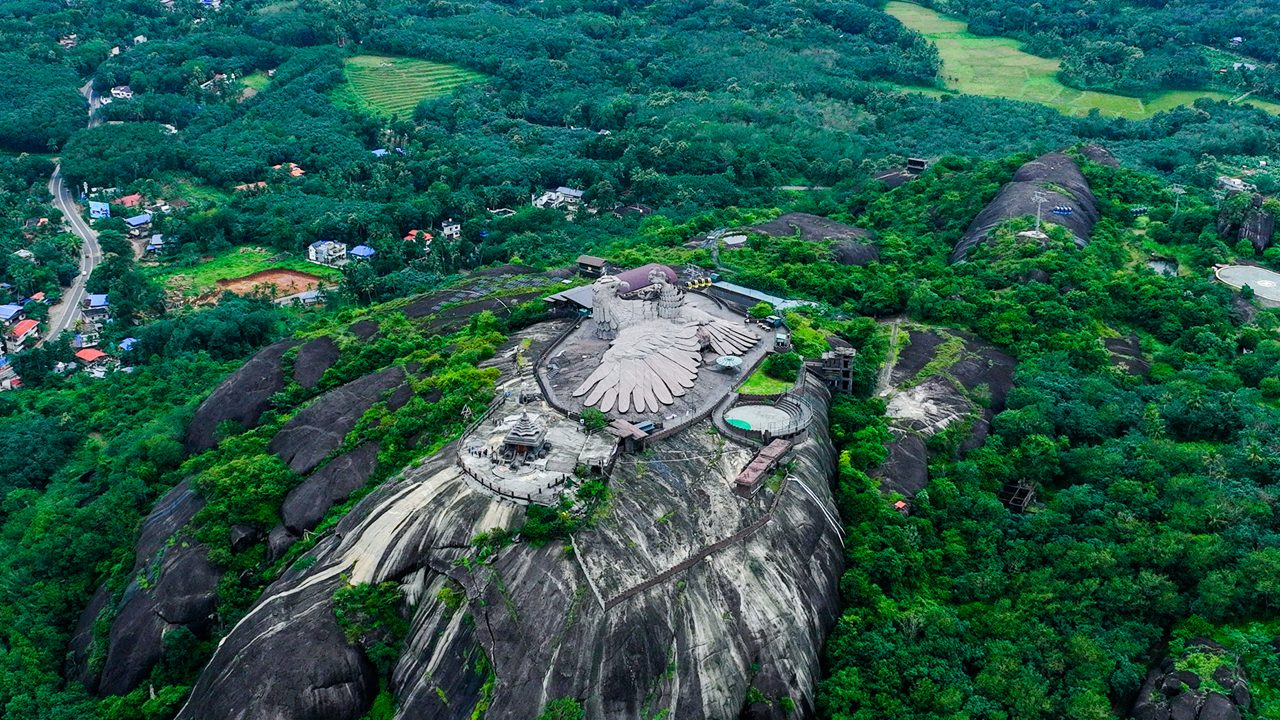
Line Producer Kerala work comes down to the single accountable person who turns a shoot on paper into a shoot on the ground: one budget, one schedule and one point of contact from the first recce to the final wrap. Working across the state’s backwaters, tea hills, beaches and heritage towns means coordinating local authorities, Forest Department clearances, boat and location owners, crew and equipment, and a line producer holds all of it together so the director and the client can concentrate on the frame.
Kerala sits inside a larger southern production belt, and for most international or out-of-state shoots it is one leg of a regional schedule rather than a standalone destination. This state page sits under the line producer South India hub, which coordinates crew, equipment and airport gateways across Kerala, Tamil Nadu, Karnataka, Goa and Pondicherry. Reading Kerala as part of that layer is what keeps a multi-state shoot on one budget and one accountable team.
For international clients running Kerala as one node in a larger India or multi-country schedule, a team of line producers in India can carry the whole route on one budget, from the backwaters to wherever the schedule goes next.
Why Kerala Works for a Shoot
Kerala rewards productions that plan locally. It offers a compact range of looks: backwaters, tea slopes, colonial streets, beaches and forest, often within a few hours of each other, plus a deep Malayalam-industry crew base, the KSFDC-run Chitranjali Studio near Thiruvananthapuram, and costs well below the metros. Experienced film fixers in Kerala know which authority, panchayat or owner grants access, and which season keeps the monsoon off your schedule.

What the Role Covers on a Kerala Shoot
The core of the job is accountability. A line producer in Kerala builds the budget from a real breakdown, not a template, then defends it through prep, shoot and post. That means negotiating local rates, booking crew and kit, scheduling around the monsoon and daylight, arranging transport and accommodation, and keeping a running cost report so there are no surprises at wrap. On a Kerala schedule that also means managing water logistics (houseboats, ferries and shore access), which a crew flown in from outside will almost always underestimate.
Just as important is local knowledge. Kerala’s locations sit under a patchwork of owners and authorities: village panchayats, the Forest Department, temple boards, port and railway authorities, and private estate owners. A film fixer in Kerala, or a line producer who works the state regularly, knows who actually grants access, how long each clearance takes, and where the quiet permission matters more than the paperwork. That relationship layer is what keeps a shoot moving when a plan changes on the day.
Water-Unit Budgeting
Water is where Kerala budgets most often slip. Houseboats, ferries and shore access carry their own hire rates, crew-safety cover, marine insurance and tide timing, costs a generic production budget rarely captures until they appear as overages. A line producer who works the backwaters prices these from the recce, schedules water days against the tide and light rather than the clock, and carries the running cost report so the client sees the true position at every stage rather than a surprise at wrap.

Crew, Studios and Equipment
Kerala has one of India’s most established regional film industries, and Malayalam cinema’s technical reputation means the local crew pool runs deep. Camera, grip, lighting, sound, art and production departments are all available in-state, with senior technicians used to demanding schedules and international standards. For a visiting production, that depth keeps day rates reasonable and reduces the number of heads you need to fly in.
The state’s production spine is the Kerala State Film Development Corporation (KSFDC) and its Chitranjali Studio, established in 1980 at Thiruvallam, about seven kilometres from Thiruvananthapuram. Chitranjali offers floors, a preview theatre, dubbing and post facilities, and outdoor locales within the complex. Camera, lighting and grip packages are available from rental houses in Kochi and Thiruvananthapuram. Specialist equipment Kerala does not stock is routinely trucked overnight from Chennai or Bangalore, so productions rarely need to fly kit into the state unless a highly specialised system is required.
The practical advantage of that depth is a smaller travelling unit. Line producers in Kerala can crew most departments locally and fly in only the heads of department a client insists on, which cuts both cost and the visa and carnet load. Fixers, location managers, production assistants and unit drivers who know the terrain are the difference between a schedule that holds and one that slips, and Kerala has them in numbers because the regional industry works year-round.
Local Crew and Working Language
Language rarely gets in the way. Kerala’s production crews routinely work in English on international shoots, so assistant directors, production coordinators and fixers brief a visiting crew directly, and call sheets, risk assessments and vendor contracts move in English without a translation layer. A local production office also absorbs the day-to-day load a foreign unit cannot carry from outside: vendor negotiation, cash handling, government liaison and the constant small approvals a Kerala schedule generates.
Working With a Line Production Company in Kerala
For larger jobs the line producer usually operates through a local production company, in effect a line production company in Kerala that carries the insurance, payroll and vendor contracts. Engaging a line producer company in Kerala, rather than assembling freelancers job by job, gives an international client one contracting entity in India for GST-compliant invoicing, crew payments and equipment liability. It also provides a legal home for permits and a single point for reconciliation once the shoot wraps.

Filming Permits and KSFDC Coordination
Kerala does not have a single online film-permit window, so clearances are assembled location by location, which is exactly where experienced film fixers in Kerala save a schedule. Public spaces and roads are handled through the district administration and police; backwater and coastal shoots run through the local panchayat and, where relevant, port or irrigation authorities; forest and wildlife locations such as Wayanad and Periyar require Forest Department permission with strict conditions on access, drones and crowd size, a process our filming in Indian forests permission toolkit walks through in detail. Heritage sites fall under the Archaeological Survey of India or the state archaeology department.
KSFDC acts as a facilitation point for productions using its studios and state locations, and a line producer routes the application chain so approvals land in the right order rather than stalling each other. Foreign nationals shooting in India also need the correct visa category and, for certain content, central clearance, a step your line producer flags early so it never becomes a schedule risk. Getting the tax benefits filming in India paperwork right depends on the same clean permit trail, so the two are handled together.

Kerala Film Incentives: KSFDC, Chitranjali and the National Rebate
Kerala’s state incentive schemes are often misread, so precision matters here. KSFDC’s subsidies for award-winning Malayalam features and children’s films that use Chitranjali Studio’s full facilities are cultural grants for regional-language cinema, not a cash rebate for international productions. A foreign or out-of-state shoot does not qualify for them.
There is no Kerala rebate for foreign films. The only cash incentive a Kerala shoot can claim is the national one, a reimbursement of qualifying Indian spend applied for through the India Cine Hub (ICH), formerly the Film Facilitation Office (FFO), worth a 30% base rising to 40% with Indian-manpower and significant-Indian-content bonuses, capped at ₹30 crore (about US$3.6 million) per project. Because that scheme rewards spend anywhere in India, a Kerala shoot counts towards it exactly like any other state. Kerala’s own KSFDC schemes are cultural grants for Malayalam cinema, not foreign productions, so a line producer folds the national rebate into a Kerala budget only where a shoot genuinely qualifies, and builds the case for the state on cost and locations rather than a headline rebate.

Locations Across Kerala
Kerala’s draw is variety within a short drive. The Alleppey and Kumarakom backwaters give you palm-lined canals, houseboats and village life on water. Munnar and the high ranges offer tea estates, mist and cool-climate greenery that double for hill country far outside India. The coastline runs from the resort sweep of Kovalam to the cliffs of Varkala, while Wayanad and the Western Ghats provide forest, waterfalls and tribal-belt landscapes.
Wayanad, Periyar and the wider Western Ghats belt push the range further into rainforest, spice plantations, grasslands and dam reservoirs, while Athirappilly’s waterfalls give scale to an action or fantasy frame. These are the locations that most often need Forest Department sign-off and careful crowd and vehicle management, so they are planned early. Palakkad’s paddy country, the Vembanad wetlands and the fort towns of the Malabar coast round out a location list that rarely forces a production to travel far for a change of look.
Fort Kochi is the state’s most film-friendly urban location, with Portuguese, Dutch and British architecture, the Chinese fishing nets and a walkable historic core. Because the city carries its own dense crew and location base, a Kochi-centred schedule is often run as its own unit; if your story sits in and around the city, work with a dedicated line producer Kochi who lives the local access day to day. Thiruvananthapuram adds the capital’s institutions, Chitranjali Studio and the airport gateway to the south.

Cost and Budget Structure in Kerala
Kerala shoots typically cost less than an equivalent day in Mumbai or Delhi. Crew day rates, accommodation and transport are lower, and the compactness of the state keeps travel days down, so you can move between backwaters, hills and coast without long repositioning. The saving is real, but it depends on booking local: a line producer who sources crew and kit in-state rather than importing them is where the budget advantage actually lands.
What moves a Kerala budget most is not the headline rate card but the shape of the schedule: how many water days you carry, how much forest and heritage access needs paid permissions and cover, how far kit has to travel, and whether the shoot lands in the dry window or fights the monsoon. A line producer builds the estimate from that breakdown, flags the two or three lines that carry the real risk, and holds a contingency against weather rather than spreading it thin across the whole budget.
What a Kerala Budget Contains
In practice a Kerala budget breaks into a familiar set of lines, each driven less by a fixed rate than by the shape of the shoot:
| Budget line | What drives the cost |
|---|---|
| Line producer & production office | Shoot length, scope and number of units |
| Crew: DOP, gaffer, art director, PAs | Department size and how many heads are local versus flown in |
| Camera, grip & lighting package | Format, rental house, and whether kit comes from Kochi or is trucked from Chennai or Bangalore |
| Houseboat & boat hire | Vessel class, season, and safety and marine-insurance cover |
| Accommodation | Location, tier, crew size and length of stay |
| Unit vehicles & drivers | Number of units, terrain and distance between locations |
| Location & permit fees | Site type: forest, heritage or backwater, and Forest Department or ASI conditions |

Weather and Production Calendar
Season is the one hard constraint. Kerala takes a heavy southwest monsoon from roughly June to September and a lighter northeast monsoon in October and November. The reliable window for exteriors runs from December to March, with the shoulder weeks of late October and April usable with a weather contingency built into the schedule. A local line producer plans cover sets and interior days against the forecast so a wet afternoon does not cost a shoot day.
- December to March: the dry, reliable window for exteriors and the peak booking season.
- April to May: hot and humid but shootable, and cheaper on crew and hotels before the rains arrive.
- Southwest monsoon, June to September: the heaviest rain; best kept for interiors, cover sets or deliberately wet, green imagery.
- Northeast monsoon, October to November: lighter and intermittent, so late October is a usable shoulder with contingency built in.
Airports and Logistics
Kerala is served by four international airports: Cochin (Kochi), Trivandrum, Calicut (Kozhikode) and Kannur, which is unusual for a state this size and means a unit rarely faces a long road transfer from arrival to base. Kochi is the main production gateway for the central and backwater belt, Trivandrum anchors the south and Chitranjali Studio, Calicut and Kannur open up the Malabar coast and the northern hills.
Typical transfers are short by Indian standards: Kochi to Fort Kochi is under an hour, Kochi to Alleppey around one and a half hours, and Kochi to Munnar roughly four hours up into the tea country. In the south, Trivandrum to Kovalam is about forty minutes, and in the north Kozhikode to Wayanad is a two-and-a-half to three hour climb into the Ghats. A line producer builds these legs into the schedule so travel days are costed rather than discovered on set. For equipment, Kochi handles carnet and cargo clearance, and any kit not sourced in-state is trucked in overnight from the rental houses in Chennai and Bangalore, so productions rarely need to air-freight gear into Kerala.

Kerala in the South India Corridor
Few productions shoot Kerala in isolation. The state pairs naturally with Tamil Nadu, where film fixers in Tamil Nadu run the Chennai and temple-city leg, plus Karnataka, Goa and Pondicherry on a single southern schedule, sharing crew, equipment routes and airport gateways at Kochi, Thiruvananthapuram, Bangalore and Chennai; on the Goa leg the same unit works with a line producer in Goa. Planning the leg as part of the region lets a line producer move one core unit across state lines instead of rebuilding a crew at each stop, the model we set out in our guide to filming in Kerala and South India.

Shoots Kerala Suits Best
Kerala is a natural fit for travel, lifestyle and tourism films, for documentaries on ecology and culture, and for commercials that need lush, green, water-rich backdrops without leaving India. Its backwaters and hill stations have long stood in for tropical and monsoon-country settings, and the cool greenery of Munnar reads convincingly for locations far outside the subcontinent. Feature and OTT productions use the state for period and rural stories, drawing on Fort Kochi’s colonial texture and the plantation belt.
What all of these have in common is a dependence on weather and access, the two variables a local line producer controls best. Water shoots need boats, safety cover and tide-aware scheduling; forest shoots need clearances and low-impact crewing; hill shoots need mist and light planned into the call sheet. Matching the story to the right season and the right permit path is where a Kerala shoot is won or lost, and it is exactly what an experienced line producer is there to do.

Work With a Kerala Production Team
Whether you are shooting a feature, a commercial, a documentary or a series, a Kerala shoot is only as smooth as the local team behind it. A line producer gives you a realistic budget, a monsoon-aware schedule, cleared locations, vetted crew and a single point of accountability from prep through wrap. That end-to-end cover is what our film production services in Kerala are built to provide. Share your script, locations and dates, and we will come back with a costed plan and the permit path to match. When the shoot extends beyond the state, our line production services in Kerala carry across the southern corridor on one budget. To scope a shoot, or to fold Kerala into a larger Indian schedule, get in touch with our team.
Frequently Asked Questions
Does Kerala offer a cash rebate for international shoots?
Not at state level. KSFDC’s subsidies are cultural grants for Malayalam films using Chitranjali Studio, not a rebate for foreign productions. International shoots in Kerala access the national incentive, a 30% base rising to 40% with Indian-manpower and significant-India-content bonuses, administered through the India Cine Hub (formerly the Film Facilitation Office) and subject to a per-project cap.
When is the best time to film in Kerala?
December to March is the reliable dry window for exteriors. The southwest monsoon runs roughly June to September and a lighter northeast monsoon falls in October and November, so schedules in those months need weather cover built in.
Do I need separate permits for backwater and forest locations?
Yes. Backwater and coastal shoots run through the local panchayat and port or irrigation authorities, while forest and wildlife areas such as Wayanad and Periyar need Forest Department permission with conditions on access, drones and crowd size. A line producer sequences these so they clear in time.
Can one line producer cover Kerala and the rest of South India?
Yes. Kerala pairs naturally with Tamil Nadu, Karnataka, Goa and Pondicherry, and a line producer can run one core unit across the southern corridor on a single budget, moving crew and equipment between states rather than rebuilding at each stop.
How far ahead should I plan a Kerala shoot?
Allow four to six weeks for a straightforward commercial or documentary, and longer where forest, wildlife or heritage locations are involved, since Forest Department and archaeology clearances run on their own timelines. Booking crew and houseboats in the peak December-to-March window also needs lead time, so earlier engagement of a line producer protects both access and rate.
Can foreign productions film on Kerala houseboats?
Yes. Houseboats are privately operated, so filming is arranged through the boat operator and cleared with the local panchayat and, on the backwaters, the relevant tourism or port authority. A line producer books the vessel class the shoot needs, adds safety and marine-insurance cover, and schedules water days around the tide and light, the same water-unit discipline that keeps a backwater shoot on budget.
