
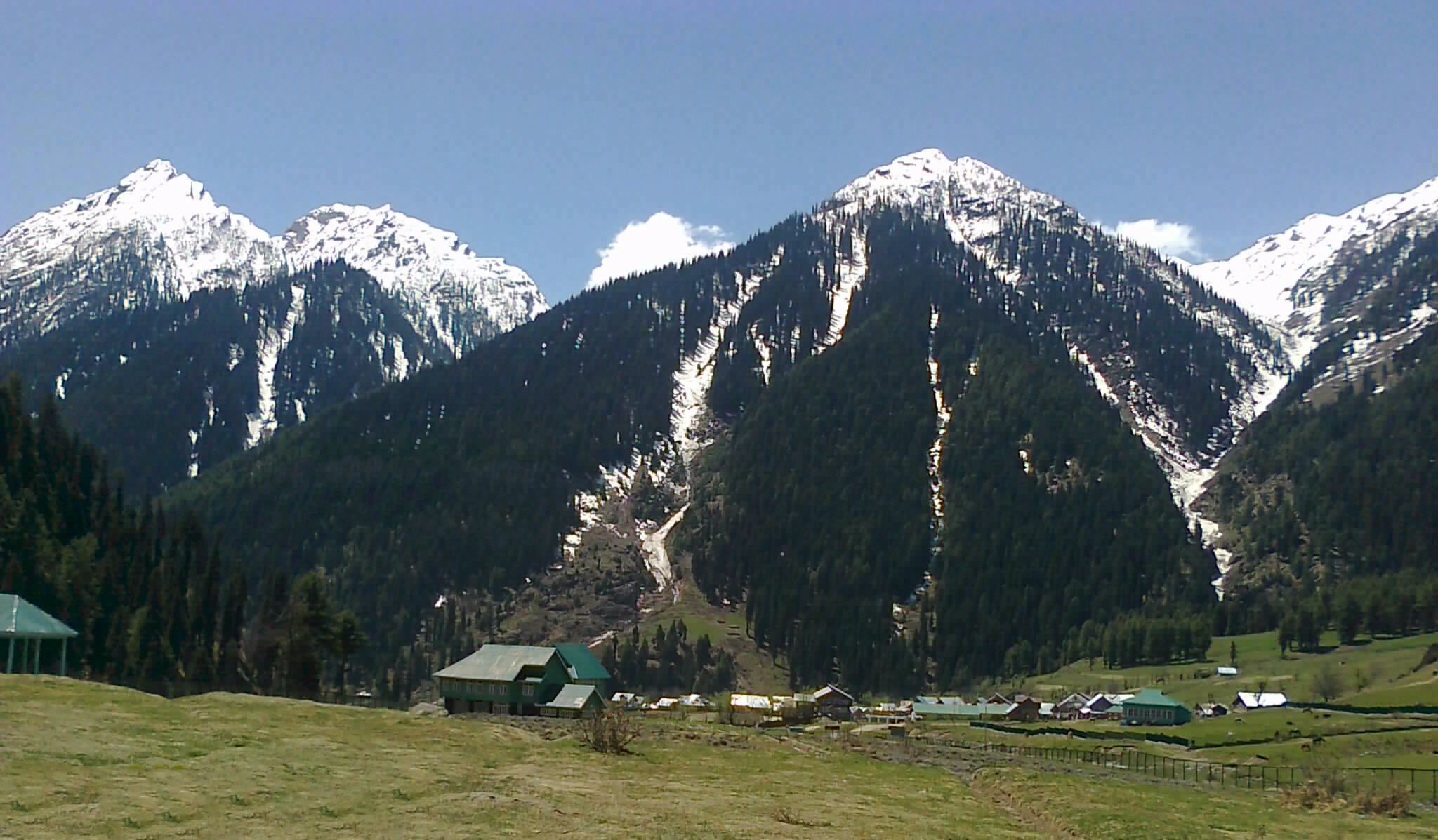
Global Producers provides line production and film fixer services in Ladakh for features, commercials, documentaries, stills shoots and location recces. Our Ladakh team supports work in Leh, Nubra Valley, Pangong, Turtuk and Zanskar with location research, permits, crew and vehicle coordination, high-altitude logistics, and on-ground problem-solving.
The right scope depends on the production. A film fixer in Ladakh suits a recce, a stills shoot, a documentary unit or a tightly controlled single-location brief. A line producer in Ladakh is the better fit when the production needs a full budget, multi-location scheduling, travelling crew and equipment, permit coordination, local hiring, safety planning and production accounting.
Why Ladakh Demands Specialist Line Production
A line producer in Ladakh operates in conditions that bear no resemblance to India’s mainstream production ecosystem. A line producer Ladakh brief does not operate as a location extension of India’s mainstream production ecosystem. It functions as a separate discipline: one shaped by altitude, military administration, ecological regulation, and infrastructure scarcity that collectively redefine what line production means on the ground.
Altitude as an Operational Variable
Leh sits at 3,500 metres. The passes that connect it to Nubra Valley and the eastern zones reach 5,300 metres at Khardung La and 5,360 metres at Chang La. At these elevations, altitude is not a scenic backdrop: it is an active operational constraint that affects every department simultaneously.
Crew performance degrades at altitude before acclimatisation is complete. Reaction times slow, physical exertion becomes taxing, and altitude sickness is a genuine production risk. Plan at least 48 hours in Leh before travelling to the higher-altitude circuits, kept low-exertion and medically supervised. The district’s own advisory sets that window before any move to higher areas such as Khardung La or Pangong, and it allows visits to areas near Leh town within it, so the time is low-exertion rather than dead: permit collection, close-in recces and camera prep all fit inside it. Those hours are not optional buffers. They are scheduled production line items with direct cost implications. Productions that compress or skip this period pay for it in crew incapacitation, medical incidents, and lost shooting days.
Equipment behaves differently at altitude. Battery discharge rates increase significantly in cold, thin air. Camera and lens performance in sub-zero temperatures requires pre-warming protocols. Generators underperform at altitude due to lower oxygen density and must be derated and sized accordingly, which in practice means larger units or redundant power planning. Drone operations are subject to specific DGCA restrictions at altitude and in proximity to military zones, adding a regulatory layer that does not exist in lower-altitude shoots.
Medical backup requires advance coordination. SNM Hospital in Leh is the nearest facility with meaningful capacity, but its resources are limited relative to a large production. For shoots extending into remote zones, a production medic with altitude medicine training is a standard requirement, not a premium addition. This is the baseline operational intelligence that international productions access when they engage a line producer in India with documented Ladakh capability.

Infrastructure Gaps That Define the Discipline
Power infrastructure in Ladakh cannot be assumed. Reliable grid connectivity exists in central Leh but deteriorates rapidly beyond the city boundary. Remote locations in Nubra, Changthang, and Zanskar operate on generators, solar hybrids, or no power at all. A line producer plans power architecture as a primary logistics variable (not an afterthought) with fuel supply chains mapped weeks before the shoot.
Internet connectivity follows a similar pattern. Leh town has functional 4G coverage from certain operators. Beyond Leh, coverage becomes patchy and unpredictable. Satellite communication equipment is the standard solution for productions operating in remote zones, but its procurement, import clearance, and operational compliance require pre-production lead time.
Film Fixers in Ladakh: Location Support for Lean Crews and Recces
A Ladakh film fixer provides the local knowledge a visiting crew cannot safely improvise: road and weather updates, local transport, accommodation, village and monastery coordination, location access, interpreters or guides where needed, and practical support across Leh, Nubra, Pangong and the other remote circuits.
For a small crew, the fixer can be the principal on-ground contact. For larger or multi-location shoots, the fixer works within the line-production team, so that local decisions, permits (most of which need defence and army sign-off in Ladakh), budgets and call sheets stay aligned.
When Do You Need a Film Fixer Rather Than a Line Producer?
Choose a film fixer in Ladakh for a recce, documentary, stills shoot, interview unit, research trip or a small shoot with a defined location plan and a limited crew.
Choose a line producer in Ladakh for commercials, features, series, large crews, imported equipment, multiple locations, high-altitude safety planning, the defence and army approvals most Ladakh permits require, or any production that needs a detailed budget and end-to-end accountability.
Filming Locations Across the Ladakh Production Corridor
Ladakh’s production geography is not a single environment: it is a sequence of distinct zones, each with its own access regime, visual character, and logistical profile. Understanding how these zones connect is what separates productive Ladakh shoots from ones that lose days to permit gaps and route failures.
Leh, Nubra Valley, and Pangong: Visual Identity and Access
Leh functions as the base camp for all Ladakh production. Accommodation clusters, equipment staging areas, crew assembly points, vehicle hire, local vendor networks, and the district administration’s permit offices are all located here. A production that attempts to operate Ladakh without Leh as its operational anchor introduces unnecessary fragmentation into an environment that already demands precision.
Nubra Valley lies to the north, accessed via Khardung La at 5,359 metres: among the world’s highest motorable passes. The drive from Leh to the valley floor at Diskit takes four to five hours under normal conditions. A full acclimatisation day in Leh before ascending Khardung La is standard protocol: the altitude gain is rapid and the physical toll on crew who have not acclimatised is significant. The valley itself offers a striking visual contrast: Bactrian camels on sand dunes at Hunder, the Shyok River, and the green channel of the Nubra River against barren ridgelines. These environments have been used in both feature film and commercial production as Central Asian, desert, and remote wilderness stand-ins.
Pangong Lake sits at 4,350 metres and stretches 134 kilometres into Tibet. The Indian side, accessible from Leh via the Chang La pass, provides approximately 45 kilometres of shoreline within Indian territory. The lake’s colour shifts across the day from turquoise to deep blue: a visual characteristic that has made it one of the most identifiable filming locations in Indian cinema, referenced in international productions evaluating the subcontinent for high-altitude water environments. Access requires Inner Line Permits coordinated through the district administration, and proximity to the Line of Actual Control means military coordination is embedded in the process. The detailed permit process for filming in Ladakh’s protected zones covers the full application framework, timelines, and documentation requirements for these locations.

Zanskar, Turtuk, and Restricted Border Zones
Zanskar is reached from Leh via the Srinagar-Leh Highway and a branch road south through Kargil. It is a long day’s move, and the time depends entirely on the season, the route and road condition on the day. The landscape is defined by deep gorges, the Zanskar River, and monasteries perched on cliff faces. It is among the most visually dramatic environments in Indian production geography, and among the most logistically demanding. Road access is seasonal: the Zanskar valley road is closed for several months in winter, and the alternative, the frozen river route known as the Chadar Trek, is not viable for production equipment.
Turtuk is located near the Pakistan border in the Shyok Valley, one of the few Balti villages accessible to civilians in India. It requires additional clearances beyond the standard Inner Line Permit. The visual environment (orchards, stone houses, and the Karakoram range in the background) is distinct from every other Ladakh zone and has been used in productions requiring a Central Asian village aesthetic.
Sensitive locations may require additional approvals from the relevant civil, security or defence authority, depending on the exact site, the access route, the crew’s nationalities and any airspace involved. These carry longer lead times, are subject to assessment, and are confirmed site by site rather than assumed from a published rule. Line production in these zones is not an improvised exercise. Most enquiries for film production services in Ladakh arrive as a location list and a date range, and the work is turning that into a permit path, an acclimatisation plan and a number. It requires a permit-first planning approach where location selection is contingent on clearance confirmation before schedule commitment.

Permits, Military Zones, and Ecological Compliance
Ladakh’s permit architecture is not a bureaucratic formality that can be managed casually during pre-production. It is a multi-layered regulatory system where a gap in one clearance can make an entire location inaccessible: regardless of how much schedule and budget have been committed to it. Productions that treat permits as an administrative afterthought do not film in Ladakh’s most valuable locations. They film in the areas that do not require permits, which are also the areas that have been used most heavily and offer the least visual differentiation.
Inner Line Permit and Protected Area Permit Requirements
For Indian crew, access to the protected and restricted circuits, Pangong, Nubra, Tso Moriri, Hanle, Dah-Hanu, Chushul and Umling La among them, now runs through the Leh District Tourist Management System rather than a counter at the DC office. LAHDC Leh and the District Administration have confirmed that the existing fee structure continues to apply: the environmental (green) fee, the Red Cross Fund contribution and the wildlife fee, paid online through the portal without a physical visit to a government office. The requirement attaches to each individual rather than to the production entity, so every person crossing into a permitted zone carries their own record.
The filing itself requires identity documentation, a declaration of purpose and confirmation of the specific zones being accessed, and the administration encourages routing it through a registered local agency. Timing is not published as a guarantee, so it is planned as a lead-time item rather than assumed. For a unit of forty to sixty people the volume is the point: this is a dedicated pre-production function, not a task handled alongside other logistics, because the permit attaches to every individual name on the call sheet.
Foreign nationals and the Protected Area Permit
The Protected Area Permit is narrower than most summaries suggest, and the distinction decides how a foreign unit is scheduled. Per the Leh District administration, a PAP for the protected and restricted areas is required for citizens of Pakistan, Afghanistan, China, Bangladesh, Myanmar, Sri Lanka and Taiwan, for foreign nationals of Pakistani origin, and for holders of diplomatic, UN, international-organisation, official and journalist passports or visas. Those nationalities cannot obtain the permit at the DC office in Leh at all: the application goes to the Ministry of Home Affairs in New Delhi and should be treated as a long lead-time item. That last category is the one that catches documentary and news-adjacent units, who often travel on exactly that visa class. Other foreign nationals register through the overseas route on the same Leh portal rather than filing a PAP. Where a PAP does apply, treat it as a lead-time item measured in weeks and confirm the current position for the specific nationalities on the crew list, because the requirement is set by passport and visa class rather than by the production.
Military zone clearances for filming near Line of Actual Control positions, active defence installations, or forward posts require a separate Ministry of Defence permission that operates entirely outside the civilian permit framework. MOD clearances have no guaranteed processing timeline, require detailed information about the production including script context and intended usage of footage, and may be declined without explanation. Productions should treat MOD clearances as risk items in the schedule: locations dependent on them should have documented alternatives ready.

Environmental Regulations in Ecological Zones
Ladakh’s ecological designation creates a second regulatory layer that runs parallel to the permit system. The Changthang Wildlife Sanctuary, which encompasses the Pangong Tso and Tso Moriri lake areas, is a protected zone under the Wildlife Protection Act. Filming within sanctuary boundaries requires Forest Department clearance in addition to the ILP and any military permissions applicable to the zone.
Within ecological protection zones the conditions attach to the specific permission rather than to a single published rulebook, and they are set by the authority granting access. In practice they cover where vehicles may go, how generators and power are sited, how waste is carried out, and how the unit behaves near wildlife and water. The workable approach is to obtain the conditions in writing for each location and build the unit plan around them, rather than assuming a standard set applies across the territory. Drone operations are subject to DGCA restrictions that are more stringent in ecological and border-adjacent zones than in standard filming environments.
Non-compliance is treated seriously and can put a permission, and the schedule that depends on it, at risk. A production that loses its Pangong permit mid-shoot cannot substitute another location and resume. The schedule, accommodation, and crew costs already committed to that zone become sunk costs with no recovery path. Environmental compliance in Ladakh is planned, enforced, and documented: not assumed.

Planning Ladakh as Its Own Operation
Ladakh is a separate Union Territory and it plans as its own production operation, based in Leh. The permits, the acclimatisation, the equipment plan and the local execution are a Ladakh workstream, and they do not transfer from a neighbouring schedule. Experienced film fixers in Ladakh carry the access and the ground relationships; the line producer carries the schedule, the money and the accountability across all of it.
Logistically the practical hub is Delhi. It is where specialist kit, freight and travelling crew route through, and it is the air link most units use to reach Leh. Our line producer Delhi desk carries that leg, which keeps the Leh-based unit focused on access, altitude and the shoot rather than on the supply chain behind it.
For productions filming in both Kashmir and Ladakh, Srinagar can be an optional first leg for the Kashmir block, and line producer Kashmir covers that side. It is a scheduling option rather than a default staging base: Ladakh permits, acclimatisation, equipment planning and local execution remain a separate workstream based in Leh.
Integrating Ladakh into International Production Planning
What Ladakh Doubles For
Ladakh occupies a distinct position in the global production landscape: not as a secondary Indian location, but as a primary visual environment that is operationally accessible to international productions. The combination of geographical isolation, military administration, and ecological sensitivity that makes it logistically demanding is precisely what has preserved its visual integrity. What you see in Ladakh has not been shot out.
Why Global Productions Choose Ladakh
The decision to film in Ladakh is driven by a specific production requirement that other locations cannot satisfy: the need for environments that communicate extremity, isolation, and altitude without visual compromise. Sand dunes against snow mountains at Nubra. Deep blue water at high altitude with no vegetation and no horizon interference at Pangong. Monastery architecture built into cliff faces above river gorges in Zanskar. These are not approximations of other environments. They are environments that have no equivalent at lower altitudes or in more accessible geographies.
International productions face a practical constraint when targeting genuinely extreme environments. Tibet is effectively inaccessible for international commercial production. The high-altitude environments of Central Asia involve complex logistics, uncertain regulatory frameworks, and limited infrastructure. Antarctica and Arctic locations involve cost structures that eliminate them from most budget ranges. Ladakh fills this gap: a genuinely extreme, visually uncompromised environment with a functioning regulatory framework, established permit pathways, and a production infrastructure that, while demanding, has handled international shoots at scale.
The cost dimension reinforces the case. A Ladakh production, despite its logistical complexity, operates at Indian production cost rates for crew, accommodation, and transport. The premium over standard Indian location shoots is real but manageable. The premium over shooting in comparable environments elsewhere (where they exist) is substantially in favour of Ladakh.

Ladakh as a Stand-In for Central Asia, Tibet, and Polar Environments
Ladakh’s stand-in capability is well established in both domestic and international production. In domestic cinema, the region has been used to represent Tibet in productions where access to actual Tibetan geography is not possible. The high passes, monastery architecture, and barren plateau landscapes read convincingly as Tibetan geography when framed correctly: a fact that production designers working at altitude understand and have exploited consistently.
For international productions, the stand-in logic extends further. Central Asian steppe environments (Kazakhstan, Kyrgyzstan, the high plateau regions of Tajikistan) can be approximated visually through Ladakh’s Changthang region, which shares the same geological character of flat, open plateau at extreme altitude. High Arctic and Antarctic environments can be approximated in winter Ladakh, where snow coverage at altitude eliminates the visual markers that identify the location as South Asian. The specific light quality at altitude (intense, directional, with minimal atmospheric diffusion) is consistent with polar and high Central Asian environments in ways that lower-altitude Indian locations cannot replicate regardless of set design.
Reading the Frame for a Double
What makes these stand-ins operationally viable rather than just visually plausible is the production framework that surrounds them. A production evaluating Ladakh for international shoot requirements is not just evaluating landscapes: it is evaluating whether on-ground expertise, permit management, crew capability, logistics coordination, and compliance architecture can support the shoot to the standard its distribution and platform requirements demand. Accessing film production services India through a network with documented Ladakh execution history provides the operational assurance that landscape assessment alone cannot. The location is the creative decision. The production framework is what makes it deliverable.
One thing Ladakh does not offer is a rebate. The administration does run film-maker registration and facilitation, and support for individual projects has been announced from time to time, but we could not identify a published Ladakh UT cash-rebate policy that a production can currently budget against, and the Film and Television Federation of Ladakh has been asking for a UT film policy to be framed. A line producer Ladakh desk sells the location and the access, not a rebate: Ladakh is chosen for what it looks like and what it costs to reach, and a production carrying a J&K assumption across the boundary is carrying it into the wrong Union Territory.

Ladakh Film Fixer and Line Producer FAQs
Do film fixers in Ladakh arrange permits and locations?
Yes. A film fixer can handle location research, local coordination and the groundwork a permit application needs. Most Ladakh permits, though, also need defence and army approvals because so much of the territory sits in border and military zones, and where a shoot involves those clearances, multiple authorities, protected areas, drones, larger crews or full production budgeting, Global Producers assigns a line-production lead alongside the fixer.
Can one team cover both the fixer and the line-producer scope?
Yes. Global Producers scopes it to the shoot: a fixer-only engagement for lean units and recces, or a full line-production team for larger productions, run by the same people who know the territory, so nothing is lost in a hand-off.
Getting a Ladakh Shoot Right
Ladakh demands more from line production than any other Indian filming environment. The altitude, the permits, the ecological compliance, the infrastructure limitations, and the military administration are not obstacles to be managed around: they are the operational context within which the entire production must be planned from the outset.
Productions that succeed in Ladakh do so because the line production function has been structured for the environment rather than adapted to it. Acclimatisation is scheduled. Permits are initiated weeks before location commitment. Fixers are integrated into written planning documents rather than consulted informally. Kashmir is used as the staging base that reduces logistical pressure on Leh. Power, medical, and communication contingencies are designed in, not improvised on location.
The visual output that Ladakh delivers (environments with no equivalent in accessible production geographies) justifies the operational investment for the productions that require it. The path to that output runs through production planning that treats Ladakh’s constraints as fixed variables, not negotiable inconveniences.
Send Global Producers your dates, crew size, location shortlist and shoot type, and the team will recommend either a Ladakh film fixer scope or a full line-production team, with a practical permit and logistics plan before you commit to the schedule.
