
Global Producers provides statewide line production in Rajasthan for international features, OTT series, commercials and branded content, covering crew, permits, incentives, cargo logistics and on-ground execution. When a brief needs a full line producer Rajasthan engagement to hold the complete budget and schedule, the team treats Rajasthan as one operating map rather than a single city. For a documentary, recce or second unit, a film fixer in Rajasthan can manage location access, local coordination and daily field requirements without taking over the complete production account.
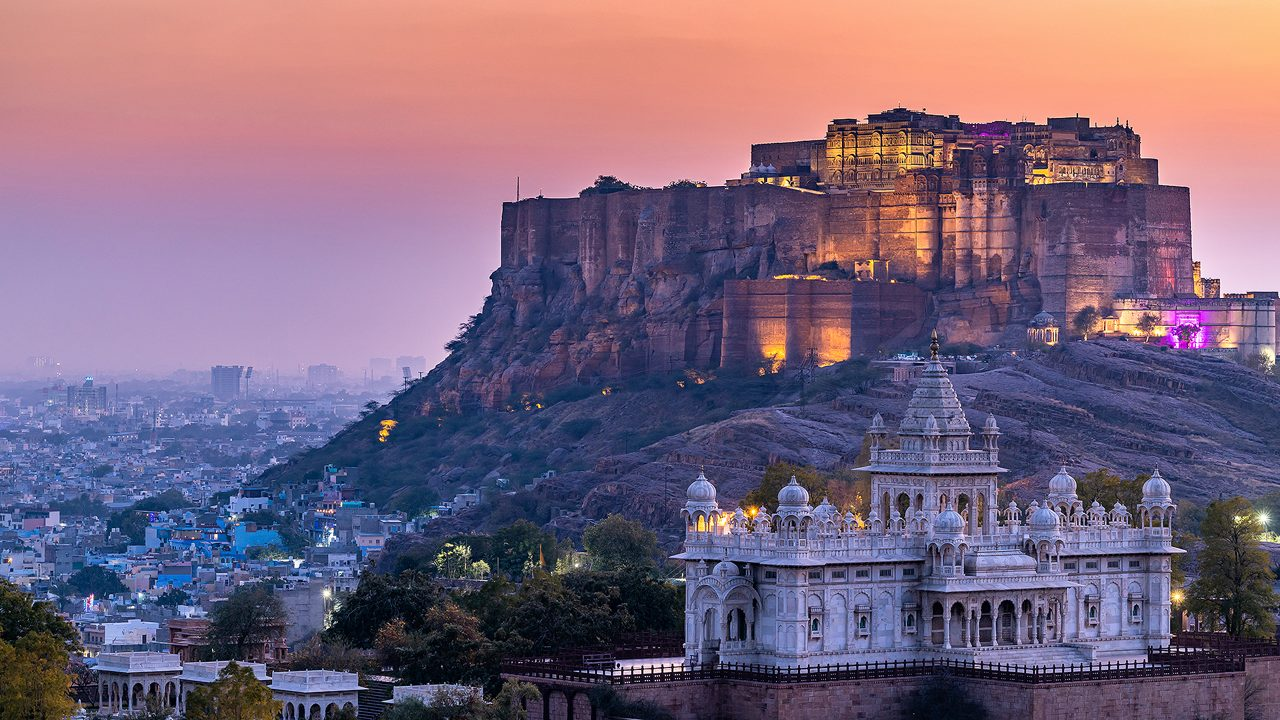
Rajasthan is one of India’s established filming regions for international and domestic productions. Mehrangarh Fort appeared in The Dark Knight Rises, Udaipur’s lake-palace environments carried Octopussy, and Jodhpur featured in The Fall. Operationally, the state spans private royal properties, centrally and state-protected monuments, desert border zones and a production-incentive system with its own claim route. This page explains the statewide operation and its city network, while detailed permit, incentive and city workflows remain with their specialist pages.
Why Hire a Line Producer in Rajasthan
Production houses engage the team for four reasons. First, a local crew base spread across the state’s corridors, so a unit moving between cities does not re-hire from scratch at each stop. Second, experience working with the authorities a production commonly encounters, from heritage-property trusts to district administrations and the state single-window. Third, working knowledge of the rebate scheme and its claim route, so eligibility is designed into the shoot, not discovered at wrap. Fourth, one accountable line production company in Rajasthan holding the budget, schedule and compliance file across every leg, which is the difference between a coordinated state shoot and five disconnected city engagements.

Line Production Rajasthan: What a Statewide Team Covers
Most enquiries arrive as a location list and a date range. From there the team builds the shoot as a single statewide plan: sequencing the cities into a workable route, drafting and filing the permits each location needs, assembling crew from the state pool with a travelling core carried between legs, coordinating the local film fixers in Rajasthan who run location access on the ground, arranging cargo clearance and equipment caches, and, where the production format is eligible, mapping it against the rebate criteria before the camera rolls. The team holds the production account, runs one cost report against the approved budget, and keeps a single compliance file current as the schedule changes. It is a statewide service layer, not a set of city vendors coordinated after the fact. Engaging one line producer in Rajasthan gives the production a single budget, reporting line and compliance file across every city leg.
Budget and Reporting Across Multiple City Legs
A statewide Rajasthan budget is divided by city leg without breaking the production into separate financial systems. Jaipur, Udaipur, Jodhpur, Jaisalmer and Ajmer each carry their own location fees, accommodation, transport, local crew and authority costs, while the travelling crew, shared equipment and central production office remain common across the schedule. Coding those expenses by city allows the producer to see where the budget is moving without receiving five unrelated local accounts.
Global Producers maintains one approved budget, purchase-order register and daily cost report for the complete Rajasthan schedule. Location deposits, permit fees, crew advances, convoy costs and accommodation commitments are recorded against the leg that incurred them, while shared costs remain visible at the statewide level. This also protects the incentive file because qualifying Rajasthan expenditure can be tracked as it occurs rather than reconstructed after release.
Schedule changes are handled through the same reporting structure. If a palace date moves, a desert day is lost to weather or a permit pushes one city behind another, the team reforecasts the affected transport, hotel, crew and equipment lines before the revised call sheet is issued. The producer receives one current forecast and one variance report instead of separate explanations from each city team.
Rajasthan’s Airport Network: One Hub, Five Corridors
Rajasthan operates as a hub-and-spoke production network, with Jaipur as the principal base. Jaipur International Airport is the state’s principal commercial aviation gateway, with domestic and selected international services that should be confirmed against the live schedule, and FICCI lists Jaipur among the Indian Customs offices handling ATA Carnets; the appointed broker should confirm the precise clearance point before freight is routed. The capital also holds the state’s deepest crew, equipment and government-liaison capacity. Regional airports can shorten cast and crew movements, while specialist equipment may enter through Jaipur, Delhi, Mumbai or another listed Customs office selected around the manifest and wider route.
| City | Airport | Air connectivity | Role in the network |
|---|---|---|---|
| Jaipur | Jaipur International (JAI) | International and domestic | Primary hub: crew and equipment base; Carnet handling subject to broker confirmation |
| Udaipur | Maharana Pratap, Dabok (UDR) | Domestic | Southern lakes-and-palaces access |
| Jodhpur | Jodhpur (JDH) | Domestic | Marwar and western desert approach |
| Jaisalmer | Jaisalmer (JSA) | Seasonal domestic; confirm the current schedule | Desert-season access to the frontier |
| Ajmer | Kishangarh (KQH) | Limited domestic | Ajmer and Pushkar secondary-unit access |
Regional airports shorten crew movements but do not replace a defined equipment-entry plan. When Jaipur is selected as the customs point, Carnet and broker documentation are coordinated there; equipment entering through Delhi or Mumbai remains tied to the applicable customs and re-export arrangements. State permission and incentive files remain coordinated through Rajasthan’s online and Tourism Department systems regardless of the arrival airport. Jaisalmer services are commonly seasonal, so confirm the live timetable and retain a road-transfer alternative through Jodhpur. The FICCI ATA Carnet office list confirms Jaipur as a listed Customs office, but not Jodhpur, Udaipur, Jaisalmer or Kishangarh.
How a Multi-City Rajasthan Route Is Sequenced
A Rajasthan route is not built only around the shortest road distance. It is built around the location with the least flexible access, then balanced against crew movement, equipment position, daylight, accommodation and the approval dates for the remaining cities. Jaipur commonly works as the preparation base, while Ajmer and Pushkar can be incorporated into a westbound road leg. Jodhpur provides a practical staging point before Jaisalmer, whereas Udaipur often needs its own southern movement because its palace, hotel and lake permissions are independent of the western desert route.
The order changes with the brief. A heritage-and-desert feature may move from Jaipur through Jodhpur to Jaisalmer. A palace-heavy commercial may combine Jaipur and Udaipur while keeping its travelling unit compact. Festival or religious-location work can place Ajmer and Pushkar on the critical path, particularly when access depends on a fixed event window or a working religious calendar.
Before the route locks, the statewide team compares location availability, permit lead times, road-transfer hours, airport options, crew rest, equipment duplication and the cost of holding hotels or vehicles through a schedule change. This is also where a line producer decides whether the whole unit should travel together, whether a second unit should move ahead, or whether equipment should be cached in the next city before the principal unit arrives.
The City Corridors: Where Each Leg Is Planned
Rajasthan is planned as five city corridors, each with a defined role in the route. These are the five principal operating corridors represented by dedicated city pages, not an exhaustive list of Rajasthan locations. Bikaner, Kota, Bundi, the Shekhawati belt and smaller districts are assigned to the nearest practical base according to the route. The summaries below set out what each corridor contributes; the detailed location, access and crew planning for each city lives on its own page.
Jaipur: Capital Base and Crew Hub
Jaipur is the state’s production capital and the usual base for a Rajasthan shoot. It holds the largest local crew pool, the primary equipment rental and storage, and the government-liaison bandwidth, so units stage pre-production here, drawing on Jaipur’s regional crew and available equipment, with specialist crew and packages sourced from Delhi or Mumbai according to the brief, before moving out to the other corridors. The dedicated line producer Jaipur page covers the full location, permit and crew detail.

Udaipur: Lake Palaces and Heritage Interiors
Udaipur offers lake palaces, ghats and royal interiors. Selected locations may suit European lakeside or Mediterranean-courtyard briefs, subject to scouting, framing and production design. Heritage access runs through several distinct authorities, from the development authority to royal trust properties and heritage hotels. The line producer Udaipur maps trust-controlled lake-palace access, royal interiors and local execution in detail.

Jodhpur: Blue City, Fort and Desert Approach
Jodhpur anchors the western corridor: Mehrangarh Fort exteriors and interiors, the indigo Blue City streetscapes, and the desert approaches leading toward Jaisalmer. It also works as the staging post for convoys moving further west. See line producer Jodhpur for Mehrangarh access rules and the Blue City municipal coordination.

Jaisalmer: Thar Desert and Fort Logistics
Jaisalmer runs the dune, fort and long-convoy desert shoots that define the western frontier, and it is the most logistics-heavy of the corridors. A dune shoot at Sam or Khuri moves large convoys with generator, water and catering support, and border-adjacent locations can require Border Security Force coordination. The line producer Jaisalmer page carries the dune-access and restricted-zone detail.

Ajmer: Pushkar and Secondary-Unit Logistics
Ajmer connects the Dargah heritage zone and the Pushkar circuit to the wider network, and works as a secondary-unit base and a halfway point between Jaipur and Jodhpur on long road schedules. It is rarely a first leg, but it is valuable for pilgrimage-route and festival coverage. The line producer Ajmer page covers the Dargah heritage zone and the Pushkar circuit.
Incentives and Permits at a Glance
Rajasthan’s Film Tourism Promotion Policy 2025 provides tiered subsidies for eligible feature films, web series, television serials and documentaries. Advertising films and videos are expressly ineligible. The applicable rate and cap depend on the production category, Rajasthan shooting days or screen time, and verified in-state expenditure. Subsidy claims must be filed within six months of the production’s release; the detailed thresholds, qualifying costs and claim workflow are maintained in the Rajasthan film incentives handbook, and the conditions are set out in the official Rajasthan Film Tourism Promotion Policy 2025.
Rajasthan permits can cross state and centrally protected monuments, private royal properties, municipal and police approvals, controlled airspace, wildlife authorities and, in the western desert, border-security clearances. Rather than duplicate those routes here, the team builds the project-specific permit plan against the specialist tracks set out in Rajasthan filming permissions.

Crew, Equipment and Logistics in Rajasthan
The Rajasthan crew ecosystem has matured over the last decade, built on the kind of long-term vendor relationships that keep a crew base dependable across repeat shoots. Jaipur hosts the primary rental and storage base for cameras, lighting, grip and generators and concentrates the seasoned regional crew; the western cities primarily provide fixer and ground-support teams, with equipment repositioned from Jaipur or brought in from Delhi or Mumbai as the shoot requires. On the ground, film fixers in Rajasthan handle location access and daily field coordination.
Transport is sourced locally in each city, crew accommodation is booked at vetted properties that can absorb late-night returns, and unit catering is planned against headcount, dietary requirements, call times and remote-location access. Specialist kit not held in the state is moved in from Delhi or Mumbai as domestic transport; only equipment entering India from overseas requires customs clearance, arranged through the appointed broker and port of entry.
Travelling Crew, Local Teams and Equipment Repositioning
A multi-city Rajasthan production normally combines a travelling core with city-level crews. The travelling group preserves creative and production continuity across the schedule, while local production managers, location teams, drivers, crowd coordinators and support crew expand or contract around the requirements of each leg. A feature moving through five cities therefore uses a different staffing model from a two-day commercial based entirely in Jaipur.
The line producer Rajasthan team sets that split during budgeting. Carrying every crew member through the complete route increases transport, accommodation and per-diem costs, but rebuilding the team in each city can weaken continuity and reporting. The working model retains the departments that must remain consistent and adds local capacity where location knowledge, access or a larger field footprint is required.
Equipment follows the same logic. Core camera and specialist packages may travel with the main unit, while generators, vehicles, routine lighting, crowd-control infrastructure and production supplies can be positioned locally or advanced to the next city. For the western desert leg, water, fuel, communications and medical support are treated as part of the moving production base rather than last-minute location purchases. This division reduces unnecessary convoy movement while keeping the equipment plan consistent with the approved budget.
Rajasthan as a Global Stand-In Market
Rajasthan can stand in for Middle Eastern, North African and Central Asian desert references, as well as European palace interiors, depending on the production design and location brief. Jaisalmer’s dunes and mud-fort textures double for Morocco and Egypt; Jodhpur and Bikaner cover walled-city and fort briefs; and Udaipur’s lake palaces can suit Italian and Mediterranean noble-interior briefs. The team benchmarks stand-in options against the original territory on a like-for-like cost basis, so a production can weigh the Rajasthan option against the location it is replacing on a comparable basis, subject to scouting and production design.

Multi-City Rajasthan Production Experience
What separates a statewide operation from a city fixer is having run the routes end to end. On Haji Backpacker, our team coordinated the unit’s train journey and filming from Jaipur to Ajmer, inside the Ajmer Dargah, and on to Pushkar, holding the moving-unit logistics, the railway and location scheduling, and the access and crowd-management discipline that a working religious site demands. As the line production company in Rajasthan for the project, Global Producers held the budget, permits, crew, transport and equipment on one file as the unit moved between cities.

Titik Nol covered a wider circuit, shooting across Jaipur, Udaipur, the Pushkar Mela, Ajmer, Mehrangarh Fort and the Jaisalmer dunes before continuing to Delhi. That schedule turned on multi-city sequencing, heritage access at major monuments, and the long-distance movement of crew and equipment between legs, all held on one statewide budget and compliance file. Both productions ran large multi-city units in Rajasthan.

Alongside these long-form schedules, the team has delivered a number of shorter advertising films and television series across separate Rajasthan locations, from single-city commercials to multi-location series work, each planned and run through the same statewide team.
Line Producer Rajasthan FAQs
Do I need a line producer for a two or three day Rajasthan shoot? For any production involving heritage-property access, restricted-zone filming, drone use, foreign crew or equipment imports, an experienced local production-services team is operationally advisable to hold the permits, the budget and the compliance file. For a light editorial or recce brief, a film fixer in Rajasthan can be enough.
Can foreign crews shoot inside Mehrangarh or Amber Fort? Yes, subject to application, fee payment and site-specific restrictions, with requirements varying by the managing authority for each property. The city pages cover the access route for each fort.
How do international crews clear equipment into Rajasthan? For eligible professional equipment, an ATA Carnet is commonly used through a listed Customs office. Other temporary-import arrangements must be confirmed with the appointed broker and port before dispatch.
How does the state interface work? State shooting applications are coordinated through Rajasthan Tourism’s prescribed application system (see the Rajasthan Tourism shooting-permission system), with the relevant departments and custodians retaining their approval responsibilities. Centrally protected ASI monuments, private heritage properties, controlled airspace and border-adjacent locations retain their respective approval routes.
To scope a Rajasthan production, share the proposed dates, city and location references, crew size, equipment origin and any heritage, aerial or border-area requirements. Global Producers can then return an initial route, permit map, crew plan and budget framework for the complete Rajasthan schedule.
