
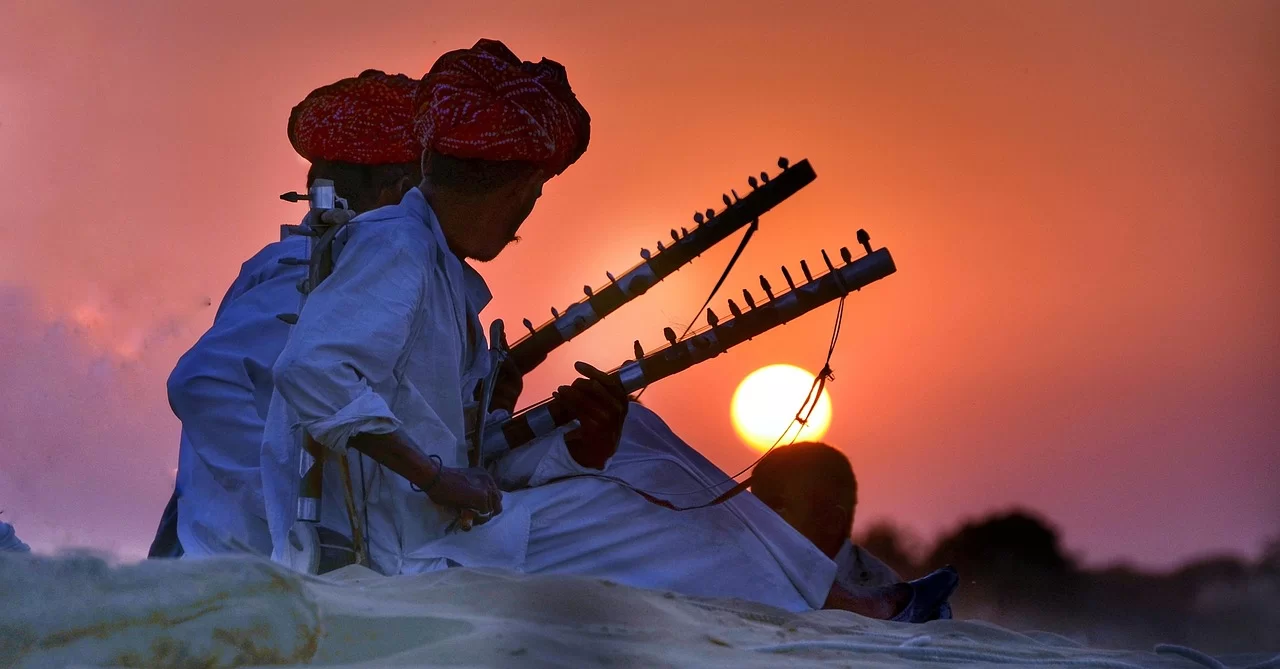
Filming in Rajasthan: Permits, Subsidy and Production Logistics

Advertising filming locations India — Rajasthan film fixer coordinating crew and production logistics for commercial shoots

Rajasthan is widely used for advertising film production in India because of its deserts, palaces, historic architecture, and expansive landscapes. Film fixers and line production teams coordinate crews, vendors, and permits across these environments to support commercial campaigns and international brand shoots.

A day at Amber Palace costs a foreign feature ₹3,00,000 before a single light is rigged, plus a refundable deposit of a quarter as much again. Five such days is ₹15,00,000. Under the state’s current scheme, it can all come back on an approved subsidy claim. That is the arithmetic that should decide whether you are filming in Rajasthan, and almost no producer arrives knowing it.

This is the operational guide to the state: what the money does, which authority controls which location, where to base a unit, where the crew comes from, and when to shoot. It is not the service page. If you are looking to engage a line producer Rajasthan productions rely on, that conversation starts there. What follows is the map.

Taragarh Fort Rajasthan, a hill fort location used for international film production
One state, four landscapes, and six separate authorities deciding who films where.

Why Producers Choose Rajasthan

Strip away the scenery and five practical reasons for filming in Rajasthan remain. They are the ones that survive a budget meeting.

  • It doubles for several countries. The Thar reads as Arabia or North Africa, the forts as Mughal or Central Asian, the lakes as almost anywhere temperate. Productions have used it to stand in across MENA for a fraction of the cost.
  • The monument fees come back. One hundred per cent of government location fees, for the first five days at each location, reimbursed to a subsidy-approved project.
  • Four terrains sit inside one subsidy jurisdiction. Desert, lakes, forts and working cities, and the claim accumulates statewide rather than city by city.
  • Delhi is close enough to support a large unit. Roughly five hours by road, with Mumbai behind it for feature-scale kit.
  • The permit system is complicated but navigable. Six issuing bodies, a fifteen day statutory window, and no meaningful discretion once the file is complete.

Nine UNESCO World Heritage Sites sit inside the state, including six hill forts inscribed together in 2013, the Jaipur Walled City added in 2019 and Jantar Mantar in 2010. Very little of that is closed to a camera. Nearly all of it is conditional.

Rajasthan’s Filming Geography

Few productions shoot one Rajasthan city, and permits do not travel between districts. Every stop attaches a fresh set of local approvals. The subsidy, by contrast, accumulates across the whole state, so a corridor schedule usually improves the film and the claim together. What it costs is days.

Jaipur, Udaipur and Jodhpur

Jaipur is the default base: an international airport, the deepest crew bench in the state, the widest hotel inventory and the shortest road run to Delhi. It carries the Walled City, Amber, Nahargarh and Jantar Mantar. Anything with imported crew, heavy kit or a tight turnaround should be based here, and the detail sits on our line producer Jaipur page.

Udaipur trades infrastructure for water, giving lakes, island palaces and a softer romantic register that Jaipur cannot produce, with palace access governed by trust rather than statute. Jodhpur offers the reverse: Mehrangarh rising off the rock, the blue city beneath it, and the desert opening westward. Both sit roughly six hours from Jaipur, both have domestic airports, and both thin out quickly on crew depth. Plan them as Udaipur and Jodhpur blocks, not as day trips.

Udaipur City Palace and Lake Pichola, a trust-administered filming location in Rajasthan
Udaipur trades infrastructure for water. Nowhere else in the state offers it.

Jaisalmer, Ajmer and Bikaner

Jaisalmer is the longest company move and the biggest desert. Its fort is one of the six UNESCO hill forts and, unusually, a living fort with residents inside the walls, which constrains crowd control, vehicle access and rigging in ways an empty monument does not. The Sam dunes deliver the classic vista, and the support logistics are the shoot: fuel, water, vehicles, comms, heat management.

Ajmer and Pushkar are pilgrimage centres, where cultural sensitivity and crowd conditions are stricter than any fee schedule implies. Bikaner offers Junagarh Fort, camel country and an unpeopled north, with long moves and thin infrastructure. Both reward productions that want frames nobody else has, and punish those that arrive assuming Jaipur’s resources.

Jaisalmer fort and Thar desert filming location in western Rajasthan
Jaisalmer is a living fort. The residents are not extras.
Diagram showing how the Rajasthan film subsidy is calculated from eligible spend, screen time tier and cap
The tier is set by screen time. The ceiling is set by format.

How the Subsidy Changes a Budget

The Rajasthan Film Tourism Promotion Policy 2025 took effect on 20 December 2025 and runs to 31 March 2029, replacing the 2022 policy that most online advice still quotes.

What the Numbers Actually Do

Subsidy is paid on cost of production incurred inside the state, and it scales with how much of the finished film Rajasthan carries. Five to fifteen per cent of screen time earns 10 per cent of in-state spend. Sixteen to thirty per cent earns 20 per cent. Above thirty per cent of screen time, or half of total shooting days in the state, earns 30 per cent. Shoot the whole film in Rajasthan and a further 5 per cent attaches.

Ceilings apply by format: ₹3 crore for a feature film, ₹2 crore for a web series or documentary, ₹1.5 crore for a TV serial. A feature must incur at least ₹2 crore of qualifying spend in the state, or ₹1 crore if made in the Rajasthani language. The full tier tables, the eligibility conditions and the claim mechanics sit on our Rajasthan film incentives page.

Where Rajasthan’s Scheme Runs Out

Here is what nobody tells an international producer. Rajasthan’s rate is competitive. Its cap is not. A ₹3 crore ceiling binds almost immediately on a large feature: spend ₹20 crore inside the state and you still collect ₹3 crore, an effective recovery of fifteen per cent rather than thirty.

So the honest case for Rajasthan is not the headline subsidy. It is the low base cost of shooting there, the monument fees that come back in full, and locations that cannot be bought anywhere else. Treat the subsidy as a meaningful contribution rather than the reason for the shoot, and the budget behaves. Treat it as the reason, and a big feature will be disappointed.

Diagram of the six authorities controlling filming permits in Rajasthan: state archaeology, ASI, palace trusts, district, DGCA and forest
Six authorities. A single Rajasthan day can answer to more than one.

Which Authority Controls What

Producers routinely conflate the subsidy with the permit. They are separate systems, run by separate bodies. Subsidy approval grants no right to stand anywhere in particular, and a location permit pays nothing back.

The Six Issuing Bodies

Six bodies issue what a Rajasthan shoot needs. Police sit inside the district track rather than alongside it, and the palace trusts are private parties rather than authorities, though in practice they gate more schedules than any of the six.

  1. Department of Archaeology and Museums, Rajasthan for state-protected monuments.
  2. Archaeological Survey of India for centrally protected monuments.
  3. District administration, meaning the collector, the municipal corporation and the police, for roads, crowds and closures.
  4. DGCA, under Digital Sky, for drone and aerial work.
  5. Forest authorities, meaning MoEFCC, the state Forest Department and NTCA, for reserves and national parks.
  6. The Film Facilitation Cell, which grants shooting permission itself through the single window.

How the Map Plays Out on the Ground

State-protected monuments such as Amber, Nahargarh, Jaigarh, Hawa Mahal and Jantar Mantar answer to the Department of Archaeology and Museums, Rajasthan. Centrally protected monuments answer to the Archaeological Survey of India on a separate track. Roads, crowds and closures run through the district collector and the police. Aerial work is governed nationally by the DGCA under Digital Sky, entirely separately from the permit that lets you stand on the ground beneath. Ranthambore, Sariska and Keoladeo sit under a national forest chain: MoEFCC, the state Principal Secretary for Forests, the Park Director and the Divisional Forest Officer, all under NTCA guidelines.

Shooting permission itself runs through a single window operated by the Film Facilitation Cell, filed on the state SSO portal, with a statutory commitment of fifteen days from a complete application. Note the name: a Facilitation Cell, not a film commission. Our guide to filming Rajasthan’s royal and restricted locations maps the boundary between the archaeology regimes and the private estates.

Forests, Tiger Reserves and Aerial Work

Ranthambore and Sariska are the images every producer wants and the permissions almost none of them secure. Filming inside a national park or tiger reserve runs on a national chain that has nothing to do with the state’s fifteen day window: approval from the Ministry of Environment, Forest and Climate Change, permission from the state Principal Secretary for Forests, assessment of the shooting plan by the Forest Department, sign-off from the reserve’s Park Director, and clearance from the Divisional Forest Officer for the specific range.

Crew sizes are capped, zones assigned, timings dictated by the reserve. Note too that the Kerala High Court has held commercial film shoots impermissible in national parks, sanctuaries and tiger reserves under the current framework. That judgment binds Kerala rather than Rajasthan, but it signals the direction of judicial thinking, and any commercial schedule inside an Indian reserve deserves legal advice before it is costed.

Aerial work is a separate matter again. The DGCA governs drone flight nationally through Digital Sky, zoning airspace green, yellow and red. Heritage sites, government installations and airport approaches all constrain what can be flown over Rajasthan, and the clearance is independent of the monument permit that lets you stand on the ground beneath. Aerial sequences need both, applied for in parallel.

The Trusts Set the Critical Path

The three most photogenic palaces in Rajasthan belong to nobody the state can lean on. City Palace Jaipur is administered by the Maharaja Sawai Man Singh II Museum Trust, Mehrangarh by the Mehrangarh Museum Trust, and City Palace Udaipur by the Maharana of Mewar Charitable Foundation. Each is a private body. Each sets its own commercial terms and keeps its own calendar.

No fifteen day rule binds them. They will not be hurried by a locked shooting schedule, and they are the single most common reason a Rajasthan recce turns into a rewrite. Approach the trusts first, months before the state paperwork, not after it.

Amber Palace Jaipur, charged per shooting day by the Rajasthan Department of Archaeology and Museums
Amber is charged per day, per monument, at rates set by production origin.

Monument Money: What Comes Back and What Doesn’t

The Department of Archaeology and Museums publishes a per day, per monument fee schedule, tiered by production origin. A foreign feature pays ₹3,00,000 a day for full access at Amber, and ₹1,00,000 a day at Hawa Mahal, Jantar Mantar or Nahargarh. Other state monuments are ₹50,000. A refundable security deposit of twenty five per cent of the fee is charged in addition.

Against that sits the provision worth memorising. A subsidy-approved project recovers one hundred per cent of fees paid at monuments and locations under state departments and under Government of India control, capped at five days per location. Six days at Amber recovers no more than five. Two locations at five days each recover twice what one location at ten days does.

Monument fees come back. Imported crew does not. Every rupee paid to a Delhi head of department leaves the state and leaves the claim, while the same rupee paid to a Jaipur grip enlarges the base the subsidy is calculated on. That single asymmetry should shape how a Rajasthan unit is staffed and how a monument-heavy schedule is blocked.

City Palace Jaipur at evening, administered by a private museum trust
The palaces the state cannot give you. Approach them first.
Foy Sagar Lake Ajmer, a Rajasthan water location used as a temperate stand-in
The state’s range is why it doubles. The range is also why the permits multiply.

What Rajasthan Doubles For

Substitution is a large part of why international productions come. The Thar around Jaisalmer and Bikaner reads convincingly as Arabian or North African desert. The sandstone forts carry Mughal, Persian and Central Asian architecture. Udaipur’s lakes and hill terrain give a temperate register that most of India cannot. Walled-city bazaars stand in for pre-modern urban environments across a wide geographic span.

The economics are the point. A production that would otherwise shoot Morocco or the Gulf can hold the same frame in Rajasthan at a materially lower base cost, with an English-speaking production economy and a five hour road link to Delhi behind it.

Where Substitution Stops Working

Be honest about the limits, because the wrong substitution costs more than it saves. Rajasthan cannot double for the Gulf’s contemporary architecture, and it has no coastline. The heritage is unmistakably Indian at close range, so wide shots substitute far better than detail. Signage, crowd wardrobe and vehicle dressing all need active management, and any sequence resting on a specific real monument abroad will not survive here.

Substitution also runs into the permit map. A desert vista costs almost nothing to clear; the same shot inside a UNESCO hill fort or a tiger reserve carries conditions that can reshape a schedule. Decide what the frame actually needs before committing the location, rather than after the recce photographs come back.

Rajasthan production workflow from script and budget through subsidy registration, single window, monument permits, trust approvals, shoot, CA audit and subsidy claim
Script to subsidy claim. Steps 4 to 7 run in parallel, and the trusts start first.

What Stops the Fifteen Day Clock

The state’s fifteen day commitment is real, and it is also conditional on a word most producers skim past. Permission is granted within fifteen days of receiving a complete application, with participating departments expected to clear on the portal within seven days of referral.

An application missing a script synopsis, a crew list, proof of insurance or any required annexure does not start that clock. It is not rejected either. It simply sits, unremarked, while the two weeks a producer had already budgeted evaporate. This is the single most common way a Rajasthan schedule loses time, and it is entirely avoidable.

Register the project before principal photography. File the single window application first, then run the monument permits, the trust negotiations, the drone clearance and any forest approval alongside it rather than behind it. Treat the approval, not the shoot day, as the critical path, and map every special shot to its issuing body during prep.

The Crew Ecosystem

Rajasthan has a real production economy, built on decades of Hindi cinema, advertising and a heavy wedding and events industry. It is not self-sufficient for a large unit, and pretending otherwise is how schedules break.

Locally you can staff coordinators, location managers, drivers, spot and base camp teams, and a competent grip and lighting bench concentrated in Jaipur. Junior artists and period extras come at scale, as do horses, elephants and camels through licensed handlers, subject to animal welfare clearances that experienced film fixers in Rajasthan insist on rather than negotiate.

Why Imported Crew Earns Nothing Back

Above that line, the unit travels in. For most commercials and mid-sized productions, senior heads of department, high-end camera packages, technocranes and specialist rigs come commonly from Delhi, roughly five hours away by road. Larger features frequently draw from Mumbai as well, particularly for camera, cranes, VFX supervision and specialist crew.

That spend sits outside Rajasthan and therefore outside the subsidy base. It is the strongest commercial argument for building as much of the crew locally as the work allows, and it is also why the kit run matters operationally: equipment moves at road speed, and a technocrane held up outside Gurugram does not care about the call sheet.

Line production and fixer services crew working on a Rajasthan film shoot
The local bench is real. The imported layer should be lean.

Where the Equipment Comes From

Crew and kit follow different roads. Jaipur supplies the working layer: grip, lighting, base camp, generators, vehicles and the standard camera bodies a commercial can shoot on. It is enough for a modest unit and it books quickly in the October to March window.

Anything above that comes by truck from Delhi, roughly five hours on the road, which is the practical source for high-end camera packages, larger grip and lighting orders and most specialist rigs. Mumbai supplies what Delhi cannot: technocranes, motion control, the deepest lens inventory and feature-scale support. That is a two day run, sometimes more with a company move at the far end.

Build the lead times in rather than discovering them. Reserve Delhi kit weeks ahead in peak season, allow a buffer day either side of any long haul, and remember that a truck held up outside Gurugram does not care about the call sheet. None of that freight spend qualifies for the subsidy, which is one more reason to source locally wherever the frame allows.

What Filming in Rajasthan Actually Costs

Day rates move with scope, so the durable thing is the shape of the budget. Read the third column: it is where a line producer earns the fee.

Budget lineWhat drives itRecoverable?
Line production and local entitySingle window filing, department liaison, subsidy claimCounts as qualifying spend
Monument and location feesArchaeology per-day schedule, tiered by production origin100%, first 5 days per location
Security deposits25% of the shooting fee, per monumentRefundable
Palace trust accessNegotiated privately, on the trust’s calendarCounts as qualifying spend
Permits and complianceDistrict, police, DGCA, forest and NTCA where relevantPartly reimbursable
Local crewJaipur bench: grip, lighting, spot, base campCounts as qualifying spend
Imported crew and equipmentDelhi for most units, Mumbai for feature scaleNo, the spend leaves the state
Company movesRoughly six hours between major centres; permits do not travelCounts if incurred in state
Junior artists, extras, animalsLicensed handlers and welfare clearancesCounts as qualifying spend
Audit and claimChartered accountant with UDIN, filed within six months of releaseEnables everything above
Two lines are fully recoverable, one is refundable, and one earns nothing at all.

The Production Calendar

Rajasthan is a cool-season shoot, and the best months are also the busiest. Wedding season overlaps the prime window and competes directly for crew, vehicles and hotel rooms. The desert districts run hotter and drier than Jaipur, so the workable window out west is shorter still.

MonthsConditionsShootabilityPlan around
October to NovemberCooling, clear skiesPrimeWedding season begins competing for crew, vehicles and rooms
December to JanuaryCold mornings, low winter sunPrimeBest light; book monuments and trusts far ahead
February to MarchWarming, comfortableGoodFestival closures and crowd restrictions in the walled cities
April to June40°C and above, desert higherHardExteriors at dawn and dusk only; heat is a safety issue
July to SeptemberMonsoon, humid, unpredictableDifficultWeather cover, equipment protection, light loss
The prime window is October to March. So is everyone else’s.
Thar desert dunes in Rajasthan, a cool-season filming location
The western desert shortens the workable window further.

Rajasthan Against Morocco, Jordan and Saudi Arabia

These are the territories a producer actually weighs Rajasthan against when the script says desert, fort or palace. The comparison is not close on rate, and it is not close on cap either, but not in the same direction.

TerritoryHeadline rateCap per projectMinimum spend
RajasthanUp to 30%, plus 5% if wholly in-state₹3 crore (feature)₹2 crore in-state (feature)
Morocco30%UncappedAbout 10 million dirhams and 18 shooting days
Jordan25% to 45%, points-basedUS$5.25 millionUS$250,000
Saudi ArabiaUp to 60%No published per-project capSAR 750,000 (feature)
Rates and caps as published by each administering body. Terms are revised periodically; confirm before budgeting.

What the Table Does Not Show

On paper Rajasthan loses. A ₹3 crore ceiling is modest next to Morocco’s uncapped scheme, Jordan’s US$5.25 million and Saudi Arabia’s headline sixty per cent. Read only the table and you would shoot the desert somewhere else.

The table omits base cost, and base cost is where Rajasthan wins. Crew, vehicles, accommodation, junior artists and construction are materially cheaper in India than in Morocco or the Gulf, so a smaller percentage of a smaller number can still land a lower net cost. It omits the full reimbursement of government location fees, which no neighbour matches. And it omits that Rajasthan comes with an established, English-speaking production economy and Delhi five hours away, where a Saudi shoot still imports most of its senior crew.

Compare net cost per shooting day, not headline percentages. Our state-wise incentives reference sets the Indian schemes side by side, and the Rajasthan line producer guide works the corridor through district by district.

Film crew shooting on location in Rajasthan, India
Compare net cost per shooting day, not headline percentages.

Five Mistakes That Cost Producers Money

These are not hypothetical. Each is recoverable in prep and expensive after wrap, and each one recurs on productions filming in Rajasthan for the first time.

  1. Locking trust dates last. The palace trusts answer to no statutory deadline. Approaching them after the state paperwork is the most common reason a Rajasthan schedule is rewritten.
  2. Treating the subsidy as automatic. It is conditional on a U or U/A certificate, on 4K and Dolby delivery, and on registration before principal photography. An A certificate removes it entirely.
  3. Budgeting imported crew as qualifying spend. Delhi and Mumbai crew and kit leave the state, and leave the claim. Only in-state spend builds the base.
  4. Assuming district permits transfer. They do not. Every district attaches a fresh set of local approvals, so a corridor schedule needs a fresh clearance at every stop.
  5. Leaving the accountant until wrap. Cost of production must be certified by a chartered accountant with a UDIN, and the claim filed within six months of release. Nobody reconstructs a Rajasthan schedule from loose receipts.

Working With a Line Producer in Rajasthan

Everything above resolves into a handful of decisions that get made before principal photography or not at all. Register before the camera rolls. Approach the palace trusts months out, because no statute binds them. Block monument access in five day units. Split the budget into spend that lands inside the state and spend that does not, because only one column earns. Capture receipts in the format a chartered accountant will certify with a UDIN, from the first day of prep.

Then diarise the six month claim deadline from release, and put the Tourism Department logo in the opening titles, which the policy makes mandatory. Our India filming compliance checklist covers the documentation an approved file needs.

Filming in Rajasthan means working with a state that pays generously and permits slowly. The productions that recover the most are not the ones that found the best locations. They are the ones that treated the claim as a production task rather than an accounting exercise afterwards, and that sequenced six authorities against a shooting schedule instead of discovering them one at a time.

Back to top: