
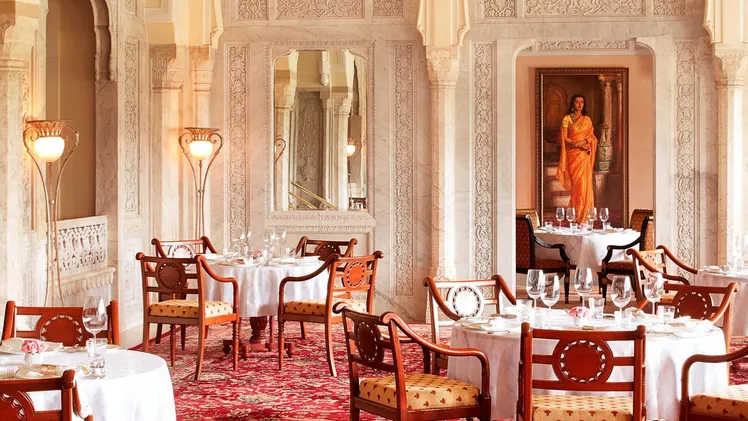
Rajasthan’s most cinematic backdrops are also its most controlled. The state’s palaces, forts and royal estates are not open sets: many are still private royal residences, trust-administered monuments or luxury palace-hotels. That makes Rajasthan restricted locations a category every producer has to plan around before a shoot is greenlit, because access here is rarely governed by a single permit.
A fort may be publicly accessible yet tightly regulated for filming. A palace may operate as a five-star hotel while remaining a working royal residence with strict narrative and visual sensitivities. This guide maps the restricted filming locations in Rajasthan property by property: who controls each one, what access it allows, and how productions actually secure it without losing the schedule.
What Makes a Rajasthan Location “Restricted”
“Restricted” in Rajasthan rarely means closed. It means controlled by a specific gatekeeper, with its own approval route, lead time and on-ground limits. Most properties fall into one of seven categories: private royal residences still occupied by the family; trust-administered palaces and museums; palace-hotels run by hospitality groups; living forts with resident communities; ASI and state-archaeology protected monuments; border and defence-sensitive zones; and wildlife reserves under forest control. The distinction matters for planning: border and defence zones, protected forests and tiger reserves are genuinely restricted under law, while royal residences, trusts and palace-hotels are privately controlled rather than legally off-limits, each answering to its own gatekeeper.
Reading the Gatekeeper Map
The practical consequence is that two locations a few kilometres apart can sit under entirely different authorities, with lead times ranging from a fortnight to several months. A state-managed monument may clear within the state’s published single-window timeframe, while a private palace-hotel answers only to its own management calendar and a royal trust may take far longer to commit.
Knowing which gatekeeper controls a property (and approaching the right one first, in writing) is what separates a workable plan from a stalled one. The most common failure is not a refusal; it is a request sent to the wrong authority, or sent too late for a property whose calendar required a longer planning allowance.
Rajasthan’s mix of private, state, central and security-controlled properties makes fragmentation a central planning issue. A single shoot week can touch a royal trust, a five-star hotel, an ASI or state-protected monument and a defence-sensitive zone, each with its own paperwork and timeline. Treating them as one approval process is the mistake that costs productions their first-choice locations.

| Category | Typical authority | Indicative planning allowance | Main restriction |
|---|---|---|---|
| Royal palace / residence | Royal trust or family | 4–8 weeks or more | Private wings require express approval; defined zones only |
| Palace-hotel | Hotel management | Occupancy-dependent | Guest operations; premium fees |
| Protected monument / hill fort | ASI, state archaeology or relevant site authority | 2–6 weeks | Permit-specific conservation and access conditions |
| Living fort | Local + heritage authorities | Variable | Resident community; fragility |
| Wildlife reserve | Rajasthan Forest Department / Chief Wildlife Warden | Variable | Approved zones, crew and equipment limits; ecological conditions |
| Border / defence zone | Defence authorities | Variable | Separate airspace and security clearance; access may be refused |
These are Global Producers’ planning allowances based on production experience, not published authority service standards. Current availability and processing time must be confirmed for each property and proposed activity.
Royal Residences and Palace Trusts
Several of Rajasthan’s headline palaces are still the homes of their former ruling families, with only defined wings opened to the public through charitable trusts. These are among the most restricted filming locations in the state, because a private residence and a working museum exist inside the same walls and answer to different rules.
City Palace, Jaipur and Udaipur
The City Palace in Jaipur remains the official residence of the Jaipur royal family (the private Chandra Mahal areas should not be assumed available without express approval), while the public museum areas are administered by the Maharaja Sawai Man Singh II Museum Trust. Filming is negotiated with the trust, confined to agreed courtyards and galleries, kept clear of the residence, and timed around public visiting hours that the museum is reluctant to suspend. Access to these controlled Jaipur sites is coordinated by film fixers in Jaipur working with the trusts and authorities.
The City Palace in Udaipur is similarly the seat of the Mewar family, with several wings open as the City Palace Museum under the family’s foundation and the rest reserved as private residence and heritage hotels. Access arrangements within the complex can change as portions of the property remain under different ownership and management structures, so early written confirmation matters more here than almost anywhere else in Rajasthan. Our deep-dive on filming at Udaipur City Palace covers the Mewar trust, the films shot there and the permission process in full.
At both palaces the workable approach is the same: define the exact frames you need, accept that interiors carry the tightest limits on lighting and rigging, and lock written trust approval weeks ahead rather than assuming a heritage site that tourists walk through is open to a unit.

Umaid Bhawan Palace, Jodhpur
Umaid Bhawan is effectively three properties under one roof: the Jodhpur royal family’s private residence, a Taj-managed luxury hotel, and a museum. Each section is approached separately, and the residence and active hotel guest areas are the most tightly restricted. Its global profile as a venue for high-value private events makes management cautious about commercial shoots.
For productions, that means the museum and exterior elevations are the realistic targets, the hotel areas depend entirely on occupancy and management goodwill, and the residential areas should not be included in a plan unless expressly released in writing. Engagement has to be early, specific about areas and dates, and backed by the kind of references a luxury property expects.
Palace-Hotels Under Hospitality Control
Many of Rajasthan’s most photogenic palaces now operate as luxury hotels. Here the gatekeeper is not a government body or a trust but the hospitality group running the property, and filming is treated as a commercial booking scheduled around paying guests rather than a monument permit.
Rambagh Palace, Jaipur
Rambagh Palace is a high-value heritage filming location in Rajasthan operating under restricted access protocols. Once the principal residence of the Jaipur royal family (expanded into a palace by Maharaja Sawai Man Singh II), it was handed to Taj Hotels in 1972 and runs today as a five-star Taj heritage hotel.
Shoots are scheduled around guest occupancy, confined to agreed gardens, courtyards and public rooms, and priced as a hospitality engagement rather than a permit, which means limited windows, premium day rates and tight controls on crew size, equipment movement and noise. The payoff is one of the most refined palace interiors in India; the constraint is that the hotel’s booking calendar, not a filming season, decides when a unit can come in.
Taj Lake Palace and Heritage Hotels
The Taj Lake Palace in Udaipur (the white marble island palace famously used as a location in Octopussy, 1983) now functions as a Taj luxury hotel where commercial filming depends on management approval, guest operations and the requested production footprint, constrained by guest privacy and the logistics of an island accessed only by boat. It remains a location whose current availability must be confirmed directly with management.
Heritage-hotel palaces such as Devi Garh, Deogarh Mahal and the many converted forts and havelis across Rajasthan follow the same model: owner or management approval, restricted areas, premium fees, and availability driven by the property’s occupancy rather than a production calendar. Smaller heritage hotels are often more flexible than the flagship names and can stand in convincingly for them.
Living Forts and Fragile Heritage
Some of Rajasthan’s forts are restricted less by ownership than by who lives inside them and how fragile they are. These sites reward productions that plan around residents and conservation limits, and punish those that treat a heritage monument like a backlot.
Jaisalmer Fort
Jaisalmer Fort is one of the world’s few living forts: thousands of people still reside inside the twelfth-century Sonar Quila, a UNESCO World Heritage Site built of golden sandstone. It has a long filming history (Satyajit Ray’s Sonar Kella revived the city’s fortunes, and Border, Sarfarosh, Lamhe and others were shot in and around it), but execution is constrained on every side.
Resident communities live along the narrow stone lanes, the structure carries documented fragility from drainage and load stress that has placed it on heritage watch lists, and the fort sits in a border district with its own sensitivities. Heavy equipment, crowd control, generators and night work all need careful negotiation with local authorities and the residents whose homes double as the set.
In practice, the fort’s golden exteriors, ramparts and the approach across the desert are the dependable frames; deep interior and resident-lane work is where productions slow down. Units that engage the local administration and fort residents early, keep footprints small and shoot the dense lanes with compact crews get far more out of Jaisalmer than those that arrive expecting a cleared monument.

Mehrangarh and Trust-Managed Forts
Mehrangarh Fort in Jodhpur, run by the Mehrangarh Museum Trust, is one of Rajasthan’s most film-friendly heritage sites when approached correctly: it doubled for the prison city in The Dark Knight Rises. The trust grants access to clearly defined zones with conservation limits on rigging, lighting intensity and crew numbers, and rewards productions that respect them with some of the most dramatic ramparts in the country.
Junagarh Fort in Bikaner and other trust-administered forts operate on the same basis: a single controlling body, defined shooting areas, fixed conservation rules, and approval timelines that reward early, detailed applications over last-minute requests.
Chittorgarh, Kumbhalgarh and Authority-Specific Fort Access
The six Hill Forts form one UNESCO serial property, but individual forts and shooting areas do not share one filming gatekeeper. Before filing, confirm whether each proposed area falls under ASI, state archaeology, the Forest Department or another site authority. The applicable authority then sets the fees, access route and conservation conditions.
These sites can be filmed when the application is submitted early and the approved scope is respected. Equipment distances, crew size, permitted zones and processing time are authority- and project-specific conditions, not one fixed framework applied uniformly across every fort.
Legally Restricted Zones: Border, Defence and Protected Areas
Western Rajasthan (the Jaisalmer and Barmer belt) runs along the international border with Pakistan and carries defence-sensitive restrictions that sit on top of the usual filming process. The desert around Longewala and the frontier districts has stood in for war and frontier cinema, but shooting close to the border, near military installations, or in notified protected zones needs clearance beyond the standard state route.
Drone work in border-adjacent and defence-sensitive areas requires separate aviation, airspace and security checks. Notified restricted airspace, military installations and sensitive infrastructure may remain unavailable regardless of the ground-location permission. Productions planning desert, dune and frontier sequences here build extra lead time for defence clearances and treat aerial permissions as a separate, uncertain track rather than an assumption baked into the boards.

Professional filming in Rajasthan’s national parks, sanctuaries and tiger reserves requires advance application through the Rajasthan Forest Department and approval from the competent wildlife authority. Access depends on the approved zone, dates, crew, vehicles, equipment and ecological conditions; it should not be treated as general location access. The broader national permit framework these legally restricted zones sit within is set out on filming permits in India.
Productions needing wilderness or wildlife backdrops plan around buffer zones and seasonal access windows rather than assuming entry, and budget for forest-department escorts and the restrictions that come with them. As with the palaces, the location is achievable, but only on the authority’s terms, not the production’s.
Cultural and Narrative Sensitivities
A significant Rajasthan planning consideration is cultural rather than administrative. Its forts and palaces carry living Rajput history, and depictions of royal figures, traditions or sensitive episodes have drawn organised objection, most visibly around productions perceived to distort that heritage, which have faced protests or withdrawals of location access.
For producers this means the strongest paperwork is not always enough. Anticipating community and trust sensitivities, aligning the narrative framing with the property’s expectations, and keeping local stakeholders informed are part of securing a restricted Rajasthan location, not an afterthought once the camera is on the floor.
When the Flagship Is Closed: Stand-Ins and Workarounds
Because the marquee properties are the hardest to secure, experienced Rajasthan units rarely depend on a single restricted location. The state’s depth is its insurance: when a City Palace or the Lake Palace is unavailable, a lesser-known heritage hotel, a film-friendly trust fort, or a privately owned haveli can carry the same visual register at a fraction of the friction.
Smaller converted-palace hotels across the Shekhawati, Bikaner and Mewar belts are often more willing to host a unit than the flagship names, and many forts under state archaeology or local trusts grant access more readily than the headline monuments. For interiors that no property will allow a full crew into, a partial build dressed against a real courtyard, or a set constructed on a studio floor and matched to plates shot at the location, remains the standard workaround.
The planning task is to decide which restricted property justifies the wait, which has an available stand-in, and when a controlled build is more reliable than uncertain access.

Access, Costs and Planning
Budgeting a restricted Rajasthan location starts with accepting that the cost is rarely just a permit fee. State-managed monuments follow their applicable published fee schedules, and eligible productions approved under the 2025 film policy may later claim conditional reimbursement of qualifying government-location fees, which is not an automatic or upfront waiver. The properties that draw productions to Rajasthan in the first place sit outside that system, and each category prices access differently.
Royal trusts negotiate case by case, weighting the property’s prestige and the production’s profile more than any published rate, and can take weeks or months to commit. Palace-hotels charge premium hospitality day rates on top of a lost-revenue allowance for blocked rooms, so the real cost is occupancy-driven and rises sharply in peak wedding and tourist season. ASI and state hill forts apply fixed monument fees with conservation conditions, and those conditions (equipment distances, crew caps, prohibited zones) carry their own cost in slower setups.
Forest reserves add escort charges and ecological constraints, while border zones add security coordination and the schedule risk of a defence clearance that may not arrive on time. The single biggest hidden cost across all of them is lead time: a location confirmed late, or confirmed by the wrong authority, forces reshuffles that ripple across the entire Rajasthan schedule.
Identifying the Gatekeeper and Planning the Shoot
Because control is fragmented, the decisive first step at any restricted location is identifying the right gatekeeper: ASI or state archaeology for protected monuments, the relevant royal trust for palace-museums, hotel management for palace-hotels, the Forest Department for reserves, and defence authorities for border zones. Sending one generic application to the state and hoping it routes correctly is the surest way to lose a location.
The Rajasthan Film Tourism Promotion Policy offers a single-window facilitation route and conditional reimbursement of eligible government-location fees for approved productions, with the current terms set out on the Rajasthan film incentives handbook; trust, hotel and defence-controlled properties sit outside it and must be approached directly and early. Where a production wants those relationships held and the whole restricted-location map managed as one workstream, that is the work of a line producer Rajasthan. The state single-window system covers specified state-administered permissions, including police and traffic, municipal coordination, state-protected monuments and the District Collector; it does not replace ASI, private-property, wildlife, aviation or defence approvals.

The pattern across every category is the same: the locations are achievable, but only for productions that map control accurately and engage early. Lead times stretch when a property answers to a private trust, a hotel calendar or a defence authority rather than a public office, and the cost of getting the gatekeeper wrong is a lost shoot day, not just a delayed form.
Built into the schedule from the first recce, with the right authority identified, written approvals in hand, and cultural sensitivities respected, Rajasthan’s restricted palaces, forts and estates remain some of the most rewarding backdrops in Indian and international cinema.
