

To hire crew for line production in India, a visiting production first fixes the shape of the shoot: the format, the locations, the shooting dates, the department requirements and how an incoming unit will sit alongside local hires. From there an experienced line producer in India or an Indian production-services team does the sourcing, bringing in department heads and local crew, checking credits and references, negotiating rates, issuing contracts and aligning every hire to the schedule, permits, insurance and budget. That single accountable route is what separates a properly crewed production from a stack of disconnected day-hires.
The crew is where a budget either holds or leaks. India carries deep, experienced talent across camera, lighting, art, sound and post at a fraction of North American or Western European cost, but the depth is uneven between cities and the strongest people book out months ahead. This guide sets out what an A-list crew in India actually means, how a line producer sources one, and the India-specific checks worth making before anyone is confirmed.

What Defines an A-List Crew in India
A-list here is about track record on comparable work, not a marquee name. It means department heads who have delivered international features, series or commercials; who run to a call sheet, hold continuity, and understand the paperwork a foreign production needs for insurance, customs and the rebate. It also means crew who keep that standard under Indian shooting conditions, working through heat, crowds, traffic and permit windows without the schedule slipping.
The distinction that matters is reliability across a full shoot rather than a strong reel. A camera or sound head who has carried a multi-week schedule for an overseas producer is a different hire from a talented freelancer who has only cut short-form work, and the crewing decision turns on that history.
Part of why an Indian crew slots into international work is a deep training base. India’s crew base includes graduates of institutions such as the Film and Television Institute of India in Pune, alongside technicians and department heads who have developed through established studio, advertising and regional production systems. Performing and directing talent also emerges from institutions such as the National School of Drama in Delhi, while a growing number of technicians train at international film schools, so a line producer can staff a unit that meets global production demands without a long ramp-up.
Why Crew Selection Drives Line-Production Outcomes
The line producer sequences the shoot; the crew executes it, and the two are inseparable. A director of photography who works fast protects the schedule. An assistant director who runs a disciplined floor protects the budget. A sound recordist who flags a location problem at recce saves a reshoot. Weak links do the opposite, and they surface as overruns, continuity errors, or a qualifying-spend record that will not survive an audit.
Because every department feeds the same budget and the same incentive claim, one under-qualified head can cost more than the saving on the day rate. This is why crewing is treated as a production-control decision, made with the line producer, rather than a series of isolated bookings.

Sourcing Crew Across India’s Production Hubs
Depth is spread across a handful of hubs, and a services unit draws on whichever the project needs. line producers Mumbai work from the deepest crew, studio and post base in the country, which makes the city the default for features and long-form OTT. Hyderabad brings large-format studio capacity for period builds and effects-heavy work; the southern belt around Chennai anchors strong crew and studio depth with practical port and carnet handling for equipment landing; Bengaluru carries one of the deepest visual-effects and post talent pools; and Delhi with the wider National Capital Region covers the northern circuits.
The advantage of routing crew through one national unit is that specialists move between cities under a single plan rather than being imported at cost. A DoP based in Mumbai, a period art department out of Hyderabad and a local unit in the north can sit inside the same schedule, with the regional teams reporting to one budget instead of operating as separate vendors.
Availability, not just depth, decides which hub a shoot draws from. Studio floors, marquee heads and specialist kit in the busiest cities are booked against a crowded calendar, so a production that fixes dates early has the widest choice, while a late schedule is steered toward whichever hub can still field a full unit. Matching the right city to each sequence, rather than forcing the whole shoot through one base, is part of what a national unit does before the crew list is locked.
The Hiring Process: Sourcing, Vetting and Contracts
Sourcing runs through the line producer’s standing relationships and the affiliated craft associations, not a cold job board. Heads of department are approached for the dates first, because the calendar decides availability before anything else; the rest of the unit is then built under each head to keep working styles consistent.
Credits are checked against comparable productions rather than taken from a showreel. A reference from a producer who has run a similar shoot, on similar dates, with a similar budget, tells you more than the polish of the cut. This is also where any chain-of-command or reliability concerns are caught before a contract is issued.
Rates are negotiated against the role and the schedule, with overtime and turnaround terms set in writing. Each hire is then contracted, insured and run through payroll so the spend is documented as it happens and stays inside the qualifying base the rebate depends on, rather than reconstructed at wrap.

Key Departments and How to Hire Them
Every department is hired for the format and the conditions of the specific shoot rather than to a generic checklist. The heads below are the ones a visiting production feels most directly, and each is judged on delivered work of a comparable kind, on the ability to hold standard under an Indian schedule, and on how cleanly the role slots against an incoming unit.
| Hire | What to verify | When to engage |
|---|---|---|
| Line producer | Comparable productions, budget control, regional network | Before dates and locations are locked |
| DoP and camera team | Format experience, kit compatibility, availability | Early pre-production |
| Production designer | Build experience, sourcing network, schedule feasibility | Before final budgeting |
| Production manager | Logistics, vendor control, multi-city experience | Early pre-production |
| First AD | Schedule discipline, scale of previous units | Once the shooting plan is defined |
| Sound team | Location experience and equipment requirements | Before technical recce |
| Local support crew | Regional experience, travel and language needs | After locations are confirmed |
Line Producer
The line producer is the first hire and the one that governs the rest, running the budget, the schedule and compliance across the shoot. Engaging a line producer India early, before locations and dates are locked, is what lets every later hire be sequenced against a real plan.
Camera, Design and Sound
The DoP is hired for experience with the intended format and the shooting conditions, for familiarity with the camera and lighting packages available locally, and for a camera team that travels as a unit. Continuity of that team across the schedule matters as much as the individual credit.
The production designer is responsible for the overall visual look of the film, including sets, locations and costumes, and on an international production must balance a global standard with local sourcing and craft. Assessing the design portfolio alongside the ability to build and dress within Indian supply chains is the practical test.
Production Manager, First AD and Gaffer
Below the heads, the production manager, first assistant director and gaffer carry the day to day. The production manager holds logistics, cash flow and vendor coordination; the first AD runs the floor and the call sheet; the gaffer leads the lighting crew. These are hired for local knowledge as much as craft, because they are the roles that absorb the friction of an unfamiliar city, and a line producer will usually field a trusted core for each.
Location sound is hired for the ability to work clean under real Indian conditions, with crowds and traffic to manage, while editorial, mix and visual effects are best kept in-country where the work still qualifies for the rebate. Keeping post in India, in Mumbai, Chennai or Bengaluru, both protects the incentive and shortens the path to delivery.

What Crew Costs in India
Cost is a large part of why productions crew in India. Base rates for experienced crew and department heads sit well below North America and Western Europe for comparable quality, so the same budget buys more shooting days and larger units. Rates climb with seniority, with demand on marquee heads, and with the length and complexity of the schedule, so a credible crew estimate comes from the real department list against the shoot dates rather than a headline day rate.
The larger saving is structural. Eligible spend on Indian cast and crew may form part of qualifying production expenditure when it is incurred in India through the approved applicant structure and supported by the required contracts, payroll and payment records, and employing at least 15% Indian labour may also qualify the production for the additional 5% incentive under the current scheme. Keeping the crew spend clean and coded as it happens is what protects that position and turns a lower day rate into a lower net cost at wrap.

India-Specific Checks Before You Confirm a Hire
Beyond credentials, a handful of checks specific to shooting in India decide whether a hire holds up on the floor:
- availability across the exact shoot dates, confirmed before anything else;
- regional and language experience for the states on the schedule;
- standing with a craft association where the role calls for it;
- travel and accommodation requirements across a multi-city shoot;
- familiarity with the specific camera, lighting and grip packages in use;
- rate cards and overtime expectations agreed in writing;
- references from comparable productions, not general credits;
- clear contracting, insurance and payroll arrangements;
- the ability to work alongside an incoming international unit.
On the association point, most Mumbai-based film labour is organised through the Federation of Western India Cine Employees and its affiliated craft bodies, which together cover the great majority of technicians and support crew. Where a role falls within that structure, checking the applicable association position early can reduce the risk of membership or working-condition disputes during production, and a line producer will know which craft body applies.
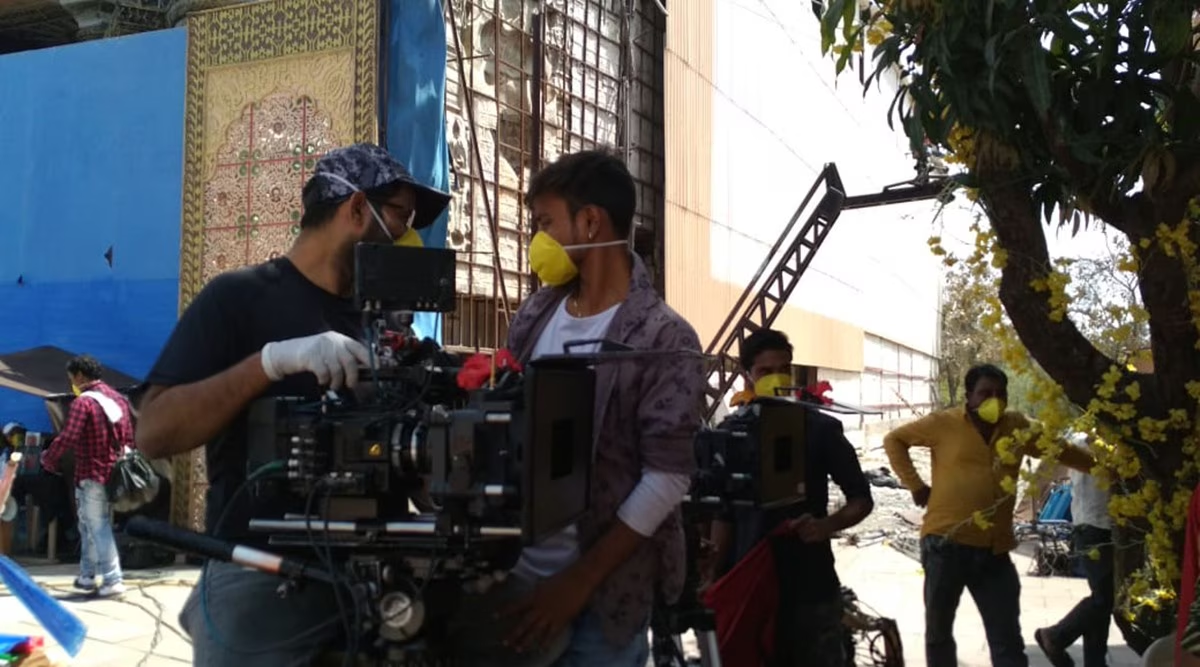
Legal, Budget and the Incoming International Unit
Getting that alignment right is largely a contracting and payroll exercise. Local crew sit on Indian agreements, foreign hires clear the correct route, and one payroll trail keeps the whole unit inside the qualifying spend, which is also what makes the crew cost auditable when the rebate is claimed.
The last layer is fitting local crew around a visiting unit. Foreign heads of department clear the correct visa route while local crew are contracted under Indian terms, and the two are scheduled so the incoming team and the local floor work as one rather than in parallel. The clearances involved are set out in the guide to compliance for foreign films, and keeping the crew spend documented and qualifying is what turns the hiring plan into recovered budget at the end.
Common Questions on Hiring Crew in India
Can a foreign production hire local crew directly, or through a line producer?
Either is possible, but a line producer is the practical route. Direct hiring means sourcing, vetting, contracting, insuring and paying each person, and managing craft-association standing, in a market the production does not know. A line producer or production-services unit absorbs all of that under one contract and one budget line.
How far ahead should crew be booked?
The strongest department heads book months out, so the calendar is the first conversation. Once dates are firm, heads are locked first and the unit is built under them; late crewing is where quality and rates both suffer.
Does crew pay count toward the film rebate?
Eligible expenditure on Indian cast and crew may form part of the qualifying production expenditure the central rebate is calculated on, when it is incurred in India through the approved applicant structure and backed by the required contracts, payroll and payment records. That is why the hiring and the accounting are handled together rather than separately.
Crewing a shoot in India well is, in the end, mostly sequencing: the right department heads, booked for the right dates, contracted and aligned to one plan. A national production-services unit is how a visiting production gets there without assembling it piece by piece, and the vendor evaluation checklist is a practical starting point for judging who to engage.
