
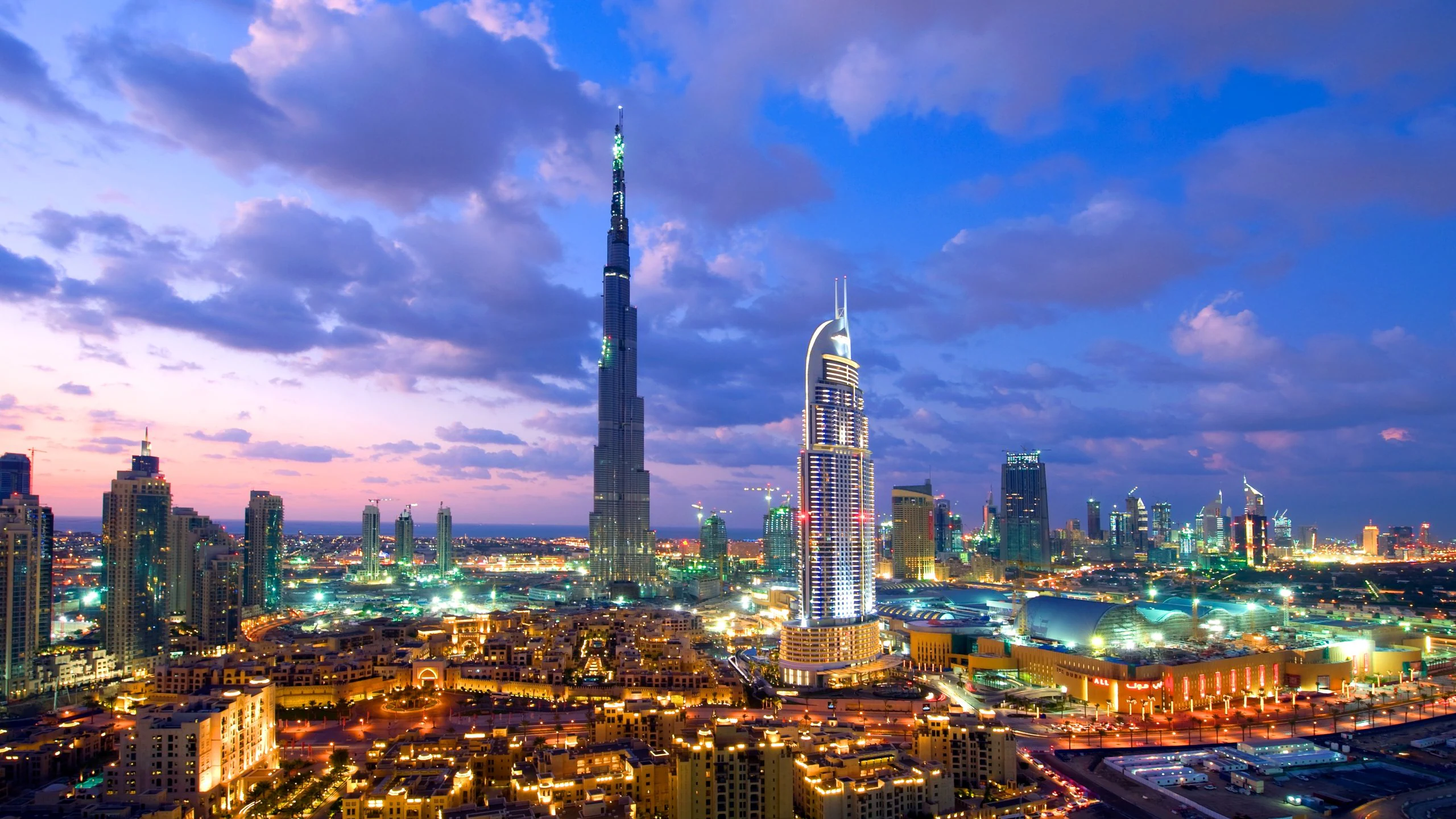
The United Arab Emirates reads as one country on a call sheet and behaves as two on the ground, and that split shapes everything from UAE film production rates to which authority signs off a location. Dubai and Abu Dhabi run separate film authorities, separate application portals and separate approval clocks, and a schedule that assumes one national permit will lose days it never budgeted. The federal layer is real and it governs the things that cross borders, aerial work and equipment coming through customs, but permission to point a camera at a street is granted emirate by emirate. Planning around that split is the first thing a line producer Dubai sorts out on an inbound shoot.
This page covers what a shoot costs across the Emirates and how the paperwork actually runs: UAE film production rates by role, what equipment adds on top, the Dubai Film and TV Commission route, the Abu Dhabi script approval that has to clear before a single location is confirmed, and the two federal layers that catch productions out most often. The rate bands are market ranges, not quotes, and the permit steps are the sequence rather than a promise of timing.

What UAE Film Production Rates Look Like
Rates in the Emirates sit above the Eastern European and South Asian markets and below the major Western European hubs. The premium buys a deep freelance pool that works in English, rental houses carrying current cinema packages, and a permitting system that is genuinely quick by regional standards. Every band below moves with season, booking length and format: a three day commercial with an agency and client attending prices differently from a documentary crew of four.
Day Rates by Role
These are the roles that set the shape of the crew budget. Heads of department carry the widest spread, because the top of each band is the name a global brand asks for and the bottom is a competent local operator who will deliver the same day perfectly well.
These are Global Producers’ indicative 2026 planning ranges based on production experience, not published UAE tariffs or binding quotations.
| Role | Indicative day rate (AED) |
|---|---|
| Director of photography | 2,500 to 10,000 |
| Camera operator | 1,500 to 3,000 |
| Drone operator (licensed) | 6,000 to 8,000 |
| Gaffer | 1,500 to 2,000 |
| Sound recordist with kit | 1,800 to 3,000 |
| Producer | 2,000 to 4,000 |
| Production assistant | 800 to 1,100 |
The drone line is the one that surprises people. A licensed aerial operator in the UAE is not a camera assistant with a quadcopter, it is a permitted specialist carrying the registrations described further down, and the rate reflects the clearance as much as the flying.
The Crew Pool Behind the Rates
Those rates are supported by an unusually deep freelance base for the size of the market. Abu Dhabi’s media zone alone works with a network of several hundred registered freelancers across production and post, and Dubai carries a large commercial and corporate industry that keeps operators, grips and lighting crews working year round. For a producer that means a mid sized unit can normally be crewed locally at short notice, and it means the quality gap between the top and the bottom of each rate band is narrower than the spread suggests.
Equipment and What Else Lands on the Day
Kit hire runs from roughly 2,000 to 20,000 dirhams a day depending on scale. A standard mirrorless or DSLR package sits around 2,000 to 5,000, while a cinema camera build with lenses, support and monitoring runs 5,000 to 15,000 before lighting and grip. Add a lighting truck, a jib or a gimbal operator and the equipment line moves independently of the crew line, which is why the two should never be estimated as a single blended figure.
Location fees and permit costs are the third line, commonly 2,000 to 20,000 dirhams depending on where the camera actually stands. A public beach, a mall, a private tower lobby and a government-managed street are four different negotiations with four different price behaviours.

What a Shooting Day and Full Campaign Can Cost
A working professional unit of a director of photography, camera operator, gaffer and assistant lands around 6,000 to 10,000 dirhams a day in crew rates alone. Scale that to a mid range commercial with a full crew of eight to twelve and the day sits between roughly 25,000 and 75,000 dirhams once kit, transport and support are counted. High end campaign work with international talent, agency attendance and multiple locations regularly runs 150,000 to 500,000 dirhams as a total campaign cost rather than a day rate.
Those bands are wide because the Emirates serve two very different markets at once: a large regional commercial and corporate industry working to tight local budgets, and inbound feature and campaign work paying international rates for the same crew base.
Where UAE Budgets Slip
Three lines cause most overruns. Overtime is the first, because permit windows and heat push days long. The second is location access bought late, when a building or authority knows the schedule is already locked. The third is equipment sitting at the airport, which is a customs question rather than a production one and is dealt with below.
What Sits Outside the Day Rate
Crew and kit are only part of the number. Talent buyouts, insurance, transport and catering all sit outside the day rate, and for inbound productions the largest underestimated line is people rather than gear: crew arriving from abroad need the correct entry and work permissions, and arranging those is a lead time item rather than a same week fix. Hiring locally avoids that entirely, which is one reason UAE film production rates look higher on paper and often land lower in practice than importing a unit and paying for its paperwork, flights and accommodation.

Filming Permits in Dubai
Dubai handles film permissions through the Dubai Film and TV Commission, which operates a registration and application portal. Permits cover media production in essentially every format, including advertising, long and short form content, documentary and stills photography, across public and private locations.
For emirate-specific location access and local execution, our film fixers in Dubai coordinate the Dubai production leg.
The Application and Its Document Set
A production registers with the Commission and submits the shoot alongside its supporting documents. In practice that means passport copies for the full cast and crew, a commissioning letter from the client or broadcaster, a shoot brief or storyboard describing what is being made, and a no objection letter from the owner of any private premises appearing on the schedule.
Scripted work carries an extra step: the script itself goes in for approval, and material changed after submission needs re-approving. That is worth building into the schedule rather than discovering it, because a rewrite between recce and shoot day can quietly reset an approval a production assumed was banked. Our Dubai film production permit handbook walks the sequence through in full.
Timelines, Public Locations and Restricted Zones
Approvals in Dubai are fast by regional standards, commonly landing within a few working days for a straightforward application, though complexity and the locations requested move that. Public parks, beaches and government-managed streets need a no objection certificate obtained through the relevant authority, which is a separate consent from the filming permit itself.
Some areas are simply closed. Military installations and certain government buildings are off limits, and filming there is treated as a legal matter rather than a permitting oversight. The practical discipline is to clear every address on the schedule before it is committed rather than arriving to negotiate, because film fixers in UAE spend more time recovering refused locations than obtaining approved ones. The team holding those relationships is the same one running the shoot, which is why location vetting belongs in prep rather than on the day.


Filming Permits in Abu Dhabi
Abu Dhabi runs a different sequence, and the order matters more than in Dubai. Nothing about locations gets confirmed until the script has cleared, so a production that treats script approval as a formality to be handled in parallel with the recce will find the whole schedule waiting on it.
Content Approval Comes First
Creative Media Authority content approval forms part of the ground, aerial and marine filming-permit process in Abu Dhabi. Feature-film scripts are handled by the UAE Media Council. Once the required content approval has been granted, the production applies to the Creative Media Authority for a Ground Filming Permit covering the listed public locations. Private locations require separate agreements with their owners. Confirm the current processing allowance before locking the schedule.
The Ground Filming Permit
With script approval confirmed, the production applies for a Ground Filming Permit, which covers filming across the Abu Dhabi, Al Ain and Al Dhafra regions. The application must list every specific place the production intends to use, and each private location needs its own signed location agreement. Adding a location later is a variation, not a note to the file.
Where the Rebate and the Facilities Sit
Abu Dhabi also runs the cash rebate that makes the emirate financially interesting, administered through its film commission and claimed against qualifying spend in the emirate. The rate, the uplifts and the qualifying rules are a subject of their own and are set out on our Abu Dhabi film rebates and incentives page, alongside a filming in Abu Dhabi checklist and rebate worksheet. Treating the rebate as a budgeting input rather than a bonus is what turns it into recovered cash.
The Backlot and Stage Base
The emirate’s production base is built around a backlot of roughly 400,000 square metres, the largest of its kind in the region, supported by sound stage capacity, broadcast studios, dressing and make up rooms and production offices.
That infrastructure is why Abu Dhabi has carried principal photography on productions of the scale of Dune, Star Wars, Fast and Furious and Mission Impossible Dead Reckoning Part One. For a schedule it means controlled stage days, standing sets and open desert sit within a short drive of one another, which is a real scheduling advantage rather than a marketing line. Booking that base is what film fixers in Abu Dhabi handle alongside the permits.
Drone, Customs and Moving Between the Emirates
Two layers of UAE production are federal rather than local, and both are places where an otherwise well planned schedule loses time. Neither is difficult once understood, but both need lead time that productions coming from lighter jurisdictions rarely allow.
Commercial Drone and Aerial Filming Approvals
Commercial drone work requires an authorised operator and mission-specific aviation and security approvals. In Dubai, DCAA flight authorisation applies alongside the relevant GCAA requirements. In Abu Dhabi, the production first obtains an aerial-filming NOC from the Creative Media Authority, with additional authority or location-owner approvals where required.
The practical consequence is that aerial days cannot be added to a schedule at short notice. A licensed local operator carrying current registrations is faster than importing a crew and starting the paperwork from scratch, which is most of why the aerial day rate sits where it does.

Temporary Equipment Import: ATA Carnet or Customs Deposit
Qualifying professional equipment can enter Dubai under an ATA Carnet. Dubai Customs states that goods covered by a valid carnet follow the carnet procedure without the normal customs deposit. Equipment travelling outside that route may require temporary admission against a refundable customs-duty deposit. The customs broker should confirm the general list, port of entry, carnet scope and re-export documents before dispatch.
Visiting media teams taking equipment temporarily into Abu Dhabi must also obtain the applicable Media Equipment Entry Permit. Our airport cargo and customs checklist for film equipment sets out the document flow, and the current handling detail is always worth confirming with a broker before kit travels.
One practical footnote on sourcing: local rental stock is deep but finite, and when a specialist package is already committed across the region, Mumbai is the nearest large equipment market with the technical crew to match it. Drawing kit and operators from India’s studio and equipment base runs through the same temporary admission process, so it is a scheduling option rather than a compromise.
Heat, Seasons and Scheduling Two Emirates
The shooting calendar is dictated by heat. The window from October to April carries workable daytime temperatures and the light most productions come for. Summer work is possible but reorganises the day around dawn, dusk and interiors, which is where stage capacity earns its keep.
A schedule crossing both emirates needs both permit tracks run in parallel from the start, since an Abu Dhabi approval grants nothing in Dubai and the reverse is equally true. The wider regional picture, including how the Emirates compare with the rest of the region, sits on our MENA line production hub.
Turning the Paperwork into a Shooting Schedule
The Emirates reward productions that respect the sequence. Script approval before locations in Abu Dhabi, every address cleared before it is committed in Dubai, aerial registrations in hand before an aerial day is promised, and a customs deposit budgeted before the kit leaves home. None of it is obstructive, but all of it is upstream, and the schedule is built backwards from the slowest approval rather than forwards from the shoot date. Budgeted against realistic UAE film production rates, that sequence is what turns an ambitious schedule into a deliverable one. That planning, and the local relationships behind it, is the work a line producer in the Emirates is engaged to run.
