
Introduction — Why Cambodia Matters Operationally
Cambodia’s Position in the Southeast Asia Execution Map
Cambodia sits between Thailand, Vietnam, and Laos, placing it inside one of Asia’s most active production corridors. This geography allows productions to evaluate Cambodia not in isolation, but as part of a wider Southeast Asia execution strategy.
For international producers, Cambodia often appears alongside Thailand or Vietnam during early location shortlisting. However, its operational value is defined less by proximity and more by how efficiently projects can be executed once a location is chosen.
Why Productions Evaluate Cambodia
Cambodia attracts attention for a combination of practical and creative reasons. The country offers accessible heritage locations, distinct urban textures, and rural landscapes that remain visually underutilized on screen. In addition, its smaller production ecosystem can translate into faster administrative movement when projects are correctly structured.
That said, Cambodia is rarely chosen on visual appeal alone. It is evaluated where cost sensitivity, simplified access, and limited-scale execution align with the project’s scope. This makes it particularly relevant for advertising films, documentaries, short-form narrative, and select feature work.
Location Appeal vs Execution Readiness
There is a clear distinction between a location that looks right and one that can be executed safely, legally, and on schedule. Cambodia scores high on location appeal, especially for heritage and atmospheric settings. Execution readiness, however, depends on how well productions understand local permissions, logistics constraints, and coordination pathways.
This gap is where many first-time productions underestimate the territory. Without structured planning, heritage access, customs handling, and provincial coordination can introduce delays that are avoidable with the right execution framework.
Why a Line Producer Is Critical in Cambodia
A line producer Cambodia functions as the operational anchor between creative intent and regulatory reality. Cambodia’s filming environment involves national ministries, provincial authorities, heritage custodians, and logistics providers that do not operate through a single-window system.
Line production in Cambodia therefore centers on alignment: aligning scripts with permission pathways, schedules with location constraints, and logistics with infrastructure limits. The role is not promotional or transactional—it is structural. When execution is planned correctly, Cambodia integrates smoothly into regional production pipelines; when it is not, even small shoots can lose momentum.
Cambodia as a Filming Territory
Cambodia is a viable filming destination, but only when its operational realities are clearly understood. It works well for certain production formats and struggles with others. Line producers operating here must design workflows around these constraints rather than fight them.
This section outlines where Cambodia performs strongly, where it does not, and what that means in practice for international productions.

Types of Productions That Work Well in Cambodia
Cambodia is best suited to lean, mobile, and location-driven productions. Projects that prioritise real environments over heavy technical infrastructure tend to execute smoothly.
Advertising films
Commercial shoots benefit from Cambodia’s visual density and relatively fast location access. Ad productions typically operate with compact crews, short schedules, and flexible shot design—an ideal match for Cambodia’s production ecosystem.
Documentaries and factual content
Cambodia is well suited for documentaries, travel content, and cultural or historical narratives. These productions align naturally with local crew depth, real locations, and minimal set construction requirements.
Short-form narrative and digital content
Web series, branded narrative shorts, and OTT ancillary content perform well, particularly when storytelling is location-led rather than effects-driven.
Select feature films
Smaller-scale feature films with contained logistics, limited company moves, and minimal VFX demands can be executed effectively. These projects succeed when scripts are adapted to Cambodia’s on-ground realities rather than imported wholesale.
What Cambodia Is Not Ideal For
Cambodia is not a universal solution. Certain production types face structural limitations that increase cost, risk, or delay.
Heavy VFX-driven productions
Large-scale green screen work, complex motion-control setups, and effects-heavy pipelines are better supported in markets with deeper studio infrastructure and post-production ecosystems.
Large studio-based productions
Cambodia does not currently support long-running, stage-heavy productions that rely on controlled soundstages, extensive backlot builds, or high-volume technical departments.
Attempting to force these formats often leads to inefficient imports, schedule compression, and avoidable cost escalation.

Infrastructure Overview: Ground Reality
Understanding infrastructure is critical for planning realistic schedules and budgets.
Crew depth
Cambodia has a capable pool of local crew, particularly in production support, locations, art assistance, and field operations. However, highly specialised technical roles may require selective international or regional supplementation.
Equipment availability
Standard camera, grip, and lighting packages are available locally, especially in Phnom Penh and Siem Reap. More specialised equipment often needs to be imported or sourced regionally, which affects timelines and customs planning.
Power and transport limitations outside urban centres
Urban areas are generally reliable, but provincial shoots require careful power planning, transport redundancy, and weather contingencies. Line producers must factor generator logistics, fuel access, and road conditions into scheduling.
Why This Reality Check Matters
Cambodia delivers strong production value when expectations are aligned with execution capacity. Projects that respect these boundaries tend to move efficiently, remain compliant, and protect budgets.
This clarity allows a line producer in Cambodia to design realistic workflows, mitigate risk early, and prevent avoidable production friction — which is exactly where professional value is created.
What a Line Producer Controls in Cambodia
Budget Structuring for Cambodia Realities
Budgets in Cambodia must reflect on-ground execution, not regional assumptions. Planning accounts for crew scale, travel distances, provincial access, and limited fallback infrastructure. As a result, cost pressure stays predictable instead of surfacing mid-shoot.
Permits and Ministry Coordination
Filming approvals move across national ministries, provincial offices, and site custodians. Early alignment between script intent, locations, and schedules prevents approvals from stalling production days. Because these bodies operate independently, sequencing matters more than speed.
Heritage and Temple Filming Protocols
Protected sites operate under cultural, religious, and conservation constraints. Execution adapts shot design, crew size, and working hours to match site rules. Consequently, productions maintain access while avoiding forced shutdowns or content disputes.
Customs and Temporary Imports
Equipment movement defines schedule reliability. Advance manifests, bonded imports, and arrival sequencing reduce exposure to customs holds. Where imports add risk, regional sourcing offsets dependency and keeps units moving.
Crew Sourcing and Bilingual Supervision
Crew selection prioritises functional depth over headcount. Local teams integrate with regional specialists where gaps exist, while bilingual supervision maintains clarity across departments. This structure prevents friction between creative intent and technical delivery.
Risk, Insurance, and Compliance Alignment
Risk assessments, insurance coverage, and permit conditions must align as one system. Stunts, drones, vehicles, and public-facing scenes operate only within approved and insured parameters. Therefore, production remains defensible if incidents or audits arise.
Schedule Protection in Remote Locations
Distance, power availability, and access windows shape daily planning outside urban centres. Shooting order adjusts proactively, buffers absorb delays, and unit moves stay controlled. As a result, remote days contribute footage instead of consuming contingency.
This control layer is what turns Cambodia from a visually attractive option into a viable execution territory.

Filming Permissions in Cambodia
Ministry of Culture & Fine Arts — National Oversight
The Ministry of Culture and Fine Arts acts as the primary national authority for film activity in Cambodia. In practice, it reviews projects for cultural sensitivity, heritage protection, and alignment with national guidelines.
Rather than issuing blanket approvals, the ministry sets the framework within which other permissions operate. Consequently, most serious productions begin here to establish legitimacy before engaging provincial bodies.
Importantly, this review focuses on what is being filmed and where, not on commercial terms or production scale. As a result, clarity of intent, locations, and crew footprint matters more than budgets or timelines at this stage.

Provincial Authorities vs National Permissions
While national clearance provides direction, provincial authorities control execution on the ground. Cambodia does not function as a single-window system. Instead, approvals stack vertically.
Typically:
- National review governs cultural and heritage impact
- Provincial offices regulate logistics, public spaces, and local coordination
- Municipal or site-level custodians impose operational conditions
Therefore, a project cleared nationally can still stall locally if provincial concerns remain unresolved. This distinction often surprises foreign producers, especially those used to centralized Southeast Asian film commissions.
Heritage & Temple Filming Protocols
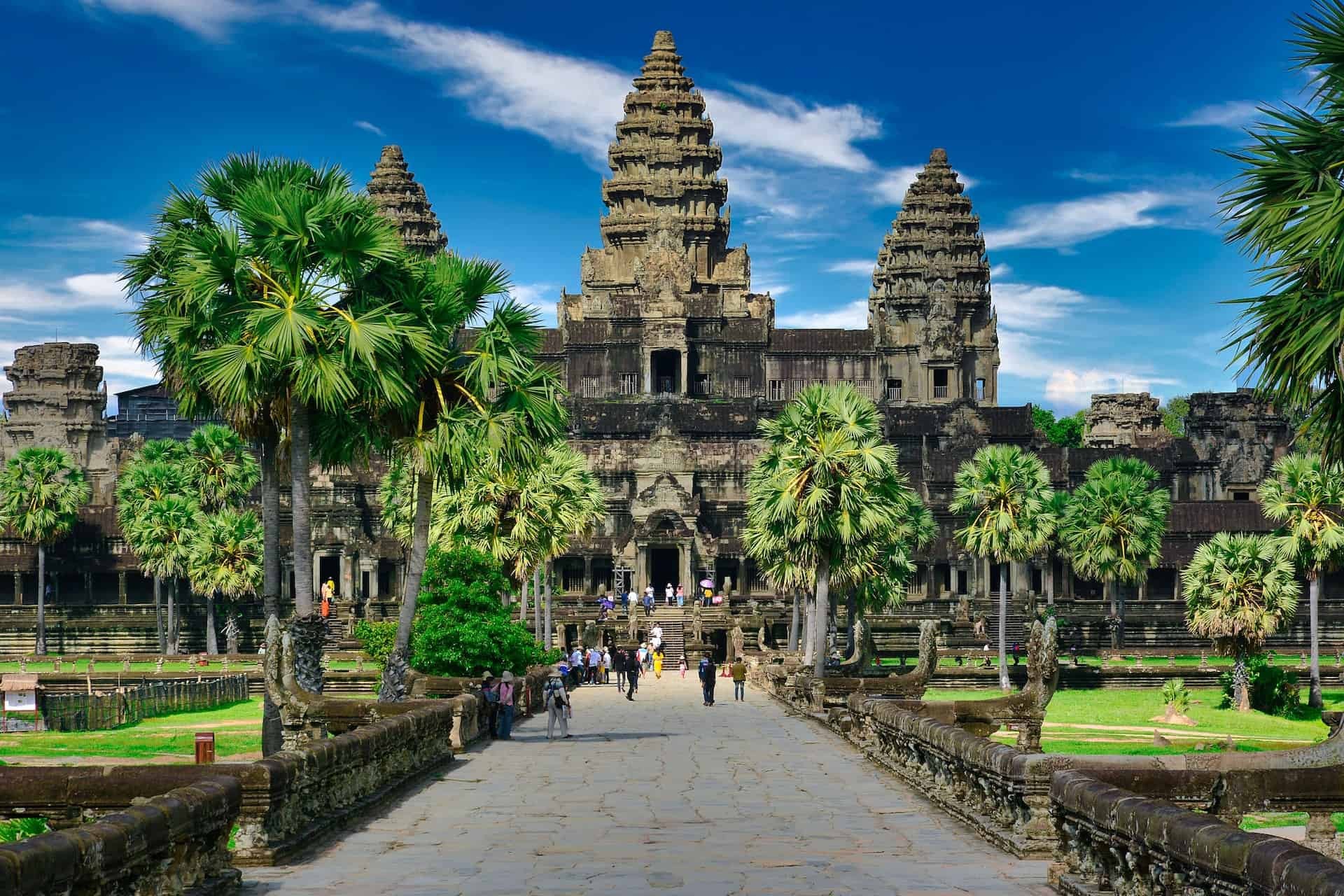
Filming at protected or culturally significant locations—most notably Angkor Wat—triggers an additional layer of scrutiny.
Heritage permissions usually assess:
- Crew size and movement control
- Equipment weight and placement
- Lighting methods and vibration risk
- Narrative context involving sacred or historical themes
Because these sites operate under conservation-first rules, approvals tend to prioritise preservation over convenience. Consequently, filming plans often require modification rather than outright acceptance.
Drone Permissions — High-Level Reality
Drone use in Cambodia remains tightly controlled. Permissions generally involve:
- Civil aviation clearance
- Local security acknowledgment
- Location-specific consent
Although regulations exist, enforcement varies by province and sensitivity of the site. For this reason, productions should treat aerial filming as exception-based, not assumed. Moreover, approvals depend heavily on declared purpose, altitude limits, and crowd proximity rather than equipment capability.
Permission Timelines — What to Expect
Cambodia does not operate on fixed approval clocks. However, realistic planning benefits from broad ranges:
- Standard location permissions: 1–3 weeks
- Heritage or temple sites: 3–6 weeks, sometimes longer
- Multi-province shoots: timelines extend with each added jurisdiction
- Drone approvals: variable, often the longest dependency
Timelines depend on location sensitivity and administrative load, early sequencing matters. Projects that lock scripts and locations late typically experience compounding delays.
Cambodia Compared to Thailand, Vietnam & Indonesia
Positioning Cambodia in the Southeast Asia Execution Map
Cambodia sits operationally between more mature production markets and emerging territories. As a result, its value is contextual rather than universal. When producers compare Cambodia with Thailand, Vietnam, and Indonesia, the decision usually turns on control, scale, and tolerance for friction.
This comparison is not about which country is “better.” Instead, it clarifies when Cambodia is the correct execution corridor decision. Download: Cambodia Filming Checklist — Comparing Thailand, Vietnam & Indonesia (PDF)

Cost Bands and Budget Behaviour (Relative, Not Promised)
Cambodia generally sits below Thailand and parts of Indonesia in overall spend expectations, particularly for:
- Local crew
- Location access outside heritage zones
- Accommodation outside peak tourist windows
However, Vietnam often competes closely on cost for urban shoots, while Indonesia can undercut Cambodia in certain provinces. The difference is that Cambodia’s budgets fluctuate more based on location sensitivity and logistics, rather than labour alone.
Speed of Permissions and Administrative Friction
Cambodia can move faster than Vietnam for small-to-mid-scale shoots, especially advertising and documentary work. At the same time, it lacks Thailand’s predictability for complex, multi-location schedules.
In practice:
- Thailand offers structured but layered approvals
- Vietnam can be slower, with higher script scrutiny
- Indonesia varies widely by region
- Cambodia sits in the middle: fewer layers, but less standardisation
Therefore, speed in Cambodia depends heavily on clarity of scope and early location locking.
Creative Restrictions and Narrative Flexibility
Cambodia is comparatively open to:
- Contemporary narratives
- Cultural and travel content
- Non-political storytelling
That said, heritage locations impose strict narrative and visual controls. Thailand manages this through formal film commission processes, while Cambodia relies more on site custodians and ministry interpretation. This creates flexibility for simple stories, but uncertainty for complex ones.
Crew Scale and Technical Depth
Cambodia supports:
- Small to mid-sized crews
- Lean advertising units
- Documentary and short-form teams
By contrast:
- Thailand sustains large studio crews and long-form series
- Indonesia supports scale with regional variation
- Vietnam excels in controlled urban environments
As a result, Cambodia works best when productions design around available depth, rather than forcing scale into the territory.

Strategic Takeaway for Producers
Cambodia is the right call when:
- Speed matters more than infrastructure density
- Heritage or Southeast Asian visual identity is central
- Crew size remains controlled
- Flexibility is built into the schedule
Another country may be better when:
- Heavy VFX pipelines are required
- Studio infrastructure is non-negotiable
- Large-scale, long-duration shoots dominate
This comparison reinforces a core principle: Cambodia is an execution decision, not a default location choice.
Production Workflows in Cambodia
Production workflows in Cambodia succeed when they are adapted to scale, access, and administrative sequencing. Projects that attempt to replicate Thailand or Indonesia-style pipelines without adjustment usually encounter friction. By contrast, workflows designed around Cambodia’s realities remain stable and predictable.
Advertising Productions
Advertising shoots form the most common and reliable production format in Cambodia. These projects typically operate with compressed timelines, compact crews, and flexible shot structures.
Execution usually follows this pattern:
- Early location locking to stabilise permits
- Limited company moves per day
- Modular shot design that adapts to access windows
- Minimal dependence on specialist infrastructure
Because ad films prioritise speed and visual efficiency, they align well with Cambodia’s permitting rhythm and crew depth. Delays most often occur when scripts change after permissions are filed or when drone usage is introduced late.
Risk is managed through simplification: fewer locations, tighter call sheets, and conservative equipment footprints.

Documentary and Travel Content
Documentary workflows integrate naturally into Cambodia’s filming environment. These productions benefit from real locations, local access, and narrative flexibility.
Typical characteristics include:
- Small, mobile units
- Extended location stays rather than frequent moves
- High reliance on local fixers and regional knowledge
- Lower equipment complexity
Because documentary shoots often adapt to real-world conditions, they tolerate Cambodia’s variable infrastructure better than rigid narrative formats. However, delays can emerge around provincial coordination and heritage access if filming intentions are not clearly communicated.
Risk management focuses on access continuity, local sensitivities, and weather-aware scheduling.
Narrative Films: Constraints and Solutions
Narrative features and scripted series require tighter control. Success depends on how well scripts are adapted to location logic rather than imposing external production assumptions.
Common constraints include:
- Limited depth in specialised departments
- Fewer controlled interiors and soundstage options
- Increased exposure during multi-location moves
Effective solutions include:
- Script consolidation to reduce company moves
- Hybrid workflows using regional equipment support
- Scheduling heritage locations early to avoid cascading delays
Narrative projects that succeed in Cambodia usually prioritise location authenticity over technical spectacle. When expectations align, execution remains viable.
Logistics, Transport & Accommodation
Logistics determine whether Cambodia functions as a smooth production territory or a fragile one. Ground planning, not creative ambition, defines outcomes.

Phnom Penh vs Siem Reap vs Provincial Shoots
Siem Reap compared to Phnom Penh offers the most reliable base for production. It provides better crew availability, equipment access, and administrative reach. Siem Reap functions well for heritage-driven projects but operates within tighter conservation controls.
Provincial locations introduce additional complexity:
- Longer transport times
- Reduced power reliability
- Limited accommodation tiers
As distance from urban centres increases, planning precision becomes critical.
Transport Reliability and Movement Planning
Urban transport remains stable, but inter-provincial movement requires buffer planning. Road conditions, seasonal weather, and fuel access affect call times and turnaround.
Effective planning limits:
- Long night drives
- Same-day long-distance company moves
- Dependence on single transport routes
Redundancy protects schedules.
Accommodation Tiers and Crew Housing
Cambodia offers a wide range of accommodation, but availability varies sharply by region and season. Phnom Penh and Siem Reap support international-standard hotels. Provincial areas rely on guesthouses or temporary lodging solutions.
Crew comfort directly affects productivity, especially on longer shoots. Therefore, accommodation decisions must align with shoot duration and physical demand, not just cost.
Equipment Transport and Handling
Equipment transport requires careful sequencing. While standard packages move easily within cities, provincial transfers increase exposure to delays and damage.
Best practice limits:
- Over-sized shipments
- Late-night arrivals
- Unscheduled cross-border imports
Where complexity rises, regional sourcing often provides better control than long-distance imports.
Weather and Seasonal Considerations
Seasonality affects both access and pace. Monsoon periods introduce road risk and humidity challenges. Dry seasons improve movement but coincide with peak tourism at heritage sites.
Scheduling must account for:
- Rain windows
- Heat exposure
- Heritage access restrictions during peak periods
Ignoring seasonality compresses contingency rapidly.

Is Cambodia the Right Location for Your Line Production?
Cambodia performs best when projects fit its execution profile. This section helps producers self-select accurately.
Best-Fit Production Profiles
Cambodia suits productions that:
- Operate with controlled crew sizes
- Prioritise real locations over technical builds
- Allow schedule flexibility
- Value regional authenticity
Advertising, documentaries, and contained narratives fall squarely into this category.
Projects That Should Avoid Cambodia
Cambodia is not ideal when projects require:
- Large soundstage builds
- Heavy VFX pipelines
- Long-duration studio occupancy
- High-volume technical departments
In these cases, neighbouring markets provide better structural support.
When Cambodia Works as a Stand-In
Cambodia can double effectively for:
- Generic Southeast Asian settings
- Period or heritage-driven environments
- Rural or undeveloped landscapes
Stand-in use succeeds when scripts avoid country-specific identifiers.
When Another SEA Country Is the Better Choice
Thailand, Vietnam, or Indonesia often perform better when:
- Scale outweighs flexibility
- Studio control is essential
- Technical density drives the schedule
Choosing Cambodia in these cases increases risk without creative gain.
Cambodia Within a Regional Line Production Network
Strategically Cambodia integrates best when treated as part of a wider execution corridors
Cambodia Compared to Thailand rather than a standalone solution.
Cambodia + Thailand
Thailand absorbs scale and studio-heavy sequences, while Cambodia delivers heritage and location depth. This pairing balances control with authenticity.
Cambodia + Vietnam
Vietnam handles controlled urban production; Cambodia supports rural, cultural, and heritage elements. Together, they offer visual range with manageable complexity.
Cambodia + India / MENA Pipelines
For India- or MENA-origin productions, Cambodia functions as a cost-sensitive Southeast Asian extension when scale remains contained and schedules remain flexible.
This networked approach reduces pressure on any single territory and improves overall execution resilience.
Conclusion — Execution, Not Promotion
Cambodia is neither a shortcut nor a compromise. It is a situationally strong filming territory when projects align with its operational structure.
Successful outcomes depend on:
- Realistic planning
- Early permission sequencing
- Logistics-aware scheduling
- Experienced execution leadership
When these conditions are met, Cambodia integrates cleanly into regional production strategies and delivers consistent value. When they are not, friction escalates quickly.
Execution—not promotion—determines results.
