
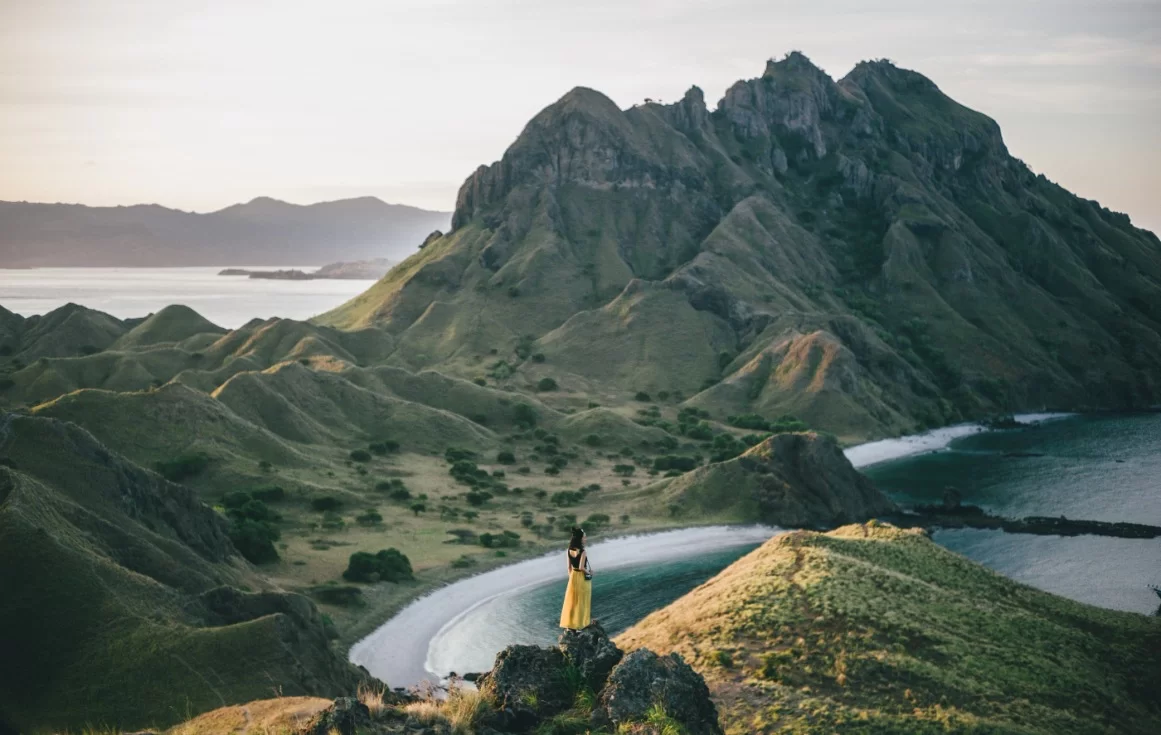
Indonesia is not a single production location but a country of more than seventeen thousand islands, and planning a shoot here is really an exercise in inter-island logistics. Jakarta anchors the system as the operational and infrastructure hub; Java carries the heritage sites and volcanic interiors; Bali operates as a distinct, location-led production corridor covered separately, while Lombok, Komodo, Flores, East Java and Raja Ampat extend the national location map. Each corridor runs on its own permit track, crew pool and travel chain, which is why a line producer in Indonesia spends as much time on movement and sequencing as on the camera. International productions that search for film production services in Indonesia are, in practice, shopping for that coordination layer across the islands rather than a single vendor.
This guide treats Indonesia as a national production system rather than a list of beaches. It covers how Jakarta functions as the hub, what each regional corridor offers, how the national permit and visa structure works, and how equipment and crew actually move between islands. Bali-specific planning (its temples, its dedicated crew base and its cultural protocols) is handled in depth in a separate Bali production guide, so this page stays focused on the country as a whole.
| Region | Visual register | Permit profile | Operational base |
|---|---|---|---|
| Jakarta metropolitan | Contemporary urban, studios, port & industrial | Potentially faster for qualifying city locations; confirm current service scope | Jakarta |
| Yogyakarta / Central Java | UNESCO temple heritage, courtly, highland | Slower: Ministry of Culture + provincial heritage | Yogyakarta |
| Bali | Temple, terrace, volcanic and coastal locations | National production requirements plus local cultural and location approvals | Denpasar / Bali |
| Lombok / Gili | Beach, Rinjani volcano, quieter coast | Medium: provincial | Bali / Lombok |
| Komodo / Flores | Conservation marine, dragons, Kelimutu lakes | Slower: SIMAKSI conservation permit | Labuan Bajo (via Bali) |
| East Java (Bromo / Ijen) | Volcanic caldera, blue-fire crater | Medium: provincial + park | Surabaya |
| Raja Ampat (Southwest Papua) | Marine wilderness, karst islands | Slower: marine-park + vessel permits | Sorong (charter) |

Why a Line Producer in Indonesia, Not Just a Fixer
Film fixers in Indonesia arrange access at specific points; a line producer owns the budget, the schedule and, most importantly here, the plan for moving a production between islands. That distinction matters more in Indonesia than in most markets, because a national shoot routinely crosses several provincial authorities, multiple permit regimes, customs clearance for equipment travelling by sea and air, and weather windows that differ from one island to the next. Single-point execution authority is what keeps those moving parts aligned to a budget.
No two provinces in Indonesia handle a film request in quite the same way, and the gap between a national capital approval and a remote regency office is real. A line producer who works the country regularly knows which permissions are genuinely centralised, which are decided locally, and where a national letter still needs a provincial counterpart before anyone will roll. That local knowledge is not a luxury on an Indonesian shoot; it is the difference between a permit that arrives on time and one that arrives after the unit has moved on.
On-the-ground presence also counts for more here than the regional average. Our Indonesia operation runs through a permanent local team led by production head Widiyantoro Alste, based at our Jakarta office in Duren Tiga, South Jakarta, and a substantial share of the work moves along the India–Indonesia corridor, with crews, equipment and post travelling between the two countries, a route we run regularly rather than improvise.

The National Permit and Visa Structure
Film permits in Indonesia are issued through national and provincial bodies, with heritage and protected sites involving the relevant national ministry, protected-area authority and provincial government depending on the location. Foreign crew immigration is assessed project by project with immigration counsel: Indonesia’s C14 film-production visit visa requires a local sponsor and permission from the relevant location authority, and it restricts receiving remuneration from an Indonesian person or company, so the correct route depends on role, payment structure and duration of stay. Equipment is brought in typically under ATA Carnet or the applicable temporary-import framework, cleared against the shoot calendar. None of this is unusually difficult, but it is paperwork-heavy and lead-time sensitive, which is the first reason productions appoint local execution authority early.
Protected and sacred locations carry extra layers on top of a standard film permit. UNESCO World Heritage sites such as Borobudur and Prambanan, and conservation areas such as Komodo National Park and the Raja Ampat marine zones, each require their own dedicated permissions, quotas or conservation permits, and these are the items most likely to delay a schedule if they are left late.
In practice the permit chain is sequenced backwards from the most restricted location on the schedule. A conservation permit for Komodo or a marine permit for Raja Ampat should be initiated early, and its timing and conditions are location-specific, so those are locked first; UNESCO-site windows at Borobudur are booked around them; and the more routine city and provincial permits, which move faster, are slotted in last. Visas and carnet clearance run on their own parallel track. Building the schedule in that order, hardest permissions first, is what separates a deliverable Indonesian plan from one that only looks good on paper.

Indonesia’s Filming Territory, Island by Island
The country breaks down into a handful of distinct production corridors. Jakarta is Indonesia’s principal national infrastructure hub; Central Java is the heritage base; Bali is the location-led island corridor; and the outer regions supply landscapes that exist nowhere else in Asia. How they combine matters more than any single ranking: a workable Indonesian schedule usually pairs the Jakarta base with one or two location corridors rather than chasing all of them. The sections below take them in that working order, from the hub outward to the remote islands.
Jakarta: The Operational Hub
Jakarta is where many national, multi-island and infrastructure-heavy Indonesian productions are based and budgeted. It holds the country’s deepest crew pool, its main equipment-rental houses, its studios and soundstages, and its post-production facilities, and it is also the commercial-production capital: most of Indonesia’s advertising and branded-content work originates in the city. For an international production, Jakarta is the practical base camp even when the story plays out somewhere else.
As a backdrop, Jakarta offers contemporary doubles that are hard to find elsewhere in the region: a dense modern skyline, glass financial districts, sprawling industrial and port zones around Tanjung Priok, the colonial-era streets of Kota Tua, government and civic buildings, and characterful, high-energy street life. For projects that need a believable large Asian metropolis (modern, chaotic or both), Jakarta stands in for far more than Indonesia itself.
Studios, Post and Air-Freight
Behind those locations sits the country’s deepest production ecosystem. Jakarta’s studios and soundstages handle interiors and controlled builds, its rental houses carry camera, grip and lighting packages to international standard, and its post-production and sound facilities mean a project can finish in-country rather than shipping rushes abroad. The same depth supports the city’s heavy commercial workload, which keeps crews working between feature and series projects and is a large part of why Jakarta’s technicians are among the most experienced in the country.
Logistically, Jakarta is the principal entry and staging point for multi-island productions, specialist equipment packages and units drawing heavily on the capital’s crew and rental infrastructure. Soekarno-Hatta International handles crew and air-freighted equipment, Tanjung Priok handles sea freight and heavier shipments, and Jakarta is the staging post from which gear is forwarded to the islands. The city has also begun positioning itself as a regional production centre: a new “Filming in Jakarta” one-stop filming permit service, along with location incentives, has been announced to cut bureaucracy, though the terms are still settling and are best confirmed directly for a specific project. Michael Mann’s Blackhat (2015) ran on exactly this Jakarta base, shooting at Soekarno-Hatta Airport, Sunda Kelapa Harbour and across the old city.

Yogyakarta and Central Java: The Heritage Corridor
Central Java is Indonesia’s cultural heartland, and Yogyakarta is its production base. The region’s signature location is Borobudur, the ninth-century Buddhist monument and UNESCO World Heritage Site. Filming there is possible but tightly controlled: arranged through the relevant national and provincial authorities and the site’s heritage management, governed by strict etiquette around a living place of worship, with access and filming windows determined by the site management and the applicable heritage approvals. Prambanan, the towering Hindu temple complex nearby, offers a dramatic counterpart. Java Heat drew its Central Java backdrop from Borobudur and the streets of Magelang and Yogyakarta.
Beyond the monuments, the Keraton (the Sultan’s palace), the royal city of Solo (Surakarta), and the surrounding Central Java landscapes give productions a deep heritage palette of courtly architecture, batik workshops and rural Java. Local crew and equipment cover mid-sized shoots, with larger orders forwarded from Jakarta, and the corridor is reached through Yogyakarta’s airport and the port and rail connections at Semarang.
The corridor extends beyond the headline temples. The Dieng Plateau adds highland volcanic scenery within reach of the same base, and Central Java’s crew, while smaller than Jakarta’s, is well used to heritage-site protocols and the particular discipline that filming around active religious and royal institutions demands.
Bali: The Location-Led Island Corridor
Bali supports commercials, fashion films, travel content and selected feature or streaming sequences through an established island-based production network. Its temples, rice terraces, volcanic interiors, coastline and resort architecture require a combination of Indonesia’s national production framework and site-specific coordination with landowners, village councils, religious authorities and local administrators. Bali’s locations, cultural-access requirements, crew structure and seasonal planning are covered separately in our guide to working with a line producer in Bali.
Lombok and the Gili Islands
Immediately east of Bali, Lombok offers much of the same coastal and volcanic beauty, including the great cone of Mount Rinjani, with far less congestion and a quieter permit environment, reached by short flight or fast ferry from Bali. It suits productions that want Bali-style visuals without Bali’s crowds and traffic. Crew depth is thinner and most specialist equipment still travels from Bali or Jakarta, so Lombok generally works as a location corridor served by a Bali or Jakarta base rather than as a standalone production centre. Oliver Stone’s Savages (2012) shot nearby on Moyo Island, off the coast of Sumbawa.
Komodo and Flores
The islands of Komodo and Rinca, inside Komodo National Park, are a conservation-led environment. Filming requires a SIMAKSI conservation-area permit arranged well in advance through the national park’s booking and permit system, together with visitor quotas, ranger accompaniment and separate, restricted rules for drones near nesting sites and feeding times. Labuan Bajo on neighbouring Flores is the gateway port and a fast-growing production base, and Flores itself adds the tri-coloured crater lakes of Kelimutu. This is boat-and-charter country: spectacular on screen, and demanding enough in logistics that it has to be planned as its own mini-expedition within a larger schedule.

East Java: Bromo and Ijen
East Java holds two of Indonesia’s most cinematic landscapes. Mount Bromo, shot at sunrise from the surrounding viewpoints, delivers an almost lunar vista of ash plains and smoking cones rising out of an early-morning sea of cloud. The Ijen crater is known for its electric-blue sulphuric flames, visible only in darkness, which means demanding overnight shoots with genuine safety, altitude and gas-exposure considerations. Surabaya is the staging city for both, and each site lives or dies on weather and timing windows that a local team has to read carefully.
Raja Ampat and the Outer Islands
At the far eastern end of the country, in Southwest Papua, Raja Ampat is among the most biodiverse marine environments on earth and one of the most logistically demanding places to shoot anywhere in Asia. Access runs through marine-park entry permits and vessel operating permits, with protected zones that govern exactly what is allowed where, and the whole region is liveaboard-and-charter based. Further west, Sumatra’s Lake Toba (a vast volcanic caldera lake) is a more accessible outer-island option worth noting for productions willing to range beyond Java and Bali.
Sulawesi is another option again, from the Torajan highlands with their distinctive boat-shaped houses and funerary culture to the diving grounds of the north, a reminder that even after Java, Bali and the marine east, Indonesia still holds corridors most production maps never reach.

National Crew, Equipment and Inter-Island Logistics
Indonesia’s professional crew depth is concentrated in two places: Jakarta and Bali. Both can field full local units for features, series and commercials, while elsewhere a core team travels and is topped up locally. The main equipment-rental base is Jakarta, with a strong secondary base in Bali, and the real crew day rates and kit rentals there are itemised in our guide to the Jakarta film production cost. For regional shoots, gear is shipped or flown in and built into the schedule as a line item in its own right rather than assumed to be waiting on location.
Department depth follows the same Jakarta-and-Bali concentration. Camera, grip, lighting, art and production departments can be crewed locally to international standards in both cities, and Indonesia has a strong tradition in underwater and marine units, unsurprising for an archipelago, alongside capable aerial and drone teams operating within the country’s permit rules. For specialist roles on larger features, key heads of department are often brought in and matched with sizeable local crews, with the India–Indonesia corridor giving access to a further experienced pool when a production needs to scale quickly.
Moving Between the Islands
Moving a production between islands is the defining challenge of working in Indonesia. Domestic air freight, sea freight, ferries and charters all play a part, and customs clearance for temporarily imported equipment has to be sequenced against shoot dates rather than treated as a formality. A realistic Indonesian schedule budgets real time for travel and clearance between corridors. The difference between an experienced national plan and an optimistic one usually shows up here.
This is also where execution authority earns its place. The same production may need a studio day in Jakarta, a sunrise window at Borobudur, a charter to Komodo and a marine permit for Raja Ampat, each with its own lead time and its own local interface. Holding all of that to a single budget and schedule is the core of the line-producer role in Indonesia, and it is the reason national shoots are planned from one desk rather than assembled region by region. For productions combining Indonesia with neighbouring countries, that same desk plans the routing through the Asia film production corridor.

Budget, Incentives and Scheduling
Indonesia does not currently operate a blanket national cash rebate of the kind Thailand offers, and the incentive picture is best approached with caution because it is changing. Support today is piecemeal, project-specific and not a substitute for a location-production incentive, and Jakarta has begun introducing its own location measures alongside the new one-stop filming permit service. Rather than build a budget around an assumed percentage, productions should confirm what is actually available for their specific project at the time of shooting.
With no rebate to lean on, an Indonesian budget is managed rather than subsidised, and the rupiah’s movement against the funding currency is a real line, not a footnote. Holding that gap across a schedule is the subject of currency volatility in film routing systems.
Indonesia’s real support is on the co-production side: the Indonesia Film Matchfund matches financing an Indonesian co-production raises overseas, rewarding a genuine local partner over a pure service shoot.
Scheduling is driven by the monsoon. Broadly, the drier months from around April to October suit most outdoor and island work, while the wetter season brings heavier rain across much of the archipelago. The exact pattern varies island by island, and the eastern islands and Papua run on their own timing, so season planning in Indonesia is done corridor by corridor rather than as a single national window.
The calendar is also shaped by national and religious observance. The fasting month of Ramadan and the Idul Fitri holiday that follows affect crew availability and working hours across much of the country, and regional ceremonies, particularly in Bali and Java, can both close locations and, handled well, become extraordinary things to put on camera. A local team reads these into the schedule rather than colliding with them.
Indonesia Compared: Thailand and Vietnam
Against Thailand, Indonesia trades infrastructure maturity for sheer location diversity. Thailand has a long-established service industry and a clear cash rebate, which makes it the region’s default for straightforward shoots. Indonesia offers landscapes Thailand simply does not have (seventeen thousand islands, from temple-topped Java to the marine wilderness of Raja Ampat), at the cost of a less settled incentive system and a heavier logistics load.
The honest summary is that Indonesia is the right call when the script needs what only Indonesia has. For a contained shoot built around a tight rebate calculation, Thailand’s established cash rebate is often the simpler answer, and some regional options are lighter on permits and logistics. But for projects built on volcanic landscapes, living heritage, genuine marine wilderness or the sheer texture of a vast island nation, Indonesia offers a range its neighbours cannot match, and the logistics premium becomes a worthwhile trade rather than an obstacle, provided the national plan is owned by someone who works the country week in and week out.
The contrast with a line producer Vietnam operation is one of stage and scale. Vietnam has surged recently on the back of a modern Cinema Law and a compact, well-drilled north-to-south corridor; Indonesia is larger, more varied and more complex to move around, and it rewards productions whose story genuinely needs that range. A line producer Cambodia rounds out the neighbouring options for projects weighing more than one country in a single trip.

What International Productions Find in Indonesia
That reliability is not theoretical for us. We have run line production for Falcon Pictures, Indonesia’s largest studio, including the feature Haji Backpacker and Titik Nol, which we took across Kashmir, Rajasthan and Delhi. Working both sides of the India-Indonesia corridor means we plan an Indonesian shoot the way a studio does, around permit clearances, inter-island moves and currency exposure rather than locations alone. Our Titik Nol multi-state case study sets out how that execution held together day by day.
Indonesia rewards productions that plan around its geography rather than against it: a Jakarta base for infrastructure and crew, Central Java for heritage, Bali for contained location-led production, and the outer islands for landscapes that exist nowhere else. With a permanent local team led by production head Widiyantoro Alste, and a busy India–Indonesia corridor moving crew, equipment and post between the two countries, the country is at its most efficient when a single line producer owns the national plan end to end, from the first permit application to the last carnet clearance.
Engaging a Film Fixer and Line Producer in Indonesia
Indonesian production runs cleanest when film fixers in Indonesia and the line producer are engaged at script-breakdown, because the country’s hardest constraints all sit early in the chain. Conservation permits for Komodo and the Raja Ampat marine zones should be initiated early, with timing and conditions location-specific, so they are locked first; the UNESCO window at Borobudur is narrow and booked around them; inter-island movement and carnet clearance have to be sequenced against the shoot calendar; and the incentive position (what, if anything, applies to a given project) needs confirming early rather than assuming. A single-corridor shoot based in Jakarta or Bali can engage closer to prep without much downside, but any production crossing several islands gains substantially from script-breakdown-stage engagement, with one desk owning the national plan from the first permit application to the last carnet clearance. That is what a line producer Indonesia coordinates, and what line production services in Indonesia ultimately mean: one accountable plan across the archipelago.
