
Engaging a line producer in Tamil Nadu is less about a single city than about running a whole state as one production base. Tamil Nadu pairs a deep studio industry in Chennai and Coimbatore with a location range that runs from UNESCO temple towns and the Coromandel coast to the Nilgiri hills and the southern tip at Kanyakumari, and a unionised crew system that makes structured line production, not ad-hoc fixing, the only reliable way to work.
Experienced film fixers in Tamil Nadu hold the relationships across the state’s studios, the FEFSI union, the district administrations, the temple and ASI authorities and the forest and coastal departments that each shoot has to clear. This guide maps the state (its studios, its locations, its permits and its crew) and how a line producer turns that breadth into a single, schedulable plan.

Why Tamil Nadu Is a Complete Production State
Few Indian states give a production both a built studio base and a full location spectrum. Tamil Nadu does, and the value of a line producer here is holding the two together, keeping a studio-anchored schedule moving across a state that spans coast, hills and temple plains. That state schedule plugs into the national grid a line producer in India runs across the hubs, so a Tamil Nadu shoot can extend to Mumbai or Delhi when the brief needs it.
A Studio Base and a Location State in One
Tamil cinema is one of the largest film industries in India, and its infrastructure shows it. Chennai houses AVM Studios, among the oldest and most influential film studios in India, alongside EVP Film City with its twenty studio floors, Prasad Studios and Film Labs for post-production, and the Tamil Nadu government’s MGR Film City, while Coimbatore adds further studio capacity in the west of the state. That built capacity, combined with the location range, is why a Tamil Nadu shoot can move between controlled stages and real heritage and natural environments without leaving the state.
That mix also makes Tamil Nadu a stand-in base, not just a destination. The Chennai studios and the state’s coast, hills and heritage towns let productions build controlled looks that double for other regions at domestic cost, with crew, post and equipment all available inside the same system. For Tamil cinema itself, among the highest-output film industries in the country, that integration is everyday infrastructure; for visiting productions it is the reason a complex schedule can sit inside one state.
Filming Locations Across Tamil Nadu
The state’s real strength is the spread of distinct environments within one administrative and crew system. They fall into four broad clusters: the Chennai studio belt, the temple cities, the Nilgiri hills, and the heritage-and-coast of the south.
Chennai and the Studio Ecosystem
Chennai is the production anchor and the entry point, the studios, the FEFSI crew base, equipment houses and post facilities all concentrate here, alongside city locations from Marina Beach to colonial campuses and government precincts. For productions whose work sits mainly in and around the capital, the city has its own dedicated playbook in our line producer in Chennai guide; at state level, Chennai is the base from which the rest of Tamil Nadu is reached.
Chennai also carries the state’s finishing capacity. Its post-production houses and film labs, led historically by the Prasad group, make it a major editing, sound and DI base for South Indian cinema and for productions from further afield, which means a Tamil Nadu schedule can shoot, finish and deliver without leaving the region. For a line producer, that keeps the whole pipeline (pre-production, shoot and post) inside one coordinated system.
Coimbatore and the Western Production Belt
Beyond the capital, Coimbatore is Tamil Nadu’s second production base, its studio heritage running through historic facilities such as Central Studios and Pakshiraja, and a working film economy of its own distinct from Chennai. It opens the western belt of the state, the textile-mill and industrial backdrops of Kovai, the Anamalai hills and the tea country around Valparai and Pollachi, and the road and rail crossings into Kerala, giving a production a second anchor that shortens access to the western and hill locations the Chennai base cannot reach efficiently.
The Temple Cities: Mamallapuram, Thanjavur and Madurai
Tamil Nadu’s temple heritage is among the most cinematic in India, and it splits across two very different permission regimes. The UNESCO-listed, ASI-protected monuments, Mamallapuram (Mahabalipuram), with its Shore Temple, Pancha Rathas and Arjuna’s Penance relief on the coast just south of Chennai, and Thanjavur’s Brihadeeswara Temple, anchor of the Great Living Chola Temples, are managed as heritage sites. Active temple complexes such as Madurai’s Meenakshi Amman Temple, by contrast, are living places of worship run by temple administrations under the state’s HR&CE framework, with their own access and filming rules.

Filming at the ASI monuments runs through the Archaeological Survey of India, with conservation conditions on equipment, lighting and crew, while the active temples are cleared with the temple administration and the HR&CE department and carry their own ritual and access sensitivities. A line producer maps which sites a script needs, identifies the right authority for each, and starts those clearances early, since temple permissions sit on a different timeline from a studio booking.
These sites have long screen histories: Mamallapuram’s Shore Temple and rock reliefs have featured in films from Mani Ratnam’s Guru to 2 States, and the temple towns of the south recur across Tamil cinema whenever a narrative calls for scale and ritual authenticity. The point for a production is that the look is achievable and proven, but only through the ASI process, on its timeline, not the unit’s.
The Nilgiri Hill Stations: Ooty, Coonoor and Kodaikanal

The Nilgiris have been a fixture of Indian cinema for decades. Ooty (Udhagamandalam), Coonoor and Kodaikanal supply rolling tea slopes, colonial architecture, lakes and pine forest, served by the UNESCO Nilgiri Mountain Railway, and they offer the cool-climate window the plains cannot. The hill stations have their own a detailed breakdown of filming in Ooty; at state level they are the high-altitude register of a Tamil Nadu schedule.
The trade-off is access and weather: hill roads from the plains are long and winding, forest-fringe locations bring Forest Department conditions, and the monsoon and mist windows have to be planned around. These are exactly the variables a line producer prices into the routing rather than discovering on the day.
Decades of Tamil and Hindi films have used the Nilgiris for romance, song sequences and period work, which means local crew, transport and accommodation in Ooty and Kodaikanal are already geared to film units. That familiarity shortens setup, but the hill stations still book out in peak tourist season, so unit space and crew rooms are blocked well ahead.
Chettinad, the Coast and the South
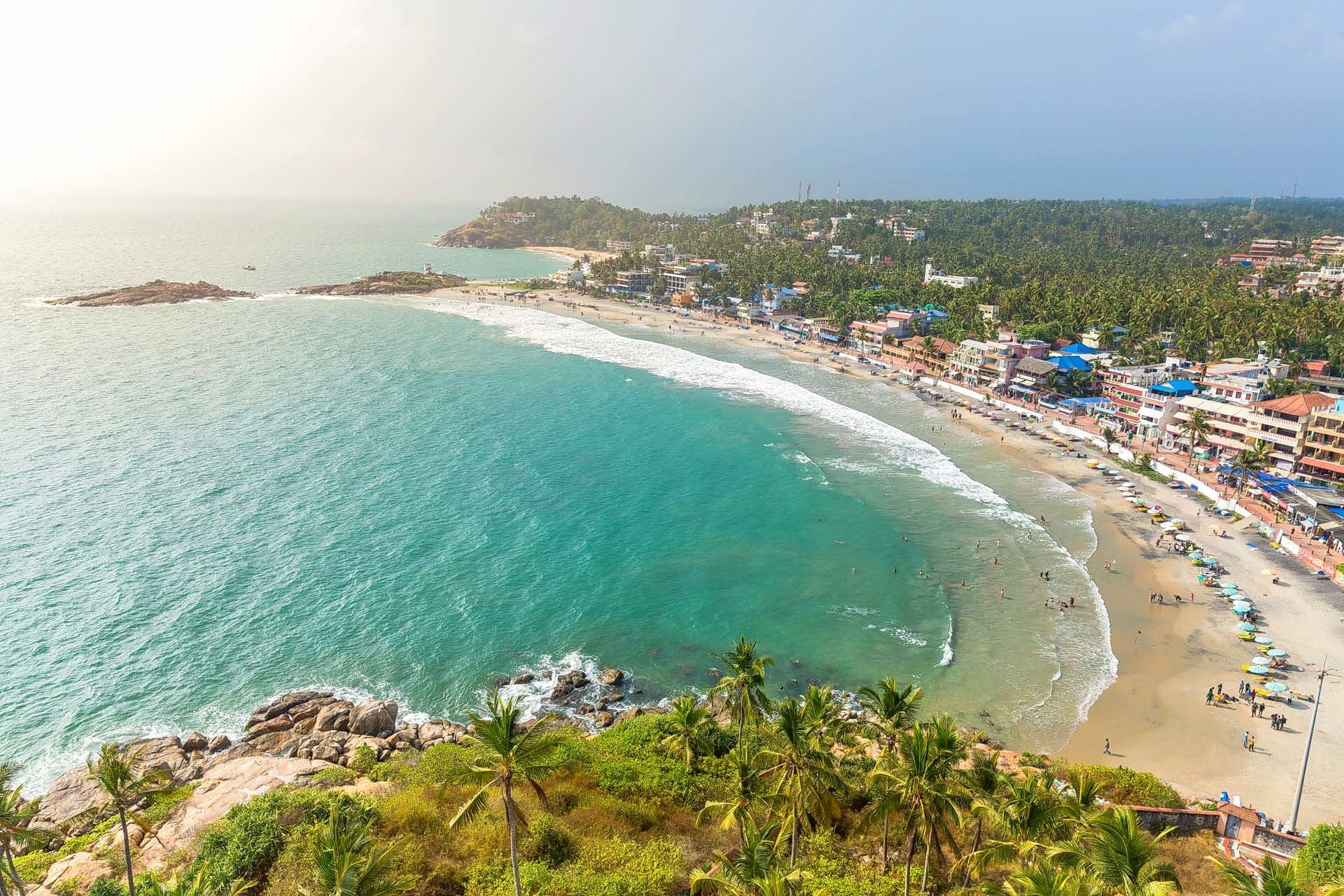
Beyond the temples and hills, Chettinad, the Karaikudi belt, is one of the state’s most distinctive looks, its grand merchant mansions with Athangudi-tiled courtyards used regularly for period and heritage productions. The Coromandel coast runs the length of the eastern seaboard under Coastal Regulation Zone rules, the Danish-era fort town of Tranquebar and the Gingee fort add further texture, and Kanyakumari closes the state at the southern tip of mainland India.
The Chettinad mansions in particular have become a recognised period location, their scale and Athangudi-tiled interiors standing in for heritage wealth across Tamil and national productions, while the quieter towns and coast of the deep south offer texture away from the studio belt. Each of these sits under its own controlling authority (private mansion owners, district administrations, the coastal authority) so access is confirmed location by location rather than as a single state permit.

Permits and Government Liaison in Tamil Nadu
Permission in Tamil Nadu is layered across state, central and site authorities, and which ones a shoot triggers depends entirely on where it goes.
State Single-Window, Subsidy and India Cine Hub
At state level, Tamil Nadu operates a single-window portal for clearances and runs a film subsidy for qualifying Tamil features through the state government. Feature, OTT and foreign productions also route central permission through India Cine Hub, the national single-window for film shooting in India. A line producer aligns the state and central tracks so they run in parallel rather than in sequence. Our line producer guide to Tamil Nadu filming sets out the permit tracks, studios and incentive detail in full.
The practical consequence is that a Tamil Nadu schedule almost never runs on one approval. A single shoot week can touch the state single-window, India Cine Hub, the ASI, the Forest Department and a district collector, each with its own paperwork and lead time. Mapping that stack accurately at pre-production, and starting the slowest clearances first, is what separates a confirmed schedule from a stalled one.
ASI Monuments, Forest and Coastal Clearances
On top of the administrative permissions sit the site-specific ones. The temples and historic monuments fall under the ASI shooting framework; the Nilgiri and Western Ghats forests, including reserves such as Mudumalai and Anamalai, require Forest Department clearance with ecological conditions; and the entire coastline sits under CRZ rules. Each carries its own lead time, and a generic application sent to the wrong authority is the most common cause of delay.
For the Western Ghats locations especially, forest clearances carry ecological conditions on vehicles, lighting, generators and crew movement, and core reserve zones are usually off-limits, so productions plan around buffer areas and seasonal access. On the coast, CRZ rules constrain construction, vehicles and night lighting even on an open beach. None of this rules the locations out, it simply has to be in the schedule from the first recce.
| Location type | Main authority |
|---|---|
| Studios (Chennai, Coimbatore, MGR Film City) | Studio / facility management |
| UNESCO & ASI monuments | Archaeological Survey of India |
| Active temple complexes | Temple administration / HR&CE |
| Forest & Western Ghats reserves | Forest Department |
| Coastline | Coastal Regulation Zone authority |
| Public spaces & roads | District administration / police |
| Feature / OTT / foreign permission | State single-window + India Cine Hub |

Crew, Studios and Equipment
Around the locations, Tamil Nadu’s production depth is genuine, and a line producer’s job is to deploy it under the union framework rather than against it.
FEFSI Crew and Union Coordination
The state has one of India’s deepest below-the-line crew bases, organised under FEFSI’s trade unions. Crew ratios, day rates and engagement terms are union-governed, and the most common cause of friction on a Tamil Nadu shoot is not capability but coordination, a line producer who manages FEFSI engagement correctly turns the union from a risk into a reliable, scalable resource. The union’s city-level mechanics are handled at city level; at state level the point is simply that this crew depth extends across Tamil Nadu, not only the capital.
Studios and Equipment Sourcing
The studio and equipment base itself sits mainly in Chennai and Coimbatore and is covered in the city guides; at state level the distinct challenge is movement. Gear is drawn from these hubs and trucked to temple towns, hill stations and coastal locations hundreds of kilometres apart, so a Tamil Nadu schedule plans equipment transport, redundancy and return logistics across the whole state as carefully as it plans the shoot days themselves.
Costs and Lead Times
Budgeting a Tamil Nadu shoot turns on three variables more than on headline rates: the union crew structure, the multi-region travel and equipment movement, and the lead times on permits. State and central film permissions and the ASI, forest and coastal clearances each take weeks, and a location confirmed late can cost a whole leg of a multi-region schedule. The discipline is to fund the routing and the lead time honestly and to treat the permit fees, which are rarely the expensive part, as the easy line.
Multi-Region Scheduling and the South India Corridor
Because the state is large and varied, routing is the central scheduling task, and Tamil Nadu rarely sits alone in a broader South India plan.
Routing Across Tamil Nadu

A Tamil Nadu schedule typically threads the coast and studio belt around Chennai and Mamallapuram, the temple south of Thanjavur and Madurai, and the Nilgiri hills, with road movements between them running into several hours, Chennai to Ooty is effectively a full travel day. Sequencing high-dependency, permit-heavy locations first and absorbing flexible scenes around them is what keeps a multi-region shoot from cascading delays.
This is also where local knowledge pays for itself. Knowing that the temple permissions take longer than the studio booking, that the hill roads cost a travel day, and that the union conversation has to happen before the crew is called is the difference between a routing that holds and one that unravels mid-schedule.
Tamil Nadu Within the South India Corridor
At the regional level, Tamil Nadu integrates naturally with its neighbours, the Nilgiris adjoin Kerala’s high ranges, Bengaluru and the Karnataka locations sit a short hop to the north-west, and Hyderabad anchors the Telugu studio system to the north. Productions routing a broader southern schedule treat Tamil Nadu as one node in the South India production corridor, often paired with a line producer in Kerala for contrasting natural environments.
The corridor logic is practical, not just geographic. A unit can hold its crew core, equipment and coordination structure steady while moving between Tamil Nadu’s studios and temples, Kerala’s backwaters and hills, and the Karnataka or Telangana studio systems, instead of rebuilding the operation in each state. A line producer who works the corridor sequences these crossings so permits, vendors and logistics carry over rather than restart at every border.
When Tamil Nadu Works Best: and What a Line Producer Handles

Tamil Nadu suits regional feature films using its full geography, studio-driven OTT formats that need controlled stages and crew depth, advertising that requires scale and fast turnaround, and international units that want experienced, unionised crews behind a project. Across all of them, a line producer and film fixers in Tamil Nadu handle the same end-to-end load: state and central permissions, ASI, forest and coastal clearances, FEFSI crew engagement, studio and equipment coordination, multi-region routing, and cost and schedule control across the locations.
For international units in particular, the appeal is a combination of experienced, English-comfortable crews, a real studio base, and a location range that few single territories can match, all at domestic cost. The constraint is the same one that runs through this guide, the permissions and the union framework are non-negotiable and have to be planned, not improvised, which is precisely why a foreign production engages a local line producer rather than attempting the state cold.
That single thread of control, held by a team that already works with the studios, the union and the district and site authorities across the state, is what turns Tamil Nadu’s breadth from a logistical challenge into a dependable, schedulable production base.
