
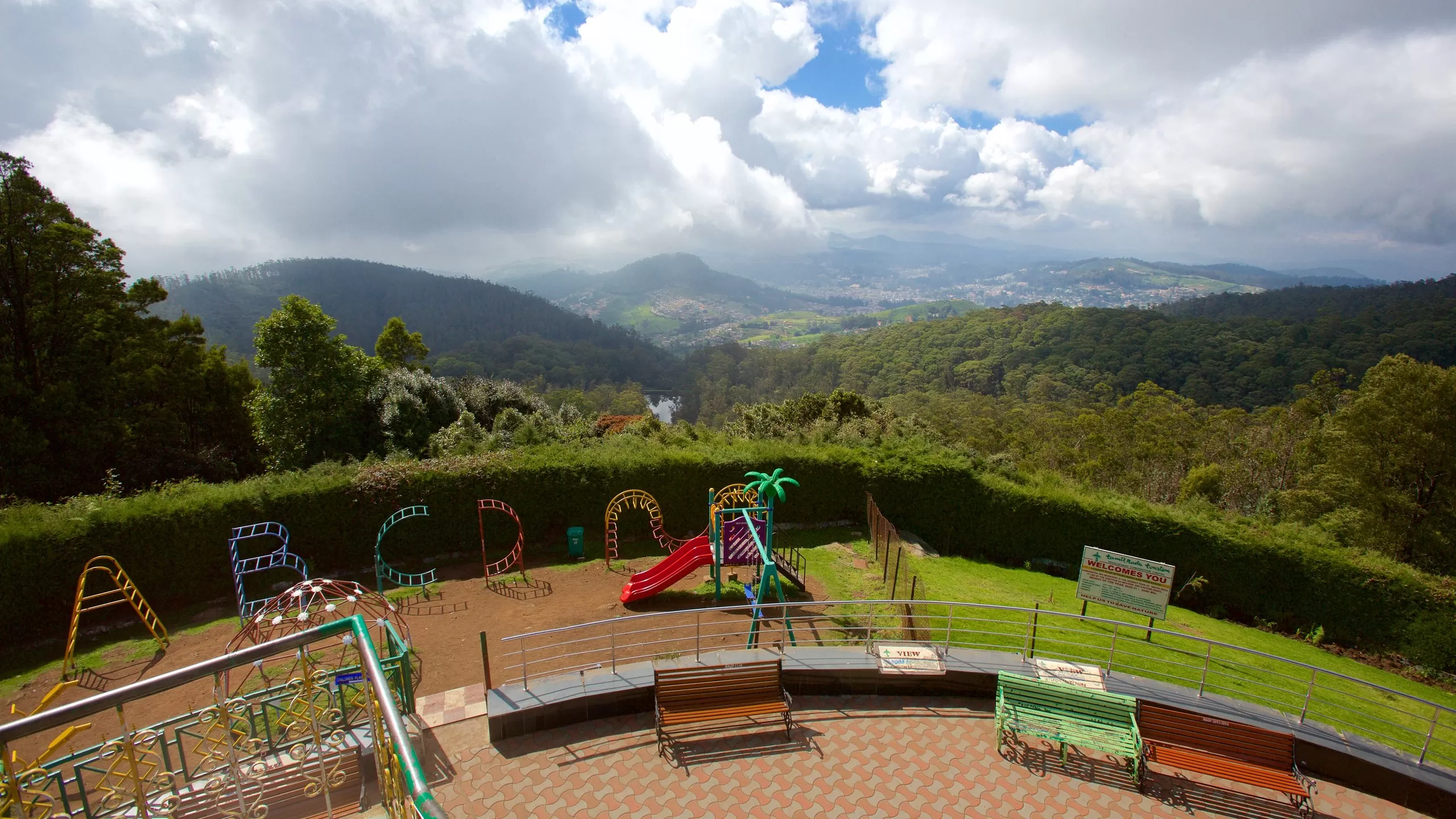
A line producer in Ooty is really managing three things at once: a location that more than two hundred films have already used, a permit map split across the horticulture, forest and railway departments, and a mountain climate that decides how many usable hours a day the unit actually gets. Ooty, or Udhagamandalam, sits at roughly 2,240 metres in the Nilgiris of Tamil Nadu, and its meadows, lakes, pine forests and heritage toy train have carried Hindi, Tamil, Telugu and Malayalam productions for decades.
What makes it deceptively hard is that the postcard is the easy part. The scenery sells itself; the schedule is where shoots are won or lost, because access runs up a hairpin ghat, the crewing and equipment base is 500 kilometres away in Chennai, and the two departments that own the best locations can close them for an entire season. This guide walks the locations, the films that made them famous, the permission chain, the weather window and the logistics a unit has to plan around, from the perspective of the people running the shoot rather than visiting it. It sits under the wider line producer Tamil Nadu coverage.
The Hill Station That Bollywood Treats as a Backlot
Ooty earned its place in Indian cinema the same way it earned its tea estates: the British laid out ornamental gardens, downs and a rack railway, and the landscape that resulted looks like nowhere else in the country. For a production it offers rolling green meadows, still lakes, planted pine forest and colonial architecture within a short drive of one base town, which is why song sequences, romances and hill-station set-pieces have gravitated here since the 1960s.

Wenlock Downs and the 9th Mile Shooting Point
The single most-filmed spot is Wenlock Downs, known to crews simply as the 9th Mile Shooting Point, about 14 kilometres from town on the Pykara road. Once British hunting grounds, it is a sweep of open, treeless downs that has stood in for everything from summer camps to European meadows. The roll call is long: Raja Hindustani, Kuch Kuch Hota Hai, Chennai Express, Roja, Saajan and, more recently, The Archies have all used it. The appeal for a line producer is a large, controllable open space with no permanent structures to clear from frame.
Pykara, the Pine Forest and the Lakes
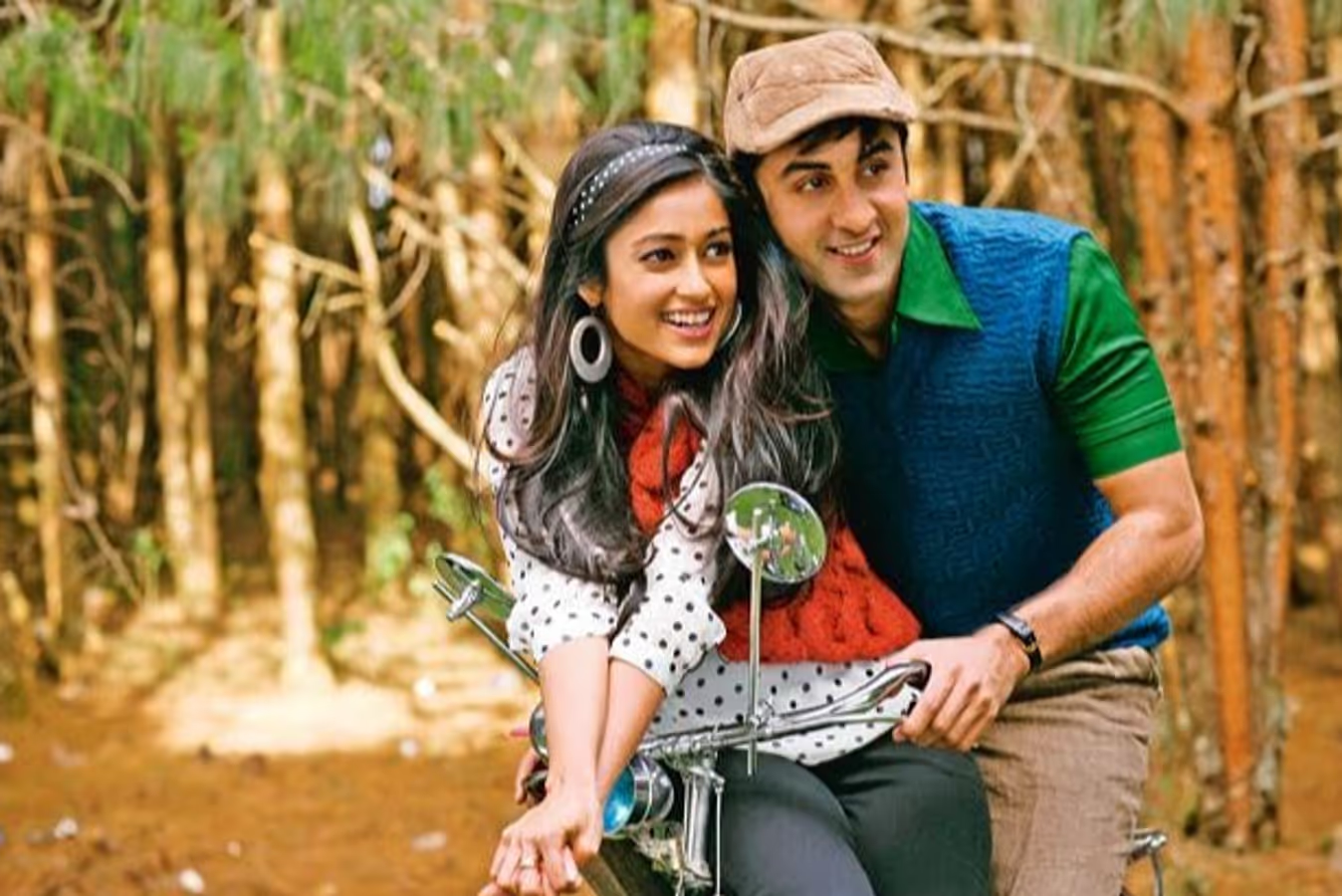
A few kilometres on lie the Pykara Lake and Falls, sacred to the Toda community, where the river drops in two cascades and a boathouse gives a ready water-and-hills composition. Between town and Pykara sits the Pine Forest, its trees planted in geometric rows, a look used in the Jo Jeeta Wohi Sikandar song Gazab Ka Hai Din and later in Barfi. Ooty Lake, Emerald and Avalanche further out, and the Botanical Garden complete a location grid that rarely needs the unit to travel more than an hour from base.
The Nilgiri Mountain Railway
The other icon is the Nilgiri Mountain Railway, a UNESCO World Heritage line that climbs from Mettupalayam through Coonoor to Ooty on a steam rack system. Its blue-and-cream carriages are the toy train that carried the Dil Se song Chaiyya Chaiyya, with Shah Rukh Khan on the roof, and the cart ride in Barfi. Filming on or beside the working railway is its own permission track, run through Southern Railway rather than any state department, and it is one of the few sequences on this list that cannot simply be scheduled around the weather.

Coonoor and the Tea Country
Fourteen kilometres downhill, Coonoor is the quieter second base most units end up using alongside Ooty. It is smaller, warmer and less crowded, and its own locations, the botanical slopes of Sim’s Park, the Dolphin’s Nose and Lamb’s Rock viewpoints, and the tea estates that terrace the hills toward Kotagiri, carry a greener register than the open downs above. For a schedule that wants tea-country texture, or simply a calmer unit base away from Ooty’s tourist crush, Coonoor is where many crews stage, and the drive between the two towns is short enough to work both in a single shooting day.
The Colonial-Architecture Layer
Beyond the landscape, Ooty carries a stock of colonial buildings that productions use for period and boarding-school stories: St Stephen’s Church, the Nilgiri Library, the Ooty Club, Stone House and the campuses of hill schools such as Lawrence and Breeks. These are working institutions rather than open sets, so each is a separate negotiation with its trustees or management, but together they give a shoot a ready nineteenth-century British-hill-station look without a build. A location manager treats them as the interiors-and-facades layer sitting under the natural exteriors of the downs and lakes.
The Films That Turned Ooty Into a Location
Ooty is unusual in that its reputation as a location is itself a selling point: producers arrive knowing the frames, because audiences have seen them for thirty years. The Nilgiri toy train and the downs are the headline, but the depth of the catalogue is what keeps crews coming back, and it spans every major Indian film industry rather than Hindi cinema alone.

On the Hindi side, Ajab Prem Ki Ghazab Kahani staged its central proposal at Pykara Lake, Hum Aapke Hain Koun built its summer camp on Wenlock Downs, and Deewana, Sadma and countless song sequences used the gardens and forests. Tamil, Telugu and Malayalam productions have leaned on Ooty even harder, from Roja and Suryavamsam to a steady stream of romance and family films for which the hill station is shorthand for escape. The practical takeaway for a line producer is that the locals, from hoteliers to transport operators, already understand film units, which shortens the learning curve on the ground.
A Catalogue Across Every Industry
The pattern across the catalogue is that Ooty tends to play a version of itself, an idyll set apart from the city, which is why the same handful of frames recur. Barfi used the toy train and the Pine Forest; Jo Jeeta Wohi Sikandar planted its cycling montage in those same pines; the downs have doubled for summer camps and European meadows for thirty years. That familiarity cuts both ways: the locations are proven and the local ecosystem is fluent in film units, but a director hoping to avoid the postcard has to work harder to find an angle audiences have not already seen.
The southern industries have arguably shaped Ooty on screen even more than Hindi cinema. Tamil films from Roja to Suryavamsam, and a long line of romances, treat the Nilgiris as the default hill idyll; Telugu and Malayalam productions run steady schedules here for the same reason. For a line producer that cross-industry history is a practical asset, because transport operators, lighting and reflector crews and location owners in and around Ooty have serviced units of every language and size, so an out-of-state or foreign production is rarely the first film a given vendor has handled.
Who Controls a Shoot in the Nilgiris
There is no single Ooty film office that clears everything. The best locations sit under different authorities, and the slowest of them sets the critical path, so the permission map has to be drawn before the schedule is locked. The national picture of how central, state and local layers fit together is set out in the guide to film permission in India; below is how it plays out on the ground in the Nilgiris.
The Horticulture Parks and the Botanical Garden
The Government Botanical Garden, the Rose Garden and the Arboretum are run by the state Horticulture Department, and filming in them is chargeable: current fees run around ₹50,000 for the flagship gardens and roughly ₹25,000 for tea-garden locations, with approval routed through the Director of Horticulture in Chennai rather than the local park office. That central sign-off is the part productions underestimate, because it adds lead time that a location manager on the ground cannot compress.

The Summer Shooting Ban
The catch that has stranded more than one schedule is seasonal: during the summer tourist peak, filming is banned outright in the Botanical Garden and the other major parks so that visitor access is not disrupted. A production that assumes the gardens are available year-round can lose a marquee location for the exact months, roughly April to June, when the weather is otherwise most reliable. The season has to be checked against the shot list before dates are committed.
Forests, Eco-Sensitive Zones and the Toy Train
Much of the Nilgiris is reserved forest, and the district borders the Mudumalai Tiger Reserve, so any shoot moving off the manicured parks into woodland, waterfalls or wildlife country falls under the Forest Department and the biosphere’s eco-sensitive-zone rules. The constraints on equipment, vehicle access and timings are covered in the guide to forest and wildlife filming in India. The Nilgiri Mountain Railway is a separate track again, cleared through Southern Railway under the same framework as any shoot on Indian Railways property.
Drones and Aerial Work in the Biosphere
Aerial and drone photography is the request most likely to stall in the Nilgiris, because the whole district sits inside the Nilgiri Biosphere Reserve and much of it is eco-sensitive or forest land where unmanned flights are tightly controlled. Drone work needs its own clearance stack, national DGCA registration and airspace rules layered on top of forest-department and local permissions, and proximity to Mudumalai and protected habitat can rule out flights entirely in some zones. It is planned at the recce, never assumed on the day, and it is one of the first items to confirm before an aerial is promised to the director.
The State Single-Window
Tamil Nadu has moved toward a film-friendly, single-window posture with a state nodal officer for shooting permissions, and the Nilgiris District Collector’s office coordinates local law-and-order, traffic and municipal clearances. In practice a unit still assembles a stack of individual permissions, horticulture, forest, railway, police and municipal, rather than one master permit, which is precisely why the permission map belongs at the top of prep and not the end of it.
A Schedule Held to the Weather
Ooty is a climate-bound location in the literal sense: the calendar decides the schedule more than the budget does. Planning the shoot window, and building contingency into it, is the difference between a smooth hill shoot and a unit burning day rate waiting for a cloud to lift.
Monsoons and the Real Shoot Window
The Nilgiris catch both monsoons: the south-west from roughly June to September and the north-east from October into December, which between them rule out large parts of the year for exterior work. The most reliable dry, clear light tends to fall in the late-winter-to-spring stretch and again briefly after the rains, but that spring window collides with the summer park ban, so there is rarely a month that is perfect on both counts. The trade-off between weather and access has to be made deliberately.
Fog, Continuity and Call Times
Even inside a dry spell, Ooty makes its own weather. Mist rolls across the downs at short notice, most often in the late morning and again by mid-afternoon, which compresses the usable window to early starts and disciplined turnarounds. For a line producer that means building the day around light rather than convenience, holding continuity notes on cloud and fog, and carrying cover sets indoors or under canopy for when a location greys out mid-scene. Temperatures that drop sharply after sundown add a further limit on night exteriors.
Getting a Unit Up the Ghat
The final variable is simply reaching Ooty with a full unit and getting it working. Nothing about the town’s scale matches the size of the productions that use it, so the logistics are planned from outside the hills inward.

Access, Airports and the Hairpin Bends
The nearest airport is Coimbatore, around 85 to 100 kilometres away, with Bengaluru the larger alternative about 270 kilometres out; Chennai, the state’s production capital, is some 550 kilometres and a full day’s drive. The final climb runs up a ghat of tight hairpin bends from Mettupalayam through Coonoor, which caps the size of vehicle that can carry a crane, generator or camera truck and slows every equipment move. Convoy timing, vehicle size and a margin for breakdowns on the bends all belong in the movement order.
Equipment, Crew and Accommodation
Ooty has no significant equipment-rental base of its own, so cameras, grip, lighting and generators travel up from Chennai, Coimbatore or Bengaluru and stay for the schedule, which makes kit lists and contingency spares more important than on a metro shoot. Crews staging that kit in the city often base it with film fixers in Bengaluru. Experienced crew are brought in the same way, supplemented by a local pool that knows the terrain. Accommodation is a genuine constraint: a handful of heritage and business hotels, including long-standing production bases in and around town, plus homestays, fill fast in season, so blocking rooms early is part of securing the shoot. Altitude and cold also tax batteries and equipment, which the kit plan has to allow for.
The Costs That Surprise First-Timers
The Ooty premium is not in the location fees but in everything around them. Every truck of grip and lighting carries its own transport and standby cost for the days it spends climbing to and sitting in the hills; generators are effectively mandatory, because hill-grid power is not something a shoot can rely on for a lighting plan; and accommodation and vehicle rates climb in season when the town is already full of tourists. Weather contingency has to be budgeted as time, not just insurance, because a fogged-out morning is a real cost against the day rate. A realistic Ooty budget prices the mountain, not only the frame, and that gap is exactly where an experienced local line producer earns back the fee.
What a Line Producer in Ooty Actually Carries
Ooty rewards the unit that treats it as an operations problem, not a scenery one. The frames are guaranteed; the risk sits in the permission calendar, the monsoon-and-fog window and the ghat-road logistics, and those are exactly what an experienced line producer is paid to absorb. Mapping the horticulture, forest and railway permissions against a weather-realistic schedule, staging equipment and crew from the plains, and holding cover options for when the hill greys out is what turns a beautiful location into a delivered one. It is the same execution discipline the wider line producer in India network brings to every territory, applied to a hill station that has been earning its place on screen for sixty years.
