
Mumbai holds one of the deepest concentrations of crew, studios, equipment and talent in India, and it is the home of Bollywood, of Film City and the studio system, so much of a shoot can be resourced within the city. A Line Producer Mumbai turns that abundance into a shoot that holds its budget and schedule against what the city asks in return, its cost, its crowds and its layered permissions.
The flip side of all that capacity is that Mumbai is among the most expensive and most congested places to shoot in India. Locations are spectacular but public and dense; the monsoon reshapes half the calendar; and permissions run through the municipal corporation, the police, the railways and more. Experienced film fixers in Mumbai plan around these realities, and because the capital of the industry so often anchors a national schedule, the same team scales the job up into the line producer India operation when a shoot travels beyond the city.

Line Producer Mumbai: Why the City Works as a Production Base
Mumbai carries exceptional production depth. It is the base of the Hindi film industry, the advertising business and a large share of the country’s OTT output, which means the whole ecosystem lives here, heads of department, technicians, casting, post houses, vendors and rental inventory at scale, held together by the vendor relationships that repeat productions rely on. For a visiting production, that depth means much of the unit can be built locally rather than flown in, which reduces a major source of risk on an Indian shoot.
The trade-off is cost and density. Mumbai’s real estate, hotels, transport and location fees run at a premium, and its streets are highly congested, so control of the budget and of on-ground logistics is central to a Mumbai shoot. A line producer’s job is to convert the city’s capacity into a schedule that holds, at a cost the production can defend.
Why Mumbai Stays the Default
OTT has only added to the pull. Mumbai is the production capital of India’s streaming output as much as its cinema and advertising, so demand runs year-round. That sustained demand supports a large working base, though turnaround and crew availability still depend on the dates, and the busiest departments need early booking.
There is a quieter advantage too: Mumbai is where the decisions are made. Agencies, studios, broadcasters and most producers are headquartered in the city, so approvals, meetings and problem-solving happen in the same place as the shoot. That proximity removes a layer of delay that remote schedules often carry, and it is a large part of why productions that could technically shoot cheaper elsewhere still choose to base themselves here.
Real Productions Shot in Mumbai
Mumbai’s screen record is extensive. Danny Boyle’s Slumdog Millionaire (2008) staged its climactic dance on the platforms of Chhatrapati Shivaji Terminus and shot through the Dharavi slum and Juhu; Gully Boy returned to Dharavi a decade later. The city’s landmarks recur constantly, Bandra Fort alone appears in Dil Chahta Hai, Talaash and Wanted, and Juhu Beach carried classics from CID to Anand.

Bhansali spectacles such as Bajirao Mastani, mounted on Film City sets, show the other side of the city: not just real locations, but the built-set and studio capacity to construct worlds from scratch. Between the streets and the stages, Mumbai gives a line producer an unusually wide working palette, from real streets to built sets.
Mumbai is also among India’s most internationally experienced bases. Slumdog Millionaire‘s eight Academy Awards put the city on Hollywood’s map, and cross-border projects from The Lunchbox to streaming co-productions have run through its crews and studios since. For a foreign unit, that history means familiar workflows, English-speaking departments and vendors who have handled international paperwork before, reassurance that many foreign units value.

Line Production Mumbai: Studios, Crew and Equipment
Mumbai’s studio base is extensive. Dadasaheb Phalke Chitranagari (Film City in Goregaon) offers backlots, standing sets, lakes and forested acreage inside the city, and studios such as Mehboob, Yash Raj, Filmistan and the Royal Palms complex provide interiors and standing sets. The ruins of Mukesh Mills are a practical location in their own right rather than a studio. Stage specifications, including any virtual-production capability, and availability are confirmed with each venue for the dates. Equipment rental houses carry current camera, lighting and grip inventory, and local vendors can turn kit around quickly, subject to the specification and the booking window.
The crew pool matches the studios, and it runs deep enough that many departments can be crewed locally. Mumbai holds one of the largest concentrations of experienced heads of department, camera and lighting technicians, art departments, assistant directors and production staff in the country, most fluent in English and used to international standards and union norms. That depth can help with availability, though short-notice crewing still depends on the dates, the department and the specification; a line producer in Mumbai confirms availability against the brief rather than assuming it.
Post-production completes the picture. Mumbai holds a deep concentration of sound, DI, VFX and edit facilities, so a production can finish where it shot instead of moving material and team elsewhere, a genuine advantage for schedule, budget and creative continuity, and one reason so many international projects keep their Indian post here too.

Working With a Line Production Company in Mumbai
On larger jobs the line producer usually operates through a local production company, in effect a line production company in Mumbai that carries the insurance, payroll and vendor contracts. Engaging a line producer company in Mumbai, rather than assembling freelancers, gives an international or out-of-state client one contracting entity for GST-compliant invoicing, crew payments and equipment liability. It is also the cleanest way to buy full line production services in Mumbai under a single point of accountability, with the permit trail and the cost report held in one place from prep to wrap.
In practice the film production services Mumbai companies provide run well beyond the shoot itself: budgeting and cost reporting, location scouting and permissions, crew and equipment booking, casting and extras coordination, transport, catering, insurance and compliance, and the reconciliation and paperwork a foreign or corporate client needs at wrap. Contracting line production in Mumbai through one accountable entity keeps the permit trail and cost report together from prep to wrap.
Commercials, Ads and Brand Films in Mumbai
Mumbai is the capital of Indian advertising as much as of cinema. The country’s major agencies, commercial production houses and post facilities are concentrated here, which makes the city the default for high-volume, fast-turnaround work, television commercials, digital films, brand content and fashion shoots. For a client, the advantage is speed and choice: directors, DOPs, stylists, models and vendors are all within reach, and a job can be crewed, cast and delivered on tight timelines, subject to the brief and current bookings.
That volume shapes how a line producer runs an ad. Commercials work to tight schedules and tighter client approvals, so the premium sits on pre-production discipline, locked locations, permits and contingencies before the shoot day, not improvisation on it. For the ad-specific workflow, budgets and agency dynamics, our ad film production in Mumbai coverage goes deeper.

Iconic Filming Locations in Mumbai
Mumbai’s locations split cleanly by geography, and each zone carries its own access and crowd profile.
South Mumbai Heritage
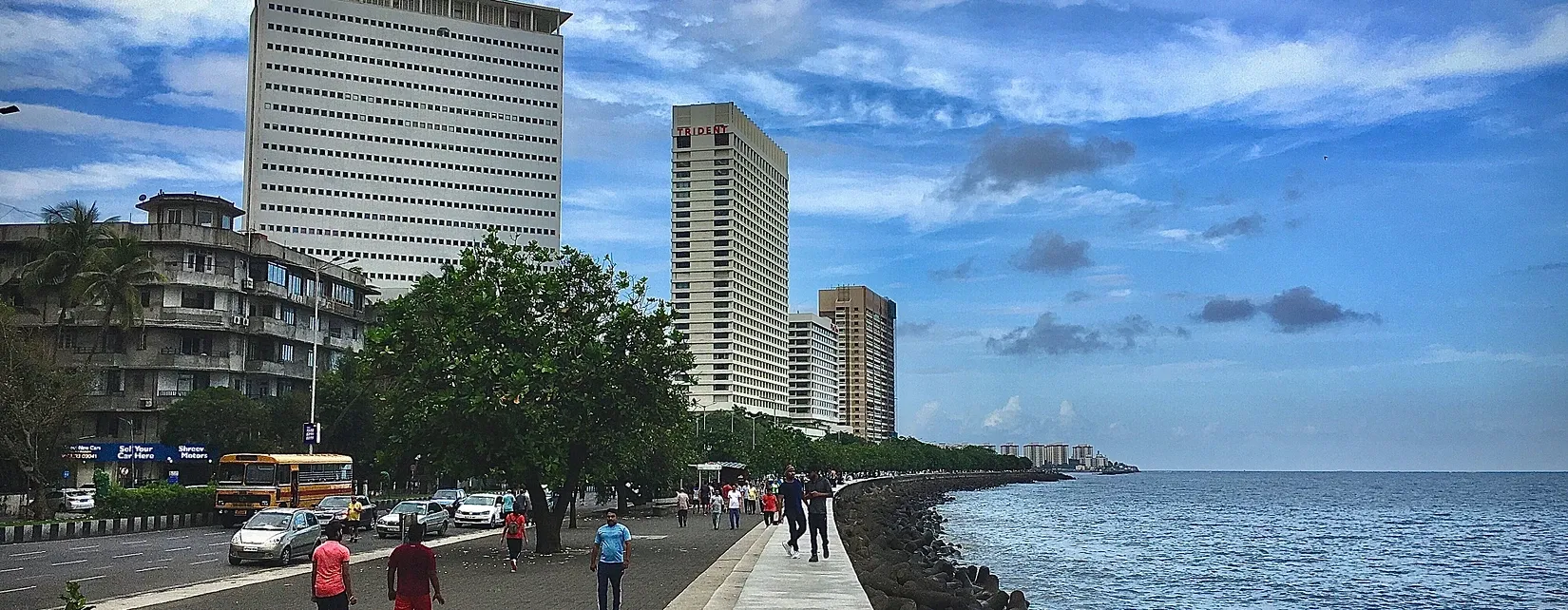
The southern tip holds the colonial city: the Gateway of India and the Taj, the UNESCO-listed Chhatrapati Shivaji Terminus, the Fort district, Colaba, the sweep of Marine Drive and the Victorian and Art Deco ensembles along it, and the crowded arcades of Crawford Market. The neoclassical steps of the Asiatic Society and the Edwardian offices of Ballard Estate are recurring stand-ins for courts, institutions and period settings. These are the postcard frames, and the most permit- and crowd-sensitive, since most are heritage-listed and heavily trafficked.

The Suburbs and Bandra
North of the city, Bandra offers the fort, the sea-facing promenades and the mural-covered bylanes that stand in for a younger, hipper Mumbai; the Bandra-Worli Sea Link gives a modern engineering skyline; and Juhu Beach remains a workhorse location. This is also where much of the industry lives and works, so crew and vendors are close at hand.

Film Fixer Mumbai Support: Dharavi, Chawls and Kanheri Caves
For the real, textured city, Dharavi and the chawls give the density and energy that Slumdog Millionaire and Gully Boy made globally famous, locations where a film fixer in Mumbai with the right community relationships supports sensitive, well-managed access and community consent. At the city’s edge, the ancient rock-cut Kanheri Caves inside Sanjay Gandhi National Park add a historic, natural register a short drive from the studios.

Working and Lesser-Known Locations
Beyond the landmarks, the working city is a location library in itself. Sassoon Dock and the Worli Koliwada fishing village give raw, maritime texture; the Aarey forest colony offers unexpected greenery inside the metropolis; Powai’s lake, corporate towers and Hiranandani facades cover the modern-corporate register; and the island caves of Elephanta add an ancient counterpoint a boat ride from the Gateway. For interiors, the city’s apartments, offices, old mills turned studios and heritage bungalows are constantly hired as real sets, a practical alternative to building, sourced and cleared by a line producer as part of the schedule.
Filming Permits in Mumbai
Mumbai has no single authority that grants every permission, so clearances are assembled by location. Public spaces, roads and crowd control run through the Brihanmumbai Municipal Corporation (BMC) and the Mumbai Police; heritage sites and museums add their own custodians; and railway locations such as CST require Central or Western Railway permission on top of the heritage rules. Maharashtra runs a single-window film-facilitation route that coordinates applications, but the individual authorities retain their own approval responsibilities; foreign crews also need the correct visa category and, for some content, central clearance. Where a production is weighing state support alongside the central rebate, the Maharashtra film subsidy is targeted at Marathi cinema rather than a general rebate, and operational reasons usually decide the base.
Because the permit landscape is extensive, we cover the authorities and documents in our dedicated guide to filming permissions in Mumbai, and our Mumbai BMC, police and high-risk permissions guide goes deeper for complex or high-risk sites. Film fixers in Mumbai prepare the location files and coordinate with the relevant custodians, while the line producer sequences the approvals against the budget and schedule.
Unions and Night Shoots
Mumbai also has India’s most organised film-labour framework. Crews work within the norms of the Federation of Western India Cine Employees (FWICE) and its craft unions, which set working hours, overtime and minimum terms, and a shoot that ignores them risks disruption. A line producer budgets and schedules to these norms from the outset, so union compliance is designed into the plan rather than argued over on set.
One Mumbai-specific reality is the night shoot. Arterial roads and business districts are heavily trafficked by day, so some commercial and street filming runs at night under night permissions, depending on the approved hours, the location conditions and the production plan. A line producer factors this into the permit applications and the crew’s hours from the start, rather than discovering on the day that a location is only viable after midnight.

Cost and Budget Structure in Mumbai
A line producer Mumbai team builds the budget around the production’s scale, location choices, studio requirements, crew grades and dates. Accommodation, location fees and transport can be substantial, while congestion adds travel time and can reduce the number of setups achievable in a day.
Local crew and rental availability can reduce the need to bring resources from other cities, but specialist requirements and existing bookings may still involve additional travel or freight. Compare complete packages, including overtime, transport, accommodation and contingencies, rather than assuming that local supply guarantees a lower total cost.
What a Mumbai Budget Contains
| Budget line | What drives the cost in Mumbai |
|---|---|
| Line producer & production office | Shoot length, scope and number of units |
| Crew: DOP, gaffer, art, PAs | Department size; much sourced locally |
| Camera, grip & lighting package | Rental house and format; extensive local inventory |
| Studios & sets | Film City, Mehboob and private floors versus real locations |
| Locations & permits | Heritage sites, BMC, police and railway charges |
| Accommodation & unit transport | High hotel rates and heavy traffic time |
| Crowd control & security | Dense public locations and heritage precincts |
Weather and Production Calendar
Mumbai’s calendar is written by the monsoon. Timing a shoot is largely a question of working around the rains.
- November to February: the dry, pleasant window and the peak shooting season, with mild temperatures and clear light.
- March to May: hot and very humid, shootable but demanding on cast, crew and hydration.
- June to September: the southwest monsoon brings intense, sustained rain and flooding; exteriors need heavy cover, and many productions move to studios.
- October: a transitional, drying-out shoulder before the peak window returns.

Beyond Mumbai: Locations Near the City
Mumbai is also the base for a rich belt of nearby locations. Alibaug’s beaches and villas are a short ferry south; Lonavala, Khandala and Karjat add ghats, waterfalls and a growing cluster of outdoor studios within a few hours; and Matheran, Igatpuri and the vineyards around Nashik extend the range further. Running these as short legs from a Mumbai base keeps the deep city crew on the job while the look changes, the options are set out in our guide to film shoot locations near Mumbai. For coastal work further south, productions commonly hold a Mumbai base and shoot in Goa, where our line producers in Goa run the beach, heritage and permit logistics on the ground.
The ghats are the biggest draw. Lonavala, Khandala and the Karjat belt turn lush and dramatic in and just after the monsoon, and Karjat in particular has grown a cluster of outdoor and set studios, a favourite when a production wants controlled backlot space with natural scenery an hour or two from the city’s crew base. Because the unit stays intact, these legs can cost less than mounting a fresh shoot elsewhere, though the saving depends on the schedule and the location.
Planning Mumbai Within a Multi-City Shoot
Mumbai holds one of the country’s deepest crew, rental and studio bases, which is why many productions prep here before a schedule splits toward other regions, routed according to the brief. A line producer Delhi team coordinates directly with the Mumbai team when a schedule spans both cities, and units commonly route on to Rajasthan, Goa or Kerala. For clients weighing partners rather than a single city, our guide to the best line production company in India sets out what separates a genuinely reliable outfit.
What Shoots Mumbai Suits Best
Mumbai suits almost everything, which is part of why it dominates, and line producers in Mumbai carry all of it because the crew and studios sit in one city. Features and OTT series base here for the crew and studio depth; the advertising industry runs the country’s highest volume of commercials through the city; and music videos, fashion films and brand content draw on the mix of glamour, grit and sea. Because so much of the talent and infrastructure already lives in Mumbai, it is also the default for anything that needs stars, established directors or fast turnaround.
What unites these is that the main variables are usually cost, crowds and the calendar. A one-day commercial and a multi-month feature face the same three Mumbai variables: how much premium location and hotel exposure the schedule carries, how dense the chosen sites are, and whether the dates dodge the monsoon. Managing those is the whole job.

Work With a Mumbai Production Team
Whether you are shooting a feature, a commercial, a documentary or a series, a Mumbai shoot rewards a strong local team more than almost anywhere in India, and a line producer in Mumbai is the person who turns that depth into a shoot that holds, marshalling budget, crew, studios and permits against cost, crowds and the monsoon. The value is a single, clear line of responsibility: a realistic budget, cleared BMC, police and heritage approvals, studio and crew bookings, crowd planning, and no gap between prep and wrap. Share your script, locations and dates, and we will come back with a costed plan and the permit path to match.
Line Producer Mumbai FAQs
Is Mumbai expensive to film in?
Mumbai is among India’s most expensive shooting cities, with high hotel, transport and location costs and heavy traffic that turns time into money. The offset is that crew, equipment and studios are largely local, which can reduce crew travel and equipment freight costs, and vendor competition is strong.
Do I need permits to film in Mumbai?
Yes. Permissions are assembled location by location through the BMC, the Mumbai Police, heritage custodians and, for stations like CST, the railways. The process and documents are covered in our dedicated guide to filming permissions in Mumbai, and a line producer sequences them so approvals land in time.
When is the best time to shoot in Mumbai?
November to February is the dry, comfortable peak window. March to May is hot and humid, and the June-to-September monsoon brings heavy, sustained rain that pushes most exterior work into studios or under cover.
Are studios available, or is everything shot on location?
Mumbai has an extensive studio base, Film City in Goregaon plus Mehboob, Yash Raj and many private floors and chroma stages, so a line producer can move between real locations and built sets, which is especially useful during the monsoon.
