
Film Studio Procurement India Infrastructure Benchmarking
Film studio procurement India begins with infrastructure benchmarking. International productions rarely choose studios based only on location or cost. Instead, they assess whether a facility meets technical standards required for high-volume film and OTT production. Soundstage size, rigging capacity, power distribution, acoustic isolation and production support infrastructure form the baseline metrics. These variables determine whether a studio can handle complex builds, multi-camera setups and large art departments without operational constraints.
Infrastructure benchmarking also helps global producers evaluate predictability. A soundstage that lacks sufficient ceiling clearance or structural rigging capacity can restrict lighting systems, stunt equipment or large production design installations. Likewise, inadequate power infrastructure may limit high-wattage lighting grids, motion control rigs and LED wall environments. For international productions, these limitations translate into schedule risk and budget expansion.
The procurement process therefore evaluates studios against global reference standards used by major production hubs in North America, Europe and Asia. Technical specifications are mapped against production requirements before committing to long-term stage bookings. This benchmarking process allows producers to determine whether a facility supports full-scale set construction, large crew operations and multi-department workflows.
A detailed comparison of these infrastructure benchmarks is explored in Indian Film Infrastructure Hollywood Standards, which examines how Indian studio facilities align with global production requirements.
By structuring film studio procurement India around measurable infrastructure metrics, producers avoid procurement decisions based purely on cost or availability. Instead, the process identifies studios capable of supporting the scale, technical complexity and production predictability expected in international film and streaming projects.
Global Stage Standards vs Indian Studio Infrastructure
Global soundstage standards have evolved around the needs of large-scale film and streaming productions. Studios in established production hubs typically offer high ceiling clearances, extensive rigging grids, large uninterrupted floor plates and integrated production infrastructure. These facilities allow complex set construction, large lighting rigs and extensive technical equipment without structural limitations.
Indian studio infrastructure has historically developed around domestic film production, where shooting styles and set construction requirements often differ from international studio systems. However, this landscape has shifted significantly in recent years. Many Indian studios have expanded stage capacity, upgraded power systems and integrated modern production support facilities to accommodate global projects.
The benchmarking process therefore evaluates multiple parameters simultaneously. Ceiling height determines whether large lighting rigs or stunt harness systems can be safely installed. Floor load capacity determines whether heavy set builds or water tanks can be supported. Power supply infrastructure affects the ability to run large lighting arrays and virtual production systems. Acoustic isolation also becomes critical when multiple stages operate simultaneously.
Film studio procurement India must therefore examine how Indian studio infrastructure compares with international benchmarks. When these benchmarks align, Indian facilities can support large international productions without requiring structural modifications. Where gaps exist, producers must plan additional infrastructure or consider alternate stage solutions.

Capacity Benchmarking for International Production Volume
Infrastructure benchmarking also evaluates whether a studio ecosystem can sustain high-volume production environments. International productions rarely operate on a single stage. Large projects often require multiple stages simultaneously for set construction, filming, rehearsals and unit preparation.
Capacity benchmarking therefore examines the total number of stages available within a studio complex and the operational support systems surrounding them. These include workshops for art departments, storage facilities for production equipment, parking infrastructure for large crew operations and access routes for heavy construction materials. Without these supporting systems, large productions experience logistical bottlenecks that disrupt shooting schedules.
Another key factor is stage turnover efficiency. Large productions frequently rotate between stages as sets are constructed and dismantled during filming. Studios that provide adequate storage zones, loading docks and technical service corridors allow rapid set transitions without interrupting the shooting schedule.
Film studio procurement India therefore evaluates not only individual soundstages but also the broader studio ecosystem supporting them. Facilities that offer multiple stages with integrated production infrastructure allow international projects to operate efficiently without relocating between separate facilities.
Through structured capacity benchmarking, producers identify studio environments capable of sustaining complex, multi-stage production workflows. This evaluation ensures that infrastructure decisions support the scale and continuity required by global film and streaming projects.
Soundstage Capacity Modeling for Film Studio Procurement India
Soundstage capacity modeling is a central component of film studio procurement India. While infrastructure benchmarking identifies available facilities, capacity modeling determines whether those stages can sustain the scale and technical demands of a specific production. International projects rarely rely on a single stage environment. Large productions require multiple sets, complex lighting systems and extensive technical installations operating simultaneously. As a result, the evaluation process must examine the structural characteristics of a soundstage in detail before procurement decisions are finalized.
Capacity modeling examines whether a stage can physically support production design builds, camera systems and lighting infrastructure without operational restrictions. Floor load capacity, ceiling clearance and rigging grid strength directly affect how large a set can be constructed and how complex lighting rigs can be installed. Productions that rely on large-scale art direction, water tanks, mechanical effects or stunt equipment require stages with significant structural tolerance.
In addition to physical structure, capacity modeling evaluates how soundstages integrate with production workflow. Adequate loading access, equipment staging zones and set construction areas allow art departments to build and dismantle sets without interfering with active shooting schedules. Without these supporting systems, productions experience logistical bottlenecks that delay filming.
Film studio procurement India therefore relies on detailed soundstage modeling before committing to studio infrastructure. This evaluation ensures that the selected stage environment can support both the physical scale of production design and the operational rhythm required for complex shooting schedules.

Stage Dimensions, Ceiling Heights & Rigging Systems
Stage dimensions are one of the most important factors when evaluating soundstage infrastructure. Large productions frequently require expansive floor areas to accommodate elaborate sets, camera tracks and lighting equipment. Narrow or segmented floor plans restrict set construction and reduce flexibility for camera movement. As a result, productions often prioritize stages with large uninterrupted floor plates that allow multiple technical departments to operate simultaneously.
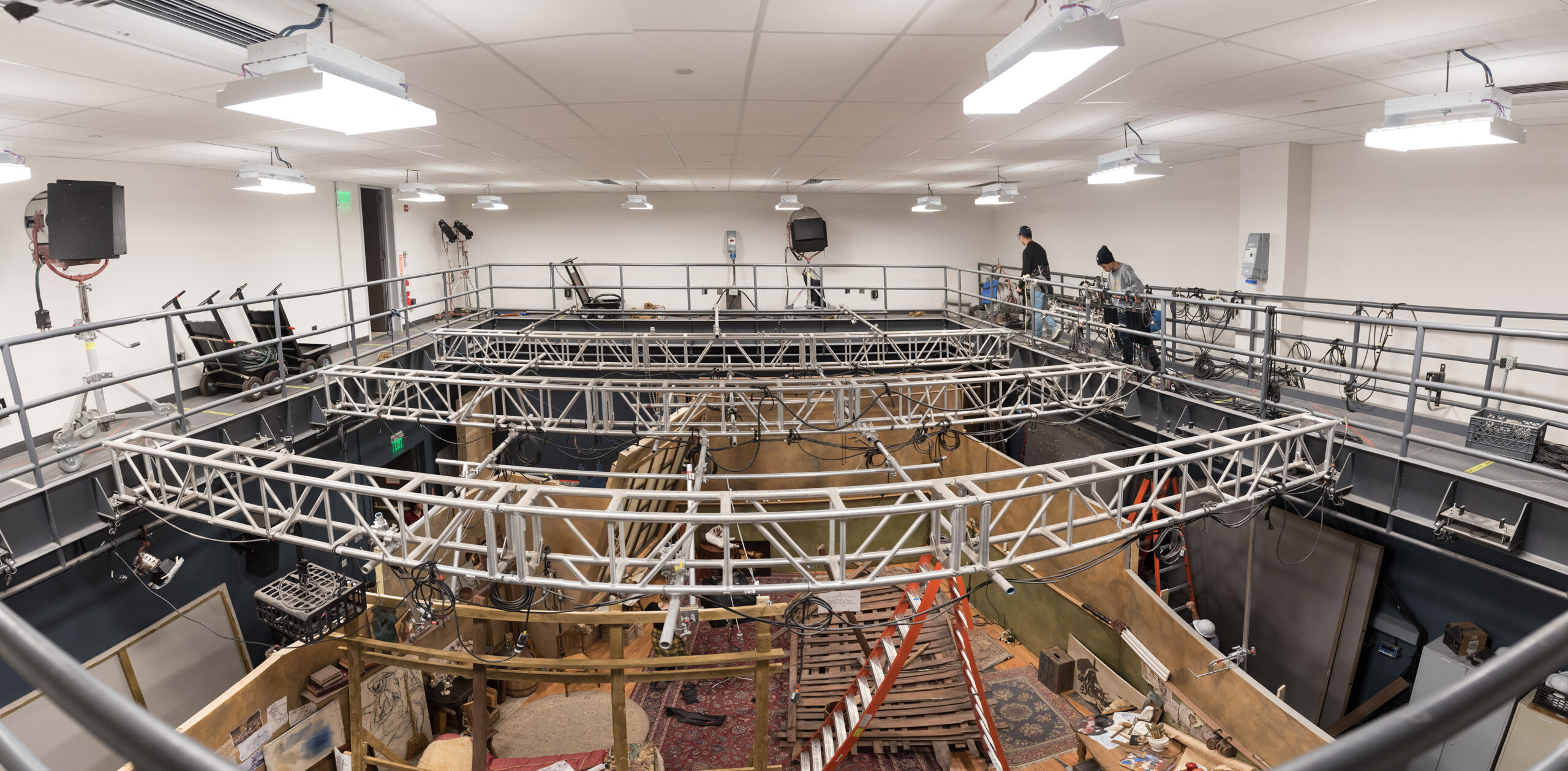
Ceiling height is equally critical. Modern film productions frequently install complex lighting rigs, overhead camera systems and stunt harness mechanisms that require significant vertical clearance. Stages with low ceilings limit the use of large lighting arrays and restrict the installation of overhead rigging systems. This constraint forces productions to redesign lighting setups or adjust shot composition, both of which increase production complexity.
Rigging systems form the structural backbone of modern soundstages. Steel grid systems and overhead truss networks allow lighting equipment, mechanical rigs and safety harness systems to be installed securely above the set environment. The load capacity of these rigging systems must support heavy lighting fixtures, motion control equipment and large scenic elements.
Film studio procurement India therefore evaluates stage dimensions and rigging infrastructure carefully. Stages that offer large floor plates, high ceilings and strong rigging grids provide the structural flexibility required for complex film production environments.
Acoustic Isolation, Power Supply & Climate Control
Beyond structural size, soundstage functionality depends on environmental control systems. Acoustic isolation is essential for productions that record live dialogue. If soundstages lack adequate acoustic treatment or structural soundproofing, external noise and adjacent stage activity can interfere with sound recording. Productions then rely heavily on post-production dialogue replacement, which increases both time and cost.
Power supply infrastructure also determines whether a stage can support large-scale technical installations. Film productions often rely on high-wattage lighting arrays, camera systems, motion control rigs and specialized equipment operating simultaneously. A stage with limited electrical capacity may require additional generators or temporary power infrastructure, increasing both operational complexity and cost.
Climate control systems also influence stage performance. Large lighting setups generate significant heat, particularly during extended shooting schedules. Without proper ventilation and temperature regulation, working conditions deteriorate quickly and equipment reliability may decline. Controlled climate environments also protect sensitive electronics used in modern digital production systems.
Film studio procurement India therefore evaluates acoustic isolation, electrical infrastructure and climate management systems as core operational factors. Soundstages that maintain stable environmental conditions allow productions to operate continuously without technical interruptions.
By combining structural capacity with environmental infrastructure, soundstage capacity modeling ensures that a selected studio environment can support demanding production schedules while maintaining technical stability across long filming periods.

LED Volume & Virtual Production Procurement Systems
LED volume infrastructure has transformed modern studio procurement decisions. Virtual production environments now allow filmmakers to replace traditional green screen workflows with immersive LED wall systems that display real-time digital environments. These systems enable productions to capture final visual backgrounds directly in camera while maintaining realistic lighting reflections on actors, props and set surfaces. As a result, LED volumes have become an increasingly important component of film studio procurement India.
Virtual production stages require significantly different infrastructure compared with conventional soundstages. LED walls demand structural rigging systems capable of supporting large modular display panels arranged in curved stage environments. These panels must be mounted with precise alignment to maintain seamless visual continuity across the display surface. In addition, the supporting stage must provide stable power distribution and cooling systems capable of sustaining high-output LED arrays operating continuously during filming.
Procurement systems therefore evaluate whether a studio can support the technological demands of LED volume installations. Factors such as stage dimensions, rigging capacity, power redundancy and environmental control directly influence whether virtual production workflows can operate reliably. Studios that lack these infrastructure capabilities often require temporary installations or external technical support, increasing both cost and complexity.
A detailed overview of India’s evolving virtual production infrastructure can be explored in Indian Studios Global Filming Set Design Technology, which examines how modern studio facilities integrate LED volume systems into global production pipelines.
By incorporating LED volume procurement into film studio procurement India, productions can evaluate whether studio environments support advanced virtual production workflows without relying on temporary stage modifications.

LED Volume Infrastructure and Virtual Production Workflows
LED volume stages function as controlled digital environments where physical sets and virtual landscapes interact in real time. Unlike traditional chroma key stages, LED walls display fully rendered environments during filming. These environments respond dynamically to camera movement, allowing perspective shifts that match the physical camera position. This technique creates realistic depth and parallax effects directly on set.
For this workflow to function effectively, LED volume infrastructure must operate with precise technical synchronization. High-resolution LED panels are arranged in large curved arrays surrounding the performance area. These panels display digital environments generated by real-time rendering engines connected to motion tracking systems attached to the camera. As the camera moves, the rendering system adjusts the digital background instantly, maintaining visual consistency within the frame.
Stage infrastructure must therefore accommodate both physical and digital production systems simultaneously. LED panels require stable mounting systems, high-capacity electrical supply and specialized control hardware that manages brightness, color calibration and synchronization across the display surface. Without stable infrastructure, the virtual environment may experience flicker, latency or color inconsistencies that disrupt filming.
Film studio procurement India therefore evaluates LED stage infrastructure carefully. Studios capable of supporting large LED volumes provide a controlled environment where digital and physical production elements operate seamlessly within the same shooting space.
Integration of Stage Design with Real-Time Rendering Pipelines
Virtual production stages also require close integration between stage design and digital rendering systems. Unlike traditional soundstage environments where physical set construction dominates production design, LED volume stages combine partial physical sets with digital extensions generated in real time. This hybrid design approach requires coordination between art departments, visual effects teams and technical operators managing the rendering pipeline.
Real-time rendering engines generate the digital environments displayed on LED walls. These engines receive continuous data from camera tracking systems that record the position, orientation and lens characteristics of the camera. The rendering system then adjusts the digital scene to match the camera perspective precisely. When this synchronization operates correctly, the digital environment appears physically integrated with the practical set elements.
Stage design must therefore account for how physical set pieces interact with digital backgrounds. Lighting design also becomes critical. LED walls emit colored light that reflects naturally onto performers and set surfaces, creating realistic environmental lighting. However, additional lighting systems must be calibrated carefully to match the color temperature and intensity of the digital environment.
Film studio procurement India therefore evaluates how well studio facilities integrate physical stage design with digital rendering infrastructure. Studios that support real-time rendering pipelines allow productions to operate virtual production workflows efficiently without requiring extensive technical modifications.
Through careful infrastructure planning, LED volume procurement systems enable studios to support modern production techniques where physical and digital filmmaking converge inside a controlled studio environment.

Build vs Rent Modeling in Film Studio Procurement India
Build versus rent modeling is a critical decision layer in film studio procurement India. Productions must determine whether to utilize existing studio infrastructure or construct temporary stages tailored to specific project requirements. This evaluation influences capital exposure, schedule flexibility and the long-term operational efficiency of the production. The choice between renting established soundstages and constructing temporary infrastructure is rarely based solely on cost. Instead, it depends on the scale of production design, the duration of the shoot and the technical demands of the project.
Permanent studio facilities offer predictable infrastructure environments. Established studios provide controlled acoustics, rigging systems, stable power supply and integrated production services that allow productions to begin filming with minimal setup time. These facilities are particularly advantageous for projects operating under tight schedules where infrastructure reliability is essential.
Temporary stage construction, by contrast, allows productions to design infrastructure tailored precisely to the requirements of the project. Productions building large set environments or specialized shooting spaces may find that constructing a dedicated stage offers greater design flexibility. However, temporary construction introduces additional complexity. Structural engineering, power distribution, safety compliance and acoustic treatment must all be planned before filming can begin.
Film studio procurement India therefore relies on structured build-versus-rent modeling. Producers evaluate whether existing studio infrastructure supports the technical scale of the project or whether constructing a dedicated stage environment will provide greater operational efficiency. This modeling framework ensures that infrastructure decisions align with both the creative and financial requirements of the production.
Temporary Stage Construction vs Permanent Studio Infrastructure
Temporary stage construction provides productions with complete control over the physical environment of filming. When projects require unusually large sets, specialized water tanks or unique spatial layouts, existing soundstages may not offer sufficient flexibility. In these situations, constructing a temporary stage allows production designers to define the exact dimensions, rigging capacity and technical infrastructure required for filming.
These temporary stages are often built inside industrial warehouses, aircraft hangars or specially leased facilities. Structural reinforcement is typically required to support lighting grids, mechanical rigs and heavy scenic installations. Productions must also install power distribution systems, soundproofing materials and climate control infrastructure to transform the raw structure into a functional soundstage environment.
Permanent studio infrastructure, however, offers a different set of advantages. Established studios provide pre-engineered stage environments that already include lighting grids, acoustic treatment and integrated technical services. Productions renting these facilities can begin filming quickly without investing time and capital into infrastructure construction. Studios also provide supporting amenities such as workshops, storage facilities and production offices, which improve operational efficiency during filming.
Film studio procurement India therefore evaluates whether existing studio infrastructure can support the physical requirements of the project. If permanent soundstages meet these requirements, rental solutions typically provide faster deployment and lower operational complexity.

Cost Control, Schedule Control & Infrastructure Ownership
The financial implications of build-versus-rent decisions extend beyond simple construction costs. Temporary stage construction requires significant upfront capital expenditure. Structural modifications, electrical installations, safety inspections and environmental controls must all be implemented before filming begins. While these costs may be justified for long-duration productions, short-term projects often find that renting existing studio infrastructure offers greater cost stability.
Schedule control is another critical factor in this decision. Constructing a temporary stage requires additional time for engineering approvals, construction work and infrastructure testing. Productions operating under strict filming schedules may not have the flexibility to accommodate these preparation phases. Renting established soundstages reduces this timeline significantly, allowing filming to begin once stage availability is secured.
Infrastructure ownership can also influence procurement strategy. Large franchise productions or long-running television series may benefit from constructing dedicated stage environments that remain available across multiple production cycles. Ownership or long-term control of stage infrastructure allows producers to maintain consistent production environments and avoid recurring rental costs.
Film studio procurement India therefore incorporates detailed cost modeling when evaluating build-versus-rent strategies. Producers must balance capital investment, infrastructure flexibility and schedule constraints to determine the most efficient approach.
By analyzing these variables systematically, build-versus-rent modeling ensures that studio infrastructure decisions support both the financial stability and operational predictability required for complex film and streaming productions.
Stage Procurement Logistics for High-Volume Productions
Stage procurement logistics become increasingly complex when productions operate across multiple soundstages simultaneously. Large film and streaming projects rarely shoot within a single stage environment. Instead, production schedules frequently distribute filming across several stages within the same studio complex or across multiple facilities. This approach allows different departments to prepare sets, rehearse scenes and shoot sequences concurrently. As a result, studio procurement decisions must consider how effectively a facility supports multi-stage production logistics.
Operational planning begins with evaluating the spatial organization of the studio complex. Productions require clear movement pathways between stages, set construction areas and equipment storage zones. If these operational corridors are poorly designed, departments compete for limited space, slowing production workflows. Efficient studio infrastructure ensures that art departments can construct sets, camera teams can prepare equipment and filming units can operate without interfering with each other.
High-volume productions also rely on predictable stage allocation systems. Stages are frequently booked months in advance, and production schedules must account for set construction periods, shooting days and dismantling phases. Procurement teams therefore evaluate how studio management coordinates stage usage across multiple productions operating within the same facility.
Film studio procurement India must incorporate these logistical considerations during infrastructure evaluation. Studios that provide coordinated stage allocation, adequate support spaces and efficient internal transport systems allow large productions to maintain steady filming schedules without operational disruption. Effective logistical planning transforms studio infrastructure into a stable production environment capable of supporting complex, multi-stage filming operations.
Multi-Unit Production Scheduling Across Soundstages
Large-scale productions often operate several filming units simultaneously. A primary unit may shoot principal scenes while secondary units capture inserts, action sequences or environmental footage on separate stages. This multi-unit structure accelerates production timelines but requires careful coordination of stage availability and department workflows.
Scheduling across multiple soundstages therefore becomes a critical planning task. Each stage must be assigned a defined operational role within the production schedule. One stage may host large set builds while another accommodates dialogue-heavy interior scenes. A third stage may support rehearsal spaces, stunt preparation or specialized technical setups. Without clear stage allocation, departments compete for space and resources, creating scheduling conflicts that delay filming.
Studios capable of supporting multi-unit production environments provide sufficient stage capacity and operational flexibility. Productions can rotate filming activities between stages as sets are prepared, modified or dismantled. This rotation allows filming to continue without interruption while art departments prepare the next environment.
Film studio procurement India must therefore evaluate whether a studio ecosystem can support simultaneous filming operations. Facilities that provide multiple stages with coordinated scheduling systems enable productions to operate efficiently across different filming units while maintaining schedule continuity.
Equipment Routing, Storage and Stage Turnover Efficiency
Efficient equipment movement is another essential component of stage procurement logistics. Film productions rely on large volumes of technical equipment, including lighting systems, camera rigs, grip infrastructure and specialized filming machinery. These assets must be transported continuously between stages as filming progresses.
Studios that provide dedicated equipment routing corridors allow departments to move equipment without disrupting active filming areas. Wide loading bays, service corridors and internal transport routes enable large technical units to move efficiently across the studio complex. Without these logistical pathways, productions experience delays as equipment must navigate congested stage environments.
Storage infrastructure also plays a critical role in production logistics. Productions require secure spaces to store equipment, props and set components when they are not in use. Adequate storage facilities allow departments to maintain organized inventories while keeping active stages free from unnecessary clutter.
Stage turnover efficiency further influences production scheduling. As filming concludes on one set, art departments often begin dismantling and preparing the stage for the next build. Studios that provide sufficient staging zones and equipment storage areas enable rapid transitions between sets without interrupting ongoing filming operations.
Film studio procurement India therefore evaluates logistical infrastructure alongside physical stage characteristics. Studios that support efficient equipment routing, storage management and stage turnover systems create operational environments where large productions can maintain continuous filming schedules without logistical bottlenecks.
Strategic Studio Selection in Film Studio Procurement India
Strategic studio selection is the final stage of film studio procurement India. After benchmarking infrastructure, evaluating soundstage capacity and analyzing procurement models, productions must determine which studio environment provides the most stable foundation for the project. This decision rarely depends on price alone. Instead, producers evaluate long-term operational predictability, infrastructure reliability and the broader production ecosystem surrounding the studio facility.
International productions operate under strict schedules and complex coordination between departments. When studio infrastructure fails to perform consistently, the consequences quickly escalate into production delays and cost overruns. Strategic studio selection therefore focuses on identifying facilities where infrastructure reliability, technical support and operational efficiency remain stable across long filming periods.
Producers examine whether the studio environment can sustain continuous production activity without interruption. This includes evaluating power reliability, rigging stability, environmental controls and access to technical maintenance teams capable of resolving infrastructure issues during filming. Facilities that offer predictable operational conditions reduce production risk significantly.
Another factor influencing studio selection is the surrounding production ecosystem. Studios that operate within established filmmaking hubs typically provide access to experienced technical crews, equipment suppliers and production support services. This ecosystem allows productions to scale operations quickly without importing large external resources.
Film studio procurement India therefore evaluates studio environments not only as isolated facilities but as part of a broader production network. Strategic studio selection ensures that infrastructure decisions support stable production operations throughout the filming schedule.
Infrastructure Predictability vs Cost Arbitrage
Cost advantages often attract productions to emerging studio environments, but infrastructure predictability remains the more important variable for long-term production stability. While lower stage rental rates may initially appear attractive, facilities that lack reliable infrastructure can introduce hidden operational risks that ultimately increase production costs.
Infrastructure predictability refers to the ability of a studio facility to maintain stable technical conditions throughout the production cycle. Reliable power systems, consistent climate control and durable rigging infrastructure allow filming to proceed without technical interruptions. When these systems fail, productions must pause filming while repairs or temporary workarounds are implemented. Such disruptions quickly cascade through tightly structured shooting schedules.
Cost arbitrage strategies typically prioritize short-term financial savings by selecting studios with lower rental costs. However, these savings may disappear if additional infrastructure modifications become necessary. Productions may need to install temporary power systems, reinforce rigging structures or implement supplementary climate control equipment. These adjustments increase both cost and logistical complexity.
Film studio procurement India therefore emphasizes infrastructure predictability over simple rental cost comparisons. Studios that maintain stable technical environments reduce the likelihood of operational disruptions. This stability allows production schedules to proceed efficiently while protecting budgets from unexpected infrastructure adjustments.
Studio Ecosystems and Long-Term Production Partnerships
Studio ecosystems also influence long-term procurement decisions. A soundstage rarely operates as an isolated facility. Instead, it functions within a broader network of technical vendors, skilled crew members and service providers that collectively support the production process. When these ecosystems are well developed, productions gain access to specialized expertise without importing large external teams.
Established studio hubs typically maintain long-standing relationships with equipment suppliers, construction workshops and technical maintenance services. These partnerships allow productions to secure specialized equipment quickly while maintaining consistent technical standards across departments. In contrast, isolated studio facilities may require productions to transport equipment and personnel from distant locations, increasing logistical complexity.
Long-term production partnerships can also improve operational efficiency. Studios that regularly host international productions often develop standardized workflows that align with global production practices. Staff members become familiar with international safety requirements, equipment standards and scheduling structures. This familiarity allows productions to integrate smoothly into the studio environment without extensive procedural adjustments.
Film studio procurement India therefore evaluates the strength of the surrounding studio ecosystem when selecting infrastructure partners. Facilities supported by strong vendor networks and experienced technical crews create production environments capable of sustaining complex filming operations over extended periods.
Strategic studio selection ultimately depends on balancing infrastructure reliability, ecosystem strength and operational predictability. When these elements align, studios become stable production platforms that support both immediate project requirements and long-term production partnerships.
Conclusion
Film studio procurement India requires a structured approach to infrastructure evaluation rather than simple location selection. Productions must analyze soundstage capacity, technical infrastructure and operational logistics before committing to studio environments capable of supporting complex filming operations. Without systematic benchmarking, infrastructure limitations may only become visible after filming begins, introducing operational disruptions that affect both schedule and budget.
Soundstage capacity remains a central factor in this evaluation. Large productions require stages with adequate dimensions, ceiling heights and rigging systems capable of supporting complex lighting installations and large set constructions. When stage infrastructure aligns with production requirements, filming operations proceed with greater flexibility and efficiency.
Technological infrastructure has also become a defining element of studio procurement decisions. LED volume environments and virtual production workflows now play a significant role in modern filmmaking. Studios capable of supporting these technologies allow productions to integrate digital environments directly within controlled stage settings, expanding creative possibilities while maintaining production efficiency.
Build-versus-rent modeling further influences infrastructure decisions. Productions must determine whether existing studio facilities provide sufficient capacity or whether constructing temporary stage environments offers greater operational control. This evaluation balances capital investment with infrastructure flexibility and schedule considerations.
Ultimately, stage procurement decisions influence long-term production predictability. Studios that provide stable infrastructure, efficient logistical support and reliable technical systems create production environments where filming can proceed without interruption. Film studio procurement India therefore operates as an infrastructure governance process that ensures production stability rather than a simple search for available shooting space.
