
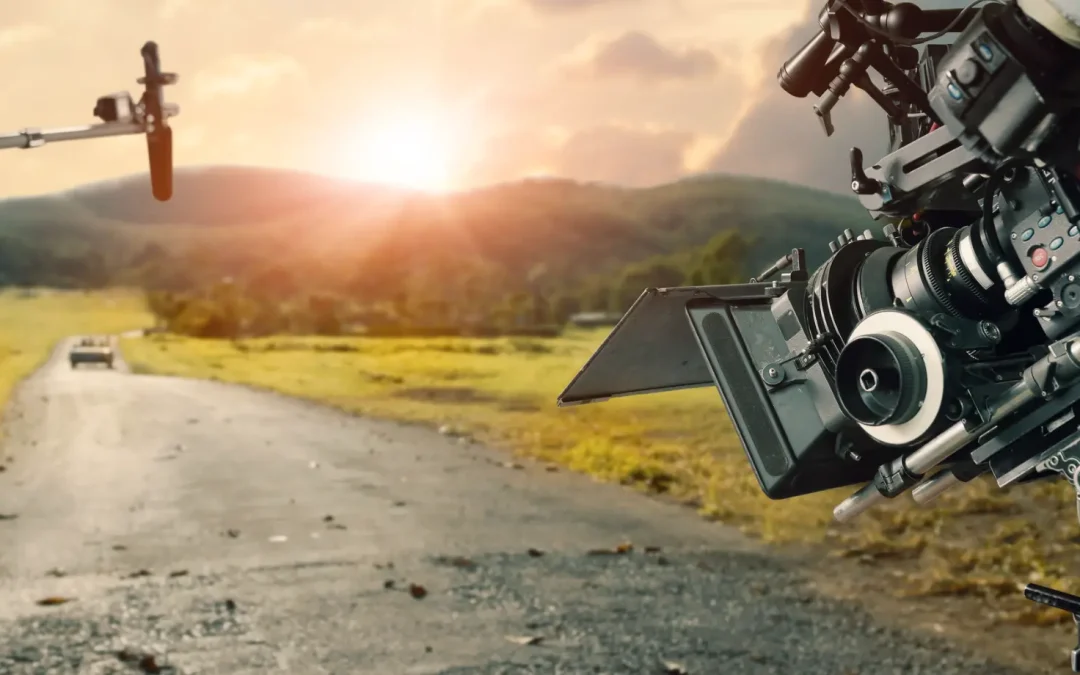
A location that photographs beautifully is not the same as a location you can shoot. The photograph shows the frame; it does not show where forty vehicles park, whether the power will carry the lighting, how long the permit takes, or what happens when the monsoon arrives a week early. Turning that photograph into a decision the production can stand behind is a specific discipline, and on a professional shoot it is not left to instinct.
Film location risk assessment is the standard process that does it. It takes a scouted location and runs it through a consistent set of feasibility checks and a formal hazard assessment, so the go or no-go decision rests on the same method every time rather than on how good the place looked on the recce.
This piece sets out that process as it is actually practised: the feasibility checklist, the likelihood-by-severity formula that rates every hazard, the hierarchy of controls that manages them, and how weather, permits and insurance turn the assessment into a schedule and a budget a completion guarantor will accept.
Feasibility First: Can You Actually Shoot Here?
Feasibility is the first gate, and it is a checklist, not an opinion. The recce exists to answer a fixed set of operational questions: can the unit reach the location and can equipment trucks get in and turn around; is there parking for the vehicles and a holding area for cast and crew; will the power supply carry the lighting load, or is a generator needed and is it even permitted on site. Each of these has a yes or no answer that a good location fixer and scouting execution can establish before a single shoot day is committed.
The list continues into welfare and safety, because a location that cannot support the people is not feasible however well it frames. Enough toilets and catering space for the unit size, a green room or mobile units, step-free access where needed, and a clear picture of the hazards on the ground: open water, unstable surfaces, wildlife, and how quickly the emergency services can reach the site. For a production choosing across India’s range of filming locations, this feasibility pass is what separates a location that merely looks right from one that will hold a full crew for a shooting day.

Distance, Welfare and the Recce Report
Distance is its own feasibility factor. A location an hour further from the unit base costs two hours of paid crew time every day, and a remote site may need accommodation, catering and medical cover trucked in. A place that is feasible for a single day of a small unit can be infeasible for three weeks of a full one, which is why film location risk assessment is always run against the actual scale and length of the shoot planned for it, not the location in the abstract.

The output of the recce is a document, not a memory. A location report records the answer to every feasibility question: photographs from each intended camera position, measurements and the available power load, the site and authority contacts, and the nearest emergency response time. Set down that way the decision can be reviewed by people who never visited and the next department can plan against the same facts. A verbal assurance that it will be fine is not a feasibility pass, and on a professional unit it is not accepted as one.
The Risk Assessment Formula
Once a location is feasible, it is assessed for risk, and here the industry uses a single, well-established formula. Every identified hazard is rated on two axes: the likelihood that it occurs and the severity of the harm if it does. Multiplying the two gives a risk rating, likelihood by severity, that ranks hazards consistently so that attention and money go to the ones that matter rather than the ones that feel dramatic. This is the same method used across professional health-and-safety practice, and film insurers and studios require it in exactly this form.
Rating a hazard is only half the process; the other half is controlling it, and controls follow a fixed order of preference known as the hierarchy of controls. You eliminate the hazard if you can, prevent contact with it if you cannot, mitigate the harm if it still reaches people, and plan recovery for when something goes wrong anyway. Working down that hierarchy in order, rather than jumping to the cheapest fix, is what makes a production risk and insurance plan defensible to an insurer, and it is the backbone of any credible risk assessment.
Special Hazards and Sign-Off
Some hazards carry their own sub-assessments. Stunts, special effects, work at height, water, firearms and animals each trigger a more detailed process and usually a specialist supervisor, and the rating is done per scene and per department rather than once for the whole location, because the same field is low-risk for a dialogue scene and high-risk for a vehicle stunt.
The assessment also has an owner. On a professional unit it is prepared and signed off before the shoot, usually by a safety adviser working with the first assistant director and the line producer, and it is briefed to the crew rather than filed unread. An assessment nobody has read is not a control, it is paperwork.
The Hierarchy of Controls
The hierarchy of controls, worked from the top down for every rated hazard:
| Control | What it means | Example on a location | Preference |
|---|---|---|---|
| Elimination | Remove the hazard entirely | Move the scene off the cliff edge to a safe ledge | First choice |
| Prevention | Stop the hazard reaching people | Barriers and an exclusion zone around open water | Second |
| Mitigation | Reduce the harm if it still occurs | Safety divers, protective equipment, a medic on standby | Third |
| Recovery | Plan for when it goes wrong anyway | Nearest hospital identified, evacuation route briefed | Last resort |

Weather and the Calendar
The single largest location risk on most shoots is not a hazard on the ground but the weather, and it is assessed against the calendar rather than the map. In India the monsoon runs roughly from June to October and can bring flash flooding and landslides with little warning, so an outdoor location is only as feasible as the window it is shot in. A serious assessment reviews the historical weather for the location and season, not just the forecast, because an outdoor site prone to heavy rain can halt a unit for days.
This is why weather sits at the centre of any time-risk and calendar plan that involves the calendar. The mitigation is partly scheduling, building cover sets and weather days into the plan, and partly financial, because standard production insurance covers damage and injury but frequently does not cover delay. Weather cover is a separate decision, and assigning someone to monitor conditions in the run-up to and during the shoot is a control in its own right.
Weather is not only rain. Usable daylight shortens the shooting day and lengthens the schedule in winter, extreme heat imposes breaks and shifts the workable hours, and a season that looks fine on average can hide the specific week a location floods. The calendar side of a film location risk assessment reads all of it, because the exposure is to the schedule, and a lost day on a large unit is among the most expensive things a production can suffer.

Permits, Access and Lead Times
A location can be feasible and low-risk and still be unshootable if the paperwork does not clear in time, so lead time is part of the assessment. Location agreements are typically executed several weeks before the shoot, permit applications are filed against the specific dates, and certificates of insurance are issued to the location and the authorities. Each of these has its own clock, and the assessment has to confirm that the slowest of them fits inside the schedule.
This is where feasibility meets governance, because the permit that a film permits and compliance service in India secures is only granted against a location that has been assessed and insured. On a cross-border or multi-state shoot the lead times stack, and reading them correctly in prep is the difference between a location that is confirmed and one that is merely hoped for.
In India the lead times stack in a particular way, because iconic locations sit under separate authorities: a monument under the Archaeological Survey, a forest under the state forest department, a station under the railways, each with its own clock and its own conditions. An assessment that treats permission as a single step underestimates the real timeline, and on a multi-state shoot the slowest authority, not the average one, sets the date the location can be confirmed.

Insurance, the Bond and Why the Assessment Exists
The risk assessment is not a formality produced to satisfy a file; it is the document the money reads. Film production insurance is priced and issued against it, and the insurer will expect to see that hazards were rated and controlled to the hierarchy above before it covers a location. A poorly assessed location is either uninsurable or expensively insured, and either way the cost lands on the production.
The completion guarantor reads it too. A completion bond and its risk review is written on the assumption that the production has identified and managed its location risks, and an unassessed or badly assessed location is exactly the kind of exposure a guarantor will flag before it stands behind the film. The assessment, in other words, is what lets the money say yes, which is why it is treated as a deliverable rather than a courtesy.
It helps to know what the cover actually does. Production insurance typically answers for equipment, third-party injury, vehicles and damage to the location itself, but the headline gap is delay: a shoot stopped by weather or a failed location is often not covered unless a specific extension was bought. A thorough film location risk assessment is what makes that extension affordable, because an insurer prices the unknown expensively and the assessed cheaply.

Feeding the Schedule and the Budget
The output of the process is not a verdict of safe or unsafe but a set of numbers that flow into the plan. A high-risk location that is still worth shooting carries a longer schedule, a larger contingency and specific controls that all cost money, and a feasible low-risk one carries less. Reading those numbers correctly is what turns a multi-country film production into a schedule a unit can actually run, rather than a document that sits in a drawer until something goes wrong.
Contingency is where the assessment becomes money. A well-run production does not carry one blanket contingency but sizes it against the assessed risk of each location, holds cover sets that can be shot if an exterior is rained off, and sequences the schedule so the highest-risk locations are not stacked on top of one another. Read that way, the assessment is less a safety document than a scheduling instrument.
It also reframes the classic temptation to chase the cheapest location. A cheap site with poor access, an unreliable permit and a monsoon exposure is not cheap once the delay and the controls are priced in, and this is precisely why good-looking locations fail under production pressure. The most valuable outcome of a rigorous assessment is usually not the location it approves but the expensive mistake it prevents, and a line producer who runs the process properly is buying predictability, which on a large shoot is worth more than a low day rate.

Bringing It Together
Film location risk assessment is the standard process that keeps a production from confusing a good photograph with a shootable location. It runs a fixed feasibility checklist, rates every hazard by likelihood and severity, manages each one down the hierarchy of controls, and folds weather, permits and insurance into a schedule and a budget the money will accept.
Done well it is invisible, because the problems it would have caused never happen; done badly, or skipped, it is the reason a beautiful location becomes an expensive one. The discipline is not caution for its own sake, it is the method by which a production turns a place into a plan.
