
Introduction
Mumbai and Rajasthan remain two of the most influential regions in Indian and international filmmaking, shaping production workflows from development to execution. While Mumbai continues to anchor India’s studio-driven industry and large-scale production infrastructure, Rajasthan has evolved into a preferred destination for location-led filmmaking, supported by its royal heritage, desert landscapes, and historic architecture. In recent years, cities such as Ajmer and Udaipur have emerged as focused execution hubs, strengthening the line production ecosystem in Mumbai while expanding the operational depth of line production in Rajasthan through localized crews, streamlined permissions, and visually distinctive locations.

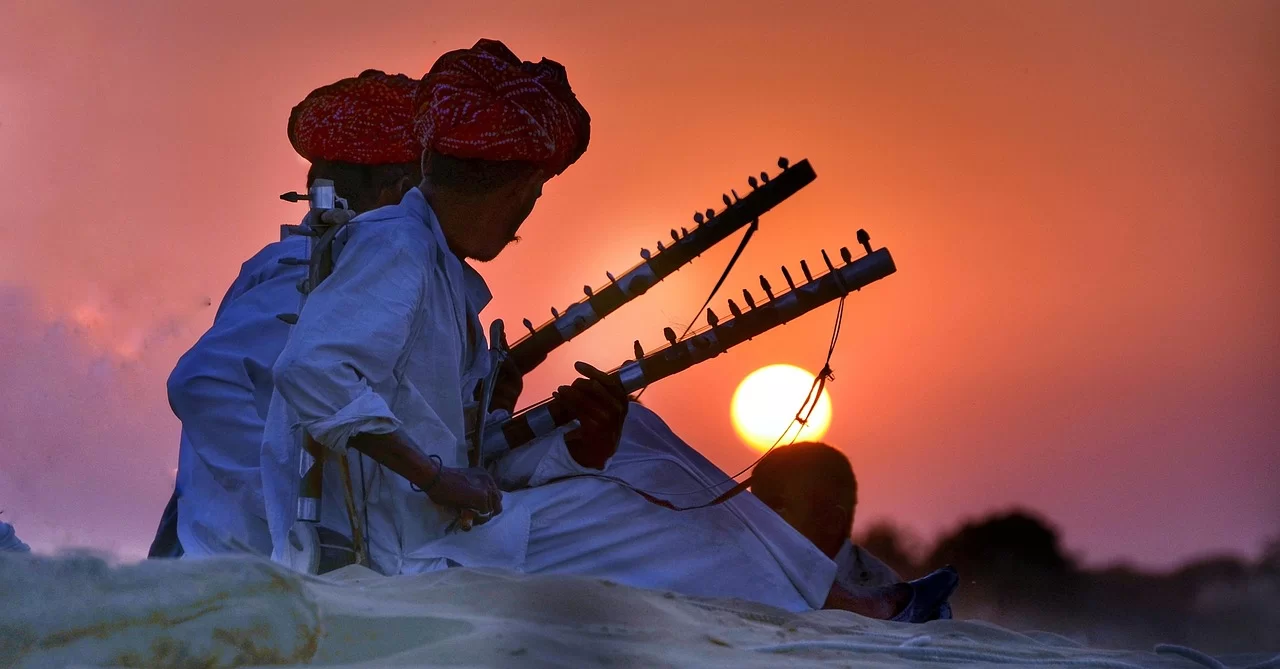
Rajasthan: A Cinematic Jewel in Global Filmmaking
Rajasthan has long served as one of India’s most visually compelling filming destinations, consistently attracting both Bollywood and international productions. Its forts, deserts, and heritage architecture have made it a natural choice for period dramas, large-scale action sequences, and culturally rooted narratives. International productions such as The Dark Knight Rises leveraged Mehrangarh Fort in Jodhpur for high-impact sequences, while The Best Exotic Marigold Hotel showcased Udaipur and Jaipur to global audiences. Indian cinema has similarly drawn from the state’s visual depth through films like Jodhaa Akbar, Bajirao Mastani, Paheli, and PK.
Ajmer offers a different advantage. Its Mughal-influenced architecture, Sufi heritage, and proximity to Pushkar and the Aravalli range make it well suited for grounded, culturally sensitive projects. Productions such as Haji Backpacker, filmed in and around Ajmer, demonstrate how smaller cities can deliver strong visual texture with comparatively lower permitting friction. Locations like the Ajmer Sharif Dargah and surrounding colonial-era structures add narrative depth while remaining logistically manageable with the right local coordination.
For location-specific execution and on-ground support, see Line Producer Services in Ajmer, Rajasthan, or explore the broader Shooting in Rajasthan overview for statewide planning.
Context Within the Mumbai–Rajasthan Production Corridor
This article examines the long-standing production relationship between Mumbai and Rajasthan, highlighting how Mumbai’s studio infrastructure and talent base align with Rajasthan’s location-driven strengths. Together, the two regions form one of the most reliable execution corridors in Indian cinema, balancing creative scale with operational efficiency across studio-driven and location-intensive shoots.
Ajmer & Udaipur: Emerging Favorites in Rajasthan’s Filming Circuit
While Jodhpur and Jaipur remain well-established production centres, Ajmer and Udaipur have emerged as high-demand filming destinations for producers seeking architectural elegance and regional authenticity with manageable scale.
Udaipur, with its palaces set around interconnected lakes, has featured in iconic international and Indian productions alike. Octopussy (1983) was extensively shot across Lake Pichola and City Palace, while more recent films such as Yeh Jawaani Hai Deewani and Ram-Leela leveraged the city’s ornate backdrops for romantic and stylised narratives. For location access, crew coordination, and heritage compliance, productions typically engage a dedicated Udaipur line producer to manage on-ground execution.
Ajmer, often overlooked, offers a different advantage. Its Mughal and Rajasthani architectural layers, combined with proximity to Pushkar and the Aravalli range, make it a viable base for outdoor shoots requiring dramatic terrain without dense urban congestion. Our collaboration on Haji Backpacker, filmed in and around Ajmer, demonstrated how smaller cities can deliver rich visual texture with comparatively lower permitting friction. The city’s Sufi heritage—most notably around the Ajmer Sharif Dargah—adds narrative depth when handled with appropriate cultural sensitivity.

Mumbai: The Undisputed Capital of Line Production
Despite limited tax incentives compared to some Indian states, Mumbai continues to dominate India’s line production ecosystem. Its leadership is driven by industry maturity, deep technical infrastructure, and an unmatched concentration of creative and operational talent.
Mumbai offers the country’s most established pool of cinematographers, editors, sound engineers, production designers, and on-set technicians. This density enables faster crew assembly, higher execution consistency, and reduced operational friction across formats ranging from feature films to large-scale advertising campaigns.
The city’s studio infrastructure—including Film City, YRF Studios, Mehboob Studios, and Balaji facilities—supports controlled shooting environments, complex set builds, and parallel unit operations. These assets make Mumbai indispensable for productions requiring reliability, speed, and technical depth.
Casting access further reinforces Mumbai’s position, with seamless availability of established actors, emerging talent, and crossover performers from OTT, theatre, and independent cinema.
Mumbai thrives not on subsidies, but on momentum. Producers choose the city for execution certainty, not cost arbitrage.
Rajasthan: The Cinematic Playground of Palaces and Sand
Unlike Mumbai’s urban dominance, Rajasthan’s strength lies in its visual range and execution-friendly administrative framework. The state offers historic forts, heritage cities, arid landscapes, and open terrains that routinely double for regions across the Middle East, Central Asia, and period-era Europe. Over the past two decades, Rajasthan has evolved into one of India’s most dependable regions for location-driven line production.
Rajasthan’s production appeal is reinforced by relatively streamlined permission workflows managed through state film and tourism departments, allowing both Indian and international productions to operate with predictable timelines. This administrative clarity, combined with location density, enables multi-day schedules to be executed within compact geographic zones.
The state also provides strong visual continuity across districts. Udaipur’s lakeside palaces, Jodhpur’s blue city skyline, and Ajmer’s religious and heritage environments allow productions to transition between genres—spiritual, historical, contemporary, or fantasy—without logistical resets.
Crew localisation has further strengthened Rajasthan’s position. With the growth of dedicated line production capabilities in cities such as Ajmer, many projects now execute entire schedules without relocating large crews from Mumbai or Delhi, improving cost control and on-ground efficiency.
Ajmer: The Rising Satellite for Spiritual and Heritage Projects
Ajmer has quietly risen as a favored location for films dealing with spirituality, heritage, and rural transformation. Known for the Ajmer Sharif Dargah and its Islamic architectural heritage, the city has started attracting more independent filmmakers and international documentary crews.
Local producers, especially those who understand religious sensitivities and logistical bottlenecks, play a huge role here. In several recent productions, Ajmer has doubled for rural Pakistan or Middle Eastern towns in low-to-mid-budget international narratives.
Ajmer’s growing line production profile is supported by hyper-local knowledge and micro-vendor relationships—making execution cost-effective without compromising quality.
Udaipur: The Royal Jewel for High-Budget Shoots
Udaipur has long been synonymous with opulence and visual grandeur. Its lakes, palaces, and heritage hotels are favorite picks for:
- Wedding-centric romantic comedies
- Historical dramas
- Brand commercials (particularly luxury, fashion, and jewellery)
Its visual appeal translates perfectly on camera. Udaipur is also popular among Hollywood units shooting in India, with some resorts and havelis even offering shooting packages and logistical tie-ups.
The Role of the Executive Producer in Bridging Mumbai and Rajasthan
With the complex multi-location nature of today’s film production, the executive producer plays an increasingly vital role in financial forecasting, tax planning, and inter-city coordination. A good executive producer bridges the Mumbai-based creative decisions with Rajasthan’s field realities.
For more insights on this critical position, explore the Finance Role in Executive Line Producer article.
Our Track Record Across Mumbai & Rajasthan
Our team, operating under the umbrella of Celluloid Pact, has managed line production for commercials, feature films, and branded content in Mumbai, Udaipur, and Ajmer. Projects like Haji Backpacker (highlighted on our blog) were executed across these locations with remarkable agility. These experiences have helped us develop proprietary vendor and crew databases, allowing instant mobilisation for urgent or seasonal shoots.
6.1 Delhi: India’s Creative & Institutional Powerhouse
While Mumbai commands the industry’s muscle, Delhi has quietly built its reputation as the academic and administrative capital of Indian cinema. It is home to some of the country’s most prestigious film and media institutions, including Jamia Millia Islamia’s AJK Mass Communication Research Centre, NSD (National School of Drama), and centers that feed talent into both mainstream and indie circuits. This has made Delhi a key node in India’s storytelling ecosystem, especially when it comes to writing, acting, and direction.
At Celluloid Pact, our network frequently collaborates with Film Facilitation Office (FFO) and NFDC, who are headquartered in Delhi and act as central clearance hubs for filming permissions across India. This proximity to institutional support, coupled with the capital’s historic monuments, urban landscapes, and diversified demographics, makes it a strong choice for both fiction and non-fiction formats. For reference, see our deeper guide: Line Production for International Studios in India.
Several iconic films such as Rang De Basanti, Rockstar, Piku, and Delhi-6 were extensively shot in Old Delhi, India Gate, and Humayun’s Tomb. The blend of colonial, Mughal, and contemporary cityscapes offers unique visual contrast.
Executive Production Leadership & Delhi’s Crew Advantage
Delhi’s strength also lies in its executive producers and senior crew professionals, many of whom have risen from strong academic and advertising backgrounds. The city has a robust pipeline of line production professionals who’ve worked with global networks like National Geographic, Discovery, Netflix, and Amazon Prime. These professionals bring sharp budgeting skills, multilingual crew management, and location negotiation capabilities to every shoot.
Spotlight on Talent: Delhi’s Screen Presence Legacy
Delhi is also the birthplace or training ground for several of India’s most critically acclaimed actors. Names like Manoj Bajpayee, Nawazuddin Siddiqui, and Irrfan Khan—each known for their screen gravity—have deep ties to NSD Delhi. Many others who trained in FTII Pune also began their journey with theater circuits and institutions in the capital.
This institutional grooming often translates to disciplined performances and intelligent script choices—making Delhi a fertile zone for casting and rehearsal work in pre-production stages.

7. Location-Based Advantages: A Quick Comparison
| Factor | Mumbai | Rajasthan (Udaipur/Ajmer) |
|---|---|---|
| Infrastructure | High-end, established | Moderate but fast improving |
| Permissions | Bureaucratic | Generally easy with local ties |
| Costs | High (talent + studio) | Moderate to low |
| Talent | National-level acting + crew base | Local crew, extras, and location-specific talent |
| Visual Range | Urban, coastal, stylized | Royal, historical, desert, spiritual |
| Tax Incentives | Very few | Offered by select districts |
8. Why Combining Mumbai and Rajasthan Works
Several productions begin with pre-production, casting, and studio work in Mumbai—before shifting to on-location shoots in Rajasthan. This hybrid strategy allows the best of both worlds: creative execution with talent + reliable technical postproduction in Mumbai, and affordable + iconic visuals from Rajasthan.
Conclusion: Udaipur to Ajmer, Mumbai to Mehboob Studio
Mumbai will always be India’s production epicenter, but Rajasthan is clearly its most complementary ally. Combining the two locations offers the ideal mix of visual diversity, production feasibility, and logistical scalability.
Whether it’s a high-gloss brand film, an indie travelogue, or a spiritual short, the Mumbai–Rajasthan corridor continues to attract filmmakers from across the world.
Ready to Film in Rajasthan or Mumbai?
Whether you’re planning a desert epic in the royal corridors of Udaipur and Ajmer, or a fast-paced contemporary drama set in Mumbai, our experienced line production team ensures seamless execution from prep to wrap. Explore our on-ground insights in Line Producing and Shooting in Rajasthan – Guide or discover why Mumbai Remains the Unofficial Capital of Line Production.
Ready to get started? Contact us to discuss your production needs today.
