
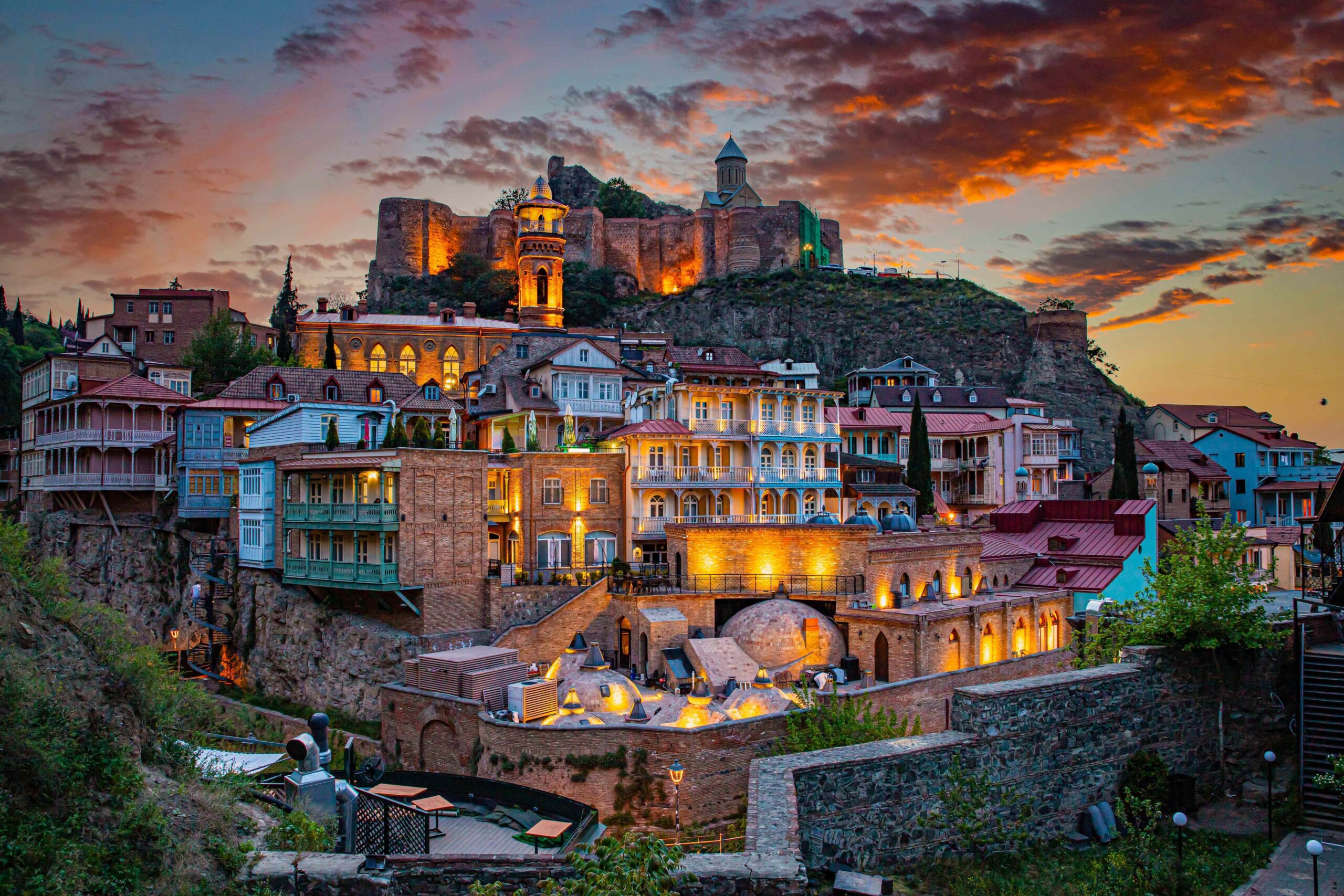
Every overseas shoot eventually comes down to one number: the real cost of production once the rebate clears. A 40% headline rebate on an expensive base can land more costly than a 25% rebate on a cheap one, and the look you actually need — a Belle Époque boulevard, a walled medieval port, a volcanic plain — often decides the matter before the accountants do. Europe rewards producers who read all three variables together: the cash rebate, the underlying cost tier, and what each territory can convincingly stand in for. The full country-by-country map sits in our guide to European film rebates by country.
This is a practical comparison of fourteen shoot-friendly, cost-efficient European countries, written for producers and line producers weighing where to route a European backdrop without overspending. It maps the most cost-efficient European filming locations against what each can realistically deliver. It follows the same discipline we use when productions choose locations on real budgets — rebate value measured against net spend, not against the percentage on the brochure.
Incentive schemes are exactly the kind of thing that change, so treat every figure here as a planning baseline that is current at the time of writing and subject to each programme’s funding and eligibility rules — confirm with the relevant national fund before you lock a budget. The shape of the map, however, is stable: Eastern Europe for value, Iberia and the islands for the biggest rebates, and the established studio capitals when infrastructure depth outweighs the saving.
How to read this comparison
Each territory is rated on four things: its cash rebate, a cost tier, the European looks it can plausibly stand in for, and the depth of its infrastructure. The cost tier uses a five-star scale where more stars mean cheaper — Budapest sits as the midpoint benchmark, so anything materially below it earns four or five stars and anything above it drops to two or below.
Rebates are paid on qualifying local spend unless noted, and the rate on the brochure is rarely the rate in your pocket. Fringe loading on crew, the speed of disbursement, minimum-spend thresholds and per-project caps all move the true cost of production. A 30% rebate paid promptly with no crew fringes can beat a 40% rebate that arrives eighteen months later on a higher base. Comparing European filming locations on net spend rather than headline rate is the whole point of the exercise.
Two structural details deserve early attention. Minimum-spend thresholds decide whether a territory is even worth structuring for — the Canary Islands’ €1M floor makes no sense for a small shoot, while Malta’s €100k opens it to far more productions. Per-project caps decide the ceiling: a generous rate with a low cap can leave a large production recovering less, in absolute terms, than a moderate rate with no cap. Read both before the headline percentage.
Quick-reference comparison
The table is the fast scan; the country profiles that follow give the detail behind each line. Cost tier: five stars = cheapest, two stars = premium. Rates are current at the time of writing and remain subject to each programme’s annual funding and eligibility rules — confirm with the national fund before budgeting.
| Country | Rebate | Cost tier | Stands in for | Infrastructure |
|---|---|---|---|---|
| Bulgaria (Sofia) | 25% | ★★★★★ | Paris, Rome, London, NY (Nu Boyana sets); Roman antiquity | Nu Boyana — 10 stages, standing backlot |
| Romania (Bucharest) | 30% | ★★★★★ | Belle Époque Paris, Communist-era, Carpathians | Castel, MediaPro; deep crew base |
| Serbia (Belgrade) | 25% / 30% | ★★★★★ | Habsburg streets, Yugoslav modernist, East Berlin | PFI Studios; no crew fringes |
| Georgia (Tbilisi) | 20–25% | ★★★★★ | Belle Époque, Soviet, Persian-influenced, Caucasus | Smaller stages; cheapest crew |
| Spain — Canary Islands | 54% / 45% | ★★★★ | Volcanic, North African, Mediterranean, tropical | Strong infrastructure; €1M min spend |
| Spain — mainland | 30% / 25% | ★★★ | Madrid, Barcelona, Moorish south, Alméría desert | Mature crew; multiple stage cities |
| Malta | 30% base, up to 40% | ★★★★ | Walled cities, period Mediterranean, water sequences | Malta Film Studios; major water-filming facility |
| Croatia | 25–30% | ★★★★ | Walled medieval (Dubrovnik), Adriatic, Roman, Habsburg | Smaller crew base; book early |
| Portugal | 30%; 40% low-density/autonomous regions; large productions 30% on first €2M then 25% | ★★★★ | Lisbon quarters, Sintra palaces, Atlantic coast | Growing infrastructure; English-friendly |
| Hungary (Budapest) | 30% | ★★★ | Paris, Vienna, Berlin, London, NY | Korda, Origo, Stern — deepest CEE crew |
| Czech Republic (Prague) | 25% (35% animation) | ★★ | Prague Old Town; Paris, Vienna stand-ins | Barrandov — historic, full service |
| Ireland (Dublin) | 32% + 8% = 40% | ★★ | Generic European, UK country, Atlantic coast | Ardmore, Troy; 90% payable upfront |
| Poland (Warsaw / Kraków) | 30% | ★★★ | Period Polish, pre-war Jewish quarter, snowy East | ATM, Alvernia; growing crew |
| Slovakia (Bratislava) | 33% | ★★★★ | Vienna and Budapest at lower cost | Smaller crew; Budapest/Prague vendors |
Cost tiers here are an indicative in-house planning model based on comparable service budgets and production experience, not published national tariffs. Actual crew, location and equipment costs vary by production scale, season and contract structure.
Which countries lead, and why
When budget is the deciding factor
Bulgaria is the all-rounder when budget is the primary constraint. A 25% rebate, service costs that in our planning experience run well below Central European baselines, and the Nu Boyana backlot (with permanent New York, London, Roman and ecclesiastical sets) mean a single base can double as several European cities. Romania remains one of the lowest-cost full-service production markets in Europe, with a Belle Époque street inventory in Bucharest that reads as 19th-century Paris. Serbia carries the lowest day rates in the region and, crucially, no fringe loading on crew — the rate you budget is the rate you pay. Georgia offers some of the lowest crew rates in the wider region, with Tbilisi’s old town suited to character-led location work. Romania sits in the same value conversation with a 30% rebate and deeper studio infrastructure; our guide to Romania film incentives and production costs covers OFIC eligibility, qualifying spend and net-budget planning. Estonia sits a tier up on incentive: its 40% cash rebate is among Europe’s highest, and film fixers in Estonia pair it with a deep Tallinn crew base for productions that weigh rebate over rock-bottom day rates.
When the rebate is the biggest draw

The Canary Islands carry what is currently among the highest rates in this comparison, 54% on the first €1M of eligible spend and 45% thereafter, suited to productions that can clear the €1M minimum and a global budget of at least €2M. Malta currently runs a 30% base, potentially up to 40% through discretionary points, and it is the specialist for period maritime and water sequences. Ireland combines a 32% base with an 8% Scéal uplift — 40% for qualifying features under €20M — and pays up to 90% of the relief upfront, subject to qualifying structure and Revenue requirements. For how these European rates sit against other options, our EU film rebates and tax incentives guide and the Europe versus MENA incentive comparison give the wider picture.
When infrastructure outweighs the saving
Hungary remains the gold standard for studio capacity through Korda, Origo and Stern, with the deepest crew base in Central and Eastern Europe; Budapest doubles convincingly for Paris, Vienna, Berlin, London and New York. Its costs have climbed sharply, so the 30% rebate is best justified when a production genuinely needs that depth. The Czech Republic offers Barrandov, one of Europe’s oldest and most complete studios, and recently lifted its rebate to 25% — still the choice when the look is specifically Prague or when Barrandov’s capacity is the deciding factor.
Country profiles

Bulgaria — Sofia / Nu Boyana
Sofia is among the most cost-effective production bases in the EU, currently carrying a 25% cash rebate (capped at €5M per project, minimum spend €250k) and a 10% flat corporate tax, with production structures that may allow VAT recovery depending on the project’s setup. The Nu Boyana studio runs ten sound stages and a full standing-set backlot with permanent New York, London, Middle Eastern, Roman and ecclesiastical sets, and it has serviced a long run of international action and historical productions. Crew is English-speaking and professional, fringe loading tends to be low, and in our service-budget experience the saving against Central European baselines is substantial; these are indicative planning observations, not published tariffs.
The country’s own architecture covers Orthodox Christian, Roman and Greek antiquity, and Soviet-era looks. The one constraint to plan around: wide street plates of the actual city won’t read as Paris or Rome, so those scenes lean on the standing sets rather than live locations. For productions whose European city work is interior- and set-led, that is rarely a limitation; for sweeping exterior boulevards, pair Sofia with a second unit elsewhere.

Romania — Bucharest
Bucharest earned the “Little Paris” nickname for its Belle Époque architecture — Calea Victoriei, Lipscani, the Romanian Athenaeum and the CEC Palace all read as 19th-century European city. After a pause, Romania relaunched its cash rebate at 30% (capped at €10M per project) and has since extended it, with financing agreements running for several more years — a rebuilt scheme worth confirming for current timing and funding before you commit.
Castel Film and MediaPro Studios have hosted major international work including Cold Mountain, Hatfields & McCoys and Marco Polo, so the crew base is deep and internationally experienced. The Carpathian forests and mountain roads such as the Transfăgărășan (a longer road move from Bucharest, and subject to seasonal access) put dramatic landscape and period backdrops within reach, which makes Romania efficient for productions that need both city and wilderness in one schedule.
Serbia — Belgrade
Belgrade tends to run below Budapest and well below Prague on a like-for-like crew week in our service-budget experience. The rebate is currently 25% above a €300k qualifying spend, rising to 30% above €5M, and crew typically carries light fringe loading, with a 12-hour working day and non-progressive overtime keeping the budgeted rate close to the paid rate; these are indicative observations rather than statutory labour terms. Zemun and Vračar carry Habsburg-era streetscapes; Novi Beograd carries Yugoslav modernist that works for period East Berlin. PFI Studios provides growing stage capacity, and the territory has carried heavy German, French and US work in recent years. As a non-EU territory, factor carnet and equipment movement into the plan.

Georgia — Tbilisi
Georgia offers some of the lowest crew rates in the wider region in our service-budget experience, with a 20 to 25% cash rebate at the time of writing and a further 2 to 5% where a project promotes Georgia. The Tbilisi old town has a distinctive Belle Époque and Persian-influenced character not found elsewhere in Europe, and the Caucasus delivers high-altitude landscape work. Stage capacity is smaller than Bulgaria or Romania, so Georgia suits location-led projects rather than stage-heavy builds — and because it sits outside the EU customs union, plan carnet and equipment movement early.

Spain — Canary Islands, regions and mainland
Spain is one of Europe’s strongest territories for territorial incentive structures. The Canary Islands carry among the highest rates in this comparison, 54% on the first €1M and 45% thereafter, capped at €36M per feature and €18M per episode, with a €1M minimum spend (€200k for animation or post). The look runs from volcanic and lunar — the islands stood in for Mars in The Martian — to North African desert and Mediterranean coast.
On the mainland, the national rebate is 30% on the first €1M and 25% on the remainder under Article 36.2 LIS. Andalusia’s Moorish architecture in Granada, Córdoba and Seville reads as Middle Eastern or North African; the Alméría and Tabernas desert is the classic Spaghetti-Western terrain of Once Upon a Time in the West and later Indiana Jones work; Madrid and Barcelona supply modern European city. Regional schemes in territories such as Navarre and the Basque Country operate as separate territorial frameworks and should be modelled case by case rather than assumed to stack on the national rate.

Malta
Malta is the specialist for period Mediterranean, walled cities such as Valletta, and water sequences: Malta Film Studios operates one of Europe’s major water-filming facilities, used on Gladiator, Troy, Game of Thrones and Napoleon. The rebate currently runs from a 30% base up to 40% through discretionary points for Maltese cultural elements, local facilities and maximising local resources, with a €100k minimum spend that keeps it open to mid-budget work. Disbursement can run several months given the volume of work the islands now carry, so build the cash-flow timing into the plan rather than assuming a fast turnaround.
Croatia — Dubrovnik / Split / Zagreb
Dubrovnik’s walled old town — King’s Landing in Game of Thrones — is the definitive medieval European port; Split’s Diocletian’s Palace covers Roman and late-antique; Zagreb carries Habsburg; and the Adriatic supplies Mediterranean coast. The cash rebate is currently 25%, rising to 30% for productions filming in less-developed regions, and a cultural test applies. The crew base is smaller than the Eastern European competitors and Dubrovnik is busy in season, so booking crew, kit and locations early is essential.

Portugal — Lisbon / Porto / Algarve
Portugal is underused relative to its strengths. Lisbon’s trams and pastel quarters give a unique European look, Sintra’s Pena Palace and Quinta da Regaleira cover fairytale and period, and the Algarve supplies Atlantic Mediterranean coast. Portugal’s current SCRI.PT framework consolidates the former cash-rebate and cash-refund programmes under RIPAC: medium-budget productions generally receive 30%, rising to 40% on qualifying spend in low-density territories and the autonomous regions, while large productions with at least €2.5M in eligible Portuguese expenditure receive 30% on the first €2M and 25% thereafter, as detailed in our Portugal film incentives guide. Infrastructure is growing and crew is English-friendly, and it tends to run cheaper than Spain on a like-for-like basis — making it a strong alternative when the Iberian look is wanted at a lower base cost.
Hungary — Budapest
Budapest remains one of the industry standards for large-scale international productions, with Korda, Origo and Stern among Europe’s largest studios and a crew base deep enough to run several major productions at once — Dune, Wednesday and Resident Evil among many that have shot here. The city doubles for Paris, Vienna, Berlin, London and New York. The 30% rebate is extended well into the next decade, but costs have climbed sharply, eroding the advantage on smaller productions — Budapest earns its place when infrastructure depth, not the headline rate, is the deciding factor.

Czech Republic — Prague
Barrandov is one of Europe’s oldest and most complete studios, and Prague’s old town is a long-standing Paris and Vienna stand-in. The rebate was lifted to 25% on live action, with a higher rate for animation and digital production where no live-action shooting occurs locally, and the per-project cap was raised substantially. Prague remains among the higher-cost Central and Eastern European options, so it is the right call when Prague-specific looks or Barrandov’s depth are genuinely required rather than as a pure cost play.

Ireland — Dublin
Ireland runs among the strongest cash-flow incentives in Europe: a 32% Section 481 base plus an 8% Scéal uplift — 40% for qualifying feature films under €20M — with up to 90% of the relief available upfront, subject to qualifying structure and Revenue requirements, rather than at the back end. Ardmore and Troy Studios anchor the infrastructure, and the territory is strongest for English-language drama, period Irish and generic UK or European country looks, with a rugged Atlantic coast for landscape. Crew rates sit above the Eastern European options, so the upfront cash flow and English-language fit are what justify the choice.
Poland — Warsaw / Kraków
Poland offers a 30% cash rebate through the Polish Film Institute — higher than the Czech rate — and suits higher-budget productions given the scheme’s minimums. Kraków’s Kazimierz district is the standing pre-war Jewish quarter, the country supplies generic European and snowy Eastern looks, and ATM and Alvernia provide mature studio infrastructure. It remains underused by international productions relative to its strengths, which can mean better crew availability than the busier capitals.
Slovakia — Bratislava
Slovakia currently carries a 33% cash rebate and functions as a de facto backlot for Vienna, roughly an hour away, and Budapest, normally closer to two hours. It draws on Budapest and Prague vendors for kit, and the smaller native crew base means most productions still travel heads of department in — but the day-rate savings on grips, electrics and locations are real, and the rate is among the highest in Central Europe.

Crew, vendors and logistics across Europe
The rebate sets the headline; logistics set whether the saving survives contact with the schedule. Most of these territories run English-speaking crews at the head-of-department level, but depth varies sharply: Hungary, the Czech Republic, Spain and Ireland can fully crew a large production locally, while Slovakia, Georgia and Croatia often require travelling key creatives in and drawing kit from neighbouring hubs. That travel and accommodation cost belongs in the comparison, because it can quietly erase a few points of rebate advantage. At the higher-value end, Italy pairs a 40% credit with world-class infrastructure, set out in our guide to the Italy film tax credit.
Customs and equipment movement is the second variable. Equipment generally moves more easily within the EU customs territory, but customs status, work authorisation and crew mobility are separate questions: Schengen membership does not itself remove equipment-import, employment or posted-worker requirements. For non-EU territories such as Serbia, Georgia and the United Kingdom, an ATA carnet and proper customs planning are essential, and underestimating that lead time is a common way to lose shoot days. Vendor sharing across borders, such as Slovakia drawing on Budapest and Prague, can solve kit gaps but adds cross-border transport to the plan.
Finally, weigh disbursement speed and fringe structure alongside the rate. Serbia’s no-fringe crew model and Bulgaria’s low loading change the net cost as much as a rebate point or two, while a slow-paying scheme forces a production to finance the receivable until it lands. These are the details a local execution partner exists to manage — and the reason the cheapest brochure rate is not always the cheapest shoot. Whichever base wins on paper, a Europe line producer is what converts the rebate maths into an on-schedule shoot.
Recommendation by need
The right territory depends on what is driving the decision — the look, the rebate, the infrastructure, or the ability to stack incentives. The European filming locations below are grouped by the priority that most often decides a shoot.
For the cheapest European city look, start with Bulgaria and the Nu Boyana standing sets, then Romania for Belle Époque streets and Serbia for Habsburg streetscapes.
For the highest rebate, the Canary Islands lead at 54% above a €1M spend, Malta reaches 40% for period and water work, and Ireland’s 40% comes with upfront cash flow for English-language drama.
For studio infrastructure depth, Hungary, the Czech Republic and mainland Spain carry the capacity for large, stage-heavy productions.
For specific looks, Dubrovnik delivers the medieval walled city, Malta the sword-and-sandal and water sequences, Alméría the desert, Lisbon its unique character, and Tbilisi a Belle Époque and Caucasus combination.
On territorial incentives, Spain offers several alternative territorial incentive structures. Mainland Spain, the Canary Islands, Navarre and the Basque territories should be modelled separately through the applicable local production and tax framework rather than treated as stackable percentages. Stacking rewards careful structuring, and our film incentive structuring support exists precisely to model and secure those layered claims before a budget is committed.

Reading the real cost of production
The headline rebate is the start of the calculation, not the end. Three mechanics decide what a European shoot actually costs. The first is the base cost tier: a 25% rebate on Sofia or Belgrade rates can deliver a lower net spend than a 40% rebate on a Western European base, because the rebate applies to a smaller number. The second is fringe loading and overtime structure — Serbia’s no-fringe crew model or Bulgaria’s low loading can move the budget more than a few points of rebate either way.
The third is timing. A rebate paid promptly, or partly upfront as in Ireland, is worth materially more than a larger rebate that arrives a year after wrap and has to be financed in the meantime. When incentives are slow, capped out, or fail a qualifying test, the saving can evaporate — we cover those failure modes in detail in our analysis of when film incentives fail. Reading rebate, cost tier and cash flow together is what separates a budget that holds from one that drifts.
Executing across these territories also takes people on the ground in each one — crew, vendors, permits and compliance handled locally while the production is coordinated centrally. That is the role of a global line production network: a single point of accountability that can place a shoot in Sofia, Valletta or the Canaries and run it to the same standard.
Choosing your European base
Europe gives producers an unusually wide menu: Eastern European value where the budget is tight, island and Iberian rebates where the spend is large enough to chase them, and the established studio capitals where infrastructure depth is non-negotiable. The territory that wins is rarely the one with the biggest number on the brochure — the best European filming locations are the ones where rebate, cost tier, cash flow and the look you need line up against your specific production.
Run the comparison against your script, your budget and your schedule, confirm the current rebate position with the relevant national fund, and the right European base usually becomes clear. When you are ready to pressure-test a shortlist or model the net cost of production across two or three territories, that is exactly the work we do before a frame is shot.
