
Japan film incentives for large international productions now run through IP360, the Ministry of Economy, Trade and Industry (METI) content-industry support programme. Its Large-scale Production Support (Location Attraction) route, set out in the METI programme summary, pays a subsidy of up to 50% of eligible production and post-production costs incurred in Japan, capped at 1.5 billion yen per project, and is administered through the Japan Arts Council under METI. It replaced the former JLOX+ location incentive that the Visual Industry Promotion Organization (VIPO) operated. It supports large-scale live-action work carried out by a Japanese production company jointly with, or under commission from, an overseas studio, and it is applied for through that Japanese company rather than by a foreign producer directly.
Programme details checked September 2026. IP360 replaced JLOX+ in 2026; the application calls, eligible-expenditure dates, project duration and the current cap and criteria must be confirmed with the Japan Arts Council and METI for the applicable programme year before committing spend.
For the crew, permits and on-the-ground execution that turn the incentive into a delivered shoot, this page pairs with our line producer Japan service. Here the focus is the incentive: how the up-to-50% subsidy works, what qualifies, who can apply, and how international productions access it.
| Feature | Japan |
|---|---|
| Subsidy | Up to 50% of eligible in-Japan spend |
| Cap | 1.5 billion yen per project |
| Administrator | METI (owner), Japan Arts Council (administrator); Japan Film Commission as a location-support resource |
| Covers | Production and post-production costs in Japan |
| Applicant | A Japanese production company; internationals via co-production or entrustment |
| Calls | Application calls set per programme year; second 2026 call closed 21 July 2026, the final new call this fiscal year; confirm the next call with the Japan Arts Council |
How Japan Film Incentives Work Under IP360
The incentive pays a subsidy calculated as up to 50% of eligible costs incurred in Japan on production and post-production. It is not a tax credit, so the value does not depend on a Japanese tax position; it is government support paid against approved expenditure. The upper limit is 1.5 billion yen per project, which frames it as a scheme for larger international productions rather than small projects.
The support is not open-ended. Applications run in defined calls, expenditure is reported against the programme rules, and the subsidy is confirmed on approved eligible costs. Because the scheme is administered by the Japan Arts Council under METI, with the Japan Film Commission available as a location-support resource, the practical route in for an overseas production is a Japanese partner who holds the application.
Because the support is confirmed on approved eligible costs, a production generally carries the spend and recovers the subsidy through the programme, though a partial estimated advance payment may be approved; the cost-reporting discipline the grant administrator expects is built in from the first purchase order rather than assembled at the end.
Why the Japan Incentive Matters Now
Japan is a sought-after location that has historically been expensive to shoot in, with an exacting production culture and access to crew and locations that rewards documented local coordination and approvals. The up-to-50% subsidy, now delivered through IP360, changes that calculus for productions that qualify, bringing the effective cost of the Japan-based part of a shoot down to a level that can materially reduce the eligible cost of a Japan-based production while preserving its Japan-specific creative and operational requirements.
Japan’s location incentive has run in successive programme years, most recently reformed into IP360 for 2026. For a producer that history matters alongside the headline rate, but availability is not guaranteed between calls, so each programme year and call is confirmed in its current form rather than assumed to be open.
Eligibility: The Japanese-Company Requirement
The defining feature of the scheme is who can apply. The applicant must be a Japanese production company that performs the live-action production; an entity handling only planning or investment is excluded, and applications from foreign companies are not accepted. That Japanese company must carry out the project jointly with, or under commission from, an overseas production company, either as a co-production or under an entrustment contract. The incentive is built around international collaboration, but the application sits with the Japanese side.
For an international producer the implication is direct. Accessing the incentive means partnering with a Japanese production company early, structuring the relationship as a co-production or entrustment, and building the budget so eligible costs are captured and reported the way the grant administrator requires. That partner selection is a financing decision, not just a service one, because it determines whether the subsidy is reachable at all.
How IP360 Assesses a Large International Production
The current review criteria include a Japanese applicant with a past production, delivered as prime contractor, recording sales of at least 1 billion yen; at least 800 million yen of domestic production expenditure; and committed financing equal to at least 50% of that domestic spend. The project must plan distribution in at least one territory outside Japan and localisation into at least one non-Japanese language. Overseas crew participation, domestic VFX work and the amount of Japan-set screen time are scoring or bonus factors in the assessment, not basic qualifying requirements. The criteria also specify that the aggregate project investment share held by Japanese corporations is below 50%. The former JLOX+ criteria no longer apply, and current requirements should be confirmed with the Japan Arts Council and METI for the applicable call.
Structuring the Co-Production
Because the applicant must be a Japanese company, the structure of the international relationship is where eligibility is established. A co-production shares creative and financial control between the partners under an agreed structure, while an entrustment contract has the overseas producer engage the Japanese company to deliver the production. Either can qualify, but each carries different implications for control, credit and how the eligible spend is booked.
Getting that structure right early is the practical core of accessing the incentive. The Japanese partner holds the application, so the co-production or entrustment terms, the budget split and the reporting responsibilities have to be agreed before the shoot, not retrofitted afterward. This is where an experienced line producer and the Japanese partner work together, aligning the commercial deal with what the programme will actually fund.

What Spend Qualifies
Eligible costs are approved production and post-production expenses incurred within the applicable project period and accepted under the current IP360 guidelines. Crew, cast, locations, equipment, production services, VFX, localisation and other post-production work may contribute where they meet the current cost-category, contracting and payment rules. The Japanese applicant should map every category and supporting record against the applicable call documents before committing the expenditure. The grant administrator determines the final amount after reviewing the final report.
Because the subsidy is paid on eligible in-Japan spend, the size of the support is shaped in pre-production: moving genuinely required spend into the eligible Japanese categories, through the Japanese production company, and evidencing it for the grant report is what supports the assessment. Spend booked outside the current rules or the approved period does not build the base, so identifying which spend genuinely qualifies is part of the pre-production plan.
Application Calls and the Programme Year
IP360 awards this support through application calls rather than on a rolling basis. In 2026 the Large-scale Production Support (Location Attraction) route ran two calls; the second closed on 21 July 2026 and was announced as the final new call for the fiscal year. A production cannot assume an open application route, so the next call and its dates are confirmed with the Japan Arts Council before a schedule is planned around them.
The programme is reviewed year to year, so the latest Japan Arts Council and METI guidance is checked before budgeting. Under IP360 the support can run for up to two years, with the project completed no later than February 2028; the application calls, eligible-expenditure dates and project duration are confirmed for the applicable programme year. The rules that apply are the ones the Japan Arts Council and METI currently publish, so nothing should be treated as active until the current official guidelines are confirmed.
The lead time this creates is real. The application has to align with a call, and the shoot and its costs have to fit the eligible-expenditure dates and project period set for that programme year. Planning the application calendar alongside the shoot schedule, rather than after it, reduces the risk of missing a call.

Japan Film Subsidy: How IP360 Is Paid
The programme is often described as a cash rebate, but it operates as a government subsidy paid against approved eligible expenditure, up to the 50% ceiling and the 1.5 billion yen cap. Productions generally fund the spend and receive the subsidy through the programme process, though a partial estimated advance payment may be approved; final support still depends on accepted costs and reporting. Keeping the cost documentation aligned with the programme rules from the start is what supports the final assessment, and specialist advice is worth taking before the support is relied on in a funding plan.
For an international production the mechanics of receiving it run through the Japanese applicant. The subsidy is confirmed and paid via the programme against the reported eligible costs, so the money reaches the production through the co-production or entrustment structure rather than directly. That is another reason the choice of Japanese partner and the terms of the deal matter: they determine not just eligibility but how and when the support actually flows. The grant administrator determines the final amount after reviewing the final report, and the subsidy can be reduced where documentation is insufficient and cannot exceed the approved amount, so the reporting discipline matters as much as the spend.
Budgeting a Japan Shoot Around the Incentive
Because the subsidy tops out at 50% and is capped at 1.5 billion yen, the budgeting question is how much of the eligible spend the project can realistically place in Japan, and whether the cap binds before the percentage does. On a very large production the cap can be reached well before 50% of the total budget, so the effective rate on the whole project is lower than the headline; on a mid-scale project the percentage is the binding limit. Modelling both against the specific budget is what turns the headline into a real number.
The other half of the budgeting work is protecting eligibility. Eligible costs have to be incurred through the Japanese company and documented to the programme standard, so the budget is coded to those categories from the first draft and the grant reporting is planned rather than improvised. A production that treats the subsidy as an afterthought risks discovering at reporting that a share of its spend never qualified.

Filming in Japan: Locations and Line Production
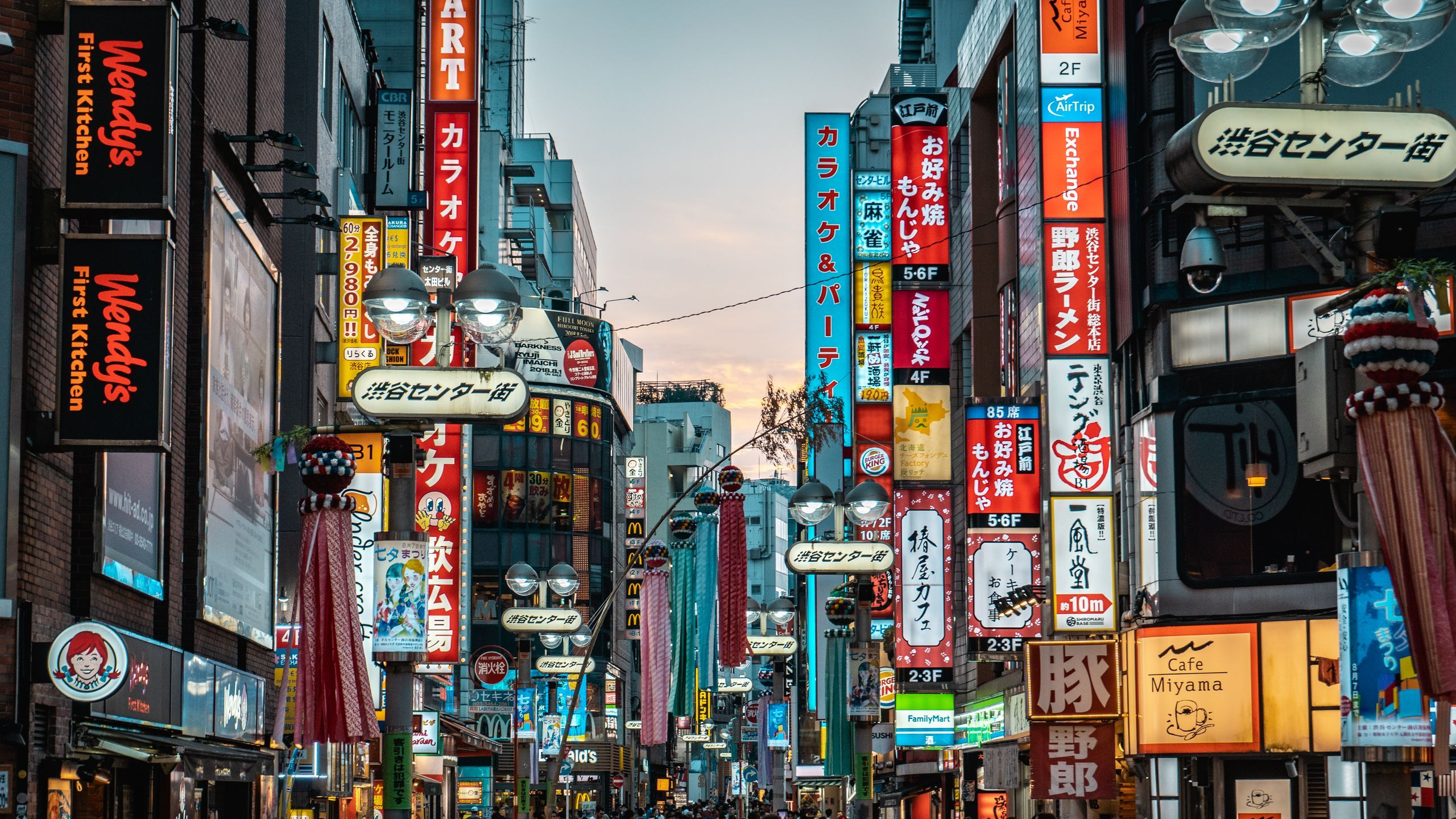
The incentive sits on top of one of the world’s most distinctive location palettes. Tokyo offers dense contemporary cityscape and neon urban settings; Kyoto and Nara bring temples, traditional streets and heritage architecture; Osaka adds castle and street environments; and beyond the cities Hokkaido’s landscapes, the Okinawa coast and the mountains give natural range across the seasons. International series and features have used Japan for exactly this mix of the ultra-modern and the traditional.
In production terms Japan offers well-developed equipment and post facilities, reliable transport between regions, and crews used to high-specification work, though the market is busy and lead times for suitable crews and locations are real. Tokyo is the main base for a larger unit, with the regions reached by the country’s fast rail and domestic air network, so a multi-location schedule is built around Japan’s connectivity rather than fighting it.
Line Production and the Incentive on the Ground
The incentive is only realised through disciplined local execution, which is where line production comes in: partnering with the Japanese production company that holds the application, structuring the co-production or entrustment, coding spend to the eligible categories, and reporting against the programme requirements. On an international shoot the local partner also bridges language, permits and the grant reporting the programme requires.
On a multi-territory production the Japan leg is coordinated against the rest of the schedule, with the eligible spend ring-fenced and reported under the programme rules while the wider production runs to its own plan. That coordination, between the Japanese partner’s application and the international budget, is the core of what a line producer adds beyond arranging crew and permits.

Japan in the Asian Incentive Picture
Japan film incentives offer an up-to-50% subsidy that is a high headline subsidy rate within Asia, but the Japanese-company requirement and the round-based application make it a scheme to plan around rather than drop into. Where it sits against other Asian programmes is a co-production and eligible-spend judgement. The right choice depends on the co-production structure, the eligible-spend mix and the schedule, not on the headline rate alone, and the current terms across the region should be confirmed for the specific project.
The trade-off is still real. Japan is not a cheap territory, and even with the subsidy a Japan shoot is priced as premium work; what the incentive does is make that premium defensible when the story genuinely needs Japan, rather than turning it into a low-cost option. Read that way, the scheme is a reason to shoot the Japan-specific parts of a production in Japan, structured to capture the support, rather than a reason to relocate a whole budget.
Frequently Asked Questions
What is Japan’s film incentive?
A location incentive paying a subsidy of up to 50% of eligible in-Japan production and post-production costs, capped at 1.5 billion yen per project, delivered through IP360’s Large-scale Production Support (Location Attraction) route and administered by the Japan Arts Council under METI. It replaced the former JLOX+ scheme.
Can a foreign company apply?
No. The applicant must be a Japanese production company. International productions join through a co-production or entrustment contract with a Japanese company.
How much is the cap?
The upper limit is 1.5 billion yen per project.
How do you apply?
Through application calls administered by the Japan Arts Council under METI. In 2026 there were two calls, the second closing on 21 July 2026 as the final new call for the fiscal year; confirm the next call and rules with the Japan Arts Council before planning.
Which programme year applies?
The rules that apply are the ones the Japan Arts Council and METI currently publish for IP360, including the application calls, eligible-expenditure dates and project duration. Support can run for up to two years, with completion no later than February 2028; confirm the current terms before budgeting.
Is the Japan film rebate a cash rebate or a subsidy?
It is a government subsidy paid against approved eligible expenditure, up to 50% and the 1.5 billion yen cap, and it is often referred to as a cash rebate.
Which productions is it for?
Large-scale live-action international projects made with a Japanese production partner, assessed around at least 800 million yen of domestic production spend along with factors such as a funding commitment of at least 50% of the Japanese production cost, overseas distribution, localisation and domestic VFX. Confirm the current criteria with the Japan Arts Council and METI.
When is the subsidy paid?
The support is confirmed on approved eligible costs and paid through the programme after reporting, so productions generally fund the spend first and recover the subsidy via the Japanese applicant, though a partial estimated advance payment may be approved.
