
Why Filming in South India Works as a Safe Corridor
South India functions as a structured coastal execution corridor rather than a collection of isolated scenic destinations. Goa, Kerala, and Pondicherry operate within a national regulatory and production ecosystem that supports foreign crews with predictable permit routing, customs handling, and inter-state coordination. This wider framework is reinforced through established systems of Line Production in India, which align state-level authorities with central compliance mechanisms.
Unlike fragmented emerging markets, South India benefits from administrative continuity, legal clarity, and established relationships between production houses and government departments. As a result, international producers are not navigating unknown terrain. They are entering a defined execution structure with known timelines, established cost benchmarks, and experienced technical departments.
Security Stability vs Volatile Alternatives
A key advantage of filming in South India is risk predictability. Productions operating in politically volatile regions often require layered security protocols, armed escorts, or location restrictions driven by instability. These measures inflate budgets and compress schedules.
In contrast, Goa, Kerala, and Pondicherry operate within stable state governance structures. Law enforcement systems are transparent, local authorities are accustomed to film shoots, and administrative routing follows standardized procedures. Insurance providers assess these territories as controlled environments, reducing premium pressure and contingency allocation.
For global studios, stability translates into measurable outcomes: fewer unexpected shutdowns, minimal emergency relocations, and reduced reliance on private security infrastructure. Predictability becomes a financial advantage. When security variables are controlled, production managers can allocate resources toward creative execution rather than risk mitigation.
Coastal Visual Language as a European Stand-In
Beyond stability, South India offers a flexible coastal visual grammar. Goa’s Portuguese architecture, Kerala’s cliff-lined beaches and backwaters, and Pondicherry’s French Quarter create tonal parallels with Mediterranean and Southern European environments.
The color palette—whitewashed facades, tiled roofs, palm-lined promenades, turquoise shorelines—supports substitution for parts of Italy, Greece, Portugal, or Southeast Asian colonial ports. Backwater river systems in Kerala function effectively as Southern European riverine doubles, while cliff formations at Varkala mirror Mediterranean coastal drama.
This versatility supports multiple genres. Romantic narratives benefit from promenades and sunset beaches. Period dramas leverage colonial streetscapes. Commercial campaigns use clean coastlines with minimal visual clutter. OTT productions gain access to layered geography within short travel radii. The corridor structure allows these visual shifts without complex international relocation.

Infrastructure Depth and Crew Reliability
Visual strength alone does not create a corridor. Execution discipline does. South India offers English-speaking department heads, experienced cinematography crews, and dense equipment rental ecosystems capable of supporting international camera and lighting standards.
Permit routing operates across both state and central channels, reducing ambiguity in documentation requirements. Budget transparency is reinforced through structured payroll systems and formal vendor contracting. When productions span multiple states, cross-border coordination remains internally controlled.
At the operational level, this discipline is guided by structured leadership through an experienced Line Producer in India who supervises on-ground coordination, cost control, crew supervision, and inter-state synchronization. Corridor stability becomes practical only when scheduling, budgeting, and compliance are unified under single-point oversight.
In effect, South India’s safety is not merely geopolitical. It is administrative. Stability, visual adaptability, and infrastructure depth combine to create a corridor where creative ambition aligns with execution control.

Filming in Goa: Beaches, Colonial Texture & Permits
Goa operates as South India’s most visually accessible coastal substitute for Mediterranean and Lusophone settings. Its Portuguese-era churches, tiled villas, Latin Quarter streets, and expansive beaches create a layered production environment within short driving distances. Directors can shift from vibrant shoreline energy to colonial façades in a single schedule block without cross-border relocation.
The coastline—from Calangute and Baga to Palolem and Morjim—supports commercial, music video, fashion, and narrative filming. Meanwhile, Fontainhas and Old Goa provide architectural continuity suitable for European stand-ins. This geographic density reduces logistical fragmentation. Units avoid excessive travel days, which improves cost efficiency and maintains creative momentum.
Managing Tourist Density and Access Control
Goa’s popularity introduces predictable crowd management variables. Peak tourist seasons, festival weekends, and cruise arrivals can increase foot traffic around beaches and heritage districts. However, these variables are cyclical and therefore schedulable.
Effective planning relies on early location locking, time-of-day optimization, and controlled access zones. Early morning call times are frequently deployed for uninterrupted beachfront shots. For commercial units requiring exclusivity, coordination with municipal authorities and local police ensures perimeter control.
Permit routing in Goa is structured but location-specific. Heritage sites, beachfront areas, and private resorts each follow separate administrative channels. Productions that pre-clear documentation and secure written approvals reduce on-ground negotiation risks. When logistical sequencing, access control, and local vendor contracts are supervised by an experienced Line Producer in Goa, scheduling friction is minimized and compliance remains centralized.
Monsoon Windows and Production Scheduling
Goa’s monsoon season typically spans June through September. While heavy rainfall restricts certain beach-based shoots, it also presents atmospheric advantages for narrative projects seeking dramatic skies and lush landscapes. Strategic scheduling therefore becomes a creative decision rather than a limitation.
Most international productions prefer the post-monsoon window from October through March, when humidity stabilizes and sea conditions are visually consistent. Weather predictability during this window improves lighting continuity and reduces reshoot risk.
Advance meteorological monitoring, backup indoor locations, and flexible shot sequencing allow units to maintain schedule integrity even during transitional weather periods. Rather than avoiding seasonal shifts entirely, structured planning converts them into controllable variables.
Cost Controls Through Local Vendor Networks
Goa’s production ecosystem benefits from proximity to Mumbai’s equipment infrastructure while maintaining regional cost advantages. Camera, grip, lighting, and art department resources are accessible without international freight dependency. Vendor density supports competitive pricing and reduces emergency rental premiums.
Local crew familiarity with beach environments also reduces learning curves. Departments accustomed to coastal humidity, sand stabilization, and shoreline safety protocols operate efficiently under variable conditions.
Because Goa concentrates visual diversity within a compact geography, productions reduce accommodation fragmentation and transport overhead. This geographic compression supports tighter budgeting and streamlined payroll management. When combined with structured permitting and controlled seasonal scheduling, Goa becomes not only a visually versatile stand-in but a financially disciplined coastal corridor.

Filming in Kerala: Backwaters, Cliffs & Execution Planning
Kerala expands South India’s coastal corridor into a layered landscape of backwaters, cliff beaches, colonial ports, and dense greenery. Unlike purely beachfront destinations, Kerala offers inland water networks and elevated coastlines that visually replicate Southern European river towns and Mediterranean cliff settlements within a compact radius.
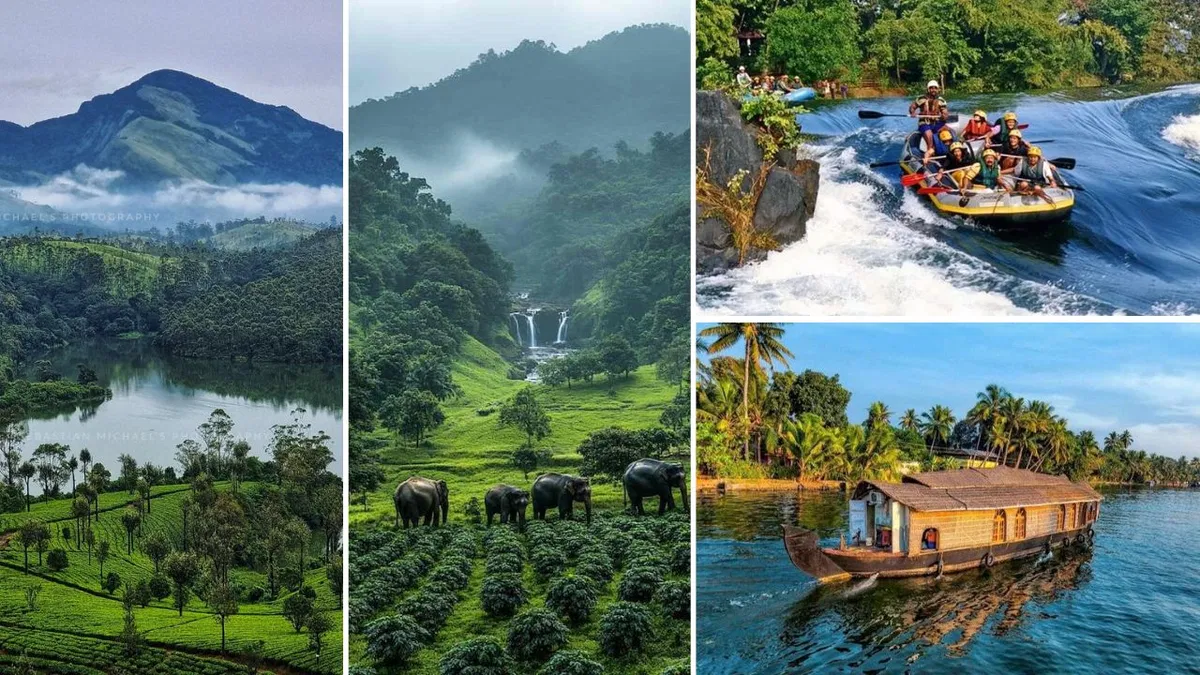
Alappuzha and Kumarakom’s backwaters function as adaptable riverine doubles. Narrow canals, coconut-lined banks, and traditional houseboats provide an aesthetic comparable to parts of Southern Europe or Southeast Asian colonial waterways. Meanwhile, Varkala and Kovalam introduce elevated coastal drama, where red cliffs meet open sea horizons—useful for romance, travel, or introspective narratives requiring spatial depth.
Backwater Logistics & Equipment Transport
Backwater shoots require mobility planning rather than static location control. Equipment transport must be structured through reinforced boats, staggered load sequencing, and dock-based staging points. Generators, camera systems, and grip equipment are typically distributed across support vessels to maintain balance and safety.
Water-based production introduces acoustic considerations and tidal timing variables. However, when scheduled with disciplined routing, these environments provide controlled isolation from urban congestion. Limited road interference allows uninterrupted takes that would be harder to secure in city centers.
Houseboats can function as both filming platforms and narrative set pieces. With advance engineering assessments, production designers can reinforce decks and stabilize mounts without compromising visual authenticity.
Coastal Cliff Visual Substitution Strategy
Varkala’s cliff formations and Kovalam’s curved bays offer Mediterranean tonal parallels. The interplay of red earth, palm silhouettes, and turquoise water supports substitution for Southern Europe in medium and wide compositions.
Because these coastlines are vertically layered, directors gain visual hierarchy—foreground beach activity, mid-ground cliffs, and expansive horizon lines. This topographical depth enhances production value without requiring international relocation.
Access routes to cliff areas are manageable but must be pre-cleared. Equipment lifts, controlled pedestrian diversion, and municipal coordination ensure safety compliance while maintaining continuity.
Regulatory Clearances and FFO Routing
Kerala’s permitting structure combines state-level approvals with central documentation for foreign crews. Coastal, backwater, and heritage zones may fall under separate regulatory oversight. Early submission of scripts, crew lists, and equipment declarations reduces administrative friction.
Structured oversight through an experienced Line Producer in Kerala ensures documentation flows through appropriate district channels while maintaining schedule control. Compliance alignment must also reflect national guidelines outlined in Filming Compliance for Foreign Films, particularly when foreign personnel, drones, or sensitive coastal areas are involved.
District-Level Coordination
District collectors and local administrative offices often supervise location permissions for waterways and public spaces. Advance liaison simplifies on-ground inspections and reduces last-minute clearance delays.
Coastal Environmental Permissions
Certain backwater and shoreline areas fall under environmental oversight. Productions must demonstrate minimal ecological disruption, particularly when using lighting rigs or marine vessels. Pre-approved environmental documentation ensures uninterrupted shooting windows.
When logistics, regulatory routing, and crew supervision are integrated under structured leadership, Kerala becomes a technically disciplined coastal stand-in rather than a scenic variable. Its layered geography, combined with controlled permit systems, supports stable scheduling and high-production-value substitution within South India’s execution corridor.

Filming in Pondicherry: French Colonial Stand-In Logic
Pondicherry offers a controlled architectural substitute for European colonial towns without the permitting complexity of filming abroad. The French Quarter—often referred to as White Town—retains consistent façades, pastel walls, arched doorways, wrought-iron balconies, and grid-based street planning. This visual continuity allows productions to replicate Mediterranean or Southeast Asian colonial settings with minimal structural modification.
Unlike larger metropolitan centers, Pondicherry’s scale works in favor of continuity. Streets maintain uniform color palettes and regulated signage, reducing post-production cleanup. The seafront promenade provides open coastal framing that supports period dramas, romantic narratives, and boutique commercial shoots. Because architectural density is concentrated within a compact radius, units can capture varied compositions without frequent company moves.
White Town as European Architectural Double
White Town’s Franco-Tamil design language mirrors Southern European port cities in tone and proportion. Pale yellow, white, and muted blue façades align visually with Mediterranean streetscapes. Churches, colonial villas, and tree-lined boulevards support substitution for parts of France, Portugal, or Southeast Asian colonial districts.
Production designers often require minimal dressing adjustments. Street furniture, textured plaster, and tiled courtyards already convey European sensibility. This reduces art department overhead and compresses prep timelines. Directors benefit from layered depth—foreground balconies, mid-ground courtyards, and long vanishing streets—without constructing elaborate sets.
However, authenticity must be preserved. Respect for local residents and heritage architecture ensures long-term filming viability. Cultural coordination is not cosmetic; it is structural. Productions that align with guidelines outlined in Cultural Sensitivity in International Films maintain community trust while safeguarding architectural integrity.
Managing Heritage Zones and Tourist Flow
Pondicherry’s promenade and French Quarter attract steady visitor traffic, particularly during weekends and festival periods. Crowd density remains manageable but requires timed scheduling. Early morning call sheets and controlled pedestrian diversion strategies are common practice.
Heritage preservation regulations also govern façade modifications, lighting rigs, and temporary installations. Written permissions from municipal authorities and heritage boards must be secured before any structural alteration or street closure. Productions that pre-clear documentation avoid compliance interruptions.
Because Pondicherry operates at a measured pace, disciplined scheduling becomes the primary control mechanism. When tourist flow, heritage rules, and neighborhood sensitivities are integrated into the production plan, the city functions as a stable European stand-in within South India’s coastal execution corridor.

Cost Efficiency & Incentive Alignment in South India
Cost efficiency in South India is not driven by low pricing alone. It is driven by predictability. Goa, Kerala, and Pondicherry operate within a stable currency environment, structured vendor ecosystems, and increasingly formalized state incentive frameworks. For international studios, this reduces financial volatility while maintaining production value.
Unlike fragmented emerging markets, South India offers benchmarked crew rates, standardized equipment rentals, and documented permit fees. This clarity allows line budgeting to be built on verified cost histories rather than speculative estimates. When schedules extend across multiple coastal locations, consolidated routing reduces duplicate logistics, accommodation fragmentation, and redundant transport charges.
Currency Stability & Budget Predictability
India’s currency structure provides relative forecasting stability for foreign producers budgeting in USD, EUR, or GBP. Exchange fluctuations occur, but they are rarely abrupt enough to destabilize structured production schedules. This predictability enables advance contracting and multi-week financial planning without excessive contingency inflation.
Vendor pricing across Goa and Kerala remains competitive due to proximity to Mumbai’s production infrastructure. Equipment can be routed regionally without international freight dependencies, lowering insurance exposure and customs complexity. Payroll systems are formalized, and crew payments follow documented cycles.
This disciplined budgeting ecosystem aligns with broader frameworks of Line Production Cost Efficiency, where cost compression is achieved through routing intelligence, vendor consolidation, and structured reporting rather than short-term discounting.
Incentive Layering Across States
South India’s financial advantage also extends into incentive layering. While national incentives remain limited compared to some Western rebate systems, several states offer reimbursement models or logistical concessions designed to attract film production.
Kerala Incentives
Kerala periodically introduces production support schemes tied to tourism promotion and cultural exposure. These may include fee waivers, location subsidies, or logistical facilitation through state agencies. Eligibility often depends on documentation transparency and local spend thresholds.
Goa Production Policies
Goa’s film-friendly positioning includes streamlined location permissions and administrative support for commercial and narrative shoots. While direct cash rebates are limited, reduced bureaucratic friction lowers indirect production costs, particularly for short-format and advertising units.

Tamil Nadu Adjacent Incentive Access
Although Pondicherry operates as a Union Territory, productions often coordinate through Tamil Nadu’s broader production ecosystem. Tamil Nadu’s policies can influence crew access, equipment routing, and post-production incentives when shoots extend beyond Pondicherry’s core zones.
When incentive alignment, currency predictability, and vendor density are integrated under structured budgeting control, South India becomes a financially disciplined corridor. Cost savings are not incidental. They are engineered through planning, routing intelligence, and regulatory alignment across contiguous coastal states.

Execution Governance & Multi-Location Control
Filming across Goa, Kerala, and Pondicherry within a single production schedule requires governance architecture rather than ad-hoc coordination. These regions operate under separate state administrations, yet they remain geographically close enough to function as a unified coastal corridor when structured correctly.
Multi-location scheduling begins with route compression. Travel days are minimized by sequencing coastal blocks logically—Goa’s beaches first, Kerala’s backwaters next, and Pondicherry’s colonial streets last, or vice versa depending on weather windows. Equipment transfers are staggered to prevent idle crew time. Accommodation clusters are negotiated in advance to avoid fragmentation across cities.
This form of corridor management aligns with broader frameworks of Line Production in India, Asia and the Middle East, where execution continuity is preserved across administrative boundaries through centralized oversight and synchronized documentation.
Permit Synchronization Across States
Each state maintains its own permission structure. Coastal areas, heritage districts, drone operations, and public roads may require separate applications. When productions shift from Goa to Kerala, documentation must travel ahead of the crew.
Permit synchronization involves parallel submissions rather than sequential ones. Scripts, equipment lists, and crew documentation are pre-filed with relevant authorities to avoid downtime between states. Central-level compliance remains consistent, while district-level approvals are coordinated locally.
Without structured oversight, minor administrative delays can cascade into schedule compression. With synchronized routing, however, transitions occur seamlessly.
Payroll, Reporting & International Audit Standards
International studios require financial reporting that aligns with global accounting systems. Multi-state production complicates payroll if vendor contracts and crew payments are fragmented.
Structured governance centralizes payroll routing, tax documentation, and vendor reconciliation under unified reporting standards. Daily cost reports, purchase orders, and petty cash tracking follow consistent templates regardless of state location.
When mobility, compliance, and accounting are unified, the corridor functions as a single operational territory rather than three disconnected jurisdictions. Governance converts geographic diversity into logistical coherence.
Conclusion — Controlled Coastal Stand-Ins Without Volatility
Filming in South India offers more than scenic coastline. It offers control. Goa’s beaches, Kerala’s backwaters, and Pondicherry’s colonial streets combine to create a European stand-in corridor grounded in administrative stability and execution discipline.
The strength of this corridor lies in predictability. Security variables remain manageable. Permits follow documented pathways. Currency exposure is measurable. Vendor ecosystems are mature. Creative teams operate within an environment where risk is structured rather than improvised.
For international studios, the distinction between “affordable” and “controlled” is critical. Low-cost locations without governance often introduce hidden volatility—delays, compliance gaps, or fragmented logistics. South India’s coastal corridor avoids that trap through synchronized scheduling, structured permitting, and unified financial oversight.
In practical terms, this means producers can pursue Mediterranean visual language, colonial continuity, and layered coastal geography without inheriting geopolitical or administrative uncertainty. Stability becomes a production asset.
As global filming continues to prioritize risk-managed expansion, South India stands as a secure alternative—where visual flexibility meets operational discipline, and creative ambition aligns with execution control.
