
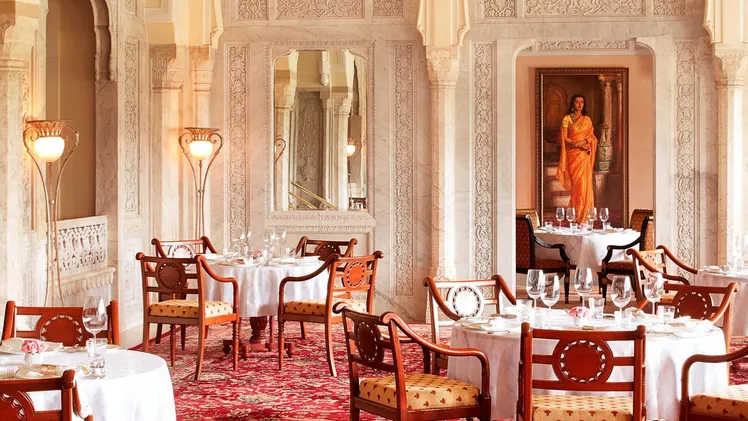
As India moves into 2026, Rajasthan has firmly positioned itself as one of the most strategically important filming states in the country. Building on the momentum of the Rajasthan Film Tourism Promotion Policy 2025, the state has shifted from being merely visually spectacular to administratively viable for large-scale domestic and international productions. Streamlined permission pathways, defined subsidy structures, and clearer coordination between state bodies have made Rajasthan increasingly attractive to producers seeking scale, heritage, and cinematic gravitas.
However, Rajasthan’s greatest strength is also its most complex challenge. The state’s forts, palaces, and heritage estates are not conventional filming locations. Many operate under layered control—split between the Archaeological Survey of India, state archaeology departments, royal trusts, private heritage hotels, and local administrations. Filming in these environments is not governed by a single approval but by overlapping permissions, cultural protocols, and operational restrictions that must be aligned before execution.
For film-makers unfamiliar with this landscape, production in Rajasthan can appear deceptively open. A fort may be publicly accessible yet tightly regulated for filming. A palace may function as a luxury hotel while remaining a royal residence with strict narrative and visual sensitivities. As a result, success in Rajasthan depends less on creative ambition and more on how well permissions, intent, and on-ground execution are synchronised.
This guide is designed to address that reality.
It examines how filming in Rajasthan actually functions in practice—particularly within royal and restricted locations—clarifying what qualifies as restricted, where approvals originate, how protocols vary by jurisdiction, and why many productions fail at the execution stage rather than during creative planning. The piece also reflects expected 2026 developments, including expanded digital permission portals, sustainability-linked conditions, and closer coordination between tourism, archaeology, and district authorities.
While Rajasthan is often spoken of as a single filming destination, execution on the ground is distinctly city-specific. Operational realities in Jaipur differ sharply from those in Udaipur, Jodhpur, Jaisalmer, or Ajmer—not just in permissions, but in pace, stakeholders, and thresholds of access. This is why productions working at scale typically depend on localized line production leadership rather than a centralised model. Heritage-heavy urban centres, lake palace environments, desert-adjacent forts, and religious-administrative zones each demand different forms of negotiation, timing, and on-ground judgement.
Understanding these distinctions early allows producers to plan with clarity—before creative ambition collides with regulatory reality.
Understanding Restricted and Royal Properties in Rajasthan
In Rajasthan, “restricted” and “royal” are not interchangeable terms, though they often overlap in practice.
Restricted properties generally refer to sites protected under the Archaeological Survey of India or the Rajasthan Department of Archaeology & Museums. These include nationally protected monuments such as Amber Fort and Jaisalmer Fort, as well as state-protected forts, stepwells, observatories, and archaeological precincts. Filming in these spaces is governed by heritage conservation rules that limit equipment load, crew size, lighting, physical interaction, and narrative portrayal.
Royal properties, by contrast, are estates owned or managed by former royal families or their trusts. Many operate as heritage hotels, museums, or mixed-use properties, but retain cultural authority and approval control independent of government bodies. Locations such as City Palace in Udaipur or parts of Umaid Bhawan Palace in Jodhpur fall into this category, where creative permission, brand alignment, and portrayal sensitivity are often as important as official clearances.
Some locations sit at the intersection of both categories. Forts like Chittorgarh involve overlapping state and ASI jurisdiction. Palaces adjacent to protected zones may trigger archaeological review even when privately managed. In such cases, permissions must be coordinated across multiple authorities rather than pursued sequentially.

Key examples include:
Forts such as Mehrangarh Fort (Jodhpur) and Chittorgarh Fort, where heritage controls directly affect camera movement and staging.
Palaces including Lake Palace (Udaipur) and Amber Palace (Jaipur), where visual access does not imply filming access.
Restricted landscapes such as protected dunes, observatories like Jantar Mantar, and buffer zones surrounding royal estates.
By 2026, Rajasthan is expected to further tighten sustainability and conservation-linked conditions, aligning heritage filming with broader environmental commitments. Productions planning long schedules or heavy setups should factor these requirements into both budgeting and creative design from the outset.
Permissions: Navigating the Approval Process in Rajasthan
Filming permissions in Rajasthan operate through a multi-authority framework, but the process has become significantly more navigable since the rollout of the Rajasthan Film Tourism Promotion Policy 2025. What earlier required parallel applications across departments is now largely coordinated through a single-window mechanism anchored by the Rajasthan Tourism Department. For most productions, this shift has reduced both ambiguity and duplication, provided applications are prepared correctly from the outset.
At a practical level, permissions in Rajasthan fall into three distinct pathways: Archaeological Survey of India–protected sites, state-protected monuments, and royal or privately managed heritage properties. Each category follows a different approval logic, timeline, and evaluation standard.
For monuments protected under the Archaeological Survey of India, applications are routed through the Film Facilitation Office portal, which is now integrated with ASI’s internal clearance system. This integration allows for faster circulation of applications and clearer tracking, but it has not reduced scrutiny. ASI approvals remain documentation-heavy and are driven primarily by conservation impact rather than production scale.
Applications for ASI sites are expected well in advance, typically a minimum of three months before the intended shoot. Producers must submit detailed documentation, including Form IX, script extracts relevant to the location, cast and crew details, shooting schedules, and a clear statement of purpose. Fees begin at ₹5,000 for professional licences, while non-commercial exterior video filming is charged at a nominal ₹25. Certain sensitive areas within monuments—such as Sheesh Mahal or structurally delicate interiors—remain excluded regardless of licence type.

ASI & Rajasthan Department of Archaeology
State-protected monuments and locations administered by the Rajasthan Department of Archaeology & Museums follow a different route. These are handled through the Rajasthan Tourism Department’s single-window portal, which coordinates clearances across police, traffic, municipal bodies, and the district collector’s office. One of the key advantages of this system is that separate municipal applications are no longer required; approvals are consolidated into a single administrative flow. Also refer to FFO Website
That said, the simplification applies only if submissions are complete and internally consistent. Required documentation typically includes identity proofs, crew lists, equipment declarations, script summaries, and indemnity undertakings. Incomplete or vaguely framed applications often stall within the system without formal rejection, leading to lost time rather than clear feedback.
Private Properties
Royal and privately managed heritage properties operate outside government portals altogether. Permissions here are obtained directly from the owning trust, estate office, or property manager. Examples include trusts managing major forts and palaces that, while publicly accessible, retain full discretion over filming activity. These permissions often extend beyond logistics into cultural and reputational considerations.
Royal properties may require additional agreements covering narrative sensitivity, brand alignment, and portrayal boundaries. Royalty structures vary widely and are negotiated case by case. Unlike government permissions, these approvals are relationship-driven and benefit significantly from local line production involvement familiar with estate-specific expectations.
Incentives and Subsidies Under the Rajasthan Film Policy
Under the 2025 policy, Rajasthan offers subsidies of up to 30 percent on eligible production expenditure, capped at ₹3 crore for feature films. Eligibility is tied to minimum local spend thresholds and a defined number of shooting days within the state. Smaller formats, including web series and documentaries, have proportionate incentive slabs.
One of the most attractive provisions is free shooting access at select government-controlled locations for up to five days. This incentive has already influenced location-heavy projects and is expected to expand further in 2026, particularly for productions that demonstrate sustainable filming practices, reduced environmental impact, or heritage-sensitive execution.
Filming Fees: What to Expect on Ground
Filming fees in Rajasthan vary significantly depending on the type of property, the nature of the production, and whether the crew is classified as domestic or foreign. Still photography typically carries the lowest daily fees, while feature films and high-impact shoots attract higher charges and refundable security deposits.
At major sites such as Amber Palace, Indian productions can expect still photography fees starting around ₹5,000 per day, with feature film charges ranging between ₹1,00,000 and ₹1,50,000 per day, plus a refundable security deposit of approximately 25 percent. Foreign productions are charged higher rates, particularly for feature films, where fees can extend up to ₹3,00,000 per day.
Monuments like Jantar Mantar, Hawa Mahal, and Nahargarh follow a lower fee band, though foreign crews are again charged at higher rates. Across most state and ASI-controlled sites, security deposits are standard and are refundable subject to post-shoot inspections confirming no damage or violation of conditions.
Entrance fees for crew members are charged separately and typically range from ₹10 to ₹250 per person, depending on the monument and nationality classification.
Permission Table & Chart
| Property/Type | Still Photography (Rs./day) | TV Documentary (Rs./day) | Feature Film (Rs./day) | Security Deposit |
|---|---|---|---|---|
| Amber Palace (Indian) | 5,000 | 50,000–1,00,000 | 1,00,000–1,50,000 | 25% refundable |
| Amber Palace (Foreigner) | 5,000 | 1,00,000–2,00,000 | 2,00,000–3,00,000 | 25% refundable |
| Jantar Mantar/Hawa Mahal/Nahargarh (Indian) | 5,000 | 10,000 | 50,000 | 25% refundable |
| Jantar Mantar/Hawa Mahal/Nahargarh (Foreigner) | 5,000 | 20,000 | 1,00,000 | 25% refundable |
| Other Monuments (Indian) | 5,000 | 10,000 | 25,000 | 25% refundable |
| Other Monuments (Foreigner) | 5,000 | 20,000 | 50,000 | 25% refundable |
| ASI General Licence | N/A | Rs. 25 (non-commercial video) | Rs. 5,000 (professional) | Varies by risk |

Timelines and What to Plan For
ASI approvals, while strict, are often processed faster than state-level clearances when documentation is precise. State permissions routed through the single-window system generally aim for a 15 to 30 day turnaround. However, this timeline assumes no narrative objections, no security flags, and no scheduling conflicts with public events or conservation windows.
Looking ahead to 2026, Rajasthan is expected to move toward a more unified digital permissions interface that may compress approval timelines further, potentially to 7–10 days for standard, low-impact shoots. High-risk or heritage-sensitive projects should continue to plan for longer lead times regardless of portal efficiency.
For productions involving desert-adjacent forts, dunes near royal estates, or remote heritage zones, logistics planning must run parallel to permissions. These locations introduce additional variables around access, crew movement, and conservation controls that cannot be resolved at the paperwork stage alone.
Protocols: Ensuring Compliance and Sensitivity
Protocols governing filming in Rajasthan’s restricted and royal properties exist to protect fragile heritage assets while still allowing meaningful creative use. Unlike generic filming locations, forts, palaces, and protected monuments operate under conservation-first principles. Every production, regardless of scale, is expected to demonstrate discipline, restraint, and respect for historical context.
Authorities assess compliance not only through paperwork but through on-ground conduct. This means that approvals are conditional—retained only as long as the production adheres strictly to approved parameters.
At the most basic level, all filming must align precisely with the permissions granted. Written approvals must be available on-site at all times and presented immediately if requested by monument staff, ASI officials, or local authorities. Deviations from the approved script, shot list, or equipment plan—however minor they may seem—can trigger intervention or suspension.
Authorized guides or monument representatives are typically assigned to accompany the crew. Their role is not symbolic. They are empowered to halt activity if filming threatens structural integrity, visitor movement, or cultural decorum. Any damage, even superficial, must be reported immediately. Attempting informal fixes or concealment almost always escalates consequences.
Equipment placement is another critical area of scrutiny. Generators, lighting rigs, and power distribution must be positioned away from walls, carvings, and load-sensitive zones. Heat exposure, vibration, and cable routing are closely monitored, especially in enclosed or elevated sections of forts and palaces.

Drones & Prohibitions
Equally important are the prohibitions. Drones are categorically restricted across most ASI and royal properties unless exceptional clearance is granted, which is rare. Tripods, dollies, and flash photography require explicit approval, particularly in interiors. Walkways, staircases, and public circulation routes cannot be blocked, even temporarily, as these spaces remain functional heritage sites, not closed film sets.
Materials that introduce contamination risk—such as oils, moulds, adhesives, smoke residues, or artificial aging substances—are strictly forbidden. Commercial filming without the correct licence classification is treated as a serious violation, regardless of whether the shoot appears low-impact.
Beyond structural protection, cultural protocols play a decisive role, especially in royal properties that remain living heritage spaces. Filming schedules must respect royal calendars, religious observances, and festivals. Certain areas may be entirely off-limits during ceremonial periods, as is common at active palace complexes. Crew size is often restricted in sensitive zones, and unnecessary personnel are discouraged from entering heritage interiors.
Way Forward
Looking toward 2026, sustainability has moved from recommendation to expectation. Zero-waste policies, controlled water usage, and responsible disposal practices are increasingly tied to both approvals and incentive eligibility. Productions that demonstrate measurable eco-compliance are more likely to receive extended access or subsidy benefits.
Safety protocols are enforced with equal rigor. Filming on roofs, parapets, or footboards is prohibited unless explicitly cleared through structural assessments. Comprehensive insurance coverage is mandatory, and indemnity clauses place full responsibility for damages on the production. In royal properties, additional vetting may be conducted to ensure cultural accuracy and reputational alignment with the estate.
Violations, even minor ones, can result in immediate cancellation of licences, forfeiture of security deposits, and financial penalties. In government-controlled sites, fines may appear modest on paper, but the real cost lies in blacklisting risks and future permission difficulties. Royal properties retain absolute discretion and may deny future access indefinitely.

Execution: Step-by-Step Guide for 2026 Shoots
Executing a successful shoot in Rajasthan’s restricted and royal locations requires a tightly coordinated approach that connects pre-production & shoot planning, on-ground execution, and post-production compliance. In 2026, this process is less forgiving of improvisation and far more dependent on structured preparation.
Pre-production begins with location intelligence, not just visual scouting. Producers must understand who controls each site, what level of heritage protection applies, and how filming activity intersects with tourism, conservation, and local governance. Applications should be routed through the Film Facilitation Office or the state’s single-window system with complete scripts, budgets, equipment lists, and schedules. As digital e-permits mature in 2026, approvals may move faster, but scrutiny will be deeper. Incomplete or loosely defined applications are more likely to stall than before.
Leveraging Delhi as a central hub has become a practical advantage for Rajasthan-bound productions. Delhi functions as India’s primary coordination point for equipment rentals, senior crew access, and national-level ASI permit processing. Many productions consolidate camera, lighting, and grip sourcing in Delhi before moving units into Rajasthan, reducing duplication and transit risk. Delhi’s production ecosystem also supports logistics planning for multi-region shoots, making it easier to align timelines across states. For teams managing scale, structured coordination through Delhi Production Services, supported by tools such as the Delhi Filming Logistics Checklist and the Delhi Line Production Checklist, allows Rajasthan shoots to plug into a larger, more resilient production framework.
On-site execution in Rajasthan
On-site execution in Rajasthan depends heavily on control and discipline. Liaison officers or line producers must be empowered to make immediate decisions, balancing creative intent with monument regulations. Approved do’s and don’ts must be enforced continuously, not just at call time. Environmental conditions require close monitoring—extreme heat in desert forts like Jaisalmer or wind exposure at elevated sites can affect both safety and equipment performance. Local fixers play a critical role here, translating approvals into practical movement, access, and timing decisions. For complex heritage sites, execution experience similar to that handled by a local line producer in Jodhpur teams up at Mehrangarh-level locations often determines whether the shoot progresses smoothly or faces intervention.
Post-production compliance is the final but essential stage. Some authorities reserve the right to review footage to ensure alignment with approved narratives and representations. Subsidy claims require precise documentation, including verified shooting days, local expenditure, and compliance confirmations. Productions completing entire schedules within Rajasthan may qualify for enhanced incentives, while award-winning projects can access additional recognition-linked benefits. Missing documentation or delayed submissions can invalidate otherwise eligible claims.
A well-documented example is large-scale historical cinema that navigated Chittorgarh permissions through early ASI script submissions and coordinated state support. These projects succeeded not because of scale, but because permissions and execution planning began months in advance.
Building Your Rajasthan Shoot Strategy
A sustainable Rajasthan shoot strategy in 2026 is built on alignment rather than volume. Productions that integrate policy awareness, inter-state coordination, and disciplined execution strengthen both approval outcomes and long-term credibility. When planned correctly, restricted and royal locations become not a constraint, but a strategic advantage within a larger national production architecture.
