
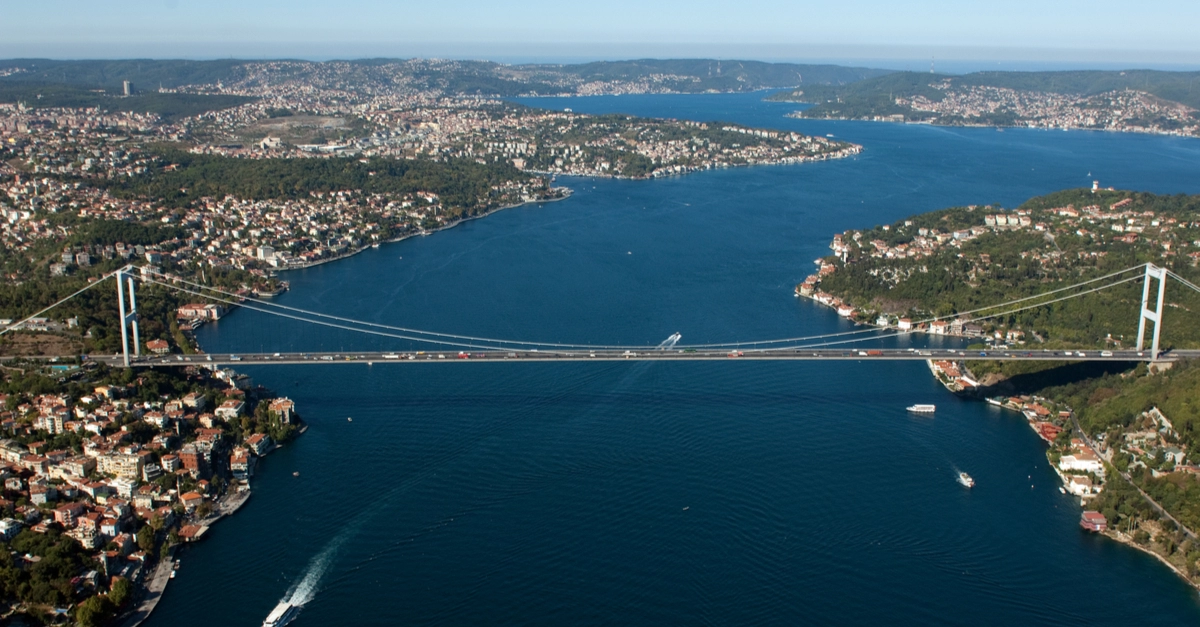
Filming locations in Turkey include urban streets, waterfronts, historic buildings, volcanic landscapes, coastal settlements and inland terrain. Selecting between them involves checking the required visual detail alongside access, working space, public activity and the proposed filming dates.
A location shortlist records what each site offers and which questions remain unresolved. Our line producer Turkey service coordinates the agreed production responsibilities once those requirements are brought into the brief.
Assessing Turkey as a Stand-In Location
A location may suit a setting outside Turkey when its architecture, terrain and visible details match the script. That assessment is made scene by scene, including signage, street furniture, vegetation, background buildings and any dressing or visual-effects work required.
A visual resemblance does not establish access, availability or an economical shooting route. Regional combinations are assessed against the actual itinerary rather than assuming one base or crew arrangement suits every location.
Turkey Filming Locations: Regional Comparison
| Region | Visual references | Checks before shortlisting |
|---|---|---|
| Istanbul | Historic streets, waterfronts, contemporary buildings | Property access, public activity, loading, unit parking and movement between sites |
| Cappadocia | Rock formations, valleys and rock-cut interiors | Requested filming areas, equipment access, terrain and proposed aerial activity |
| Anatolian interior and southeast | Steppe, stone settlements and archaeological settings | Distances, accommodation, site access, weather and local support |
| Aegean and Mediterranean coast | Harbours, coastal towns, beaches and ruins | Seasonal activity, property boundaries, equipment movement and site-specific conditions |
| Black Sea and northern locations | Forest, lakes, highlands and historic settlements | Weather, road access, working space and transport requirements |

Istanbul Airport: Architecture and Controlled Filming Access
An airport filming proposal needs to identify the requested areas, scenes, crew, equipment and working hours. Publicly accessible passenger areas and restricted operational areas should not be treated as interchangeable locations. The production confirms what information, access arrangements and supervision the airport requires for the proposed work.
Global Producers recommends starting airport filming paperwork at least a month before the proposed shoot and allowing around ten weeks where possible to address questions from the relevant authorities. This is our preparation guidance, not a published approval period or a guarantee of access.
Grimshaw commissioned Global Producers for an Istanbul Airport filming assignment on 29–30 September 2026, with Ersin Akpınar executing the work for Global Producers. Airport access requirements form part of the preparation for our line production Turkey assignments.
More Locations Across Turkey
Film locations in Turkey include coastal towns, archaeological sites, highlands, lakes and historic settlements. The gallery provides visual references for a shortlist; availability and filming access require separate confirmation.


Each Turkey filming location on the shortlist needs to be assessed for the proposed scenes, dates, equipment and unit size.

Istanbul: Historic Core and the Two Sides
Istanbul carries three distinct registers in one city, which is why it recurs in international productions. The Historic Peninsula around Sultanahmet, with Hagia Sophia, the Blue Mosque, Topkapi Palace and the Grand Bazaar, holds the Ottoman and Byzantine language used for period work, and it doubles for the broader Eastern Mediterranean and historic Arab cities. These are classified heritage sites, scouted early.

Named Istanbul Sites and What They Deliver
Within the historic core the recurring picks are specific. Süleymaniye and the Blue Mosque give monumental Ottoman scale; the Basilica Cistern gives a subterranean, columned interior used for chase and thriller sequences; the Grand Bazaar and the Spice Bazaar give dense, covered-market energy. For colour and texture, the stepped, painted houses of Balat and Fener read as an old Mediterranean or Levantine quarter, and Dolmabahçe Palace on the water gives a nineteenth-century European-imperial interior. Two options often missed on a first scout are the Princes’ Islands, where car-free Büyükada reads as a turn-of-the-century island town, and İstiklal Avenue with Taksim for the crowded contemporary high street. Each of these is permitted individually, and the interiors in particular carry filming fees and restrictions set by their managing authority.

Contemporary Istanbul and the Bosphorus
Away from the monuments, Galata, Beyoğlu and the backstreets of Karaköy deliver a grittier, low-rise European feel that stands in for Eastern Europe and the Balkans. At the other end, Levent and Maslak give a clean glass-tower financial district for corporate and thriller work, so a production can shoot a modern metropolis and the historic city in one schedule. The Bosphorus itself is its own category: filming on or beside the strait involves the authorities responsible for the waterway and any vessels used, so the requested activity is identified at the recce.

The Bosphorus Villages and the Asian Side
The Bosphorus is lined with villages that each carry a distinct look. On the European shore, Bebek and Arnavutköy give an affluent waterfront of wooden houses and cafés, and Ortaköy sits directly under the first bridge beside its baroque mosque, one of the most-filmed frames in the city. The waterfront Ottoman mansions, the yalıs of Kanlıca, Kandilli and Emirgan, are the recurring backdrop for romantic drama; their interiors are private and negotiated per property rather than cleared through a public authority. The fifteenth-century fortresses of Rumeli Hisarı and Anadolu Hisarı face each other across the narrowest point of the strait for a period-military look.
The Asian side is quieter and more contemporary. Kadıköy, Moda and Üsküdar give lived-in modern neighbourhoods, ferry terminals and a working-city texture away from the tourist core, with the Maiden’s Tower offshore. Further up the coast, the forests around Riva in Beykoz hold Bozdağ Film Studios, a purpose-built historical set complex; stage and backlot availability are confirmed with the studio for the proposed dates.
Cappadocia and the Anatolian Interior
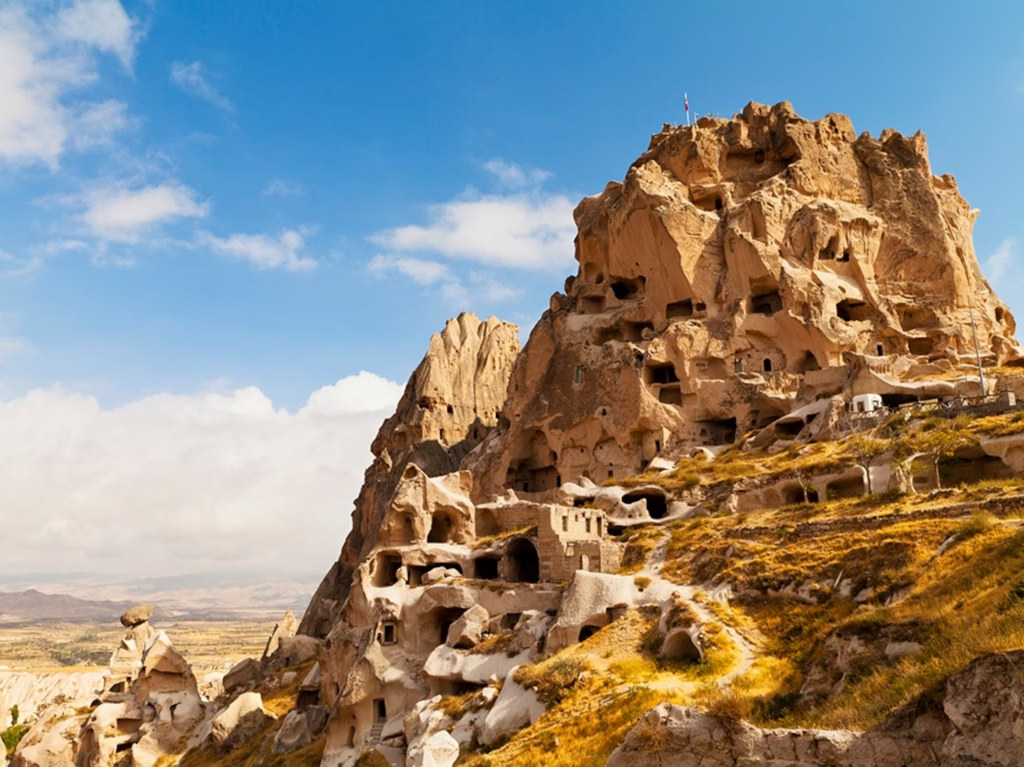
Cappadocia is Turkey’s signature otherworldly location. The fairy chimneys and volcanic valleys around Göreme stand in for Mars, ancient civilisations and fantasy worlds, and the cave settlements carved into the rock add rock-cut interiors and exteriors that are assessed against the dressing each scene needs. The balloon fleet that fills the valleys at sunrise is the region’s signature aerial and an operational feature of the airspace, so any balloon or drone shot is identified at the recce for separate confirmation.

Named Cappadocia Sites
Inside Cappadocia the specific sites recur: the Göreme Open-Air Museum and its rock-cut churches, the castle-rock of Uçhisar for elevation, the underground cities of Derinkuyu and Kaymaklı for subterranean sequences, and the Ihlara Valley and Pigeon Valley for green-canyon and panorama work. The sites are concentrated, and the movement between them is assessed for the actual setups and equipment. The most photographed valleys are also the busiest, so filming hours and permitted access points are checked for each.

Deep Anatolia and the Southeast
Beyond the tourist core, southeastern Anatolia offers a range of stone settlements and archaeological settings. Mardin, a honey-stone town terraced above the Mesopotamian plain, offers a historic Levantine and Arab-city register; Mount Nemrut, with its giant toppled stone heads at the summit, offers distinctive summit monuments; and Göbekli Tepe near Şanlıurfa anchors a deep-history register for biblical, ancient-civilisation and historical-epic work. For a surreal natural look, Lake Salda’s white mineral shores and turquoise water read as Mars or a salt desert. The wider interior, the steppe around Konya and the salt flats of Tuz Gölü, gives open, empty vistas for historical epics; distances, accommodation and equipment movement are assessed for each site.

Aegean and Mediterranean Coast
Among the filming locations in Turkey, the Aegean coast, from Çeşme and Kuşadası to the ruins at Ephesus, delivers the classical Mediterranean look: turquoise water, white architecture and ancient stone, and it stands in for Greece, Southern Italy and the wider Eastern Mediterranean without a border crossing. Ephesus and Pamukkale’s white travertine terraces are classified heritage sites with their own custodians, scouted early. Coastal locations outside the heritage zones involve different bodies, and a beach or harbour day is scheduled on its own conditions.

Named Coastal Sites
The named coastal sites carry distinct value. The Mediterranean stretch toward Antalya, the Turquoise Coast, adds limestone cliffs, coves and ancient harbour towns with accommodation and transport assessed against the unit’s requirements, and Antalya’s Kaleiçi old town gives a walled-port register. Fethiye and the Ölüdeniz lagoon give the turquoise cove, with the abandoned village of Kayaköy nearby. Kaş and the sunken ruins of Kekova give a diving and archaeology register, and Bodrum gives a whitewashed Aegean resort town with a Crusader castle. Outdoor sites and the classified ancient cities involve different bodies, so coastal days and heritage days are planned on their own conditions.

The Black Sea North: Forest, Mist and Highland
Northern Turkey adds forested slopes, lakes, highland settlements and coastal towns to the location shortlist. Along the Black Sea coast the Pontic Mountains rise straight off the shoreline into dense forest, and the moisture trapped against them produces frequent mist and deep greens, an atmosphere that stands in for Eastern Europe, the Caucasus and remote temperate mountain regions. It is the palette for atmospheric drama and historical narrative rather than bright tourism imagery: cloudy skies, layered ridgelines and coastal towns built on steep slopes rather than wide beaches. The trade-offs are the weather and the distance, since the same mist that makes the look also makes it unpredictable, and the north sits well away from the main rental and crew base.

Named Northern Sites
The north has its own set of named sites. The Sumela Monastery, built into a sheer cliff face above a forested valley near Trabzon, is one of Turkey’s most dramatic single locations; the Ottoman timber town of Safranbolu, a UNESCO site, is a preserved historic streetscape; and Amasya’s riverside Ottoman houses beneath rock tombs give a compact historic waterfront. Uzungöl’s mountain lake and the Ayder plateau add highland-pasture and alpine looks. These reward the extra travel with imagery that does not appear in the usual Turkey reel, which is precisely their scouting value for a production wanting to avoid the familiar.
Locations in Depth
Additional locations include archaeological sites, coastal landscapes, highlands, lakes and islands, grouped below by their visual characteristics.

The Southeast and Ancient Sites
The southeast and the ancient-sites group carries the deepest history of any group here. Mardin and Hasankeyf give honey-stone towns above the Tigris plain, though Hasankeyf now reads as a relocated heritage park above the Ilısu reservoir rather than the riverside town it once was, so period framing needs care. Mount Nemrut in Adıyaman puts the giant carved heads on the summit, with seasonal access to be confirmed, Balıklıgöl in Şanlıurfa offers the sacred pools, and İshak Paşa Palace near Doğubayazıt sits under Ararat for a Silk Road register. For classical ruins, Perge near Antalya and Pergamon at Bergama give standing Roman stone, Kaunos above Dalyan adds rock-cut tombs, and the hill village of Şirince covers a lived-in Aegean vernacular.

The Antalya Coast and Its Hinterland
The Antalya coast and its hinterland cover the action-and-nature brief. Olympos pairs ancient ruins with the Chimaera flames and a pine-backed beach, Kemer gives resort coastline, and inland the Köprülü Kanyon and the Kurşunlu Waterfalls deliver gorge, whitewater and forest cover. Marmaris, further west in Muğla, extends the marina-and-bay look.

Highlands, Lakes and Islands
The highlands, lakes and islands round out the range for productions that need something other than coast or city. The Anzer plateau in Rize and the Ilgaz mountains in Çankırı give Black Sea and inland highland meadow and forest, the Gölcük crater lake adds still water ringed by woodland, and Amasya offers Ottoman timber houses stacked along the Yeşilırmak under Pontic rock tombs. For graphic wide shots, Tuz Gölü in central Anatolia is a mirror-flat salt lake that has stood in for other worlds, while Bozcaada off Çanakkale gives an Aegean island of vineyards and a Genoese castle, and Pamukkale in Denizli holds the white travertine terraces beside Hierapolis. Each is assessed for access and season against the proposed dates.
Permits and Location Access
Location enquiries establish who controls the proposed filming area, what activity is requested and which conditions need confirmation. The recce records equipment positions, unit size, access routes and any proposed specialist activity so the production can seek the appropriate advice and permissions.
Our film fixers in Turkey coordinate assigned recce, access enquiries and application follow-up. Approval decisions remain with the relevant authorities and custodians; a location appearing in this guide does not mean filming access has been granted.
Planning a Multi-Region Turkey Shoot
A multi-region shortlist is assessed for travel, equipment movement, accommodation and the preparation needed at each stop. The location sequence depends on confirmed access, dates and supplier availability, rather than a standard Istanbul–Cappadocia–Aegean route.
For briefs combining filming with event management in Turkey, venue access, technical preparation and event operating hours are checked separately and incorporated into the itinerary.

Seasons and Access
Season is part of the location, not a footnote to it. The Aegean and Mediterranean coasts run their comfortable window from spring into autumn, with high summer bringing heat and peak tourism that complicate access at the busiest beaches. Cappadocia shifts hard across the year, green valleys in spring, snow-dusted rock in winter, and the balloons are weather-dependent whatever the month. The Black Sea north is wet and misty much of the year, which is the look but also the risk, and the eastern highlands and Nemrut carry winter conditions at altitude that affect access. A scout notes the intended season against each site, because the same valley or ridge can look and open differently from one month to another.
From Scout to Shoot Day
Selecting a filming location in Turkey involves distinguishing visual suitability from confirmed availability. Recce notes record the requested areas, working conditions, equipment access and outstanding enquiries so the production can compare suitable options.
