
Introduction — Why Advertising Filmmakers Look Beyond Mumbai’s Famous Landmarks
Mumbai has long functioned as the central engine of India’s advertising film industry. Major consumer brands, international agencies, and production houses regularly use the city as a base for commercial shoots. Its dense urban fabric, access to skilled crews, and proximity to diverse landscapes make it one of the most efficient production environments in South Asia. However, the very visibility that built Mumbai’s cinematic identity has also created a problem for advertisers: overexposure of the same locations.
Landmarks such as Marine Drive, the Gateway of India, and Bandra–Worli Sea Link have appeared repeatedly across commercials, films, and music videos. While these locations remain visually striking, frequent repetition often reduces their novelty in advertising narratives. Brand campaigns increasingly seek environments that feel visually fresh and distinctive rather than instantly recognizable.
For this reason, advertising filmmakers increasingly explore lesser-known neighborhoods, industrial zones, coastal villages, and historic ruins scattered across the Mumbai region. These micro-locations allow directors and cinematographers to build unique visual identities for campaigns while still benefiting from the city’s production infrastructure.
Hidden heritage districts, quiet fishing communities, mangrove coastlines, and forest corridors offer dramatically different visual textures within short distances of the city center. This geographic variety enables advertising productions to shift between urban, historical, natural, and coastal environments without relocating the entire production unit. As a result, Mumbai continues to provide one of the most versatile filming ecosystems for commercial storytelling.
Why Mumbai Is India’s Advertising Film Production Capital
Advertising Production Ecosystem in Mumbai
Mumbai’s position as India’s advertising film capital is supported by a highly integrated production ecosystem that has evolved over several decades. The city houses a dense concentration of advertising agencies, production companies, casting professionals, and post-production studios that collectively support high volumes of commercial filmmaking throughout the year.
Large global agencies maintain offices in Mumbai, allowing brands to develop campaigns and execute shoots within the same production environment. These agencies collaborate with specialized commercial production houses that handle direction, crew management, budgeting, and logistical coordination for advertising projects. The presence of experienced casting directors, talent managers, and modeling agencies further simplifies the process of assembling performers suited to specific campaign concepts.
Behind the camera, Mumbai also provides access to extensive technical infrastructure. Equipment rental houses supply cinema cameras, lighting rigs, drones, motion control systems, and specialized grip equipment required for modern advertising productions. Sound studios, color grading facilities, and visual effects companies complete the production pipeline, enabling campaigns to move efficiently from shoot to final delivery.
Within this ecosystem, production execution is typically coordinated by experienced local teams. Many international agencies rely on specialists who understand how to manage commercial shoots in the city’s complex urban environment. A detailed breakdown of how such productions are coordinated locally can be seen through line producer mumbai ad films, which outlines the operational structure behind advertising shoots conducted across the Mumbai region.
Crew Density, Infrastructure and Fast Production Turnarounds
Another key reason Mumbai dominates India’s advertising film industry is the extraordinary density of experienced film professionals working in the city. Cinematographers, assistant directors, production designers, stylists, stunt coordinators, lighting technicians, and camera operators are all readily available within a compact production network. This concentration of skilled personnel allows commercial productions to assemble large teams quickly without long lead times.
Mumbai’s geographic layout also contributes to rapid production cycles. Many filming environments—including heritage neighborhoods, beaches, forests, and industrial zones—are located within relatively short travel distances from major production offices and equipment facilities. As a result, multiple visual environments can often be filmed within a single production schedule.
This efficiency is particularly valuable for advertising campaigns, which frequently operate under tight timelines. Agencies often need to complete pre-production, filming, and post-production within weeks rather than months. The city’s infrastructure, including studios, transport networks, and experienced crew bases, allows such compressed schedules to remain feasible.
Because of these advantages, Mumbai continues to attract both domestic and international advertising productions seeking speed, reliability, and visual diversity. The operational framework behind coordinating such projects is typically handled by specialized production managers working with line producer mumbai teams that manage permits, logistics, and crew coordination across the city’s filming locations.

Hidden Heritage Neighborhoods Used in Advertising Films
Mumbai’s urban landscape contains several historic neighborhoods that remain visually distinct from the city’s modern skyline. While large commercial productions frequently rely on well-known landmarks, advertising filmmakers often prefer heritage districts that carry strong architectural character. These areas provide visual authenticity, texture, and narrative depth that cannot easily be replicated on constructed sets.
Old neighborhoods across South Mumbai and Bandra still preserve architectural layers from Portuguese, colonial, and early twentieth-century urban development. Narrow streets, colorful houses, temple courtyards, and aging facades create environments that immediately communicate atmosphere on screen. For commercial directors, these locations are valuable because they deliver visually rich backgrounds while remaining compact enough to control during filming.
Another advantage of heritage neighborhoods is their ability to support storytelling without obvious geographic identification. Unlike iconic landmarks, these streets can represent multiple cultural environments depending on production design and cinematography. A single neighborhood might visually function as a European alleyway, a vintage Indian townscape, or a bohemian urban district.
Because of this versatility, advertising campaigns frequently turn to historic pockets of Mumbai that remain relatively untouched by modern redevelopment. Locations such as Khotachiwadi, Bandra’s Ranwar Village, and the temple district around Banganga Tank offer distinct architectural styles within short travel distances. Their visual character continues to make them attractive filming environments for lifestyle, fashion, and narrative-driven advertising campaigns.

Khotachiwadi — Portuguese Heritage Village in South Mumbai
Khotachiwadi is one of Mumbai’s most distinctive heritage neighborhoods and remains a rare example of Portuguese-influenced residential architecture within the city. Located in Girgaon, this small enclave contains rows of pastel-colored houses built during the nineteenth century when the area developed as a settlement for East Indian Catholic families. The neighborhood’s architectural character immediately stands apart from surrounding urban development.
The streets of Khotachiwadi are defined by narrow pedestrian lanes lined with wooden balconies, decorative railings, and tiled roofs. Many houses feature brightly painted facades in shades of blue, yellow, and green, creating a vibrant visual palette that filmmakers often find attractive for commercial productions. Ornate doors, aging shutters, and carved wooden elements contribute additional texture that cinematographers can use to build layered compositions.
For advertising campaigns, Khotachiwadi offers an atmosphere that feels both historic and intimate. The compact scale of the neighborhood allows production teams to control framing while maintaining a sense of authenticity. Boutique fashion brands frequently use the streets to evoke a vintage European aesthetic, while lifestyle campaigns rely on its colorful architecture to create warm, nostalgic visual tones.
Because the area is small and residential, filming typically requires coordination with local residents and careful crew management. When managed respectfully, Khotachiwadi remains one of Mumbai’s most visually distinctive heritage environments for advertising shoots.

Bandra’s Ranwar Village and Chapel Road Street Art
Bandra’s Ranwar Village and the nearby Chapel Road district represent a very different kind of heritage environment. Unlike the quiet colonial atmosphere of Khotachiwadi, this part of Bandra reflects a vibrant, contemporary urban culture shaped by art, cafés, and creative communities. The neighborhood has become widely recognized for its colorful street murals and graffiti-covered walls.
Ranwar Village itself is one of the oldest East Indian settlements in Bandra, with houses that still preserve traditional architectural elements such as tiled roofs and narrow internal lanes. Over time, however, the surrounding area has developed a distinctive artistic identity. Chapel Road, in particular, features large-scale murals created by local artists that change frequently as new artwork replaces older pieces.
For advertising filmmakers, this evolving street art landscape provides dynamic visual energy. The bold colors and graphic compositions of the murals create striking backgrounds that work especially well for youth-oriented campaigns. Fashion brands, music videos, and lifestyle advertisements often use these streets to evoke creativity, individuality, and contemporary urban culture.
The combination of historic architecture and modern street art also allows directors to construct visually layered narratives. Old houses stand beside vibrant murals, creating a contrast that reflects Bandra’s identity as one of Mumbai’s most culturally active neighborhoods. As a result, Ranwar Village and Chapel Road continue to attract advertising productions seeking an energetic and visually expressive urban backdrop.

Banganga Tank and Walkeshwar Temple District
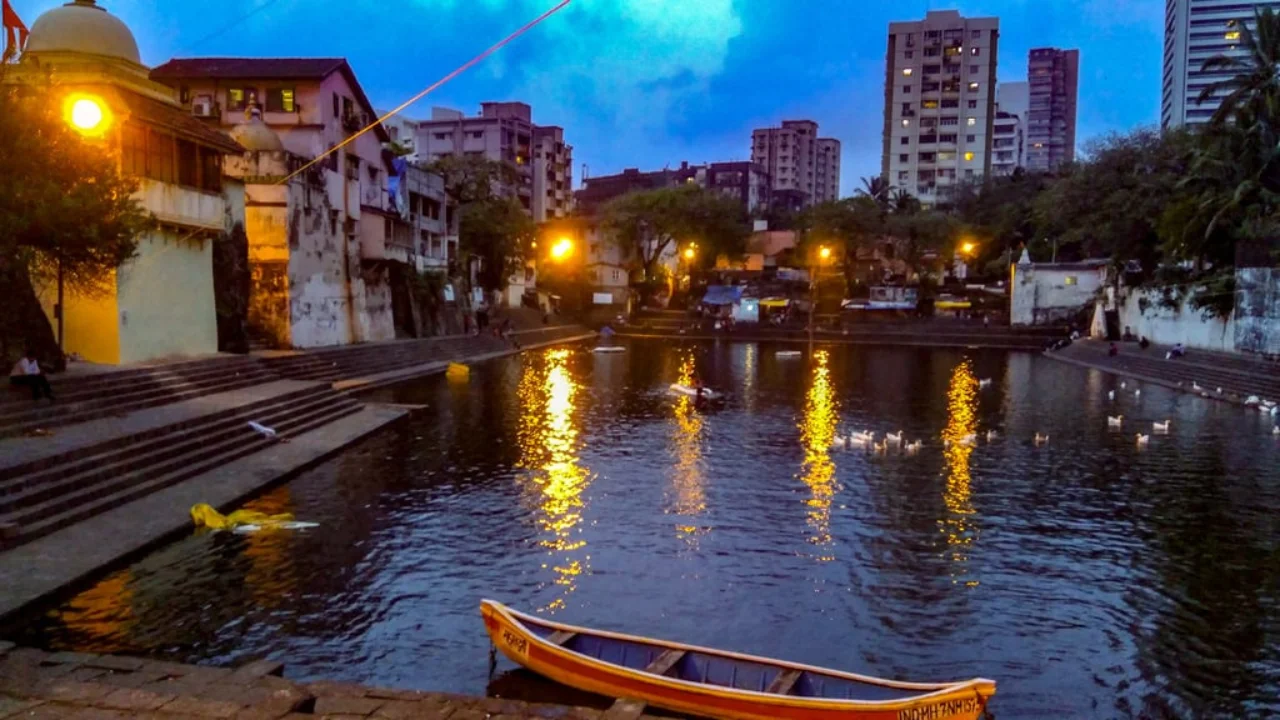
Banganga Tank, located in the Walkeshwar area of South Mumbai, offers one of the city’s most historically significant filming environments. The tank is believed to date back several centuries and forms the center of a temple district that has remained active as a religious and cultural site. Surrounded by stone steps, temples, and traditional buildings, the area retains a distinct architectural atmosphere rarely found elsewhere in Mumbai.
The visual character of Banganga Tank is shaped by its stepped stone embankments that descend toward the water. Small temples and shrines line the perimeter, while narrow pathways connect the surrounding structures. This layered arrangement of steps, water reflections, and temple architecture creates visually striking compositions that cinematographers often use to emphasize depth and symmetry.
For advertising filmmakers, the location offers a unique combination of historic authenticity and visual serenity. Campaigns focusing on mindfulness, wellness, or cultural storytelling often choose the site because of its calm atmosphere and spiritual associations. The reflective water surface also enhances lighting conditions during early morning or evening shoots.
The architectural and cultural character of such locations illustrates how urban environments influence visual storytelling in cinema and advertising. A broader discussion of this relationship can be explored in cities as cinematic language, which examines how different cities shape the visual identity of filmed narratives.
Industrial Landscapes and Urban Infrastructure for High-Contrast Commercials
While heritage neighborhoods provide nostalgic visual environments, Mumbai’s industrial districts create an entirely different cinematic tone. Advertising filmmakers frequently rely on these areas when campaigns require contrast, scale, or modern urban energy. Industrial architecture, shipping infrastructure, and large transport corridors provide dramatic visual textures that can elevate commercial storytelling.
The eastern waterfront of Mumbai, stretching across Sewri, Mazgaon, and the dockyard zones, contains some of the most visually striking industrial environments in the city. Rusted steel structures, harbor skylines, cargo ships, and large cranes form powerful geometric compositions that cinematographers often use for high-impact visuals. These environments are particularly effective for brands that want to communicate strength, movement, or technological sophistication.
At the same time, Mumbai’s modern infrastructure projects have introduced another category of cinematic landscapes. Large bridges, transport corridors, and contemporary skylines offer sleek visual identities that contrast sharply with older parts of the city. These spaces often appear in automotive advertisements, technology campaigns, and high-end brand films where scale and urban dynamism are central to the narrative.
Industrial and infrastructural locations therefore expand the visual vocabulary available to advertising filmmakers. Instead of relying solely on historical or residential environments, production teams can use these landscapes to create bold, visually intense advertising imagery that reflects the energy and complexity of a modern megacity.
Sewri Fort and Mumbai’s Eastern Waterfront
Sewri Fort stands on the eastern edge of Mumbai overlooking the harbor, offering a unique combination of historical architecture and industrial surroundings. Built by the British in the late seventeenth century as a watchtower for the port, the structure today sits amid a landscape shaped by docks, shipping routes, and mangrove wetlands.
The fort itself is constructed from dark basalt stone and features thick walls that have weathered centuries of coastal conditions. Its elevated position provides wide views across the eastern harbor, where cargo ships, cranes, and industrial installations form a striking backdrop. This combination of historic ruins and maritime infrastructure gives Sewri Fort a distinct cinematic character.
Advertising filmmakers often use the area for campaigns requiring dramatic urban textures. The contrast between the rugged stone structure and the surrounding industrial skyline creates strong visual depth. During certain seasons, flamingos gather in the nearby mangrove wetlands, adding an unexpected natural element to the industrial setting.
For automotive advertisements or adventure-themed campaigns, Sewri Fort offers expansive open spaces and a powerful visual identity. The surrounding harbor environment, with its mixture of mangrove coastline and industrial port activity, reinforces themes of movement, resilience, and exploration that many brands seek to communicate through commercial storytelling.

Mumbai Dockyards and Mazgaon Maritime Industrial Zone
The dockyard and Mazgaon region along Mumbai’s eastern waterfront represents one of the city’s most visually intense industrial landscapes. Large cargo cranes, dry docks, shipping containers, and steel infrastructure dominate the skyline, forming an environment that feels distinctly different from the residential or commercial districts of the city.
This maritime zone has historically served as a major gateway for trade and shipbuilding, with facilities such as Mazagon Dock Shipbuilders Limited continuing to operate as key industrial centers. For filmmakers, the area offers a wide range of visual elements including towering cranes, ship hulls under construction, dockside warehouses, and massive industrial platforms.
Advertising productions often use these locations when campaigns require a sense of scale and industrial strength. Automotive brands frequently film vehicles moving through large dockside spaces where metal structures and heavy machinery create powerful visual contrasts. Similarly, brands associated with engineering, energy, or logistics sometimes choose these environments to emphasize technical capability and durability.
The visual language of this district is defined by steel surfaces, weathered metal textures, and expansive working docks. When filmed during early morning or late evening hours, the lighting conditions across the harbor often produce dramatic reflections on water and steel structures. These atmospheric qualities make the dockyards an effective setting for rugged, industrial-style commercial narratives.
Bandra–Worli Sea Link and the Contemporary Skyline
The Bandra–Worli Sea Link represents one of Mumbai’s most recognizable modern infrastructure projects and has become a powerful visual symbol of the city’s contemporary skyline. The cable-stayed bridge stretches across Mahim Bay, connecting Bandra in the north to Worli in South Mumbai while rising above the Arabian Sea in a sweeping architectural arc.
Its distinctive cable towers and long suspension spans create strong geometric lines that filmmakers frequently use to frame dynamic movement. When viewed from a distance, the bridge appears as a sleek silhouette against the sea and skyline, especially during sunset or nighttime when the structure is illuminated.
Advertising filmmakers often rely on this location for campaigns that emphasize speed, luxury, or urban sophistication. Automotive advertisements in particular make use of the long roadway and dramatic skyline views to highlight motion and engineering precision. The bridge also appears frequently in technology, finance, and lifestyle commercials that aim to associate brands with modern urban progress.
Beyond the bridge itself, the surrounding skyline of Worli and Lower Parel adds additional depth to cinematic compositions. Towers, coastal roads, and waterfront buildings provide layered backgrounds that reinforce the scale of the city. The visual importance of such urban infrastructure illustrates how directors evaluate environments during the location selection process, a concept explored further in art of filming identifying locations.
Coastal Filming Locations Around Mumbai
Mumbai’s coastline extends across numerous fishing villages, beaches, and island settlements that provide visually distinctive filming environments. While the central city is defined by dense urban development, several coastal areas within short travel distance still retain quiet landscapes shaped by traditional maritime communities.
These coastal locations are particularly valuable for advertising campaigns because they offer expansive natural light, open horizons, and atmospheric sea views. Compared with the crowded promenades of central Mumbai, many of these areas provide calmer environments where production teams can operate with greater control over framing and background activity.
Fishing villages along the northern coast of the city preserve a slower rhythm of life characterized by wooden boats, narrow village lanes, and traditional houses facing the sea. These environments create visually authentic settings for storytelling that emphasizes travel, lifestyle, or cultural heritage. At the same time, nearby resort regions provide more polished coastal landscapes suited for luxury and hospitality campaigns.
Because several of these locations are connected by ferry routes or short drives from Mumbai’s western suburbs, advertising productions often combine multiple coastal environments within a single shooting schedule. This allows directors to capture different moods—from rustic village scenery to expansive beaches—without relocating the entire production unit far from the city.
Madh Island and Erangal Fishing Village
Madh Island lies along the northwestern coast of Mumbai and is known for its quiet fishing communities and coastal landscapes. Despite being close to the city, the area maintains a distinctly rural atmosphere shaped by traditional fishing villages, coconut groves, and narrow coastal roads. The presence of these elements makes Madh Island visually different from most urban locations within Mumbai.
One of the most frequently filmed areas here is Erangal Village, which sits near the historic Madh Fort overlooking the Arabian Sea. The village is characterized by small houses, fishing boats anchored along the shore, and winding lanes that open toward the coastline. Mangrove patches and quiet beaches surrounding the village create an environment that feels both natural and culturally rooted.
Advertising filmmakers often use this location when campaigns require rustic coastal imagery. Travel brands, lifestyle campaigns, and beverage advertisements frequently use Madh Island to evoke relaxation and coastal freedom. The combination of traditional fishing life and open seascapes allows cinematographers to capture atmospheric visuals that contrast sharply with Mumbai’s dense skyline.
The area also benefits from relatively accessible road connections from the western suburbs, making it feasible for production units to transport equipment and crews without extensive travel logistics.

Gorai and Manori Beaches
Gorai and Manori are neighboring coastal areas located across the creek from Borivali in Mumbai’s northern suburbs. Both destinations are known for their quiet beaches, coconut-lined shores, and village environments that feel removed from the pace of the city. Access is typically provided through short ferry crossings, which adds to the sense of isolation from urban Mumbai.
Manori Beach is particularly recognized for its long stretches of sand bordered by fishing communities and small guesthouses. The surrounding landscape features coconut trees, narrow coastal lanes, and traditional village homes that create a relaxed seaside atmosphere. These visual characteristics make the area attractive for campaigns centered on tourism, leisure, and outdoor living.
Gorai Beach, located nearby, provides a similar coastal environment but with slightly broader beach areas and clearer horizon views across the Arabian Sea. The presence of small resorts and recreational facilities also allows filmmakers to create hospitality-oriented visuals for travel advertisements and lifestyle campaigns.
For advertising productions, these beaches offer an appealing balance between accessibility and visual authenticity. Directors can capture sunrise or sunset sequences across open water while maintaining the rustic charm of coastal village life. This combination continues to make Gorai and Manori popular filming environments for brands seeking calm, natural coastal imagery.

Alibaug and Nagaon Beaches
Located across the harbor from Mumbai, Alibaug has become one of the most widely used coastal filming regions for commercial productions. Accessible by ferry from South Mumbai or by road through the Konkan coastal highway, the area provides wide beaches, open horizons, and a landscape that feels significantly less crowded than the city’s urban coastline.
Nagaon Beach, situated near Alibaug town, is particularly popular among filmmakers because of its long stretch of golden sand and shallow shoreline. The beach offers unobstructed sea views that allow cinematographers to capture expansive horizon shots—something difficult to achieve within central Mumbai. During early morning and evening hours, the lighting across the water creates visually rich conditions for filming.
In addition to the beaches themselves, the surrounding region contains luxury villas, resorts, and coastal estates that frequently serve as filming locations for high-end brand campaigns. Fashion labels, automobile manufacturers, and lifestyle brands often use these environments to create sophisticated coastal imagery associated with relaxation and exclusivity.
The proximity of Alibaug to Mumbai also makes it practical for short production schedules. Many advertising crews travel to the region for day shoots or weekend filming blocks while maintaining production bases in the city. A broader overview of such filming environments can be explored in ideal film shoot locations near mumbai, which examines the wider network of cinematic landscapes surrounding the Mumbai region.
Historical Ruins and Dramatic Cinematic Backdrops
Historic ruins around Mumbai offer filmmakers environments that feel visually powerful and narratively rich. Unlike urban districts or coastal villages, these locations carry architectural traces of earlier eras—Portuguese colonial rule, ancient temple complexes, and medieval defensive structures. Their weathered walls, stone corridors, and dramatic landscapes provide visual depth that often works particularly well in advertising films that require cinematic scale.
For commercial directors, ruins are valuable because they combine architectural texture with emotional atmosphere. Crumbling arches, moss-covered stone, and centuries-old carvings immediately communicate age and history on screen. These visual cues help brands create narratives centered on exploration, endurance, cultural heritage, or timeless craftsmanship.
Another advantage of these locations is their ability to appear geographically ambiguous. With careful framing and production design, ruins around Mumbai can visually resemble historic landscapes in other regions of the world. This flexibility allows directors to construct distinctive visual worlds without leaving the broader Mumbai production corridor.
Within a few hours of the city, filmmakers can access Portuguese-era forts, ancient cave temples, and forest monastery complexes that offer dramatically different architectural styles. Locations such as Vasai Fort, Elephanta Island, and the Kanheri Caves remain among the most visually compelling ruins used in advertising productions across the Mumbai region.

Vasai Fort — Portuguese Coastal Ruins
Vasai Fort, located north of Mumbai near the coastal town of Vasai, is one of the most dramatic historical ruins in western India. Built by the Portuguese in the sixteenth century, the fort once served as a major colonial stronghold before eventually falling into decline. Today its remains include large stone gateways, collapsed churches, and long corridors formed by weathered fort walls.
The visual character of Vasai Fort is defined by its crumbling arches, moss-covered masonry, and expansive sea-facing ramparts. Large sections of the structure remain open to the sky, allowing sunlight to filter through broken ceilings and ruined passageways. These natural lighting conditions often produce striking contrasts that cinematographers use to create atmospheric imagery.
Because the fort sits close to the Arabian Sea, coastal winds and vegetation have gradually transformed the architecture into a blend of stone ruins and wild greenery. Grass-covered courtyards and trees growing through collapsed walls add organic texture to the environment.
Advertising filmmakers often use Vasai Fort when campaigns require dramatic visual storytelling. Adventure brands, automotive campaigns, and cinematic brand films frequently rely on its large open spaces and historic stone structures to evoke themes of exploration, resilience, and timeless endurance.
Elephanta Island Rock-Cut Temple Landscapes
Elephanta Island, located in Mumbai Harbour, contains one of India’s most significant rock-cut temple complexes. Dating back more than a thousand years, the caves were carved directly into basalt rock and contain large sculptural panels depicting scenes from Hindu mythology. The island’s temple architecture has become a visually distinctive filming environment for projects requiring historical or cultural atmosphere.
The caves themselves consist of large interior halls supported by rows of carved stone pillars. The pillars create rhythmic geometric patterns that cinematographers frequently use to build symmetrical compositions. Light entering through cave openings often produces soft shadows across the carved surfaces, adding depth and texture to filmed images.
Outside the temple complex, the island’s forested slopes and coastal surroundings provide additional visual variety. Stone stairways lead from the jetty through dense vegetation before reaching the cave entrances, creating layered visual transitions between natural and architectural environments.
For advertising filmmakers, Elephanta Island is particularly suitable for campaigns focused on heritage, culture, or philosophical themes. Cultural tourism campaigns, spiritual wellness brands, and heritage-inspired fashion shoots often use the location because its architecture communicates historical depth and symbolic meaning.

Kanheri Caves in Sanjay Gandhi National Park
The Kanheri Caves, located inside Sanjay Gandhi National Park in northern Mumbai, represent one of the largest Buddhist monastic complexes in western India. Carved between the first and tenth centuries, the caves once formed an important center for Buddhist learning and religious practice. Today the site contains more than one hundred rock-cut chambers distributed across the hillsides of the national park.
The architectural layout of Kanheri includes meditation cells, large prayer halls, and carved courtyards connected by stone stairways. Many caves feature tall carved columns and sculpted entrances that frame views across the surrounding forest. These elements create visually dramatic compositions that filmmakers often use to emphasize scale and depth.
Unlike coastal ruins such as Vasai Fort, the Kanheri complex is surrounded by dense forest landscapes. This combination of ancient architecture and natural environment creates a unique visual setting where stone structures emerge directly from the hillside. During early morning shoots, mist and filtered sunlight often enhance the atmospheric quality of the location.
For advertising productions, Kanheri Caves provide a powerful environment for storytelling that emphasizes reflection, heritage, and connection with nature. Productions filming in such environments must also navigate environmental permissions and park regulations, topics explored further in forest wildlife filming india.
Natural Landscapes Around Mumbai Used in Advertising Campaigns
Although Mumbai is known primarily for its dense urban environment, the region also contains several natural landscapes that are frequently used for advertising campaigns. Forest corridors, waterfalls, and seasonal plateaus provide visually striking environments that contrast sharply with the city’s skyline. These natural locations allow filmmakers to create narratives centered on wellness, adventure, or escape without traveling far from Mumbai’s production infrastructure.
For advertising campaigns, natural environments offer several advantages. Open landscapes provide greater control over lighting and framing, while wide horizons allow cinematographers to capture expansive visuals rarely available in crowded urban districts. These environments also allow brands to connect visually with themes such as sustainability, outdoor exploration, and personal freedom.
Several of these natural landscapes lie within a short drive of the city, making them practical filming destinations for short production schedules. Forest roads, cliffside waterfalls, and seasonal flower fields can all be reached from Mumbai within a few hours, allowing directors to combine multiple outdoor environments during a single shoot.
Among the most frequently used natural filming locations near Mumbai are Aarey Colony, Pandavkada Waterfalls in Navi Mumbai, and the Kaas Plateau in Satara district. Each location offers a distinct visual environment that supports different styles of advertising storytelling.

Aarey Colony Forest Roads and Green Corridors
Aarey Colony, located in the northern suburbs of Mumbai, contains one of the largest remaining green spaces within the city. The area is characterized by dense tree cover, narrow roads, and patches of farmland that create a landscape very different from the surrounding urban districts.
For filmmakers, Aarey’s forest corridors provide natural tunnels formed by large tree canopies arching over the roads. These shaded routes create visually dramatic framing possibilities, particularly for moving camera shots involving vehicles or cyclists. Because the roads pass through dense vegetation, they can appear almost rural despite being located within city limits.
Advertising productions frequently use Aarey Colony for campaigns centered on wellness, outdoor lifestyles, and environmental themes. Automobile advertisements also often rely on the location because its winding roads and greenery create visually appealing driving sequences without requiring long-distance travel.
The accessibility of Aarey from central Mumbai further increases its popularity as a filming location. Production teams can transport equipment quickly while still achieving natural visuals that contrast sharply with the surrounding urban landscape.
Pandavkada Waterfalls and Monsoon Landscapes
Pandavkada Waterfalls, located near Kharghar in Navi Mumbai, become one of the most visually dramatic natural locations in the region during the monsoon season. As heavy rains fill the surrounding hills, water cascades down the rocky cliffs to form a tall waterfall surrounded by mist and lush vegetation.
The visual appeal of Pandavkada lies in the combination of steep rock faces, falling water, and dense greenery. When filmed during peak monsoon conditions, the environment can appear almost tropical, with mist rising from the base of the falls and clouds moving across the nearby hills.
Advertising filmmakers often use the location for campaigns that emphasize adventure, energy, and natural power. Outdoor brands, sportswear companies, and beverage advertisements frequently rely on waterfall environments to communicate intensity and movement. The dramatic vertical drop of Pandavkada creates dynamic compositions that work particularly well for slow-motion cinematography and wide-angle shots.
Because the waterfall is seasonal, production schedules must be carefully planned around the monsoon months when water flow is strongest. Safety considerations and local coordination are also essential when filming near the cliffs and rocky terrain surrounding the falls.
Kaas Plateau Flower Landscapes
Kaas Plateau, located near Satara several hours from Mumbai, transforms into one of India’s most colorful natural landscapes during the late monsoon season. Often called the “Valley of Flowers of Maharashtra,” the plateau becomes covered with thousands of wildflowers that bloom across its rocky surface.
During peak flowering months, the terrain displays vivid colors ranging from purple and pink to yellow and white. These dense carpets of seasonal flowers create visually striking compositions that appear almost painterly on camera. The plateau’s gently rolling terrain and open sky further enhance the sense of expansive natural beauty.
For advertising filmmakers, Kaas Plateau offers an environment that feels completely different from urban Mumbai. Brands focusing on nature, sustainability, travel, and lifestyle frequently use such landscapes to communicate calmness and natural harmony. The wide open space allows cinematographers to capture sweeping aerial shots and expansive horizon lines.
Because the plateau lies within a protected ecological region, filming activity requires careful planning and adherence to environmental guidelines. The logistical considerations of filming in forest and wildlife zones are explored in shooting in wildlife forests india equipment logistics, which explains how production teams coordinate shoots in environmentally sensitive locations.
Logistics of Filming Advertising Campaigns in Mumbai
Executing advertising film shoots in Mumbai requires careful coordination across multiple operational layers. While the city offers a remarkable range of filming environments—from historic neighborhoods and coastal villages to modern infrastructure and natural landscapes—working within a dense metropolitan setting introduces logistical complexities. Advertising productions must balance creative ambitions with regulatory approvals, location coordination, and on-ground operational planning.
Unlike studio-controlled environments, location-based shoots in Mumbai often involve coordination with local authorities, property owners, and community stakeholders. Even small commercial productions typically require permits and logistical planning to ensure that filming activities do not disrupt traffic, residential areas, or public infrastructure. Because advertising shoots frequently operate under tight deadlines, efficient planning during pre-production becomes particularly important.
Production teams must also consider practical factors such as crowd control, transport routes for equipment vehicles, and access to power supply or technical infrastructure. Many locations used for commercial filming—especially public roads, coastal areas, or historic sites—have operational restrictions that influence filming schedules.
Experienced production managers and line producers typically handle these logistical processes, ensuring that creative teams can focus on the visual and narrative aspects of a campaign. Proper planning allows advertising filmmakers to take advantage of Mumbai’s diverse locations while maintaining compliance with municipal regulations and ensuring safe production environments.
Permits, Municipal Authorities and Location Permissions
Filming in Mumbai requires permissions from several local authorities depending on the type of location involved. Public roads, waterfront promenades, heritage sites, parks, and residential areas often fall under different administrative bodies, which means production teams must secure the appropriate approvals before filming begins.
Municipal permissions are typically required when filming occurs on public property or involves the use of city infrastructure. The Brihanmumbai Municipal Corporation (BMC) may grant access to certain public spaces, while police authorities often oversee traffic management and public safety during shoots. If filming requires road closures, large equipment setups, or crowd control measures, additional approvals from local police departments are usually necessary.
Location coordination also plays an important role in securing private properties. Residential buildings, heritage homes, cafés, or industrial facilities used as filming environments require agreements with property owners or management authorities. This process includes negotiating filming schedules, ensuring minimal disruption to occupants, and arranging access for production vehicles and equipment.
Because the approval process can involve multiple departments, many production teams rely on experienced coordinators to streamline the workflow. A detailed breakdown of the regulatory procedures involved in securing these approvals can be found in filming permissions in mumbai, which outlines the framework governing location permits and municipal coordination across the city.

Managing Crowds, Traffic and Urban Filming Constraints
Mumbai’s population density and heavy traffic patterns present unique challenges for filmmakers working on location. Even relatively small commercial productions must plan carefully to avoid disruptions caused by crowds, road congestion, or pedestrian activity. As a result, many shoots are scheduled during early morning hours or late at night when public spaces are less crowded.
Traffic management becomes particularly important when filming on major roads or near transport corridors. Production teams often coordinate with local authorities to manage temporary traffic diversions or ensure safe movement of equipment trucks and camera vehicles. In some cases, controlled road access is required for sequences involving moving vehicles or tracking shots.
Crowd management is another key operational concern, especially in highly visible locations such as promenades, markets, or popular tourist areas. Production assistants and security personnel are typically assigned to maintain safe boundaries between filming equipment and public activity while minimizing disruption to nearby businesses or residents.
Urban filming may also involve specialized considerations such as aerial camera systems or complex stunt sequences. These activities require additional technical approvals and safety planning. Regulatory frameworks governing aerial filming, for example, are explained in drone film permission in india, while productions involving complex safety coordination may follow procedures outlined in high-risk filming mumbai permissions logistics 2026.
How Advertising Filmmakers Select Locations in Mumbai
Selecting the right location is one of the most important decisions in the production of an advertising film. Directors, cinematographers, and production designers often evaluate multiple environments before finalizing the setting that best communicates a brand’s message. In a city as visually diverse as Mumbai, this process involves balancing creative vision with practical considerations.
One of the primary factors influencing location choice is the visual identity of the brand. Luxury products, for example, may require elegant coastal environments or modern architectural backdrops, while adventure or sports brands often benefit from rugged landscapes such as forts, cliffs, or industrial zones. The environment must reinforce the narrative tone of the campaign and complement the brand’s visual language.
At the same time, production teams must evaluate logistical feasibility. Even visually striking locations may become impractical if they are difficult to access, heavily crowded, or subject to strict filming restrictions. Factors such as travel distance, equipment transport, crew accommodation, and power availability often influence final location decisions.
Cost considerations also play an important role in this process. Filming permits, location rental fees, security arrangements, and transportation expenses can vary significantly depending on the site. Production teams therefore assess locations not only for aesthetic appeal but also for operational efficiency.
These decision-making frameworks are similar to those used by international film productions when evaluating potential filming environments. A broader analysis of how production teams evaluate such locations can be found in how global productions score locations. In Mumbai specifically, these evaluations are often supported by specialized coordination teams that manage logistics and infrastructure, as outlined in production services in mumbai.
Conclusion
Mumbai continues to stand as one of the most versatile filming environments in India for advertising productions. Beyond its globally recognized landmarks, the city and its surrounding regions offer an extraordinary range of cinematic landscapes. Heritage neighborhoods, industrial waterfronts, historic ruins, coastal villages, and natural environments all exist within relatively short travel distances, allowing filmmakers to construct diverse visual narratives without relocating far from the city’s production infrastructure.
Hidden locations play a particularly important role in modern advertising filmmaking. As brands seek distinctive visual identities, lesser-known neighborhoods, forts, and coastal areas provide fresh backdrops that feel authentic and visually compelling. These environments allow directors to move beyond overused landmarks while still benefiting from the operational advantages of Mumbai’s production ecosystem.
The success of such productions depends not only on creative location choices but also on effective logistical coordination. Securing permits, managing crowds, and organizing production infrastructure require experienced teams capable of navigating the city’s complex urban environment. When these operational factors are handled efficiently, filmmakers can fully leverage Mumbai’s unique combination of architecture, coastline, and natural landscapes.
For advertising filmmakers seeking visually diverse environments supported by a mature production ecosystem, Mumbai remains one of the most dynamic and adaptable filming hubs in Asia.
