
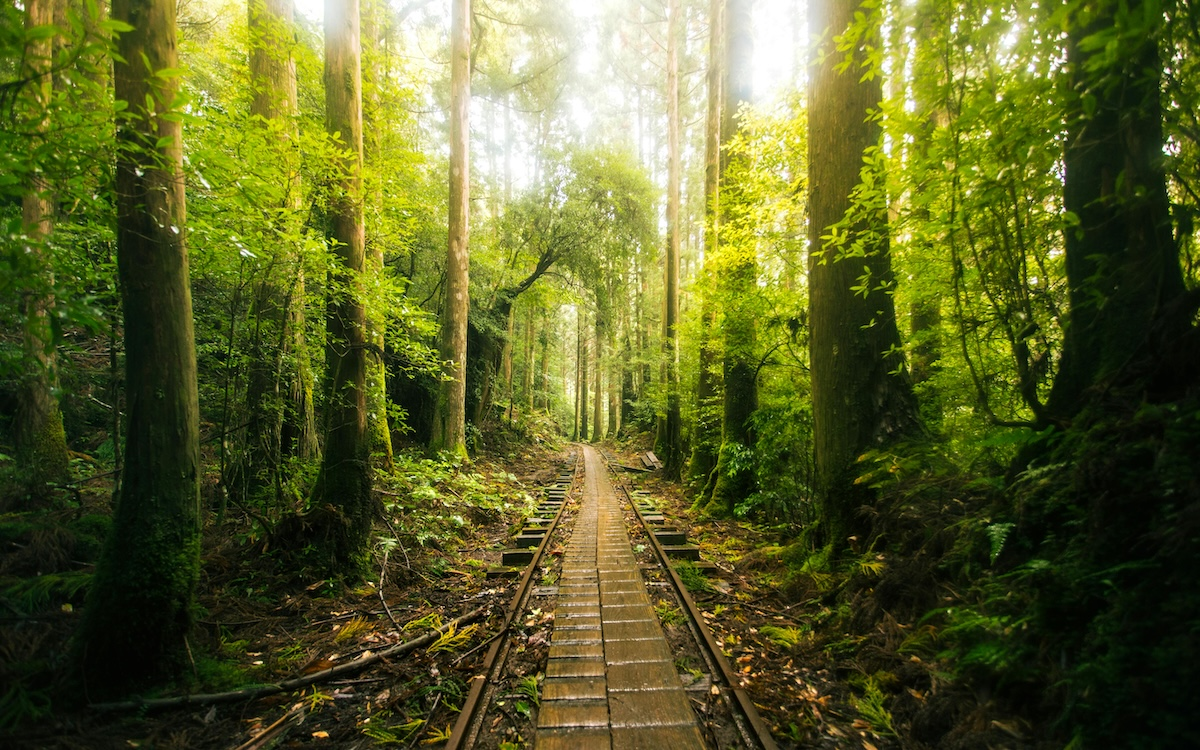
A forest or wildlife shoot in India is won or lost on execution, not on the location. The environments are extraordinary, but they are also among the least forgiving production conditions in the country: access is controlled, the terrain is hostile to equipment, the rules are written for conservation rather than crews, and there is rarely a second chance on logistics. This is the execution playbook for that work, how to plan the equipment, the movement, the power, the communication and the safety for a shoot inside India’s forests and protected areas. The permission and commercial side is covered separately in our guide to forest and wildlife film production in India; what follows is the layer underneath it, the work that turns an approved location into footage in the can.

Terrain, Access and the Execution Reality
The appeal of a forest location and the difficulty of shooting in it are two different things, and the gap between them is where unprepared productions lose days. A protected area is not an outdoor set a unit can simply occupy; it is a controlled environment with its own gatekeepers, its own movement rules and its own hazards, and every one of them has to be planned around before the camera is anywhere near it.
What the Terrain Does to a Shoot
Dense vegetation restricts movement and sightlines, so blocking, rigging and even basic repositioning take far longer than on open ground. Heat and humidity work on the crew and the gear at once, distances between the base and the location are measured in hours rather than minutes, and the surface underfoot rarely supports vehicles or heavy carts. The practical effect is that a forest day yields fewer setups than an equivalent urban day, and the schedule has to be built on that reality rather than on an optimistic page count.
Animal behaviour adds its own tax on time. Wildlife works to its own schedule, so coverage often means long, patient waits for a subject to appear or move into frame, and that waiting has to be built into the day rather than treated as lost time. A recce in the same season as the shoot is the only reliable way to gauge how the light, the access and the animals actually behave, and the schedule carries contingency days because a forest rarely delivers on the first attempt.
Controlled Access and the Guide Mandate
Entry to a protected area is by permit only, and an authorised park guide travels with every vehicle. Many parks run on fixed safari windows from sunrise to sunset, cap the number of vehicles, and route them through assigned zones, while a full-day filming permit, more expensive than a standard safari, typically allows a small number of vehicles, often up to five jeeps, to stay inside the park across the day with wider access. Minimal noise, no straying from permitted routes and no interference with wildlife are conditions of entry, not guidelines, and the guide and forest staff enforce them on the spot.
Permits and vehicles are booked well in advance and tied to specific zones and dates, so the location plan is locked early and has little flexibility once filed. The park director signs off on the on-ground filming and the Divisional Forest Officer finalises the entry and logistical support, which means the production is working to the park’s calendar, not its own, and any change of dates or zones restarts part of the approval.

Equipment Strategy for Forest and Wildlife Shoots
Equipment for a forest shoot is chosen for distance, mobility and self-sufficiency rather than for the controlled abundance of a set. The unit has to assume it will be far from power, far from support and prohibited from the noise and footprint a normal kit takes for granted.
Camera and Lens Systems
Distance is the defining constraint, because crews cannot approach wildlife, so coverage leans on long telephoto and large-range cine zoom lenses that let an operator find a subject and frame it from a fixed, permitted position. Long-range zooms such as the big cine servo lenses built for wildlife are standard tools here. The camera package is kept light and mobile, because everything may have to move on a safari vehicle or by hand, and stabilised, quick-deploy rigs matter more than elaborate support that cannot be carried in.
Crews commonly run more than one body so a second camera can hold a wide while the long lens works the action, since a missed moment cannot be reset with wildlife. Gimbals and shoulder rigs that deploy in seconds beat tripods and dollies that need clear, level ground the forest does not offer, and silent operation matters as much as image quality, because a noisy rig both breaks the park rules and drives the subject away.
Power and Energy in Remote Forests
Power is the constraint that catches most first-time forest units. Diesel generators are noisy and polluting and are barred or impractical in most protected areas, so the shoot runs battery-first, on a planned grid of camera and support batteries with disciplined charging cycles back at base camp, increasingly topped up by portable solar. Power has to be treated as a finite, rationed resource and rotated through the day, and data storage and backup are planned to the same logic, because there is no nearby facility to fall back on if a card or a drive fills.
The power plan is arithmetic done in advance: batteries counted against camera-hours, a charging rotation timed to the base-camp window, and a margin for the days that run long. Portable solar and high-capacity power stations increasingly carry the load that a generator used to, and media is offloaded and backed up to redundant drives every night, because a corrupted card on a remote shoot is footage that cannot be reshot.
Protecting Gear in the Field
The forest is hard on equipment. High humidity fogs lenses and sensors, heat and dust degrade moving parts, and sudden weather can arrive with no shelter nearby, so weather protection, silica and climate management for cameras and lenses are built into the kit rather than improvised. Redundancy is the rule for anything mission-critical, because a failed body or lens deep inside a park cannot simply be swapped from a rental house an hour away. The whole package is specified for reliability in the field first and capability second.
Rain covers, sealed transit cases, silica and a disciplined routine for acclimatising gear between the air-conditioned vehicle and the humid forest, to stop condensation forming inside a lens, are standard field practice. Critical items travel with a spare, and a small field-repair and cleaning kit goes everywhere, because the nearest rental house or service centre may be a day’s travel away and a single failure can otherwise cost the whole window.

Logistics and Movement Inside Protected Areas
Movement is the heart of forest logistics. A unit rarely shoots where it parks, and the chain from the nearest town to the actual location is where time and money are spent, so the movement plan is as detailed as the shot list.
Multi-Stage Transport and Base Camps
Equipment moves in stages: a main transport leg to the nearest accessible point, a transfer to permitted park vehicles for the leg inside the boundary, and sometimes a final stretch carried in by hand where no vehicle is allowed. The unit works from base camps positioned as close to the gate as accommodation and permissions allow, and the day is built around the in-and-out timing the park enforces. Every transfer point is a place the schedule can stall, so each is planned, staffed and timed in advance.
Each transfer carries a real time cost, and porters are often needed for the final stretch where no vehicle is permitted, so the call sheet accounts for movement as a line of its own rather than folding it into setup time. Accommodation near remote gates is scarce and books out in season, so base-camp logistics, where the crew sleeps, eats and charges, are secured as early as the permits, not left to the last weeks of prep.

Crew Size, Segmentation and Mobility
Permits cap crew numbers, and the terrain rewards a small footprint, so roles are consolidated and the unit is segmented into the minimum team that has to be at the location and a support layer that stays at base. A lean, multi-skilled core that can move quickly is worth more than a full crew that cannot all be admitted or cannot move through the forest together. Movement is scheduled and sequenced so that people and gear arrive in the order the day needs them rather than in one slow convoy.
The split between the location team and the base layer is decided by which roles genuinely have to be at the camera and which can support from behind, and people rotate so no one is carrying fatigue into a hazardous environment. A small, multi-skilled unit that moves cleanly through the forest is safer and faster than a large one that cannot all be admitted, and the movement order is sequenced so the right people and gear reach the location exactly when the day needs them.
Communication and No-Network Zones
Mobile coverage inside forests is patchy to non-existent, so communication runs on a radio backbone rather than phones, with talkback between the operating position and the rest of the team for coordinating a shot without disturbing wildlife. A clear emergency and medical plan, with defined fallback points and a chain of contact through the forest staff, is part of the communication design, not an afterthought, because help is far away and the network cannot be relied on to summon it.
Satellite phones cover the gap that radio and mobile cannot, and a daily check-in schedule with base and the forest office is fixed before the unit goes in. Hand signals and pre-agreed cues let the team work a shot in near silence, and every crew member knows the fallback points and the medical chain before the first call, because in a no-network forest the communication plan is the safety plan.
Risk, Safety and Wildlife Protocols
Safety in a forest is governed by the wildlife and the conditions, and a breach is not just a safety failure but a permit failure that can end the shoot. The protocols are non-negotiable and the forest staff have the authority to enforce them.

Wildlife Encounters and Crew Behaviour
Crews keep the prescribed distance from animals at all times, and feeding, baiting, chasing or otherwise interfering with wildlife is prohibited outright. Behaviour discipline, quiet, slow movement, staying with the vehicle or the permitted position, following the guide’s direction immediately, is briefed before entry and held to throughout, because an unpredictable animal and an undisciplined crew are a dangerous combination. The escort’s instruction overrides the shot, every time.
Every crew member is briefed before entry on how to behave in an encounter, how to move, and when to stop, and that briefing is repeated rather than assumed. Vehicle discipline, staying seated, staying quiet, never dismounting where it is not permitted, is the line between a safe shoot and an incident, and a unit that breaks it not only endangers itself but can lose the permit and the park’s goodwill for every production that comes after.

Environmental and No-Trace Practices
Protected-area filming runs on a no-trace basis. No plastic, no waste left behind, no fire, and everything brought in is carried out, with the site left as it was found. These are conditions of the permit and increasingly of the production’s own sustainability standards, and they shape the catering, the packaging and the waste plan as much as the shoot itself. A unit that treats the environment carelessly not only risks the day but jeopardises the access of every production that follows it into that forest.
In practice that reshapes catering and packaging toward reusable, low-waste systems, plans waste removal as a logistics line rather than an afterthought, and increasingly aligns with formal sustainable-production standards that clients now expect. The forest is left exactly as it was found, and the no-trace discipline is briefed and audited like any other safety protocol, because access to these locations depends on the industry’s record in them.

Executing the Shoot: Coordination and Planning
All of the above only works if it is coordinated, and forest shoots fail far more often on coordination than on any single piece of kit. The planning horizon is long and the dependencies are tight, which is why these shoots are run by people who have done them rather than improvised on the day.
Multi-Department Coordination
Camera, transport, the forest escort, safety and base camp all depend on each other on a forest day, and a slip in one stalls the rest: a late vehicle wastes a permitted window, a power gap halts the camera, a miscommunication risks a safety breach. The execution plan maps those dependencies and synchronises them so the unit moves as one, with a single point of coordination holding the timing of the permitted windows, the transfers and the shooting against each other.
A single coordinator holds that timing, because no individual department can see the whole dependency chain from inside its own work. The call sheet is built around the permitted windows and the transfer times rather than around an idealised shooting order, and a contingency is pre-agreed for the most likely disruptions, a missed window, a weather hold, a vehicle delay, so the unit has a planned response instead of improvising one inside a park where options are few.

Why Forest Shoots Fail Without Execution Planning
The common failure is treating a forest shoot like a difficult location shoot rather than a different kind of operation. Permits alone take two to three months, the Forest Department assesses the shooting plan and the equipment as part of approval, and the season, the access windows and the logistics all have to line up before a single day is viable. When that planning is skipped, the unit arrives to find the window missed, the gear unsuited or the movement unworkable, and there is no quick fix inside a protected area.
The fix is to plan the shoot as the operation it is: a season-accurate recce, permits filed two to three months out, an equipment and movement plan tested against the access rules, and contingency built into both the schedule and the budget. Done that way, a forest shoot becomes predictable and repeatable; done any other way, it becomes a gamble with a long lead time and no cheap recovery.
Bringing It Together with a Line Producer
Holding the equipment, the logistics, the safety and the coordination together across a long lead time is a line-production discipline. A line producer who runs forest and wildlife film production end to end maps the permission and the execution as one plan, so the kit suits the rules, the movement suits the terrain and the schedule suits the season. Managed as part of full film production services, that is what turns one of India’s hardest shoots into a controlled, repeatable operation rather than a gamble.
