
Technology Transforming Line Production in Indian Films

technology in line production showing digital tools and modern film production technology on set in India

technology in line production, film production technology India, digital film production tools, line production technology systems, modern filmmaking technology India

Digital Infrastructure in Modern Line Production

Digital systems increasingly shape how line production functions in India. Historically, production coordination depended heavily on spreadsheets, physical paperwork, and fragmented communication channels. However, modern filmmaking now relies on integrated software platforms that streamline budgeting, scheduling, and financial reporting.

For large productions—especially international co-productions—digital infrastructure enables transparent workflows across multiple departments. Production accountants, line producers, studio executives, and department heads can access shared systems that track budgets, crew contracts, vendor payments, and daily production costs. This visibility allows decision-makers to identify cost overruns early and make operational adjustments during filming.

Technology also improves collaboration across geographically distributed teams. Producers working from international headquarters can monitor cost reports and scheduling updates in real time, while local line producers maintain operational control on the ground. Such systems significantly reduce the delays that once occurred when financial reports had to be compiled manually at the end of production phases.

The shift toward digital production infrastructure also improves compliance and auditing standards. Structured reporting systems create detailed financial records that support tax incentives, insurance documentation, and international financing agreements. As productions grow larger and more geographically complex, these digital tools increasingly form the backbone of modern line production management.

Budgeting and Production Accounting Software

Production budgeting has evolved from manual spreadsheets into sophisticated accounting platforms designed specifically for film and television production. These systems allow producers to structure budgets by department, track expenses against projected costs, and maintain detailed records throughout the production cycle.

Modern production accounting platforms provide line producers with centralized financial oversight. Crew payments, vendor invoices, equipment rentals, travel logistics, and location expenses can all be tracked within integrated software systems. This ensures that financial information remains consistent across departments and reduces the risk of misreported expenses.

The value of these systems becomes especially clear during international co-productions. When multiple currencies, payroll systems, and contractual structures are involved, standardized cost-tracking frameworks help maintain financial accuracy. Producers can analyze cost performance daily rather than waiting for end-of-week reconciliations.

Understanding how financial control systems structure modern production budgeting helps explain why structured accounting frameworks are now considered essential in large-scale film production. Cost-coding systems categorize every production expense, allowing studios and financiers to monitor spending with precision.

Equally important are the auditing processes that verify production spending. Many international studios rely on how production accounting and auditing frameworks operate in international shoots to ensure financial transparency, tax compliance, and accurate reporting across multi-territory film projects.

Production accounting and audit services in India showing financial reports, budget sheets, laptop with cost tracking dashboard, and professional reviewing compliance documents in a film production office environment.
Structured production accounting and audit oversight for film and OTT projects in India, ensuring cost control, compliance alignment, and studio-ready financial reporting.

Scheduling Platforms and Workflow Coordination

Production schedules represent the operational backbone of any film shoot. Coordinating hundreds of crew members, equipment deliveries, location access, and actor availability requires highly structured planning tools. Digital scheduling platforms now allow line producers to manage these complex workflows far more efficiently than traditional paper schedules.

Modern production scheduling systems organize the entire shooting timeline—from script breakdown to daily call sheets—within a unified platform. Department heads can view upcoming scenes, equipment requirements, and crew allocations well in advance. This visibility reduces last-minute logistical conflicts and allows departments to coordinate more effectively.

Digital scheduling also supports real-time updates. When weather changes, location access shifts, or production delays occur, revised schedules can be distributed instantly to the entire crew. This prevents miscommunication and ensures that everyone operates with the same information.

Another advantage of these platforms is their ability to integrate with budgeting systems. Schedule adjustments automatically update projected production costs, helping line producers maintain financial control over changing filming conditions.

For international productions working across multiple cities or regions, digital scheduling tools make it possible to coordinate second units, travel logistics, and location rotations without losing operational oversight. As a result, technology now plays a central role in maintaining the efficiency and predictability required in modern film production.

film production stage with crew preparing lighting equipment and set infrastructure before filming
Production crew preparing a soundstage with lighting, equipment, and set elements before filming begins.

Technology Improving Location Scouting and Planning

Location planning has always been one of the most complex stages of film production. Producers must evaluate visual suitability, logistical feasibility, costs, permitting requirements, and environmental risks before committing to a filming location. Technology now plays a central role in improving how these decisions are made.

Digital tools allow filmmakers to explore potential filming environments long before crews arrive on location. High-resolution image databases, satellite mapping systems, and drone footage archives provide detailed visual references that help directors and production designers evaluate landscapes remotely.

These systems also support more structured production planning. Line producers can compare locations based on infrastructure access, transport networks, equipment movement constraints, and crew accommodation availability. Such data helps production teams determine whether a location can support large-scale filming operations.

Technological integration has also improved collaboration between international producers and local line production teams. Directors working overseas can review location photographs, architectural references, and environmental conditions through digital platforms, allowing faster decision-making.

As global productions increasingly evaluate filming options across multiple countries, digital location planning tools have become essential for reducing scouting costs and improving strategic location selection.

Digital Location Databases and Remote Scouting

Location scouting once required extensive travel by directors, production designers, and location managers. While physical visits remain essential before filming begins, digital scouting tools now allow production teams to narrow down options far more efficiently.

Online location databases provide curated image libraries covering urban districts, architectural landmarks, natural landscapes, and historical sites. These platforms allow filmmakers to filter potential locations based on visual characteristics, accessibility, and filming permissions.

Drone photography and satellite imagery have further expanded remote scouting capabilities. Aerial perspectives allow directors to evaluate terrain layouts, camera positioning possibilities, and lighting conditions before committing to a physical scouting trip.

These tools are particularly valuable for international productions exploring unfamiliar regions. Instead of sending large scouting teams abroad, producers can review detailed digital references and shortlist locations remotely. This significantly reduces early development costs.

Remote scouting technology also improves collaboration between international studios and local line producers. Local teams can upload updated images, infrastructure reports, and location assessments to shared platforms, allowing producers to evaluate options without delay.

As digital location databases continue to expand, remote scouting increasingly serves as the first stage of location selection in global film production.

Data-Driven Feasibility Assessment for Film Locations

Beyond visual suitability, modern productions must evaluate locations through a structured feasibility framework. Technology now enables data-driven analysis that helps line producers determine whether a filming environment can support operational demands.

Digital planning systems allow production teams to map transportation routes, estimate equipment logistics, analyze travel times between shooting locations, and evaluate accommodation capacity for large crews. These operational considerations play a critical role in determining whether a location can sustain extended filming schedules.

Advanced planning tools also incorporate risk analysis. Weather patterns, environmental restrictions, infrastructure reliability, and regulatory frameworks can all be evaluated before committing to a production site. Such analysis reduces the likelihood of costly disruptions during filming.

Understanding how location feasibility and operational risk assessment guide production planning illustrates how production teams evaluate both creative and logistical factors when selecting filming environments.

Equally important is recognizing how Indian filming environments support international productions and location planning. India’s diverse landscapes, combined with growing production infrastructure, allow filmmakers to design complex location strategies while maintaining operational efficiency across multiple regions.

Together, these digital planning systems allow modern film productions to select locations based not only on visual storytelling potential but also on operational reliability and logistical feasibility.

Camera setup on an outdoor filming location used to illustrate film location risk assessment for production feasibility and environmental stability.
Outdoor filming setup demonstrating film location risk assessment used to evaluate environmental stability, logistics access and infrastructure feasibility before production begins.

Technology in On-Set Coordination and Production Logistics

Modern film sets operate as complex logistical environments where hundreds of crew members, multiple departments, and large volumes of equipment must function in precise coordination. Technology now plays a central role in maintaining operational efficiency during filming, allowing line producers to manage communication, logistics, and resource allocation more effectively.

Digital production management platforms allow crew members across departments to access real-time information about call sheets, schedule adjustments, equipment requirements, and location changes. Instead of relying solely on verbal communication or printed documents, production teams now operate through centralized systems that ensure every department receives updated information simultaneously.

These tools significantly reduce operational delays. When filming conditions change—such as weather disruptions, location constraints, or schedule adjustments—production managers can distribute updates instantly across the entire crew network. This allows departments such as camera, lighting, transport, and art direction to adjust their workflows without interrupting filming continuity.

Technology also improves transparency in production management. Department heads can track equipment movements, vehicle deployments, and crew allocations through digital systems that document operational activity in real time. As film productions become larger and more geographically distributed, such tools help maintain the coordination required for complex shoots.

Together, communication platforms and logistical management systems have transformed on-set coordination into a data-driven operational environment that improves efficiency and reduces production risk.

Real-Time Communication and Unit Coordination

Film production requires constant communication between multiple departments operating simultaneously across a location or even across multiple filming units. Real-time communication platforms now allow line producers and assistant directors to coordinate these activities with far greater precision.

Mobile communication tools and digital production apps allow crew members to receive schedule updates, revised call sheets, and departmental instructions instantly. These systems ensure that critical information reaches camera crews, lighting teams, transport departments, and production assistants without delay.

Real-time communication becomes especially important during complex shoots involving second units, aerial filming teams, or multiple locations operating on the same schedule. Digital communication networks allow production leadership to coordinate these units while maintaining a unified operational plan.

Understanding how operational coordination structures large film production units highlights how communication systems integrate with broader logistical workflows. Effective coordination requires more than communication alone—it depends on structured planning that connects every production department.

These digital coordination systems also help line producers manage crew safety, transportation schedules, and equipment readiness throughout the filming day. By centralizing communication channels, modern productions reduce miscommunication and maintain smoother on-set operations.

Equipment Tracking and Resource Management Systems

Managing film equipment across multiple departments is one of the most complex logistical tasks in production management. Cameras, lighting rigs, sound equipment, props, and transportation assets must be tracked carefully to ensure that every department has access to the resources required for each shooting schedule.

Digital inventory systems now allow production teams to monitor equipment movement across filming locations. These platforms track equipment rentals, transport logistics, storage locations, and maintenance schedules through centralized databases. As a result, production managers can quickly identify equipment availability and avoid scheduling conflicts.

Resource management tools also support more efficient equipment deployment. When productions move between locations, transport teams can track vehicles, loading schedules, and delivery times using digital planning systems. This reduces delays that historically occurred when equipment logistics were coordinated manually.

In complex productions involving multiple filming units or geographically dispersed locations, such systems become essential for maintaining operational continuity. Line producers rely on these tools to ensure that equipment, crew, and transport logistics remain synchronized across departments.

For productions navigating these operational complexities, line producer services supporting complex film productions in India often integrate logistical planning, vendor coordination, and technology-enabled management systems that keep large-scale shoots running efficiently.

Line producer coordinating film production across cinematic locations in India
Line production services for feature films, OTT, and commercials across India’s cinematic locations

Virtual Production and Emerging Filmmaking Technologies

Technological innovation is also transforming how films are visually created. Virtual production tools now allow filmmakers to combine physical filming environments with digital imagery, dramatically expanding creative possibilities while improving production efficiency.

Virtual production techniques integrate real-time rendering engines, LED display stages, and advanced previsualization software to simulate environments that would otherwise require extensive location shooting. These systems allow filmmakers to visualize complex scenes during production rather than relying entirely on post-production effects.

For line producers, virtual production technologies offer significant logistical advantages. Scenes that would traditionally require travel to remote environments can sometimes be recreated digitally within controlled studio spaces. This reduces transportation costs, minimizes weather-related disruptions, and simplifies equipment logistics.

At the same time, virtual production does not eliminate traditional location filming. Instead, it expands the range of tools available to filmmakers. Productions often combine physical locations with digitally generated environments to achieve specific visual effects while maintaining realistic performance conditions for actors.

As these technologies continue evolving, they are reshaping both creative storytelling and operational planning within modern film production.

LED Stages and Digital Environments in Film Production

LED volume stages represent one of the most significant innovations in modern filmmaking. These stages use large curved LED walls to display high-resolution digital environments that interact dynamically with camera movement and lighting conditions.

Instead of filming actors in front of green screens, productions can project realistic digital landscapes that respond in real time to camera angles and lighting changes. This allows actors and directors to see the environment during filming, improving performance and visual composition.

LED stages also provide operational benefits for production teams. Weather conditions, lighting control, and environmental consistency can be managed entirely within a studio environment. This reduces delays caused by unpredictable outdoor filming conditions.

The increasing use of such environments highlights how studio infrastructure supports modern film production environments. Advanced soundstages equipped with LED technology allow productions to combine digital and physical filmmaking techniques within controlled production facilities.

As studio technology continues evolving, virtual environments are becoming an important component of large-scale film production workflows.

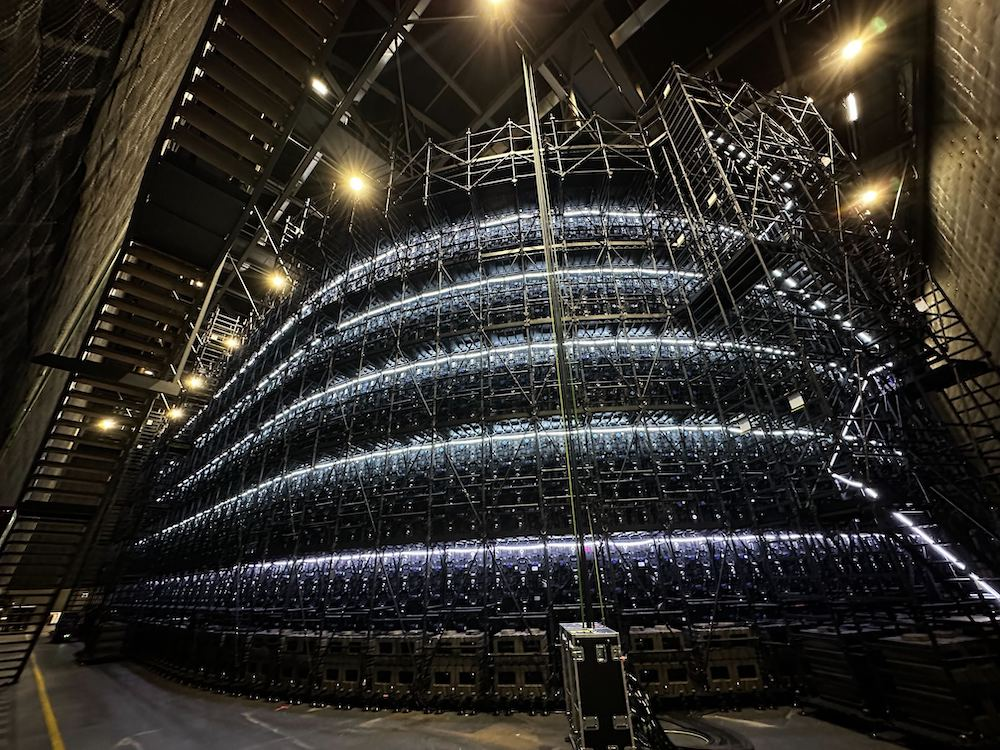
State-of-the-art soundstage construction representing film studio procurement India infrastructure development for international film production.
A modern soundstage under construction reflecting the infrastructure planning involved in film studio procurement India for global film and streaming productions.

Integration of Visual Effects and Previsualization Technologies

Another major technological development in filmmaking involves the integration of previsualization and visual effects planning during early production stages. Previsualization software allows directors and cinematographers to design complex scenes digitally before cameras begin rolling.

These tools simulate camera movements, lighting conditions, and actor positioning within virtual environments. By planning sequences digitally, filmmakers can test creative concepts, refine shot compositions, and anticipate technical challenges before filming begins.

For line producers, previsualization also improves production planning. When complex sequences are designed digitally in advance, equipment requirements, crew allocations, and shooting schedules can be planned more accurately. This reduces costly on-set experimentation and improves filming efficiency.

The growing use of such tools reflects broader advances shaping film production technology and industry workflows. As visual effects pipelines become more integrated with on-set production processes, filmmaking increasingly relies on collaboration between technical departments long before principal photography begins.

Together, previsualization tools and integrated visual effects systems allow productions to combine creative ambition with operational precision, transforming how modern films are planned and executed.

Technology Supporting Multi-Location and Global Productions

Global film production increasingly operates across multiple countries, with different filming units working simultaneously in separate regions. Technology plays a critical role in making such distributed production models possible. Digital infrastructure now enables production teams to coordinate schedules, budgets, crew logistics, and creative decisions across continents without losing operational control.

Cloud-based collaboration systems allow producers, directors, and department heads to access centralized production data regardless of location. Budget reports, scheduling updates, location documents, and creative references can be shared instantly among production teams working in different countries. This level of connectivity reduces delays that once occurred when production information moved slowly between regional offices.

For line producers managing international shoots, technology ensures operational continuity. While principal photography may occur in one location, second units, visual effects teams, or post-production departments may operate elsewhere. Digital coordination platforms allow these distributed teams to remain synchronized throughout the production process.

Such systems also improve decision-making. Producers can monitor daily production reports, track expenditures, and evaluate logistical challenges in real time. This visibility enables faster responses to production changes and helps maintain efficiency across geographically dispersed shoots.

As global filmmaking continues expanding into multi-territory production strategies, digital infrastructure increasingly serves as the connective framework that keeps international production systems functioning smoothly.

Indian films showcasing structured multi country film production across jurisdictions, highlighting cross-border execution systems, payroll reconciliation, crew mobility governance, and coordinated international filmmaking workflows.
Indian films executed through structured multi country film production systems across borders.

Cloud Collaboration Across International Production Teams

Cloud-based collaboration platforms have transformed how international film productions coordinate work between geographically dispersed teams. Instead of relying on fragmented communication channels, production departments can now access shared digital environments where schedules, documents, and production updates are maintained in real time.

These systems allow directors, producers, line producers, and department heads to collaborate seamlessly regardless of physical location. Script revisions, location photos, technical drawings, and daily production reports can be uploaded and accessed instantly by authorized crew members across the world.

Cloud collaboration also improves coordination between production stages. While filming occurs in one country, editing teams, visual effects artists, and studio executives may operate from different locations. Centralized data platforms allow these groups to review footage, exchange notes, and coordinate post-production workflows without disrupting the shooting schedule.

Another advantage is improved transparency. Producers and financiers can monitor production progress through digital reporting systems that document daily filming activities, cost updates, and schedule adjustments.

As global productions increasingly involve international crews and distributed production units, cloud collaboration tools have become essential infrastructure for maintaining operational alignment across complex filmmaking networks.

Data Systems Enabling Multi-Country Film Production Execution

Coordinating film production across multiple countries requires sophisticated data systems that integrate budgeting, scheduling, compliance documentation, and logistical planning. Technology now enables production teams to manage these complex operational structures through centralized digital frameworks.

Multi-country productions must reconcile numerous operational variables. Different regulatory environments, currency systems, payroll structures, and permitting requirements can complicate production management. Integrated production software helps consolidate these variables into a unified planning environment.

Understanding how multi-country production execution systems coordinate international shoots illustrates how global productions maintain control across complex logistical networks. These systems allow producers to track location movements, crew travel, equipment logistics, and financial reporting across multiple territories simultaneously.

Equally important is the organizational structure that connects regional production partners. Modern filmmaking often relies on global network structures that coordinate international line production teams. These networks link experienced line producers across filming territories, ensuring that each region operates within a consistent production framework.

By combining digital management systems with established production networks, global film projects can maintain both creative continuity and operational stability across international filming environments.

Conclusion

Technology has fundamentally reshaped how line production operates within the Indian film industry. Digital infrastructure now supports every stage of production, from early planning and budgeting to location scouting, on-set coordination, and international collaboration. These technological systems allow production teams to manage increasingly complex filming environments while maintaining efficiency and operational transparency.

One of the most significant advantages of technological integration is improved coordination. Digital budgeting tools, scheduling platforms, and communication systems enable line producers to track production activities in real time. This reduces delays, minimizes operational errors, and allows production managers to make informed decisions as filming progresses.

Technology has also expanded the geographical scope of film production. Cloud collaboration systems and integrated production software allow international teams to work together across multiple locations without disrupting workflow continuity. As a result, productions can design multi-location filming strategies that combine diverse environments while maintaining centralized production control.

Within this evolving environment, the role of the line producer continues to grow in importance. While technology provides the tools that support modern filmmaking, it is the expertise of line producers that ensures these systems operate effectively within real production conditions.

As digital innovation continues advancing, the future of film production in India will likely involve even deeper integration between technological infrastructure and production management. This convergence will enable filmmakers to execute ambitious global projects while maintaining the logistical discipline required for successful production.

Back to top: