
This is a scouting reference to the filming locations in Turkey that actually earn a place on the schedule, organised by region, with what each place is used for on screen, the notable productions that have filmed there, which authority controls the permit, and the access reality behind the picture. It is written to sit alongside execution: once a location list is set, the permits, crew and schedule are run by a line producer Turkey, and this page maps where to point them. The thread worth holding onto is that a location’s screen value and its shootability are two different things, and the most photogenic site is often the one with the longest permit and the tightest window.
Turkey’s greatest strength for a location scout is the diversity of landscapes within a relatively compact production footprint. Istanbul’s Ottoman and Byzantine core, Cappadocia’s volcanic valleys, the Aegean and Mediterranean coasts, the Anatolian steppe and the misty Black Sea north all sit within short internal flights of each other, and each doubles convincingly for somewhere else. What follows is region by region: the named sites, their stand-in value, the films that have used them, and the permit and access notes a scout needs before a location goes on the recce list, ready to hand to the film fixers in Turkey who turn that list into a shoot.
What Turkey Doubles For
The reason a production chooses Turkey is rarely to shoot Turkey. The appeal of the filming locations in Turkey is how many other places they can play, which is why the stand-in map is worth reading before the regional detail. Istanbul’s Historic Peninsula and the southeastern city of Mardin cover historic Arab and Levantine cities; the Aegean coast covers Greece and Southern Italy; Cappadocia and Lake Salda cover Mars, Central Asia and ancient or fantasy worlds; the Anatolian steppe covers desolate Central Asian and historical plains; and the Black Sea north covers Eastern Europe, the Caucasus and temperate mountain regions. Galata and the older European quarters cover the Balkans, while the glass towers of Levent cover a generic modern metropolis. The practical takeaway is that one country, on one production structure and one crew base, can deliver several of those doubles inside a single schedule.
Turkey at a Glance: Region Comparison
| Region | Doubles for | Permit difficulty | Best season | Crew & access |
|---|---|---|---|---|
| Istanbul | Eastern Mediterranean, historic Arab cities, the Balkans, a modern metropolis | Mixed: high at heritage monuments, low on public streets | Spring and autumn | Deepest crew and equipment base; the natural home unit |
| Cappadocia | Mars, Central Asia, ancient and fantasy worlds | Medium: Nevşehir Governorate, plus SHGM for aerial or balloon work | Spring to autumn; balloons weather-dependent year-round | Base at Kayseri; heavier kit travels from Istanbul |
| Anatolian interior and southeast | Desolate steppe, the Middle East, the ancient world (Mardin, Nemrut) | Low on open steppe; Ministry of Culture at the monuments | Spring and autumn; highland and Nemrut effectively summer-only | Limited local crew base; based from Kayseri or Ankara |
| Aegean and Mediterranean coast | Greece, Southern Italy, the wider Eastern Mediterranean | Low on the coast; high at Ephesus and Pamukkale (UNESCO) | Spring to autumn | Strong tourism infrastructure at İzmir and Antalya |
| Black Sea north | Eastern Europe, the Caucasus, temperate mountain regions | Low to medium | Summer for drier access; mist present much of the year | Thin base; plan extra travel and schedule margin |

Films and Series Shot in Turkey
Turkey’s locations come with a track record, not just a look. Istanbul alone has carried three James Bond films, a Dan Brown adaptation and the sets of the world’s most-watched Turkish drama series, and a scout can point to the exact streets, palaces and studios each one used. For an international production that history is practical reassurance: the permits, the crews and the standing sets already exist.
The international features
Istanbul has stood in for 007 three times. From Russia with Love shot at Hagia Sophia and used the Basilica Cistern; The World Is Not Enough took in Dolmabahçe Palace, the Maiden’s Tower and the Sarayburnu shore; and Skyfall staged its opening pursuit across the rooftops of the Grand Bazaar and through Eminönü and the Spice Bazaar. The Dan Brown adaptation Inferno returned to the same compact historic core, at Hagia Sophia, the Basilica Cistern and the Grand Bazaar. That the biggest set-pieces sit within a short walk of each other is a large part of why the city reads on screen with so little company movement.
The dizi: Turkish series and their sets
Turkey is one of the world’s largest exporters of television drama, the dizi, and its historical epics built their own backlot. Bozdağ Film Studios in Riva, in the Beykoz district on Istanbul’s Asian side, is the largest studio in the country: a purpose-built medieval plateau of around forty thousand square metres that is home to Diriliş: Ertuğrul, Kuruluş Osman and Destan, with Ertuğrul’s earlier seasons also shot in Cappadocia. On the European side, the Bosphorus waterfront mansions, the yalıs of Bebek, Kanlıca and Sarıyer, are a recurring backdrop for contemporary romantic dizi. For a foreign shoot that industry is the real asset: experienced period crews, dressing and standing sets are already on the ground.
More Locations Across Turkey
The range of filming locations in Turkey runs well beyond the marquee regions. The gallery below indexes options across every part of the country: the southeastern stone cities and ancient sites, the Antalya coast, canyons and waterfalls, the Black Sea highlands and monasteries, and the Aegean islands and ruins, each a working option for the right brief. The regions that follow go deeper on the signature areas, and a fuller written breakdown of these outlying locations sits further down the page.


These locations illustrate the breadth of Turkey’s location palette, but selecting between them depends on permits, access, season and production logistics rather than scenery alone.

Istanbul: Historic Core and the Two Sides
Istanbul carries three distinct registers in one city, which is why it recurs in international productions. The Historic Peninsula around Sultanahmet, with Hagia Sophia, the Blue Mosque, Topkapi Palace and the Grand Bazaar, holds the Ottoman and Byzantine language used for period work, and it doubles for the broader Eastern Mediterranean and historic Arab cities. The opening chase of Skyfall ran across the Grand Bazaar and over the rooftops of the Spice Bazaar here, and Inferno used Hagia Sophia and the Basilica Cistern. These are heritage sites: filming inside the classified monuments runs through the Ministry of Culture and Tourism with a longer lead time and a monitor on set, so they are scouted early and treated as a parallel permit track, not a late addition.

Named Istanbul Sites and What They Deliver
Within the historic core the recurring picks are specific. Süleymaniye and the Blue Mosque give monumental Ottoman scale; the Basilica Cistern gives a subterranean, columned interior used for chase and thriller sequences; the Grand Bazaar and the Spice Bazaar give dense, covered-market energy. For colour and texture, the stepped, painted houses of Balat and Fener read as an old Mediterranean or Levantine quarter, and Dolmabahçe Palace on the water gives a nineteenth-century European-imperial interior. Two options often missed on a first scout are the Princes’ Islands, where car-free Büyükada reads as a turn-of-the-century island town, and İstiklal Avenue with Taksim for the crowded contemporary high street. Each of these is permitted individually, and the interiors in particular carry filming fees and restrictions set by their managing authority.

Contemporary Istanbul and the Bosphorus
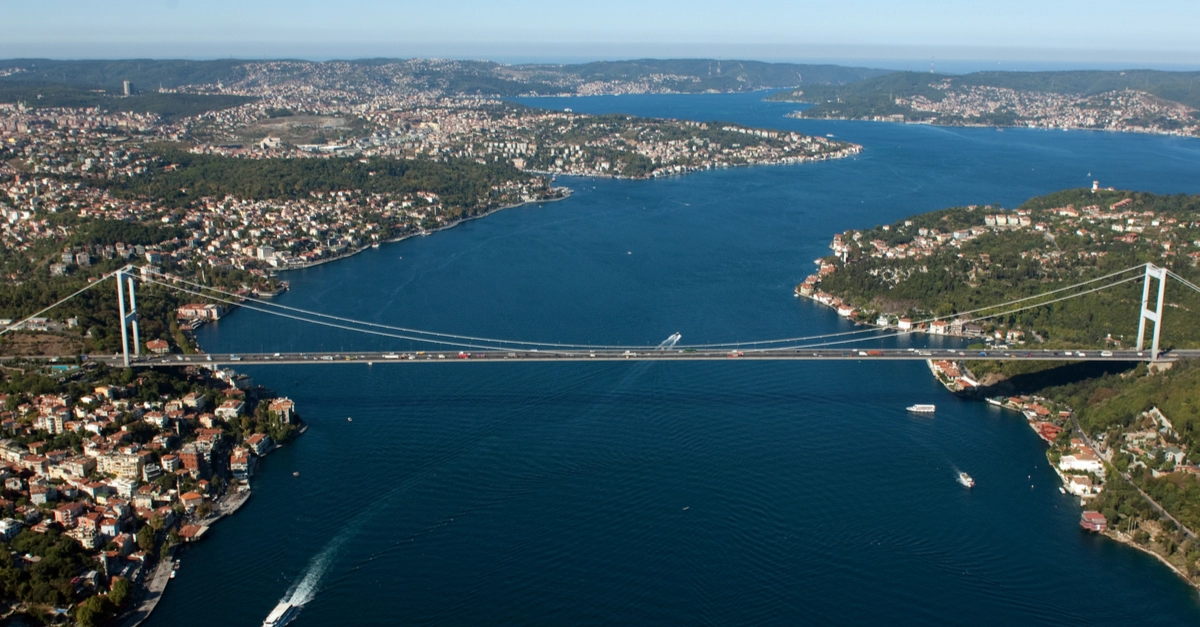
Away from the monuments, Galata, Beyoğlu and the backstreets of Karaköy deliver a grittier, low-rise European feel that stands in for Eastern Europe and the Balkans, and these public-realm locations move faster through the local municipality and district production offices. At the other end, Levent and Maslak give a clean glass-tower financial district for corporate and thriller work, so a production can shoot a modern metropolis and the historic city in one schedule. The Bosphorus itself is its own category: filming on or beside the strait pulls in the governorate, the Coast Guard and the municipality depending on vessel size and proximity to the bridges, so waterway sequences carry a longer coordination tail than a street scene.

The Bosphorus Villages and the Asian Side
The Bosphorus is lined with villages that each carry a distinct look. On the European shore, Bebek and Arnavutköy give an affluent waterfront of wooden houses and cafés, and Ortaköy sits directly under the first bridge beside its baroque mosque, one of the most-filmed frames in the city. The waterfront Ottoman mansions, the yalıs of Kanlıca, Kandilli and Emirgan, are the recurring backdrop for romantic drama; their interiors are private and negotiated per property rather than cleared through a public authority. The fifteenth-century fortresses of Rumeli Hisarı and Anadolu Hisarı face each other across the narrowest point of the strait for a period-military look.
The Asian side is quieter and more contemporary. Kadıköy, Moda and Üsküdar give lived-in modern neighbourhoods, ferry terminals and a working-city texture away from the tourist core, with the Maiden’s Tower offshore. Further up the coast, the forests around Riva in Beykoz hold Bozdağ Film Studios, the country’s largest purpose-built historical set, so a production working the Asian side has a major standing facility within an hour of the centre.
Cappadocia and the Anatolian Interior
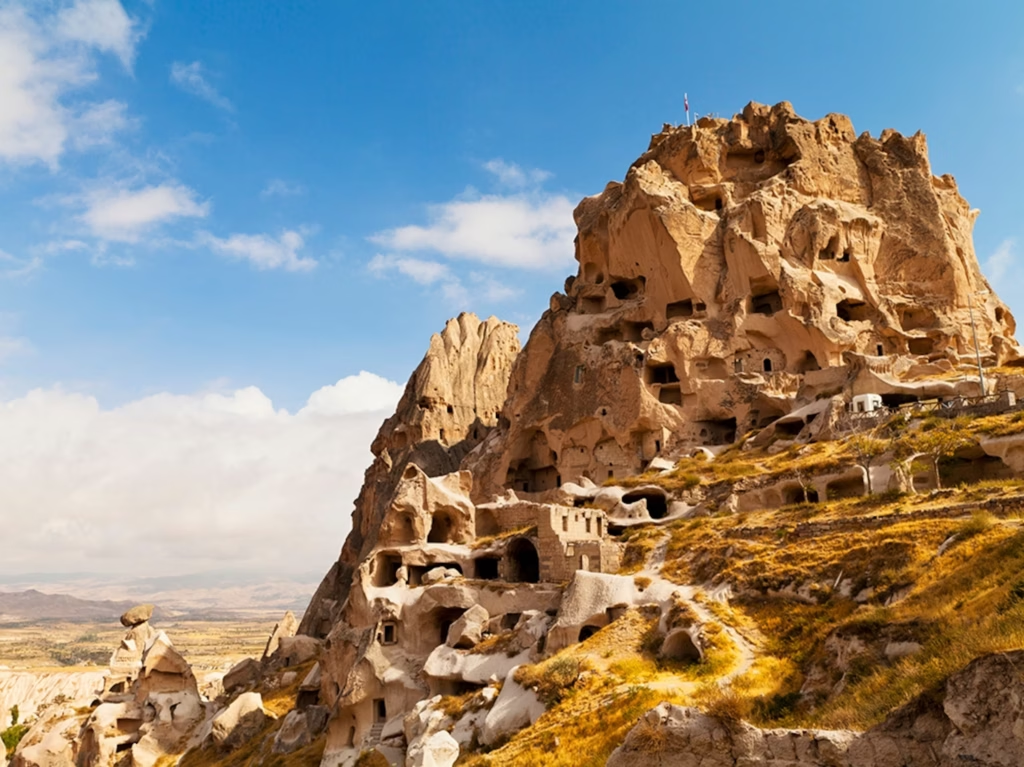
Cappadocia is Turkey’s signature otherworldly location. The fairy chimneys and volcanic valleys around Göreme stand in for Mars, ancient civilisations and fantasy worlds, and the cave settlements carved into the rock add a built-in production-design layer that needs little dressing. Ghost Rider: Spirit of Vengeance shot extensively around Ürgüp and Göreme, and The Water Diviner used the region for its Anatolian sequences. Ground permits run through the Nevşehir Governorate with heritage approvals where applicable on the classified formations. The balloon fleet that fills the valleys at sunrise is the region’s signature aerial, but it is a constraint as much as an asset: aerial and balloon coverage need civil-aviation (SHGM) coordination and must be planned around the commercial flight window, so a scout flags any balloon or drone shot at the recce, not on the day.

Named Cappadocia Sites
Inside Cappadocia the specific sites recur: the Göreme Open-Air Museum and its rock-cut churches, the castle-rock of Uçhisar for elevation, the underground cities of Derinkuyu and Kaymaklı for subterranean sequences, and the Ihlara Valley and Pigeon Valley for green-canyon and panorama work. Because these are concentrated, a unit can move between hero looks in a single day, which is a large part of the region’s efficiency. The trade-off is that the most photographed valleys are also the busiest, so early-morning windows and permitted access points matter more here than raw location choice.

Deep Anatolia and the Southeast
Beyond the tourist core, southeastern Anatolia is Turkey’s strongest Middle-Eastern and ancient-world stand-in. Mardin, a honey-stone town terraced above the Mesopotamian plain, doubles convincingly for historic Levantine and Arab cities; Mount Nemrut, with its giant toppled stone heads at the summit, delivers an ancient-monument establishing shot no set can match; and Göbekli Tepe near Şanlıurfa anchors a deep-history register for biblical, ancient-civilisation and historical-epic work. For a surreal natural look, Lake Salda’s white mineral shores and turquoise water read as Mars or a salt desert. The wider interior, the steppe around Konya and the salt flats of Tuz Gölü, gives open, empty vistas for historical epics, usually base-camped from Kayseri or Ankara given the distance from Istanbul’s rental depot.

Aegean and Mediterranean Coast
Among the filming locations in Turkey that need no set dressing, the Aegean coast, from Çeşme and Kuşadası to the ruins at Ephesus, delivers the classical Mediterranean look: turquoise water, white architecture and ancient stone, and it stands in for Greece, Southern Italy and the wider Eastern Mediterranean without a border crossing. The register splits cleanly on permits. Ephesus and Pamukkale’s white travertine terraces are UNESCO-managed heritage sites under the Ministry of Culture, with the longer lead time and an on-set monitor, so they are scouted early and treated as a parallel permit track. Coastal locations outside the heritage zones move far faster through local municipality permits, which is why a beach or harbour day is scheduled differently from a ruins day.

Named Coastal Sites
The named coastal sites carry distinct value. The Mediterranean stretch toward Antalya, the Turquoise Coast, adds limestone cliffs, coves and ancient harbour towns with deep tourism infrastructure, so large units can base there comfortably, and Antalya’s Kaleiçi old town gives a walled-port register. Fethiye and the Ölüdeniz lagoon give the postcard turquoise cove: Skyfall filmed along parts of Turkey’s southwestern coast, and Russell Crowe’s The Water Diviner shot at nearby Kayaköy. Kaş and the sunken ruins of Kekova give a diving and archaeology register, and Bodrum gives a whitewashed Aegean resort town with a Crusader castle. Most of these outdoor sites clear through local municipalities, while the classified ancient cities carry the heritage track, so the coast mixes fast-permit beach days with a small number of planned heritage days.

The Black Sea North: Forest, Mist and Highland
Northern Turkey is the register most scouts overlook, and the one that reads least like Turkey on screen. Along the Black Sea coast the Pontic Mountains rise straight off the shoreline into dense forest, and the moisture trapped against them produces frequent mist and deep greens, an atmosphere that stands in for Eastern Europe, the Caucasus and remote temperate mountain regions. It is the palette for atmospheric drama and historical narrative rather than bright tourism imagery: cloudy skies, layered ridgelines and coastal towns built on steep slopes rather than wide beaches. The trade-offs are the weather and the distance, since the same mist that makes the look also makes it unpredictable, and the north sits well away from the main rental and crew base.

Named Northern Sites
The north has its own set of named sites. The Sumela Monastery, built into a sheer cliff face above a forested valley near Trabzon, is one of Turkey’s most dramatic single locations; the Ottoman timber town of Safranbolu, a UNESCO site, is a preserved period streetscape used whole; and Amasya’s riverside Ottoman houses beneath rock tombs give a compact historic waterfront. Uzungöl’s mountain lake and the Ayder plateau add highland-pasture and alpine looks. These reward the extra travel with imagery that does not appear in the usual Turkey reel, which is precisely their scouting value for a production wanting to avoid the familiar. The north is scouted for a specific brief rather than convenience, but for green, wet and remote it is the strongest answer Turkey has.
Locations in Depth
The regions above carry the marquee work; the groups below fill out a Turkey schedule once the obvious choices are set, sorted by the brief they answer.

The Southeast and Ancient Sites
The southeast and the ancient-sites group carries the deepest history of any group here. Mardin and Hasankeyf give honey-stone towns above the Tigris plain, though Hasankeyf now reads as a relocated heritage park above the Ilısu reservoir rather than the riverside town it once was, so period framing needs care. Mount Nemrut in Adıyaman puts the giant carved heads on the summit for a sunrise window that closes in winter, Balıklıgöl in Şanlıurfa offers the sacred pools, and İshak Paşa Palace near Doğubayazıt sits under Ararat for a Silk Road register. For classical ruins, Perge near Antalya and Pergamon at Bergama give standing Roman stone, Kaunos above Dalyan adds rock-cut tombs, and the hill village of Şirince covers a lived-in Aegean vernacular.

The Antalya Coast and Its Hinterland
The Antalya coast and its hinterland cover the action-and-nature brief. Olympos pairs ancient ruins with the Chimaera flames and a pine-backed beach, Kemer gives resort coastline, and inland the Köprülü Kanyon and the Kurşunlu Waterfalls deliver gorge, whitewater and forest cover within a short drive of the same base camp. Marmaris, further west in Muğla, extends the marina-and-bay look. These sit under municipality and, at the archaeological sites, Culture Ministry control, but permits outside the protected zones are among the lighter ones in the country.

Highlands, Lakes and Islands
The highlands, lakes and islands round out the range for productions that need something other than coast or city. The Anzer plateau in Rize and the Ilgaz mountains in Çankırı give Black Sea and inland highland meadow and forest, the Gölcük crater lake adds still water ringed by woodland, and Amasya offers Ottoman timber houses stacked along the Yeşilırmak under Pontic rock tombs. For graphic wide shots, Tuz Gölü in central Anatolia is a mirror-flat salt lake that has stood in for other worlds, while Bozcaada off Çanakkale gives an Aegean island of vineyards and a Genoese castle, and Pamukkale in Denizli holds the white travertine terraces beside Hierapolis. Each is a working option once the permit and the season line up.
Permits and Location Access
Turning a location list into shooting days means matching each site to the authority that controls it, and that mapping is part of the scout. Classified monuments and museums run through the Ministry of Culture and Tourism; public streets, beaches and squares go through the provincial governorate and municipality; Cappadocia adds the Nevşehir Governorate; and any aerial work goes through civil aviation. Drone and helicopter shots are the tightest track: the SHGM issues aerial permits, commercial filming generally uses Turkish-registered drones flown by locally licensed pilots, and the lead time runs to fifteen days or more, with extra clearance near heritage sites and security zones. Knowing which desk owns which location shapes the shortlist before a single form is filed.
The application process for those permits, the Ministry compliance, the service-company and co-production requirements and the on-ground clearances, is execution rather than scouting, and it is run by a line producer Turkey desk alongside the crew and logistics. This page maps where Turkey lets you shoot and what each site reads as on camera; the permit path, the fees and the compliance that turn a shortlist into a locked schedule sit with the line producer, not the scout.
Planning a Multi-Region Turkey Shoot
The most common Turkey configuration is the Istanbul–Cappadocia–Aegean triangle, and it works because the internal flights are short: Istanbul to Kayseri for Göreme runs about seventy-five minutes, and Istanbul to İzmir for the Aegean is under an hour, with a road move sometimes used for equipment while crew flies. Istanbul is the natural production base, holding crew accommodation, the production office, casting and the equipment depot, with the regional legs anchored off it. The scheduling discipline is to hold Istanbul at the start and end and slot the regional moves into the middle, when the production is at full tempo and better able to absorb the transfers. The same regions and travel legs carry Turkey’s live-event and conference production too, which our event management in Turkey desk runs on the ground in Istanbul and Antalya.
The other discipline is confirming that a location can actually take a unit, its access routes, whether trucks and generators can reach it, the real permit authority and its lead time, and the season, before it goes on the schedule. Synchronising those moves across regions is its own workstream, planned in prep rather than discovered on the day.

Seasons and Access
Season is part of the location, not a footnote to it. The Aegean and Mediterranean coasts run their comfortable window from spring into autumn, with high summer bringing heat and peak tourism that complicate access at the busiest beaches. Cappadocia shifts hard across the year, green valleys in spring, snow-dusted rock in winter, and the balloons are weather-dependent whatever the month. The Black Sea north is wet and misty much of the year, which is the look but also the risk, and the eastern highlands and Nemrut are effectively summer-only at altitude. A scout notes the intended season against each site, because the same valley or ridge that sells the brief in one month is unreachable or unrecognisable in another.
From Scout to Shoot Day
A location list is the start of the work, not the end of it. The execution layer, matching each site to its permit authority and running those tracks in parallel, booking the crew, routing the equipment and building the schedule that holds it together, is what a line producer carries on the ground in Turkey, so the best use of this directory is to arrive at that conversation with the looks already chosen and the region-by-region reality already understood. Used that way, it shortens the recce and keeps the budget conversation about execution rather than basic geography. A successful Turkey recce is less about finding spectacular locations than finding spectacular locations that can actually be filmed within the production schedule. The regions above narrow that search before the first scout ever boards a flight.
