
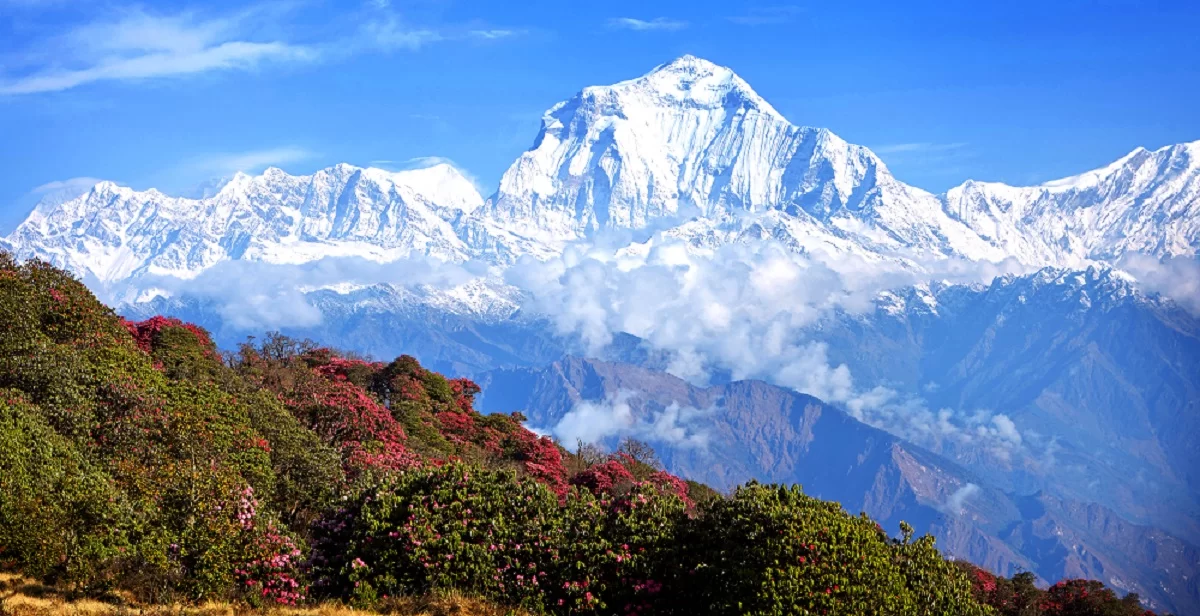
No other single production territory offers the range that India does. Desert systems that map to Arabia and Central Asia. Alpine environments credible for Switzerland and the Himalayas. Colonial street architecture that carries the British period brief. Tropical coastlines that stand in for Southeast Asia and the Mediterranean. Dense commercial skylines for contemporary East Asian urban sequences. A forest highland northeast for rural China and Japan. India does not replicate the world in approximation — it provides locations where the visual alignment is close enough to hold under production conditions, supported by a crew base and infrastructure that makes the execution manageable. Tropical island beaches and reefs in the Andaman and Nicobar Islands stand in for the Maldives, Thailand and the Pacific. Underneath that range sits one national execution base: line producers in India run crews, permits and multi-territory logistics across every environment on this page.
This page maps India’s visual range across the major global filming briefs. It is not a guide to execution mechanics; that is covered separately. It is a reference for productions at the brief stage, asking where in India a particular environment actually exists and what it can credibly double for. The environments below represent locations that have been used on productions, not theoretical matches. Each has been tested under camera and delivered results within professional production parameters.
Desert Worlds: Arabia, Central Asia and North Africa
Rajasthan is India’s most frequently used territory for Arabian and Central Asian desert briefs. The visual range within the state alone is considerable. The Sam dunes near Jaisalmer provide a rolling sand sea that reads as the Empty Quarter or Rub’ al Khali under wide framing. The scrubland and flat arid terrain between Barmer and the Pakistan border maps to the Gulf and southern Arabian Peninsula. The fortress architecture of Jaisalmer and Jodhpur carries the stone and ochre palette of North African and Middle Eastern built environments.
Rajasthan’s desert circuit is also one of the most operationally developed filming corridors in India, run day to day by a film fixer Rajasthan. The crew base is established, permit processes are understood, and the infrastructure between Jodhpur, Jaisalmer, Bikaner and Udaipur supports extended production schedules without the logistical friction that remote desert environments in other territories carry.

Ladakh and the Kutch Salt Flats
Beyond Rajasthan, Ladakh’s cold desert (barren rock, high-altitude plateau, salt flats and glacial terrain) maps to a different desert register: the high-altitude Central Asian plateau. Worked through a line producer Ladakh, the Nubra Valley dunes and the Pangong approach carry a visual logic consistent with the Xinjiang basin, the Afghan highland, and the high steppe. The Rann of Kutch in Gujarat provides a different register again: a white salt flat landscape with no equivalent elsewhere in India, credible for alien environment briefs, Middle Eastern salt pan sequences, and coastal desert settings.
The Rann of Kutch also produces a visual that nothing else in India replicates — a white salt flat extending to the horizon under a heat shimmer, with nothing breaking the frame. It has been used for alien environment sequences, apocalyptic landscape briefs, and any situation where a production needs a completely featureless, horizon-to-horizon flat white environment. It is one of the very few locations in South Asia that produces this register without post-production intervention.
European Environments: UK, France, Alpine and Mediterranean
India’s European brief is more fragmented than its desert brief — no single state carries the full range. The European environments are distributed across the country: colonial French architecture in Pondicherry, British Raj streetscapes in Kolkata, Portuguese heritage in Goa, Alpine terrain in Kashmir, and cliff-and-sea coastal geometry on the Kerala and Goa shorelines.
Pondicherry and Goa: French and Southern European Textures
Pondicherry’s French Quarter (the grid of yellow colonial buildings, shuttered facades, tree-lined boulevards, and Baroque Catholic church frontages along the seafront) is India’s most usable French stand-in. The architecture is maintained, the street scale is human, and the visual density of European texture in the Ville Blanche area is high enough to carry sequences without extensive set dressing. Goa’s Portuguese heritage districts, particularly in Old Goa and Fontainhas in Panaji, carry a different Southern European register: terracotta roof tiles, whitewashed church facades, and the compressed residential street character of a Portuguese colonial town.
Kolkata and Mumbai: British Period and Urban UK Textures
Kolkata is India’s most accurate UK stand-in. The BBD Bagh area and the streets around Dalhousie Square carry Victorian municipal architecture (classical facades, iron lamp standards, wide ceremonial roads lined with government buildings) that maps to British civic architecture of the 1880–1930 period more closely than any other South Asian city. We have used Kolkata to cheat British locations on productions where the brief called for pre-war UK street texture. The architecture carries it without extensive intervention.
Mumbai’s Fort district and the Chhatrapati Shivaji Maharaj Terminus precinct provide a different British register — high Victorian Gothic, ornate institutional facades, and a density of 19th-century commercial architecture that works for specific London and British city references under controlled framing. Both cities require strong sightline discipline: the surrounding modern urban environment is visible in any wide angle, and the European texture is concentrated in specific blocks rather than covering an entire district.

Kashmir: Alpine and Swiss Environment
Kashmir provides India’s Alpine brief. The Betaab Valley, the meadows above Pahalgam, and the pine-forest corridors approaching Gulmarg carry an environment with direct visual equivalence to the Swiss and Austrian Alpine, the case set out in full on Kashmir as a Switzerland stand-in. Snow cover, elevation, coniferous forest and the particular light quality at 2,500 metres combine to produce sequences that hold credibly for European mountain settings. The operational window is dictated by snow presence — typically November through March for winter briefs, June through September for green meadow work.
East Asian Settings: China, Japan, Korea and Southeast Asia
India’s East Asian brief divides into two distinct registers: contemporary commercial urban and rural or natural highland. The urban brief sits in the Delhi NCR corridor. The rural and highland brief sits entirely in the northeast. Neither is a comprehensive East Asian double, but both provide what productions need within a defined scope.
Gurugram and the NCR Corridor: Contemporary China and East Asian Urban
Gurugram’s Cyber City corridor, Golf Course Road, and the elevated NH-48 sections provide glass-tower commercial density that reads as contemporary Shenzhen, Chengdu, or generic East Asian financial district under mid-range framing. The skyline layering, highway geometry, and ambient lighting register all align with the Chinese commercial urban brief. The visual logic works best on tighter framing and in post-dusk lighting. Wide day exteriors require colour grade work to manage the sky signature.
The Noida Expressway corridor and the Delhi eastern fringe extend the urban East Asian brief into industrial territory — logistics hubs, highway infrastructure, and commercial periphery that reads as Chinese industrial zone without modification. Productions requiring both commercial skyline and industrial periphery sequences can cover both within a single Delhi NCR schedule.

Nagaland, Sikkim and Meghalaya: Rural China, Japan and Southeast Asian Highland
The northeast states provide a natural environment with no equivalent elsewhere in South Asia for the East Asian brief. Nagaland’s Dzukou Valley (rolling green hills, bamboo terrain, and mist at altitude) provides the closest available stand-in for rural Japanese and southern Chinese highland landscape. Sikkim’s pine forests and Buddhist monastery architecture work for Tibetan China and Bhutanese settings, part of the wider India stand-ins for China repertoire. Meghalaya’s living root bridge terrain and the Cherrapunji rainforest carry a wet subtropical forest register consistent with Guangxi and Yunnan.
The northeast also opens up Southeast Asian briefs. The vegetation character, building materials, and water-landscape integration in parts of Assam and Meghalaya provide visual alignment with northern Myanmar, Laos, and the highland regions of northern Thailand that peninsular India cannot match. Kolkata is the practical staging point for these shoots: it holds the nearest deep crew and equipment base, and units route through it for the flights, permits and overland legs into the northeast.
Tropical and Coastal Settings: Southeast Asia, Mediterranean and Island Environments
India’s coastal and tropical range is its most geographically varied brief category. The coastline runs from the arid Gujarat shore through the Konkan and Goa coast, down through Kerala to the tip of the subcontinent and across to the Andaman Islands. The visual registers within that range are distinct enough to cover multiple global briefs without overlap.

Kerala and the Andamans: Southeast Asian and Island Environments
Kerala’s backwater networks (the houseboats, palm-lined water channels, and stilt villages of Alleppey and Kumarakom) provide the closest available South Asian equivalent to Southeast Asian river and waterway environments. The vegetation density, water proximity, and building-in-landscape character of the Kerala backwater region maps to delta environments in Vietnam, Cambodia, and Indonesia under careful framing. The Andaman Islands extend this range: open ocean, clear-water tropical coastline, and beach environments that double for island settings across the Indian Ocean, Southeast Asia, and the Pacific brief, cleared on the ground by film fixers in the Andaman and Nicobar Islands.
Goa and Kerala Coast: Mediterranean and European Coastal Textures
Certain sections of the Goa and Kerala coastline (particularly the cliff-backed beaches of north Goa and the rocky cove geometry of Varkala in Kerala) carry a coastal visual that maps to the Mediterranean rather than the tropics. The combination of cliff, beach, and European colonial architecture in proximity is what makes the Pondicherry and Goa corridor one of the most used stand-in environments for productions requiring a Southern European coastal setting at Asian production cost, and film fixers in Goa handle the beach and heritage-lane clearances that make it shootable.
Urban Megacity Doubles: Gulf, Latin America and Generic Global Urban
India’s major cities carry a visual register that goes beyond their own identity. Mumbai’s scale, density and vertical residential architecture has been used for Gulf urban environments, Latin American mega-city contexts, and generic developing-world metropolis settings where the brief calls for high population density, mixed-use vertical development, and the visual language of a large city that has grown faster than its infrastructure. Delhi’s government zone and ceremonial boulevard architecture doubles for capital city sequences across multiple geographies.
Mumbai: Gulf Urban, Generic Megacity and Developing World Settings
Mumbai provides what almost no other city in the world provides for production: authentic, high-density, mixed-use urban texture at scale, fully permittable, with a resident film crew base that understands how to operate in a working city environment. The commercial districts double for Gulf urban. The dharavi textile district and the older residential neighbourhoods carry a human density and visual compression consistent with large city environments across Africa, the Middle East, and Southeast Asia. Mumbai is the most operationally tested filming city in Asia.
The Mumbai coastal fringe (the Marine Drive promenade, the Bandra–Worli Sea Link approaches, and the fishing village geometry at Versova and Madh Island) provides additional environments not available in any other Indian city; the full picture of how the city doubles for global settings sits in our Mumbai stand-in locations guide. The Arabian Sea coast carries a Gulf waterfront register at certain angles. The fishing harbour environments read as generic South and Southeast Asian coastal working communities. The sea-to-city visual of the Marine Drive arc has been used for generic Middle Eastern and South Asian urban waterfront sequences where the brief needs density meeting water.

Hyderabad: Technology Corridor and Contemporary South Asian Urban
Hyderabad’s HITEC City corridor provides a cleaner, less compressed version of the contemporary South Asian technology hub: glassed campuses, wide boulevard infrastructure, and commercial architecture that works for generic corporate and technology-sector settings without the density of Mumbai or the age of Delhi. It is also one of the more accessible cities for international productions establishing their India base, with direct international connectivity and a production services ecosystem built on decades of Telugu industry infrastructure, coordinated by resident line-producer and fixer teams that international productions base out of the city.

Why Productions Choose India for Global Stand-In Work
The visual range exists in many countries. What makes India specific is that the visual range exists within a single administrative and crew framework. A production shooting desert exteriors in Rajasthan, period street sequences in Kolkata, and commercial urban sequences in Gurugram is operating within one country, with one production company, one insurance framework, and one crew base. The logistics of moving between environments are domestic logistics (road, rail, and domestic air) rather than cross-border operations.
The cost differential is the secondary driver. India’s day rate structure for crew, art department, transport, and locations is substantially lower than equivalent operations in the territories being doubled. A Rajasthan desert shoot costs a fraction of an equivalent shoot in Saudi Arabia or the UAE, even before accounting for the access and permit complexity of the Gulf. A Kolkata period sequence costs a fraction of an equivalent UK shoot. The gap is wide enough that productions frequently choose the India double not as a compromise but as the preferred option.

Crew Depth and Production Scale
India’s crew base is not just large: it is experienced in the specific disciplines that international stand-in work requires. Art departments that have built Pakistani street sets, wardrobe departments that have managed Afghan military sequences, camera operators who have worked Northeast India for East Asian briefs. This experience exists within the existing crew pool in Mumbai, Delhi, Chennai, and Hyderabad. Productions do not arrive in India and train a crew for stand-in work. They hire a crew that has done it. When a production weighs that crew and infrastructure against shooting the original high-risk location, the trade-offs are set out in choosing India instead of a high-risk region. Our India desk coordinates across all these environments from a single pre-production base.
Permit Access and Production Control
India’s permit environment is complex but navigable. Monument access, government zone clearances, location fees, and state government NOCs all operate through established processes that experienced line producers manage as standard pre-production. The key distinction from many alternative territories is that permits in India are achievable — they require time and coordination but not political connections or risk tolerance. Productions can plan against a realistic permit timeline. In many of the territories India is standing in for, that planning certainty does not exist.
India’s environmental range also carries a specific advantage in post-production. When multiple global settings are shot within a single country, the colour science, lens character, and atmospheric light quality remain consistent across locations. Productions that shoot across Rajasthan, Kashmir, Kerala, and Kolkata within a single schedule are working in one light environment with manageable variation. Productions that shoot the same brief across four countries deal with colour grading inconsistencies that are visible at the grade stage and expensive to resolve.
India’s geographic range makes it the only production territory where this breadth of global environment (desert, European, East Asian, tropical, and urban megacity) exists within a single production framework, accessible to a single crew base without cross-border logistics. This national network maps a full execution footprint, from Mumbai and Delhi to the Northeast corridor and Ladakh.
