
I left Jaipur with another permission still unresolved.
We were arranging the Jaipur–Ajmer railway shoot for Haji Backpacker, but I also needed to get to Ajmer. Before leaving, I asked our production manager, Sushil Narera, to tell the railway DGM that I would return to thank him over dinner. The Falcon Pictures crew was due into Jaipur the next morning.
After the railway schedule, we had three more days of active filming, covering Ajmer and Pushkar. Permission to film inside the Dargah was still not secured.
This was not just another location on the schedule. The film’s journey reached its emotional conclusion there. I knew why we needed the scene. What I did not know was how I was going to get permission to shoot it.

Why This Scene Mattered
In the film, the pilgrimage brought the main character from Saudi Arabia to Ajmer. At the Dargah, he finds salvation and a sense of meaning after the journey that has brought him there.
That was the context I tried to explain to Salman Bhai.
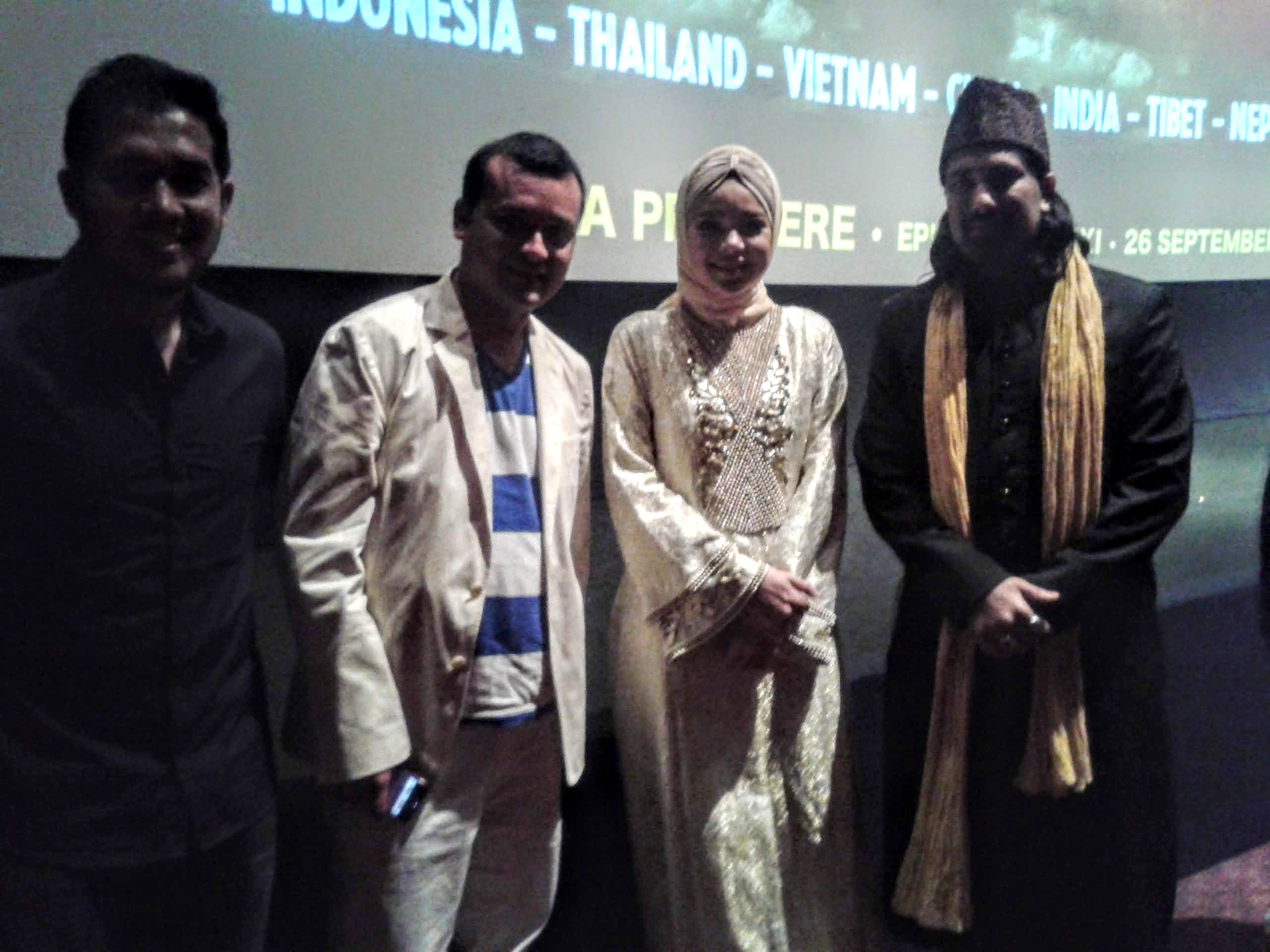
He was a speaker who understood the spiritual significance of the scene. I spoke to him about what the character was searching for and why this moment mattered to the film. He understood.
Salman Bhai was also chosen to appear in the sequence as the person who helps the main character reach that understanding. His connection to the scene was therefore more than a production arrangement. He would be part of the moment we were trying to put on screen.


This Time, Help Had to Come from Somewhere Else
Jaipur had given me an official who understood the production and helped me through the remaining formalities. Ajmer was different.
For our shoot, this was not an ASI filming application. We needed permission from the Dargah’s own management to film inside. Having the rest of the production arranged did not resolve that request. Without their approval, we could not shoot the scene that brought the film’s journey to its conclusion.
Dr Aadil at the Dargah Committee was the person whose sign-off we needed. From my side of the conversation, I felt I was getting nowhere. Permission remained unresolved, the shoot was approaching, and explaining the pressure we were under had not moved things forward.
I was back to the same admission.
I’m fucked. I need help.
This time, there was Salman Bhai.
At the final hour, he intervened and persuaded the authorities to allow us to film.
To put it as plainly as I felt it then: Salman Bhai helped unfuck the situation.
The credit for that intervention belongs to him. I had reached a point where I could not get it across the line myself. He helped us get there.


It would be unfair to remember Sushil only for the permissions that had not come through in time.
At that point, I had lost confidence in how the local arrangements were going. But during the shoot, he came through as a production manager, especially when plans changed at the last minute. We still had three days of filming after the railway schedule, including Ajmer and Pushkar, and his contribution deserves to be part of this account too.
Looking back at our production work in Ajmer and Pushkar, I remember both things: the pressure before the shoot and the people who helped us carry it through. Sushil was one of them.

The Beginning for Me
This was my entry into line production. I was learning the work while carrying the pressure of a production that needed answers.
What I remember is not a clever negotiating technique. It is the vulnerability of admitting that I needed help—and the gratitude when someone chose to give it.
The Dargah sequence was the ending of the film’s journey. For me, it marked a beginning.
There was no looking back after that.
This is Manav Paul’s recollection of the May 2014 production, not a current permission guide. For present-day planning, see our guide to filming permissions at religious sites in India.
