
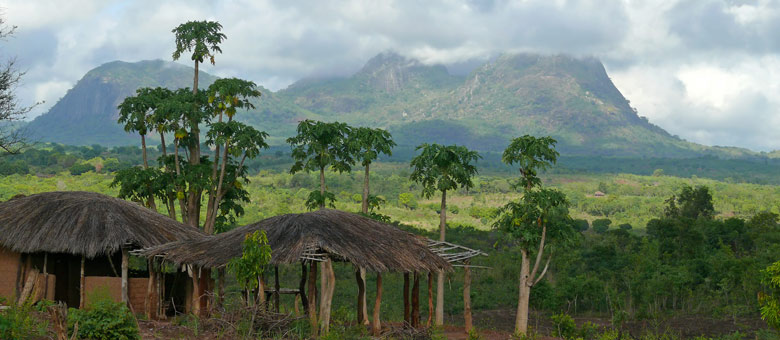
A Line Producer Mozambique engagement puts one accountable person over the budget, schedule, crew and permits for a film, commercial or documentary shoot on one of Africa’s most cinematic and less densely developed coastlines. Mozambique offers Maputo’s Portuguese-colonial and Art Deco streets, the island beaches and coral reefs of the Bazaruto and Quirimbas archipelagos, and the savannah and wildlife of Gorongosa National Park. Its local production market is smaller than established regional hubs, and it offers no automatic foreign-production cash rebate, so the real job of a Mozambique line-production team is to bridge world-class locations with a crew, equipment and permit chain that is largely imported and manually cleared.
It is worth being plain about the operating conditions. Mozambique runs no automatic foreign-production cash rebate, selected senior specialists and specialist kit may be brought in from the region, and equipment clears through a manual temporary-import process the customs broker confirms. Experienced film fixers in Mozambique plan around exactly those constraints: the permit lead times, the crew authorisation, the import paperwork and the season, so the shoot spends on the frame rather than on avoidable delay. Portuguese is the working language of the paperwork, which is one more reason inbound productions run through a local desk rather than direct.

What a Line Producer in Mozambique Runs on the Ground
Maputo is the base a Mozambique schedule is built around. The capital holds the country’s deepest pool of local crew, its production-service companies and its air links, and it is where a production assembles, clears its paperwork and stages its moves to the coast or the interior. A line producer in Mozambique holds the whole operation from there: a realistic budget that accounts for imported crew and kit, the INICC filming permit and location approvals, foreign-crew entry and work authorisation, equipment import, and a single point of accountability from recce to wrap.
The reason that single point matters more here than in an established market is that almost nothing runs on a fixed published clock. Permits, crew authorisation and temporary equipment imports are each manual and paperwork-heavy, processed separately, so project-specific local coordination is advisable. The value of an accountable desk is that it starts those tracks in prep, in the right order, so the shoot is not waiting on an import permit or a visa on the first setup day.

Film Fixers in Mozambique and Local Access
Local access is what separates a smooth Mozambique shoot from a stalled one, and it is the first thing film fixers in Mozambique earn their place on. A film fixer in Mozambique secures location sign-offs, liaises with INICC and the provincial and community authorities, arranges the Portuguese-language paperwork, and clears the practical obstacles between a permit and the shoot day, from private land and marine-park access to community coordination on the islands. On most shoots the line producer and the fixer network are the same desk, so the approvals, the access and the on-day problem-solving stay under one accountable line.
The limit is depth, not willingness. A film fixer Mozambique unit can staff the local layer and open the doors, but it may not supply every required head of department, specialist technician or item of rental inventory a full feature or high-end commercial needs. Those are planned in alongside the local layer, not after it, which is why the local access and the imported unit are scheduled together rather than in sequence.

Filming Locations Across Mozambique
Mozambique’s draw is a long Indian Ocean coastline and a handful of distinct location families within it. Maputo gives an unusual urban texture: Portuguese neoclassical architecture, Art Deco landmarks and 1970s brutalist buildings in a working port city, useful for period, character and commercial work that wants an African city without a generic skyline. The coast itself runs from accessible mainland beaches to the offshore archipelagos.
The Coast, the Islands and Gorongosa
The Bazaruto Archipelago offers palm-lined white-sand beaches, turquoise water, coral reefs and towering dunes; the Quirimbas Archipelago to the north adds mangrove channels, remote islands and some of the country’s best underwater settings. Inland, Gorongosa National Park gives rolling savannah and grassland with lions, elephants, hippos, zebra, buffalo and wildebeest for natural-history and wildlife work. It is a spread that covers beach, reef, island, wildlife and colonial-urban briefs, though the distances and the limited internal infrastructure mean the moves between them are a scheduling exercise a line producer plans early. Bazaruto, Quirimbas and Gorongosa are protected areas, so filming in them needs park or conservation-authority permission in addition to the national filming approval, and access to the Quirimbas and the wider Cabo Delgado province depends on current security advice, insurance and local-authority clearance.
That range suits commercials and fashion built around the coast, travel and hospitality content, natural-history and wildlife work, and features that want an untouched Indian Ocean look, which are the briefs Mozambique wins.
Where Mozambique forms one leg of a wider East or Southern African schedule, the line producer Africa hub compares the territory with Kenya and South Africa and maps the crew, permit and equipment hand-offs between countries.

Permits, Crew Authorisation and Equipment Import
Film permissions run through Mozambique’s national cultural and creative industries authority, INICC (Instituto Nacional das Indústrias Culturais e Criativas), which absorbed the former Instituto Nacional de Audiovisual e Cinema (INAC) in a sector reform, under the Audiovisual and Cinema Law of 2017; the exact filing route is worth confirming with a local partner before a shoot locks. An application carries the purpose of the filming, the locations and dates, a synopsis or script, and the crew details, and script or synopsis submission is a real step to build into the schedule rather than discover late.
Two more tracks sit alongside the filming permit. Foreign crew members may need entry visas and work authorisation depending on their nationality, role, length of stay and employer. This must be confirmed case by case and treated as a lead-time item rather than a same-week fix. On equipment, the customs broker should confirm whether the shipment travels on a home-issued ATA Carnet or another temporary-admission procedure. Any bond, deposit, guarantee and re-export documentation depend on the selected route and port of entry, and are planned as a cashflow and lead-time item. Drone and aerial work is licensed separately by the civil aviation authority, IACM (Instituto de Aviação Civil de Moçambique). Each track is processed separately, but the filming, crew-entry, equipment-import and aerial applications can begin alongside one another during preparation, so none surfaces late as a schedule risk.

Cost and the No-Rebate Reality
Mozambique operates no automatic foreign-production cash rebate or screen tax credit. Domestic cultural funding exists, but it should not be budgeted as a foreign service-production rebate. General investment incentives follow separate project and company rules and should not be treated as a filming incentive.
What controls a Mozambique budget is the mix of local versus imported crew, how much specialist kit has to travel and clear customs, the season the shoot lands in, and the length of the internal moves between the coast, the islands and the interior. The season is a real lever: the dry months from roughly May to October are the reliable shooting window, while the November-to-April wet season brings heavy rain and cyclone risk on the coast that a schedule has to plan around. Where a project is comparing markets on incentives, Mozambique sits within a wider global picture of widely varying schemes.
Regional crew and equipment are frequently drawn from the wider Southern African market, and the same route runs through one global line production network rather than a separate vendor in each country, which keeps a Mozambique unit lean and senior. The honest framing is that Mozambique competes on unique coastline, islands and wildlife, not on a financial incentive, and a line producer builds the budget on those verifiable levers so the number a producer carries is the one they can actually hold.

Engaging a Line Producer in Mozambique
Mozambique gives you locations few markets can match, but it asks for tight control of permits, crew authorisation, equipment import and crew travel in return, and that control is what production services in Mozambique exist to provide. Most enquiries arrive as a location list and a date range, and the work is turning that into a permit path, a crew plan and a costed number a producer can hold. What a Mozambique production team adds is a realistic budget, cleared INICC and location permissions, foreign-crew entry and work authorisation, vetted local and imported crew, and a single point of accountability from recce to wrap.
Share your script, locations and dates, and Global Producers will return with a costed plan and the permit path to match.
Frequently Asked Questions
Does Mozambique offer a film rebate or tax incentive?
Mozambique has no automatic foreign-production cash rebate or screen tax credit. Some domestic cultural funding exists but is aimed at local production, not foreign service work, so a Mozambique budget is modelled on real cost levers rather than an expected refund.
Who issues film permits in Mozambique?
Film permissions run through the national cultural and creative industries authority, INICC, under the Audiovisual and Cinema Law of 2017. An application covers the purpose, locations, dates, a synopsis or script and the crew, and foreign crew members may also need entry visas and work authorisation depending on nationality, role and length of stay.
Can I bring equipment in on an ATA Carnet?
It depends on the shipment and its origin. The customs broker should confirm whether it travels on a home-issued ATA Carnet or another temporary-admission procedure; any bond, deposit, guarantee and re-export documentation depend on the selected route and port of entry, so the import is planned as a cashflow and lead-time item from the start.
