
A line producer Tokyo engagement coordinates the budget, schedule, contracts and reporting for an international shoot in the capital, while film fixers in Tokyo coordinate location access, ward and police liaison and daily logistics. Tokyo permits are location-specific and run through ward offices, police stations and private owners, so both functions are established before travel. This guide covers the permit route, crews, studios and equipment, costs, and how Tokyo sits within a wider Japan schedule, with the national subsidy rules held on the separate IP360 guide.
What Filming in Tokyo Actually Demands
Some of the most famous Tokyo scenes in cinema were never shot in Tokyo. The Fast and the Furious: Tokyo Drift rebuilt Shibuya on American sound stages, and Bullet Train staged its Japan almost entirely in Los Angeles, because getting a large foreign unit into the real city, legally and on schedule, is genuinely hard. Lost in Translation did the opposite, shooting the actual Park Hyatt and the real streets of Daikanyama, and it is remembered for exactly that authenticity. That gap, between faking Tokyo and shooting the real thing, is in practice what a line producer in Tokyo delivers.
For an Indian film, OTT series or premium commercial, Tokyo offers backdrops that cannot be faked convincingly and cannot be accessed casually. The permits run through local police and ward offices, the incentive money runs through a Japanese company, and the crew pool that can bridge an English-speaking production is small and busy. Every one of those is a point where a shoot either holds together or comes apart on the day, and every one of them is what ground execution in the city is actually for.
Ground execution is a specific list, not a vibe: securing the permits, qualifying for and reconciling the incentive, sourcing and structuring crew, importing or hiring equipment, and building a budget that survives contact with the city. An Indian production that lands with only a shot list and a hotel booking meets each of these as a separate crisis; one that lands with them already solved shoots the frames it came for and leaves on schedule.
A City That Needs Its Own Plan
Tokyo concentrates all of this more intensely than anywhere else in Japan. It is where the crew, the studios and the permits are densest, where the most desirable and most restricted locations sit side by side, and where an international production spends the largest share of its Japanese budget. Getting Tokyo right is most of getting Japan right, which is why the city earns a dedicated plan within the remit of a line producer in Japan rather than a passing mention in a national schedule.

How Permits and Police Coordination Work in Tokyo
The Ward-and-Police Approval Chain
Tokyo does not issue film permits from a single desk. Approval is assembled ward by ward: a street scene can need sign-off from the local ward office, the neighbourhood police station and, for anything on a public road, a road-use permit issued by the police chief. Each body decides on its own, and consent in one ward carries no weight in the next. Park permits, rooftop permissions, traffic and crowd-management plans and night-filming limits are all separate approvals layered on top.
Tokyo Location Box, run by the Tokyo Film Commission, is the city’s support and liaison body for filming: it provides location information, guidance on road-use and public-space procedures and liaison with the relevant authorities. The production’s own coordination with ward offices, police stations and private owners still has to be prepared and sequenced, which is why a film fixer in Tokyo is engaged for the local coordination that coordinates the applications and access process through to the decisions issued by the relevant authorities and property owners.

The Permits Behind a Single Scene
A single ambitious scene can touch half a dozen separate approvals. A drone shot needs its own aviation clearance; a park needs a park-use permit; a rooftop needs the owner’s written permission; a night shoot runs against noise and lighting limits; a crowd scene needs a management plan the police will scrutinise. Each is a distinct application on its own timeline, and a Tokyo schedule is really a stack of these clocks running at once, which is why the paperwork begins long before the crew is booked.
The Hardest Locations, and How Access Is Won
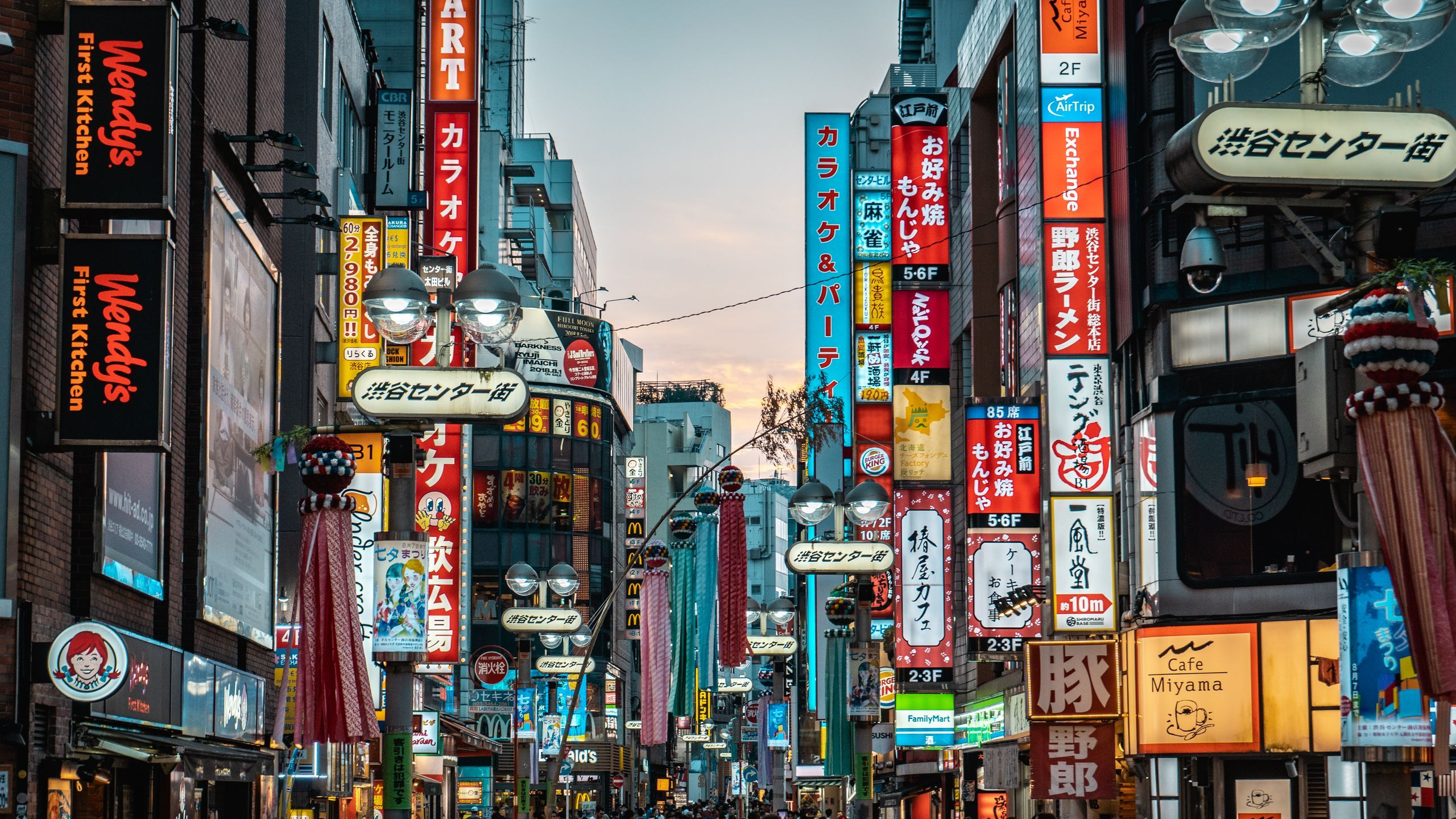
The city’s signature locations are also its most guarded. Shibuya, Shinjuku, Akihabara and Roppongi are the hardest wards to clear, and road-use permission around Shibuya Station is difficult to obtain for a controlled shoot; street filming in Shinjuku runs through Shinjuku Ward on its own terms. Access to these places depends on realistic requests, complete applications and a willingness to work the early-morning windows when a crossing or a station concourse is quiet enough to control.
There is a social layer beneath the paperwork. A Tokyo permit is not only city hall; it is the residents and businesses whose street or building a crew occupies, and their goodwill is part of the approval in practice if not on paper. Productions that treat neighbours as obstacles find the next permit harder; those that manage presence quietly, keep to agreed hours and leave a location as they found it build the reputation that makes the following shoot possible.

Permit Planning Allowances: What the Office Plans For
Tokyo Location Box states that road-use permits are generally issued within three to five days of a complete submission. Our office nonetheless plans ten to fourteen weeks for feature-scale location planning where a schedule combines public roads, several ward authorities, private owners and consultation, because it is the overall sequence of consultations and permissions, not the police permit itself, that sets when pre-production has to begin. Actual lead times depend on the location, activity, authority and completeness of the application.
A two-day shoot with a road scene and a rooftop typically means the coordinator filing with the ward and the police weeks ahead, a separate road-use application, private permission from the building owner, and a contingency for the station that declines because the type of shoot has no local precedent. These approvals may progress on different timelines, and sequencing them so an early refusal does not collapse a later day is the core of the work.
None of that lead time is padding. A permit returned with conditions, a ward that needs a second meeting, a residents’ association that wants assurances, or a police request to move a shoot by an hour all eat into the calendar, and they arrive without warning. Building the schedule with slack for these, rather than assuming a clean first pass, is what separates a Tokyo shoot that finishes on time from one that spends its contingency in the first fortnight.
Film Fixer Tokyo or Line Producer: Which a Shoot Needs
The terms line producer and film fixer are often used interchangeably here, and the overlap is real, but the scope differs. Film fixers in Tokyo typically handle location access, permits, local crew and on-the-ground problem-solving for a specific shoot. Line production in Tokyo carries all of that plus the budget, the contracts, the incentive documentation and accountability for the production as a whole. A short commercial may need only a fixer; a feature or a multi-city OTT schedule needs the fuller line-production scope. On many Tokyo jobs the same team provides both, scaling the engagement to what the production actually requires rather than to a title.
What a Tokyo Shoot Costs and How It Is Structured
The 50% Incentive and the Japanese-Entity Rule
Japan’s headline incentive is a subsidy of up to 50% of eligible spend under the METI IP360 programme, administered through the Japan Arts Council and capped at ¥1.5 billion per project. The catch that shapes every Tokyo budget is that only a Japanese company can apply; a foreign producer cannot claim it directly. The subsidy reaches an overseas production through a qualifying Japanese applicant that applies in a scheduled call and accounts for the spend to standard. For the current cap, Japanese-applicant requirements and application-call schedule, see the Japan film subsidy guide.
Separately from national IP360, the Tokyo Metropolitan Government and Tokyo Convention & Visitors Bureau run a 2026 to 2027 International Content Production Support Program grant for films to be released overseas: up to 50% of eligible shooting expenses, capped at ¥10 million per group, with a Japanese corporate applicant, five or more planned Tokyo shooting days, a full-length film of 60 minutes or more, approximately 60% or more of the programme’s length being live action requiring shooting, and a confirmed or planned release outside Japan within three years. It is a city grant with its own review terms and does not form part of the national subsidy, so the two are modelled as distinct lines.
The thresholds are real: selection requires at least ¥800 million of domestic production expenditure, a Japanese applicant with qualifying past-project sales of at least ¥1 billion, and committed financing of at least 50% of the domestic spend. Most single-city commercials and OTT episodes sit below that line, which means the honest first answer is often that the subsidy does not apply, and the budget stands on its own. Japan’s 50% is generous but narrowly gated, and knowing which side of the gate a project falls on is a day-one conversation, not an afterthought.
For projects that do clear the thresholds, the structure is decided early. Either a qualifying co-production or an entrustment arrangement may be used when it satisfies the current IP360 requirements; neither unlocks the subsidy automatically, and the appropriate structure depends on creative control, contracting, rights, cost booking and the responsibilities assigned to the Japanese applicant. That judgement belongs in the first budget conversation rather than the last.

Crew, Studios and Equipment
Tokyo has experienced technicians, while bilingual availability, studio space and specialist departments must be confirmed for the production dates. Line production services in Tokyo exist to solve exactly this: deciding which roles to fill locally and which to bring in, booking stage space against a tight calendar, and bridging a mixed unit so it works as one team. Where international crew are required, the production plan accounts for the applicable entry status, travel, accommodation and local liaison.
A line producer’s fee buys more than coordination. It covers the budget that models every one of these costs before they are committed, the vendor and crew contracts, the insurance and completion cover a serious shoot needs, and a single point of accountability when a location, a permit or a supplier moves. On the Tokyo units we run, that scope is deliberately broad, because the moment responsibility fragments between a producer abroad and a coordinator on the ground, small gaps quickly become expensive ones.
Equipment follows the same logic. Camera and grip packages either arrive under an ATA carnet or are hired locally, and each route trades cost against customs time and the familiarity a visiting cinematographer needs. Moving between locations means vehicle-access permits that differ by ward and booking around Tokyo’s traffic and parking constraints. These are the unglamorous decisions where a line production company in Tokyo either protects a schedule or lets it slip.
Day Rates and What Drives Them
Day rates in Tokyo are driven less by a headline figure than by what surrounds each shooting day. Tokyo budgets reflect crew, overtime, location supervision, transport, translation, permits and any imported personnel or equipment, and a realistic Tokyo day costs more than the equivalent in a lower-cost Asian market. A credible budget prices the whole day, supervision and contingency included, not just the crew line, and a line producer in Tokyo reconciles those costs with the permit schedule and, where applicable, the Japanese applicant’s subsidy documentation.
Finishing is worth planning early too. Post-production carried out in Japan can count toward the incentive where a project qualifies, which occasionally shifts where an edit or grade is done, and Tokyo’s facilities are capable of a full finish. For most Indian productions the edit returns home, but that is a budget and subsidy question rather than a default, and it is far cheaper to settle in prep than to renegotiate in the grade.
Where the Budget Is Won or Lost
Tokyo is not a low-cost city. Costs reflect crew, overtime, location supervision, transport, translation, permits and any imported personnel or equipment, and a budget that pretends otherwise fails on the first day. What the city returns for the premium is a disciplined, well-supervised shooting environment. A credible Tokyo budget is the one document where the permit timeline, the crew mix and, where it applies, the subsidy are reconciled into a number a producer can actually commit to.

How Indian Productions Have Used Tokyo
From Love in Tokyo to the Streaming Era
Indian cinema has been coming to Tokyo since the 1966 classic Love in Tokyo shot across Tokyo Tower, Ginza and Ueno. The habit never really stopped: Tamasha closed on the atrium of the Tokyo International Forum, and a run of Hindi productions have used the bullet train, the Shinjuku neon and the contemporary skyline as the frames that mark a story’s turn. The pattern is consistent, and it matches how international productions use the city generally, a few unmistakable Tokyo images anchoring a film whose schedule is largely built elsewhere. Film production services in Tokyo are geared to exactly that brief, delivering a handful of decisive days rather than a long and costly occupation of the city.
A District-by-District Read
Each Tokyo district reads differently on camera, and casting the city is part of the job. Shibuya supplies youth, crowds and the crossing that signals Tokyo instantly; Shinjuku brings nightlife, neon and the salaryman world after dark; Ginza reads as luxury and restraint; Akihabara is technology and subculture; and Marunouchi and the surrounding business districts give the corporate and financial backdrops that brand and tech films reach for. Knowing which ward will actually permit which of these, and at what hour, is the difference between a location on a mood board and a location on a call sheet. How productions weigh these locations against one another is set out in our PDF guide, How Global Productions Choose Locations in 2026.
Tokyo Districts at a Glance: An Office Planning Assessment
| District | Best for on camera | Permit difficulty | Key access driver |
|---|---|---|---|
| Shibuya | Youth, crowds, the crossing | Very high | Crowd control and early-morning windows |
| Shinjuku | Nightlife and neon after dark | High | Night limits and Shinjuku Ward sign-off |
| Ginza | Luxury and restraint | Moderate to high | Business consent and limited street access |
| Akihabara | Technology and subculture | Moderate | Crowd density and shopfront permissions |
| Marunouchi | Corporate, finance and tech | Moderate | Building-owner permission over public permits |
| Roppongi | Nightlife and mixed-use | High | Congestion and district sensitivities |
Season is a planning axis in Tokyo as much as a location. Cherry blossom and autumn colour are narrow, heavily contested windows that can define a film’s look but compress a schedule into days; summer humidity and the typhoon season carry their own risks; and the clear light of late autumn and winter is often the most reliable for a controlled urban shoot. A scene written for blossom and scheduled a week late simply does not exist, so the calendar is built around these windows rather than against them.

Tokyo, Kyoto and Osaka: Choosing the Right Base
Tokyo as the Control Hub
For most Indian productions, Tokyo is the logistics and control hub of a Japanese shoot even when it is not the only location. It carries the strongest crew base, the widest range of contemporary backdrops and the transport links that connect it to the rest of the country. A line producer Tokyo engagement can anchor Tokyo and Kanto work from the city; Kyoto or Osaka normally require dedicated travel, accommodation and local operating days rather than being run as day trips from a Tokyo base, so a multi-city schedule is planned as distinct legs under one budget rather than as excursions.
The case for Tokyo as the base is practical as much as creative. Its studio infrastructure is the deepest in the country, its crew pool the widest, and the bullet train puts Kyoto, Osaka and much of Honshu within a day’s reach, so a unit can hold its equipment and key crew in one place and travel out for specific frames. Running three full bases at once multiplies cost and coordination for little gain; a single Tokyo hub with dedicated legs for Kyoto or Osaka, each with its own travel and operating days, is usually the more efficient shape.
Kyoto and Osaka as Complements
Kyoto is historic Japan without set dressing, and temple and shrine filming there needs private approval from each administration, with location-specific conditions that often include early-morning slots and conduct requirements. Osaka is the pragmatic complement, offering grittier urban energy and its own municipal permit route; access, coordination timing and supervision costs are confirmed for the specific locations and dates rather than assumed to be easier than Tokyo.

How a production weighs these cities against each other, and against cheaper Asian markets across the Asia Film Production Corridor, is a genuine strategic question rather than a matter of taste. The short version for Japan is that Tokyo earns the base, Kyoto earns the heritage frames, and Osaka earns its own operating days, and a single budget holds all three together.
In practice the three cities divide by strength rather than competing. Tokyo holds the base, the crew and the contemporary frames; Kyoto is reserved for the heritage sequences that justify its slower, relationship-led access; and Osaka takes the urban sequences that suit its character, each with its own travel and operating days. A single line producer holding all three keeps the equipment, the crew continuity and the budget consistent as the unit moves, which is what stops a multi-city Japanese shoot from fragmenting into three separate productions.

Where Tokyo Fits in a Japan and Asia Strategy
Tokyo is rarely a whole production on its own. It is the most tightly controlled urban layer of a larger plan, and it works best coordinated with the rest of the country and the region rather than run in isolation. That coordination, holding a single budget and schedule across a Tokyo leg and everything around it, is precisely what national-scale line production is retained to run.
The failure mode is familiar. A production assumes Tokyo can be negotiated on arrival the way some markets can, discovers that permits, temple access and prime locations run on lead times and relationships it does not have, and either compresses a ten-week process into three or rebuilds the city on a set at home instead. The first route loses days and money; the second loses the authenticity that was the reason to come. Both are avoidable, and avoiding them is the whole point of local execution.
When Tokyo Is the Right Call
Tokyo is the right base when the look depends on authentic contemporary density that no set reproduces, when a client requires an audit-ready execution standard rather than the lowest day-rate, and when the shoot can absorb the lead time the city’s permits demand. Where a project is high-volume, cost-led and visually flexible, a cheaper market usually wins. Experienced film fixers in Tokyo will say so plainly, because the point is fit, not prestige.
For an Indian production planning regionally, Tokyo connects outward through the line producer Asia network, with the country’s national coordination and India-based line production sitting behind it for budgeting and compliance. Handled that way, Tokyo becomes one dependable layer of an Asia strategy rather than the intimidating part of it.
