
What Does a Line Producer in Abu Dhabi Do?
A line producer in Abu Dhabi manages production budgets, crew hiring, filming permits, rebate qualification, equipment logistics, customs clearance, local vendors and day-to-day production management. The rebate that draws many of them, a 35 percent cashback that rises to 50 percent, is set out in full in our Abu Dhabi film rebates and incentives guide. On the ground, film fixers in Abu Dhabi handle the same brief of permits, crew, twofour54 clearances and vendor management, packaged into the film production services Abu Dhabi shoots budget against. International productions typically appoint a local line producer or film fixer in Abu Dhabi to access the Abu Dhabi Film Commission permit process and maximise eligibility for the emirate’s cash rebate. Whether the project is a feature, an OTT series or a commercial, the line producer is the single point of accountability for delivering the shoot on budget and on schedule.
Abu Dhabi offers a 35% standard cashback rebate on qualifying Abu Dhabi production expenditure, with up to 50% for eligible enhanced-rebate projects, subject to the project format, points criteria, ADFC approval and final audit. It is one of the region’s highest published production incentives. The rebate is administered by the Abu Dhabi Film Commission, and applicants use a Creative Media Authority-registered local entity or partner; the base rate rose to 35% from 30% for productions applying from January 2025.

Abu Dhabi Film Production at a Glance
| Feature | Abu Dhabi |
|---|---|
| Cash rebate | 35% standard, up to 50% for eligible enhanced projects |
| Minimum spend | US$25k to US$200k by format |
| Rebate cap | US$500k to US$10M by format |
| Studios | twofour54, Yas Island |
| Permits | ADFC coordination; CMA approvals apply |
| Equipment | Media-equipment entry permit; temporary admission (carnet restricted) |
| Best for | Features, OTT series, commercials |
Line Production in Abu Dhabi: The Policy-Structured Production Market
Abu Dhabi’s position in global film production is not the result of location appeal alone. The emirate has been systematically engineered as a production jurisdiction, a territory where the regulatory framework, financial incentive architecture, and institutional infrastructure exist specifically to support international film and commercial production at scale. This distinction matters operationally. A location provides visual value. A jurisdiction provides predictability, and predictability is what determines whether a production can be budgeted, scheduled, and delivered with confidence. Abu Dhabi sits within the wider region mapped in our Middle East film incentives guide.
Abu Dhabi has hosted large international units for over a decade, from Mission: Impossible and Star Wars to Fast and Furious, which showed the emirate could absorb premium production at scale. The Abu Dhabi Film Commission, established in 2009, and twofour54 anchor a production environment that has moved from occasional facilitation to a standing service base. Many international units still enter the UAE through Dubai, but Abu Dhabi increasingly anchors the shoot itself: the rebate, the twofour54 studios and a compact location grid make it the production base rather than only the incentive-backed leg of a schedule that film fixers in the UAE run from Dubai.

How Abu Dhabi Became a Production Jurisdiction Rather Than a Location
Abu Dhabi is set up so that international productions have a facilitating point of contact rather than being left to approach every body independently. The Abu Dhabi Film Commission helps coordinate the approvals a shoot needs, but it is a facilitator rather than the sole authority. Depending on the project, content, ground, aerial and location approvals can involve the Creative Media Authority, the UAE Media Council, the police, civil defence, environmental and heritage authorities, and the owners of specific sites.
This coordination does not remove complexity. Large-scale productions involving road closures, restricted airspace, or sensitive heritage locations still require significant lead time and detailed application preparation. What a facilitating point of contact helps with is sequencing the different approvals a shoot needs, so they are planned rather than discovered late. For a line producer building a schedule, that visibility supports tighter location locks and a more reliable pre-production calendar, though the timelines still depend on the authorities involved.
twofour54 Studios, Abu Dhabi Film Commission and Production Support
The twofour54 campus in Abu Dhabi functions as the operational anchor for the emirate’s production ecosystem. Beyond its physical facilities, which include a large soundstage, production offices, editing suites, colour grading, and sound mixing capability, twofour54 provides institutional continuity for the production community. Crew trained through twofour54 programmes are registered, vetted, and accustomed to international workflow standards. Equipment suppliers operating out of the campus are integrated into the rebate documentation system. The post-production facilities are pre-approved as qualifying spend categories for the rebate programme.
For a line producer, this integration has a practical consequence: the administrative work of rebate compliance, vendor qualification, invoice formatting, audit-ready documentation, is substantially easier when the production is built around the twofour54 ecosystem than when it is assembled from scratch through individual vendor relationships. Productions that engage the broader line producer Middle East network, which covers Abu Dhabi as part of the Gulf and MENA production corridor, benefit from existing vendor relationships, rebate processing familiarity, and crew pipelines that reduce both cost and lead time on Abu Dhabi projects.

The Abu Dhabi Film Rebate, in Brief
The rebate is the reason many international productions look at Abu Dhabi, and a line producer’s job is to build the budget so the project earns as much of it as possible. In brief, the emirate pays a 35 percent cashback on qualifying Abu Dhabi spend as a base, rising to as much as 50 percent through an enhanced points system, on top of a UAE tax position with no personal income tax, though corporate tax and VAT can apply, so productions should take UAE tax advice.
The full mechanics, the points that lift the rate, the caps, the qualifying-spend rules and the application process, are set out on our Abu Dhabi film rebates and incentives page. On the ground the line producer sets up the local entity, tracks the spend against the eligible categories, protects the points score through the crewing and post decisions, and runs the audited claim through to the cashback.
Why Hire a Local Line Producer in Abu Dhabi?
The commercial reason international productions engage a local line producer in Abu Dhabi is that the value of the rebate is only realised through disciplined local execution. A local line producer handles rebate compliance and qualifying-spend structuring, vendor sourcing, filming permits, budgeting, customs clearance, payroll, location management, crew hiring and government liaison, the operational layer that turns a headline incentive into cash actually recovered. For Abu Dhabi film production specifically, that means structuring the budget around UAE-registered vendors and the twofour54 ecosystem before contracts are signed, since qualifying spend with licensed Abu Dhabi vendors can count toward ADQPE while also lowering cost, subject to the rebate guidelines and audit.
On multi-territory shoots, an experienced Abu Dhabi fixer also coordinates the emirate’s leg with international co-production planning across borders. Well-connected film fixers in Abu Dhabi carry the vendor, permit and location contacts that keep a production company’s schedule moving day to day.

Locations, Crew, Studios and Equipment in Abu Dhabi
Abu Dhabi’s location palette is more varied than its reputation as a desert and skyline territory suggests. The emirate can represent Gulf contemporary, ancient Middle Eastern and generic arid-landscape settings within a production-viable distance of a single base, from mountain and flat desert to coastline, heritage architecture and a modern city. The deep desert around Liwa and the Empty Quarter, used by Star Wars and Dune, sits further out, roughly 2.5 to 3 hours by road from the city, and is planned into the schedule accordingly.
What makes Abu Dhabi operationally distinct from other territories with comparable geographic range is the infrastructure connecting those environments. Roads are reliable, freight logistics are organised, and equipment movement between locations does not require the improvised logistics solutions that characterise production in less-developed territories. A line producer scheduling a multi-location shoot in Abu Dhabi can build a realistic call sheet without the contingency padding that remote or infrastructure-poor environments require.
The Location Palette, What Abu Dhabi Can Stand In For and What It Cannot
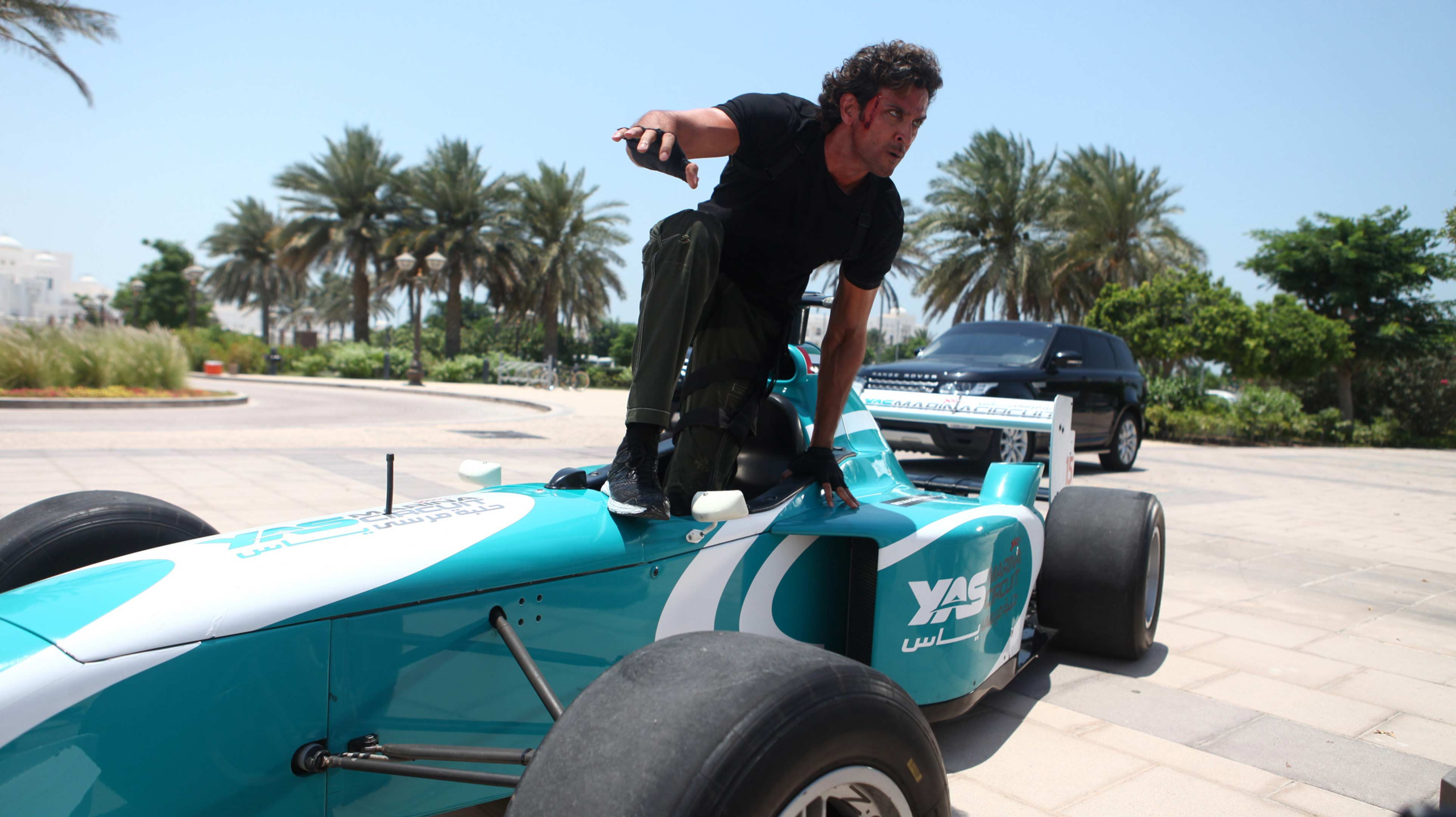
The Empty Quarter desert south of the city offers a scale of dune formation that few other filming environments match, it has been used to represent the Sahara, the Arabian Peninsula, and fictional arid landscapes across multiple international productions. The fossil dunes at Al Wathba provide a visually distinct desert texture suited to period and science fiction productions. Yas Island and the Formula 1 circuit have hosted automotive campaigns and action sequences requiring controlled high-speed environments. The heritage village at Al Ain and the old souk districts in the city centre provide period and cultural settings for Gulf and wider Middle Eastern looks. The Corniche coastline and Saadiyat Island’s beach and cultural infrastructure provide contemporary Gulf coastal environments.
What Abu Dhabi cannot easily stand in for is dense urban poverty, South Asian or East Asian visual environments, or European architectural settings. Productions requiring those visual environments will find Jordan, Morocco, or India better suited regardless of Abu Dhabi’s incentive advantages.

Crew Ecosystem, twofour54 Studios and Equipment Infrastructure
twofour54 anchors the ecosystem with studio space, production offices and post-production facilities, including grading, sound and editing, and Abu Dhabi has the local crew and equipment suppliers to service international productions. The scale and specification a given project needs are worth confirming with the facility for that shoot, but the base exists to mount premium commercial and feature work.
Crew Base and Department Heads
The resident crew community in Abu Dhabi is built around a core of multilingual professionals, Arabic, English, and French-speaking, who have worked across the productions that have used the emirate over the past fifteen years. Grip, lighting, camera, locations, art department, and transport crew are available without international import. Department heads in the Abu Dhabi market have typically worked on large international productions and are accustomed to studio-standard safety protocols, digital workflow requirements, and the documentation demands of rebate-eligible productions. For departments requiring specialist expertise, underwater, aerial, complex stunts, the regional network that connects Abu Dhabi to the broader Gulf and Indian production corridor provides access to specialists without the logistics cost of flying them from Europe or North America, coordinated through disciplined multi-country budgeting.
In practice the split is predictable. Abu Dhabi offers local crew and supplier options across grip, lighting, camera assist, locations, art-department labour, transport and production support, with experienced department heads for most formats; specialist staffing is best scoped per department and schedule. What still travels in is the senior creative and specialist layer: on a large feature the cinematographer, production designer, or a stunt or underwater unit will often come from Europe or India, and the same corridors feed second-unit and high-end VFX work. Local film fixers in Abu Dhabi hold the vendor and location relationships that keep that split working, and a line producer budgets around drawing the line correctly, and eligible expenditure with appropriately licensed Abu Dhabi suppliers can count toward ADQPE, subject to the rebate guidelines and audit.
Studios and Equipment Infrastructure
Equipment rental infrastructure on and adjacent to the twofour54 campus covers professional cinema camera systems, lighting packages, grip and rigging, generators, and specialty vehicles. Rental from UAE-registered houses qualifies for the rebate programme, which creates an additional financial incentive for productions to source locally rather than importing. For productions that must import specialist equipment, clearance timing depends on the consignment, equipment-entry requirements, customs documentation, and any additional permits.

Permits, Visas, Customs and On-Ground Compliance
Abu Dhabi’s compliance framework is a practical advantage of producing in the emirate because there is a facilitating point of contact rather than a production being left to approach every body alone. A shoot still needs approvals from the relevant authorities, content, ground, aerial, location and, where applicable, security, but the Abu Dhabi Film Commission helps coordinate and sequence them. For a line producer that means the approvals a schedule depends on can be planned in prep rather than discovered late.
This supports schedule reliability. A line producer building a shooting schedule in Abu Dhabi can plan realistic lock dates once the required approvals are mapped, though the timelines themselves depend on the content, the locations and the authorities involved and should be confirmed for the specific project rather than assumed.
Permits and Approvals
The Abu Dhabi Film Commission is the coordinating and facilitating partner for a shoot, not the sole legal authority. Depending on the project, approvals can involve the Creative Media Authority for content approval, the UAE Media Council for feature script approval, the owners of private locations, and other relevant authorities for specific sites or activities. A complete permit application typically sets out the locations, a shot or script breakdown, the equipment and crew lists, insurance, and proof of a registered local entity. Timelines and requirements should be confirmed for the specific location, content and crew rather than assumed, which is one of the things a local line producer manages in prep. The full sequence, including how the Abu Dhabi route differs from Dubai’s, is set out in our guide to filming permits in Dubai and Abu Dhabi.

Aerial and Sensitive-Location Filming
Aerial and drone work, and filming at sensitive or government-controlled locations, need content approval from the Creative Media Authority and an aerial-filming No Objection Certificate, with further approvals from the relevant aviation and site authorities depending on the location and the flight. The exact rules, restrictions and lead times are set by those authorities and should be confirmed in writing for the specific project before it is scheduled.
Equipment Import and Crew Authorisation
Visiting productions bring equipment in under the applicable media-equipment entry process. An ATA Carnet is not the default route here: filming equipment is not generally accepted into the UAE on a carnet unless it is tied to a recognised event with prior permission from the relevant authority, so most units clear kit as a temporary admission against refundable customs and VAT deposits, returned on re-export. Specialist items such as pyrotechnics, weapon props, large drones and radio-frequency equipment need advance declaration and separate permits. Clearance times depend on the consignment and the approvals involved, so lead times are confirmed per shipment rather than assumed.
International cast and crew need the correct work authorisation and entry permits to work in Abu Dhabi. Confirm the current work-authorisation and entry requirements with the relevant UAE authority and a licensed local applicant before travel, and treat compliance as an audit criterion where the rebate programme is active. A local line producer arranges the appropriate permits against the production’s registered entity.
Abu Dhabi Film Production: Frequently Asked Questions
How long do Abu Dhabi filming permits take?
Permit timing depends on the content, location, authority approvals, and completeness of the application. Confirm the current timeline with ADFC or the Creative Media Authority before locking a schedule.
Can foreign productions film in Abu Dhabi?
Yes. Foreign productions film through a UAE-registered entity or twofour54 facilitation. They need the appropriate UAE work authorisation and entry permissions, arranged through the licensed local applicant for the project.
Is twofour54 required?
twofour54 is not mandatory, but registering through its facilitation pathway speeds permit processing and simplifies the rebate documentation and audit that a line producer must prepare.
What does a line producer in Abu Dhabi do?
A line producer in Abu Dhabi runs budgeting, crew hiring, filming permits, rebate qualification, equipment logistics, customs clearance and vendor management, the single point of accountability for delivering the shoot on budget.

Why Productions Return to Abu Dhabi, Long-Term Production Value
Repeat production business is the clearest indicator of a territory’s operational reliability. Studios and production companies return to territories that delivered what was promised, budgets that held, permits that cleared, crews that performed to standard, and rebates that disbursed. Abu Dhabi has built a repeat production record across fifteen years of international production, and that record is the most credible argument for the emirate’s position as a strategic production base rather than a one-time location choice.
The compounding value of return production is significant. A line producer who has structured one Abu Dhabi budget correctly understands the rebate architecture from the inside. Vendors who have worked with a production before have pre-formatted invoicing that clears audit without amendment. Crew who have worked together have established communication patterns that reduce on-set friction. An established Film Commission relationship, built over successive projects, tends to make each subsequent application smoother because the production already understands the process. Each subsequent Abu Dhabi production costs less to set up and runs more efficiently, and the operational investment made on the first project pays back across the projects that follow.
What Keeps Productions Coming Back to Abu Dhabi
For international productions, Abu Dhabi brings institutional facilitation, a compact location grid, a resident crew base and a reliable rebate together in one emirate. It is often used alongside Dubai, Abu Dhabi for scale production and Dubai for fast commercial logistics; where the emirate sits relative to other regional hubs is covered in our Middle East production guide rather than asserted here.
The honest limitations also bear stating. Abu Dhabi is not appropriate for productions below the qualifying-spend thresholds, which run from roughly US$25,000 for short-form to US$200,000 for a feature, for productions whose visual requirements are primarily North African rather than Gulf, or for productions that cannot commit to the pre-production lead times the permit and rebate registration process requires. Productions that arrive in Abu Dhabi without institutional preparation, attempting to assemble the production from scratch on arrival rather than working through an established production structure, will find the cost and time advantages of the territory substantially reduced.
Planning an Abu Dhabi Shoot
For features, OTT series and commercials, the gap between a 35% and a 50% effective rebate is decided in pre-production, not at wrap. Engaging a line producer in Abu Dhabi early, before vendor contracts are signed and permit applications filed, is what turns the headline cashback into recovered cash. The starting point is a rebate assessment and permit plan built around your specific budget and schedule. Line production services in Abu Dhabi run from that first plan through to wrap.
