

Production in Delhi
Film production in Delhi blends historic scale with contemporary urban energy, positioning the capital as a versatile filming destination for Indian and international projects. From Mughal-era monuments and colonial avenues to modern districts and dense urban neighborhoods, Delhi has served as a backdrop for films such as Rang De Basanti and Delhi-6.
The city offers strong logistical advantages, including international air connectivity, access to NCR studio infrastructure, and proximity to Rajasthan and Agra for multi-location shoots. This guide outlines filming locations, permissions, incentives, logistical considerations, and on-ground coordination frameworks for film production in Delhi, based on guidelines from the Film Facilitation Office (FFO) and industry practices.
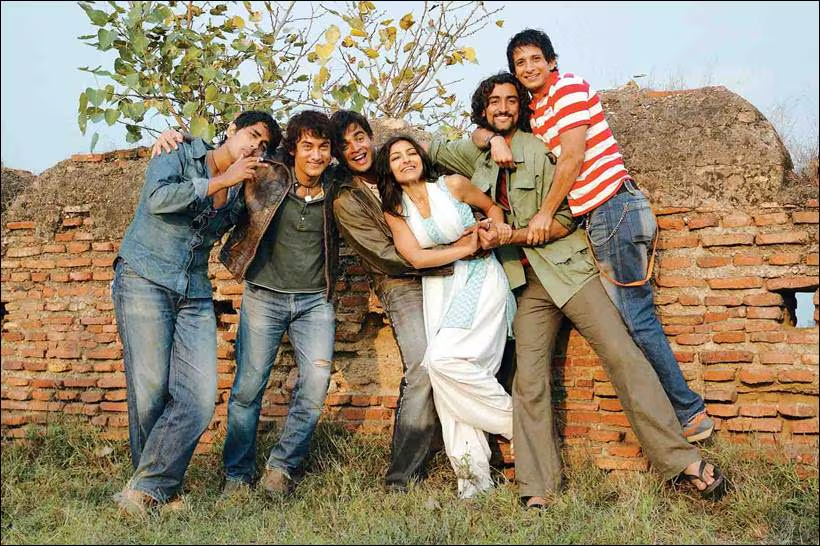
Iconic Film Locations in Delhi
Delhi’s locations offer a mix of historical and contemporary settings for film production in Delhi.
- India Gate: This war memorial, featured in Rang De Basanti, provides grand establishing shots. Permits from local authorities are required, with shooting limited to off-peak hours to manage crowds.
- Humayun’s Tomb: A UNESCO site, it appeared in Delhi-6 for its Mughal architecture. ASI permits are needed, with restrictions on equipment to preserve the site.
- Qutub Minar: This 73-meter tower suits period dramas, as in Rockstar (2011). FFO facilitates permits for heritage sites, ensuring compliance.
- Connaught Place: Urban hub for modern scenes, seen in Tamasha (2015). Traffic management is key, with permits from NDMC.
- Lodhi Gardens: Serene green space for romantic sequences, featured in Piku (2015). Free access, but crowd control is essential.
- Chandni Chowk: Bustling market for chaotic street scenes, as in Kabir Singh (2019). Permits from local police help navigate narrow lanes.
These locations make film production in Delhi visually rich and accessible.
Incentives and Government Support
Film production in Delhi benefits from national incentives via the FFO. Foreign productions can receive up to 30% reimbursement on qualifying expenses, with a maximum of ₹300 million for co-productions. Delhi Tourism promotes shooting by simplifying permits through the e-District portal.
The India Cine Hub offers a single-window system for clearances, reducing bureaucracy. For heritage sites, ASI provides permits with fees starting from ₹25,000. These supports make Delhi attractive for documentaries and features, encouraging productions like Delhi Crime. Rajasthan and Agra, near Delhi, offer additional incentives (up to 30% rebates in Rajasthan), allowing combined shoots for cost savings.
Case Studies: Films That Defined Delhi on Screen
Film production in Delhi has produced iconic works. Rang De Basanti (2006) used India Gate and Delhi University to depict youth activism, inspiring real protests. Directed by Rakeysh Omprakash Mehra, it showcased Delhi’s historical sites in modern narratives.
Delhi-6 (2009) explored Old Delhi’s communal harmony, filming in Chandni Chowk and Jama Masjid. Mehra’s direction captured the city’s chaos and unity, blending cultural elements. Rockstar (2011) used Hauz Khas and Qutub Minar for emotional journeys.
These films highlight Delhi’s narrative potential, with professionals managing permits and crowds for authentic storytelling.
The Role of Line Producers in Delhi
Line producers in Delhi play a central role in coordinating the operational aspects of film production, including budgeting, scheduling, crew engagement, and permit management. Their responsibilities often involve securing clearances from multiple authorities such as the Archaeological Survey of India (ASI) for heritage locations and coordinating approvals through the Film Facilitation Office (FFO) for domestic and international projects.
Beyond administration, line producers manage complex on-ground logistics in a city defined by dense traffic, security-sensitive zones, and seasonal weather extremes. Their work includes location scouting, vendor coordination, safety planning, and resource allocation to ensure production continuity. By aligning creative requirements with regulatory and logistical realities, line producers help maintain schedule stability and operational efficiency across Delhi-based shoots.
Challenges of Film Production in Delhi
Film production in Delhi faces bureaucracy, with permits taking 2–8 weeks for heritage sites. Traffic in busy areas like Chandni Chowk causes delays, requiring early scheduling. Weather extremes—hot summers and foggy winters—disrupt outdoor shoots, as noted in production guides.
Crowds at landmarks like India Gate need management, with police presence essential. However, experienced professionals and FFO’s single-window system mitigate these, ensuring timely completions.
Why Choose Delhi for Film Production?
Delhi’s cinematic appeal lies in its blend of heritage and modernity. Films like Rang De Basanti (2006) captured India Gate and Delhi University to portray youth activism, while Delhi-6 (2009) showcased Old Delhi’s communal harmony. The city’s locations allow filmmakers to recreate various settings within a compact area, reducing logistical costs. Additionally, Delhi’s proximity to Rajasthan and Agra enables multi-state shoots for diverse backdrops.
Government support enhances Delhi’s attractiveness. The FFO offers up to 30% reimbursement on qualifying expenses for international co-productions, with a maximum of ₹300 million. Delhi Tourism promotes shooting by simplifying permits through the e-District portal. These factors make Delhi a cost-effective choice for Bollywood, OTT series, and documentaries, attracting productions like Delhi Crime (Netflix, 2019).

Infrastructure and Connectivity
Delhi’s infrastructure supports efficient film production in Delhi. Indira Gandhi International Airport connects to global hubs, facilitating crew travel. The Delhi Metro and road networks enable quick movement between locations like Old Delhi and New Delhi.
Studios in the NCR (Noida, Gurugram) offer indoor facilities with soundstages and green screens, ideal for VFX-heavy projects. Equipment rentals are available from local suppliers, ensuring cost-effectiveness. The city’s hotels and catering services cater to large crews, with options near key sites like India Gate.
This connectivity allows multi-day shoots without major delays, making Delhi a hub for Bollywood and international productions.
Delhi vs Other Filming States in India
Delhi’s urban-historical blend sets it apart, but filmmakers often combine it with nearby states for diversity. Rajasthan, 250 km away, offers palaces and deserts in Jaipur and Udaipur, featured in Jodhaa Akbar. Rajasthan provides up to 30% incentives, complementing Delhi’s urban shoots.
Agra, 200 km from Delhi, boasts the Taj Mahal for romantic or historical scenes. Films like Taj Mahal (1963) used it extensively. ASI permits are required for Taj shoots, with fees for commercial use. These states expand Delhi’s options, reducing logistics costs for multi-state productions.

Conclusion
Delhi offers filmmakers a rare balance of historical depth, institutional support, and urban versatility. From tightly regulated heritage sites to contemporary cityscapes, the capital enables a wide range of visual narratives while maintaining strong logistical control. Centralized permissions through the Film Facilitation Office, access to NCR production infrastructure, and experienced on-ground coordination make complex shoots viable even in high-density environments.
When combined with nearby filming regions such as Rajasthan and Agra, Delhi functions as a strategic anchor for multi-location productions seeking efficiency without creative compromise. As India’s administrative and cultural center, the city continues to play a critical role in both domestic and international filmmaking, supporting productions that demand precision, scale, and regulatory clarity.
