
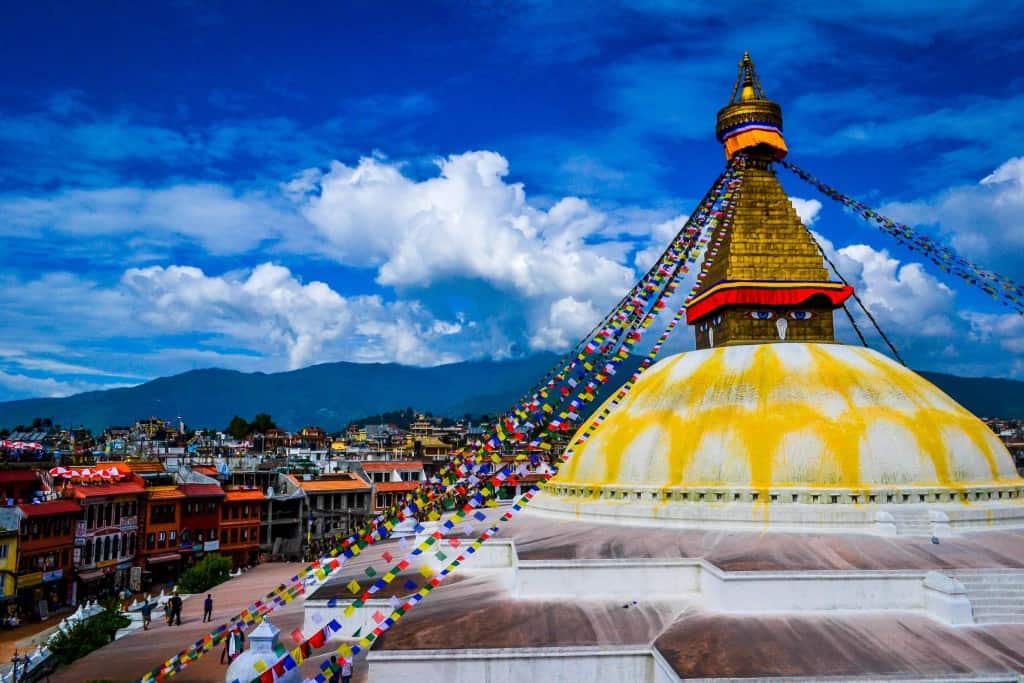
Hiring a film crew in Nepal gives a foreign production a Kathmandu-based team that works to international standards at competitive international-production rates, on terrain that runs from the Kathmandu Valley to the high Himalaya. This page sets out what that crew costs by department, how a foreign shoot secures its filming permits, the locations most productions come for, and the equipment, transport and lodging ranges that build a real Nepal budget.
The crew and the permit are two separate jobs. A Nepal-based coordinator prepares the permission application and manages the shoot on the ground, while the wider execution layer, the crewing, the permits and the on-ground running, is what a line producer Nepal team is hired to manage. This page is the crew, permit, location and cost picture that sits behind that decision.
Film Crew Nepal: What You Can Hire and Day Rates
A film crew Nepal engagement draws on a deep pool of documentary, commercial and feature crew concentrated in Kathmandu, from camera and sound to grip, art and production support. Many heads of department have worked across international co-productions and adventure and wildlife shoots, so the briefing gap that slows crew integration in less-established territories is largely absent. Day rates below are per standard ten-hour shoot day; on our recent budgets, multi-day and multi-week engagements have typically discounted ten to twenty-five per cent.

Crew Departments and Day Rates
A one-camera documentary or commercial day usually runs a camera operator, a sound recordist and a gaffer or grip, with a producer or fixer coordinating. Specialist roles, a high-altitude safety lead, a second unit or a drone operator, are added by brief. A compact one-camera crew package (a director of photography or camera operator with an assistant, a sound recordist, a gaffer or grip, a production coordinator or fixer, a production manager and a PA) runs roughly 1,200 to 2,500 US dollars a day; equipment, transport, permits and lodging are budgeted separately, and the individual role ranges that build the package are below.
Indicative 2026 market ranges in USD, excluding taxes, overtime, travel days, remote-location premiums and specialist safety support. These are budgeting guides, not regulated rates or vendor quotations.
| Role | Day rate (USD) |
|---|---|
| Line producer | $400 to $600 |
| Production manager / UPM | $250 to $400 |
| Fixer / local coordinator | $100 to $300 |
| Production assistant | $30 to $100 |
| Director of photography | $150 to $500 |
| Camera assistant | $80 to $150 |
| Sound recordist | $100 to $300 |
| Gaffer / grip | $100 to $250 |
| Drone operator | $250 to $400 |
| Government liaison / monitoring officer | Where assigned: allowance, travel and accommodation |
Beyond the core unit, Nepal fields experienced directors of photography, sound recordists, gaffers and grips, art and production designers, and first assistant directors and production managers who have run international schedules. For hill and high-altitude work the crew extends to mountain guides, porters and a high-altitude safety lead, all budgeted as shoot days rather than as an afterthought. English is widely spoken at head-of-department level, and most senior crew hold their own kit and vehicle relationships, which shortens the pre-production chain for an incoming production.
Camera, Lighting and Grip Equipment
Rental houses in Kathmandu carry current camera bodies and glass from RED, ARRI, Sony and Blackmagic, along with LED and small HMI lighting, grip packages and cinema and FPV drones. For remote hill and high-altitude work, the practical constraint is transport and power rather than availability, so equipment lists are planned around what can be carried and charged on location.
| Item | Guide (per day) |
|---|---|
| Camera body (Sony FX3 / FX6 class) | $100 to $250 |
| Prime or zoom lens set | $80 to $200 |
| Lighting package (LED + small HMI) | $150 to $350 |
| FPV / cinema drone + kit | $250 to $350 |
| Grip and support | $50 to $150 |

Filming Permits in Nepal: MoCIT Filing, Fees and Timeline
Securing filming permits in Nepal runs through the Ministry of Communication and Information Technology (MoCIT), which regulates foreign filming, with the Film Development Board facilitating the process and location-specific authorities handling heritage, park and aerial approvals. Foreign productions appoint a Nepal-based coordinator to prepare the MoCIT filming-permission application; the published documents include the coordinator and authorization letters, the application form, a script or concept, crew details, an itinerary and a valued equipment list. What filming permits Nepal requires depends on the location set: heritage, park, aviation and security authorities each attach to the shots that need them.
In practice, foreign productions normally appoint a registered Nepali production company or experienced local coordinator to prepare the application, manage authority correspondence and execute the shoot locally. The published core application requirement includes an NPR 50 postal stamp. Heritage, conservation, aviation and other location-authority charges apply separately. Larger four-figure quotes may include local coordination, service fees and additional authority costs rather than one national permit fee.
Based on our recent foreign-production filings, a complete core application has typically cleared in seven to ten working days. This is an observed operational range rather than a statutory processing guarantee. Drone, protected-location and security clearances have commonly added five to fifteen working days, depending on the aircraft, flight area and authorities involved.
Location dictates which authorities join the process. Heritage sites and the Kathmandu Valley Durbar squares clear through the Department of Archaeology; trekking peaks and the Everest and Annapurna regions add conservation-area and, in places, restricted-area approvals; and border or security-sensitive zones draw in the Ministry of Home Affairs. Trekking-based shoots also carry the usual trekking permits and, where assigned, a government liaison whose costs are confirmed for the specific shoot rather than assumed.
Heritage, Conservation and Restricted-Area Fees
Protected locations carry their own published charges. Filming in the Annapurna, Manaslu and Gaurishankar conservation areas is set at US$1,500 for non-SAARC productions, NPR 50,000 for SAARC and NPR 10,000 for Nepali productions, with a further 25 per cent for aerial filming. Upper Mustang and Upper Dolpa are US$5,000 each. Heritage sites clear through the Department of Archaeology and site-custodian approvals where applicable, and parks through the Department of National Parks and Wildlife Conservation, each on its own lead time.
Drone Filming and CAAN Registration
Foreign drone operators require temporary registration with the Civil Aviation Authority of Nepal (CAAN) and must present the aircraft for inspection. The current requirements include a valid passport and visa, the purpose and location details, and CE marking; operating permission can also require Home Affairs security clearance and location-owner or authority approval. Registration, operational approval and service costs are confirmed for the specific aircraft and route rather than quoted as a flat fee.

Filming Locations in Nepal
Most productions come to Nepal for one of three looks: living heritage in the Kathmandu Valley, the high Himalaya of the Everest and Annapurna regions, and the tea hills and jungle of the east and the Terai. A crew and permit plan is built around which of these the brief needs, because each carries its own access, altitude and authority profile.
The Kathmandu Valley and the Cultural Heartland
The Kathmandu Valley concentrates the country’s cinematic heritage within a relatively compact production area: the Durbar squares of Kathmandu, Patan and Bhaktapur, the Boudhanath and Swayambhunath stupas, and medieval lanes and courtyards that provide a living historic-city setting. Bandipur and older hill towns extend that visual language outside the valley. Depending on the property, filming may require Department of Archaeology, site-custodian and local-authority approvals. Kathmandu-based crew, equipment and accommodation make these locations more manageable than remote Himalayan routes.

Everest, Annapurna and the Pokhara Gateway
The high country is what most international shoots travel for. The Everest and Khumbu region, the Annapurna sanctuary and the lakes and ridgelines around Pokhara deliver the peaks, glaciers and high passes that define a Himalayan production. This is also where altitude, weather windows and mountain-flight reliability dominate the schedule, and where acclimatisation days, safety leads and porter logistics move from nice-to-have to non-negotiable.

The Eastern Hills and the Terai
East of Kathmandu, the tea hills around Ilam continue visually toward the Darjeeling production corridor on the Indian side, a softer, greener hill look reached overland rather than by air. South, the Terai lowlands and Chitwan bring subtropical jungle, grassland and wildlife, while Lumbini adds a major Buddhist heritage site. These lower elevations widen the shootable calendar and suit productions that want Himalayan foothills without a full high-altitude operation.

Nepal Production Rates and Budgeting
Crew, permits and locations sit inside a wider cost picture of equipment, transport and lodging, and productions comparing markets often benchmark Nepal against India line-production rates. The headline bands below are budgeting benchmarks for a foreign shoot, not a quote. The largest variables are crew composition, remoteness, equipment requirements and the scope of local coordination. Published authority charges should be separated from local service and facilitation fees.
| Cost group | Typical band |
|---|---|
| Compact one-camera crew package, per day | $1,200 to $2,500 |
| Production service (project) | $2,000 to $10,000+ |
| Equipment rental, per day | Package-dependent (see itemised table) |
| Transport, per day | $50 to $250 |
| Local coordination / facilitation (project) | $500 to $1,500 |
| Annapurna, Manaslu or Gaurishankar filming | US$1,500 non-SAARC; NPR 50,000 SAARC; +25% aerial |
| Drone (CAAN registration + approval) | Confirmed per aircraft and route |
Transport, Vehicles and Lodging
Roads into the eastern hills and high ridges are slow and often single-track, so a schedule budgets travel as shoot time, not as a transfer, and the crew beds down in local lodges and homestays near the next day location. The per-day guides below cover the vehicle, fuel and lodging lines that a remote schedule leans on.
| Item | Guide |
|---|---|
| Off-road 4WD SUV (fuel + driver) | $120 to $200 / day |
| Production van | $80 to $130 / day |
| Truck (grip / equipment) | $60 to $110 / day |
| Hill lodge / homestay (remote) | $20 to $40 / night |
| 3 to 4-star hotel (Kathmandu / regional) | $50 to $120 / night |
| 5-star (Kathmandu) | $150 to $300 / night |
What Changes the Cost of a Five-Day Hill Shoot
A five-day documentary in the eastern Nepal hills around Ilam is driven mainly by crew days, vehicles, travel time, equipment and lodging. Permit costs may remain a smaller share unless the brief includes protected locations, drones or additional authority clearances. Specialist equipment can be sourced from India, typically staged from a northern Indian base, where the temporary-import and customs route is confirmed, but it should not be treated as frictionless freight.
Nepal Film Incentives and Rebates
For productions researching Nepal film incentives and rebates, Nepal has no published national cash-rebate programme for foreign productions. The cost advantages are structural: current local crew and rental pricing, together with SAARC and non-SAARC distinctions in certain published conservation-area fees. Domestic grants or cultural-support schemes should be treated as project-specific and unavailable to an international production unless eligibility is confirmed in writing. Foreign productions should therefore budget gross local costs rather than deduct an assumed incentive. Productions comparing Nepal’s position should weigh it against the active schemes running in other markets.
Terrain, Season and Scheduling
Nepal is a high-variance territory: the same calendar week can offer a controllable Kathmandu Valley day and an unforgiving high-altitude one within a few hours’ travel. Altitude requires acclimatisation days that belong in the schedule and the budget rather than being improvised. October to November and March to April are the principal high-country filming windows. Winter can bring snow, cold and access restrictions, while the monsoon affects roads, trails, visibility and mountain-flight reliability. The valley and lower hills work through much of the year.
Nepal Crew and Permit FAQ
How much does a film crew in Nepal cost per day?
A compact one-camera crew package (camera and assistant, sound, grip, a production coordinator, a production manager and a PA) runs roughly 1,200 to 2,500 US dollars a day, depending on departments and location, and covers crew rather than equipment, transport, permits or lodging, which are budgeted separately. Multi-week engagements are discounted. Individual role ranges and equipment guides are in the tables above, quoted as indicative 2026 working ranges.
How long do filming permits in Nepal take?
Based on recent filings, a complete core application typically clears in seven to ten working days. Drone, conservation-area, heritage and restricted-zone approvals commonly add five to fifteen working days. These are practical planning ranges from completed permit work, not guaranteed authority service levels.
Can a foreign producer apply for the permit directly?
Not directly. Foreign productions appoint a Nepal-based coordinator or registered local company to prepare the MoCIT application and manage authority correspondence; the coordinator also handles heritage, park and aviation approvals as the brief requires.
Is Nepal cheaper than shooting the same footage elsewhere?
For Himalayan and high-altitude footage, it is competitive. The saving comes from published authority fees and locally quoted production services filed through a local coordinator, proximity to India where the temporary-import route is confirmed, and a capable local crew, not from cut-rate talent.
