
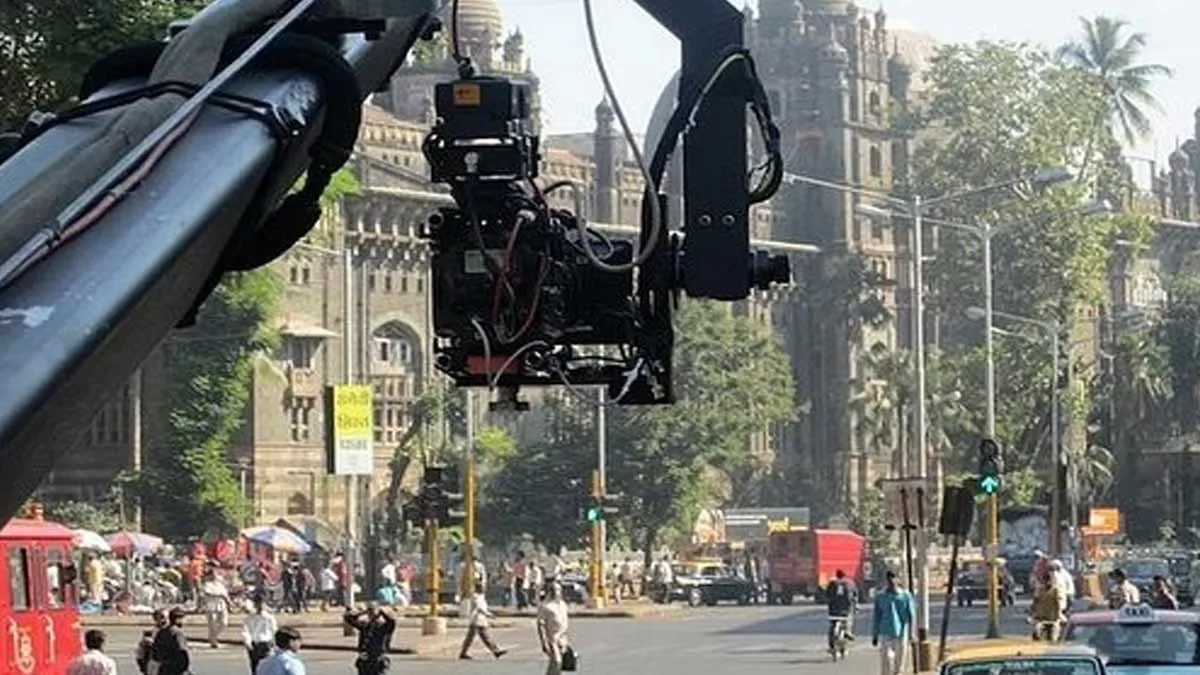
A Mumbai stand-in location lets a production shoot a foreign look without leaving the city — doubling Mumbai’s streets for London, a Mediterranean village, a West African shantytown or an American dockside, and “cheating” the geography so the audience never knows. Mumbai is unusually good at this because its architecture is a layered accident of history: colonial-era Fort, Portuguese-influenced enclaves, industrial waterfronts and dense informal neighbourhoods all sit within one city, alongside the studios, crew and post that turn a borrowed location into a believable one. This guide maps the city’s most useful stand-in and cheat locations by the look they deliver, and explains how a line producer makes the illusion hold on camera.
The appeal is practical, not just creative. Standing a foreign setting in Mumbai avoids the cost, the carnets, the visas and the schedule of travelling a unit abroad, and concentrates the whole shoot in a single city with deep local resources. The trade is that the cheat has to be executed well — the right location, dressed and controlled so the tells of Mumbai disappear — which is where the choice of location and the line producer’s execution matter most.

Why Mumbai Works as a Global Stand-In
Mumbai’s value as a chameleon comes from the range of distinct, non-iconic environments packed into it. South Mumbai’s Fort district carries Victorian and Gothic facades that read as colonial-era Britain; Girgaon and Bandra hold Portuguese-influenced villages that pass for Mediterranean or small-town Europe; Mazgaon’s docks supply industrial and port textures; and Dharavi offers dense urban grit that doubles for other parts of Asia or Africa. The key is that these are non-iconic — away from the instantly recognisable landmarks like the Gateway of India or Chhatrapati Shivaji Terminus that would give the location away.
That principle — choosing the anonymous over the famous — is the heart of cheating a location. A landmark anchors a frame to a real place; a non-iconic street, dressed correctly, can be anywhere. So the most valuable Mumbai stand-ins are rarely the postcard views but the ordinary lanes, markets, docks and bylanes whose architecture carries a foreign character without announcing the city. Knowing which of those streets reads as which country, and at which angle, is a specific kind of local knowledge that good location scouts and line producers accumulate over many shoots.
Behind the locations sits the reason stand-in work is viable at all: Mumbai is India’s production capital, with the crew, equipment, art-department and studio depth to dress and control a location convincingly, and to build what cannot be found. A production that chooses Mumbai for a foreign look is not just buying the street; it is buying the ecosystem that makes the street believable. The wider city execution sits on our line producer in Mumbai page; this page is about the stand-in locations specifically.
The Cost Case for Cheating a Location
The economics are what make the case. Shooting the real London, Lisbon or New York means international crew movement, equipment carnets, visas, foreign location fees and a schedule built around travel; standing those looks in Mumbai collapses all of that into one city, with local crew, local rental and local rates. For a scene where the location is a backdrop rather than a character, the saving can be the difference between a sequence being affordable and being cut — which is exactly why stand-in and cheat work is a standard tool in a line producer’s kit rather than a compromise.
Mumbai’s Stand-In Locations by Look
The most useful way to think about Mumbai’s cheat locations is by the look they deliver. Below are the city’s strongest non-iconic environments, grouped by the global setting they can double for.
Colonial and British — the Fort District
South Mumbai’s Fort area, the historic business district, is the city’s richest source of British and colonial street scenes. Its narrow alleys and Victorian and Gothic-revival buildings can stand in for British and colonial urban environments, and the quieter lanes away from the main thoroughfares give the control a period shoot needs. Crawford Market and the Ballard Estate precinct extend the same colonial vocabulary — arched facades, stone detailing and tram-era streetscapes — that dress easily into a European-city past.
What makes Fort work is not just the architecture but the grain of the place: cobbled side-streets, period shopfronts, cast-iron and stone detailing, and a density of continuous colonial frontage that a single dressed street can extend convincingly. The challenge is the modern intrusion — signage, wiring, vehicles and the working business district around the frame — so the strongest British scenes come from the quieter lanes shot at controlled hours, where the art department can dress out the present and dress in the period without fighting live traffic.

European Villages and Small Towns — Khotachiwadi and Bandra
For a village or small-town European look, two heritage enclaves stand out. Khotachiwadi in Girgaon is a cluster of Portuguese-style houses, pastel facades and winding lanes that can pass for a Mediterranean or Portuguese-influenced village. Ranwar Village in Bandra — a historic Christian neighbourhood of bungalows, churches and quiet lanes — offers a small-town British or European feel that complements the urban Fort aesthetic. Both are intimate, low-rise and largely free of the high-rises that would break the illusion.

The difference between the two is useful in casting a scene. Khotachiwadi leans Mediterranean and southern-European, its pastel houses and tight lanes suited to a Portuguese or small southern-European village feel; Ranwar reads more northern and British, its churches and bungalows fitting a quiet English or Irish village. Both, crucially, are protected heritage pockets, which means their character is intact but also that they have residents and custodians whose cooperation a shoot depends on — an access-and-relationship question as much as a permit one.

Urban Grit — Dharavi
Dharavi, one of the world’s largest and most densely worked neighbourhoods, supplies a texture few cities can: bustling, layered, informal urban streets that — depending on framing, art direction and story context — can double for other parts of South or Southeast Asia, or for African urban settings, without any recognisable Mumbai landmark in frame. It is the location that doubled for the city in Slumdog Millionaire, and it remains a genuine asset for productions needing dense, lived-in urban grit — provided it is shot with the local coordination, sensitivity and crowd management the neighbourhood requires.
Dharavi’s strength is also its sensitivity. It is a living, working neighbourhood, not a set, so a production shoots it with genuine local coordination, respect for residents and livelihoods, and a light footprint — which is both the ethical approach and the practical one, because community goodwill is what makes access possible at all. Handled that way, it offers a density and authenticity of urban texture that is extremely hard to build or to find elsewhere, and that has drawn international productions to it precisely for its non-iconic, lived-in realism.

Industrial and American — Mazgaon Dock
Mazgaon’s industrial waterfront — cranes, warehouses, shipyards and dock infrastructure — is a blank canvas for generic industrial and port settings — an American or European working waterfront, or a dystopian cityscape. Its unpolished, utilitarian aesthetic sits well away from Mumbai’s recognisable skyline, and the scale of the dock environment gives a production the kind of industrial backdrop that is hard to fake on a set.
Working dock and port environments do, however, come with their own access reality: they are operational, security-sensitive and controlled by port authorities, so a Mazgaon shoot is as much a permissions exercise as a location one. The pay-off is a scale and authenticity of industrial infrastructure — cranes, containers, working waterfront — that reads convincingly as a generic foreign port and would be enormously expensive to construct, which is why the line producer weighs the permit effort against the production value the location delivers.

Built to Order — Film City Custom Sets
When no real location fits, Film City in Goregaon and the city’s private studios let a production build the look instead. Custom sets and backlots can replicate a British alley, an American brownstone or an Asian market street with full control over light, dressing and continuity, which is often the right answer for a hero sequence that has to be repeatable, weather-proof and free of the compromises a live location imposes. The choice between a real Mumbai stand-in and a built set is itself a budget and control decision the line producer helps the production make.
A built set buys control and repeatability but costs construction and stage time; a real location buys authenticity and scale but imposes the compromises of the live city. Many productions blend the two — a real Fort lane for the wide, establishing reality and a Film City build for the controlled, repeatable coverage — cutting between them so the audience reads one continuous foreign place. Designing that blend, and budgeting it, is part of the stand-in plan rather than an afterthought.

Making a Stand-In Convincing
Finding the right location is only half the job; the cheat is made or broken in the execution. A Mumbai street becomes a London or Lisbon street only when the tells are removed and the foreign signals are added, and that is a coordinated art-department, locations and production effort the line producer runs.
Dressing Out the Tells, Dressing In the Look
Convincing a stand-in means controlling what the camera sees in both directions. The Mumbai signals — Devanagari and local-language signage, Indian number plates, specific vehicles, street furniture, electrical and cable clutter, and recognisable shopfronts — have to be removed, covered or reframed, while the foreign cues — correct signage, period or regional vehicles, set decoration, even the right extras and wardrobe — are added. Framing does a lot of the work too: choosing angles that exclude a high-rise or a landmark, and shooting tight where the wider context would betray the location. On a stand-in shoot the art department and the line producer plan this in detail at the recce, because a single missed tell in frame undoes the whole illusion.
Crowd, Continuity and Control
Live Mumbai locations come with crowds, traffic and commerce that a foreign setting would not, so control is the other half of the execution. That means crowd management and, where needed, controlled background action, securing the location for the window required, and maintaining continuity across the shoot so the cheated geography holds from shot to shot. In sensitive or densely populated areas the approach has to be light and locally coordinated rather than heavy-handed — the same discipline that makes any complex Mumbai shoot work, applied to the specific problem of hiding the city in plain sight.
Continuity is the quiet risk on a cheat. Because the geography is invented, it only exists in the edit, so the production has to be rigorous that a turn out of one “London” street leads believably into another, that light and weather match across days, and that no shot accidentally reveals the real surroundings. That coherence is planned at the recce and protected on the day, and it is a large part of why an experienced line producer and locations team are worth their fee on stand-in work — the illusion is fragile, and it is held together by discipline, not luck.
Building One City From Several Locations
The most ambitious cheats are not single locations but composites: a fictional foreign city assembled from several real Mumbai places that the edit stitches into one. A wide establishing shot in Fort, a character turning down a Bandra lane, an interior built at Film City and a dockside beat at Mazgaon can read as a single continuous place if the geography is engineered — matching eyelines and screen direction so a left turn out of one street arrives believably in the next, keeping light and weather consistent, and dressing all of them to the same design language. This is genuine craft that location managers and line producers do deliberately: planning the imagined map of the fictional city across the recce so the pieces cut together, and protecting that continuity on the day. Done well, the audience experiences one city; the production shot five.

Permits, Planning and When to Cheat
A stand-in shoot is permission-led like any Mumbai production, and the decision to cheat a location at all is a planning and budget call the line producer helps frame.
Permits for Stand-In Locations
Public-space shooting in Mumbai runs through the Brihanmumbai Municipal Corporation (BMC) and the Maharashtra Film Cell, with additional permissions depending on the location — port and dock authorities for Mazgaon, community and residents’ consent in heritage enclaves like Khotachiwadi and Ranwar, and police coordination for street control. Heritage and lived-in neighbourhoods in particular need their custodians and communities on side, not just a paper permit, which is why local relationships matter as much as the application. Our filming permissions in Mumbai guide sets out the permit machinery in full.
Timing and sequencing matter here too. Heritage-enclave and dock permissions can carry longer lead times and conditions than a straightforward street permit, and a stand-in shoot often needs controlled hours — early mornings or specific windows — to get the location clear of its everyday Mumbai life. A line producer maps each location to its permit path and its realistic shooting window early, so the schedule is built around what each cheat location actually allows rather than what the storyboard assumes.
When a Stand-In Beats Travelling
The strategic value of a Mumbai stand-in is the saving against shooting the real place abroad — no international travel, freight, carnets or visas, and a single-city schedule with deep local resources. That makes cheating in Mumbai compelling for scenes where the location is a backdrop rather than the subject, and where the right non-iconic street can carry the look. Where the real place genuinely cannot be faked — a recognisable landmark, a specific geography the story depends on — travelling is the honest answer. A line producer helps a production draw that line scene by scene, and then executes whichever side of it the project lands on. For full execution and compliance support across formats, our film production services extend the same governance beyond stand-in work.
It is also worth being honest about the limits. A cheat works for streetscapes, interiors, docks and villages; it works far less well where the light, the season or a specific natural feature is the point, or where audiences know the real place too well to be fooled. The skill is matching the ambition to what Mumbai can credibly deliver — using the city for the looks it carries convincingly, and not asking a Girgaon lane to be somewhere it visibly is not.
Used well, Mumbai’s borrowed geographies are one of Indian production’s quiet advantages: a city that can be several countries in a week, at a fraction of the cost of shooting them for real — provided the locations are chosen with judgement and the cheat is executed with the control that keeps the illusion intact.
