
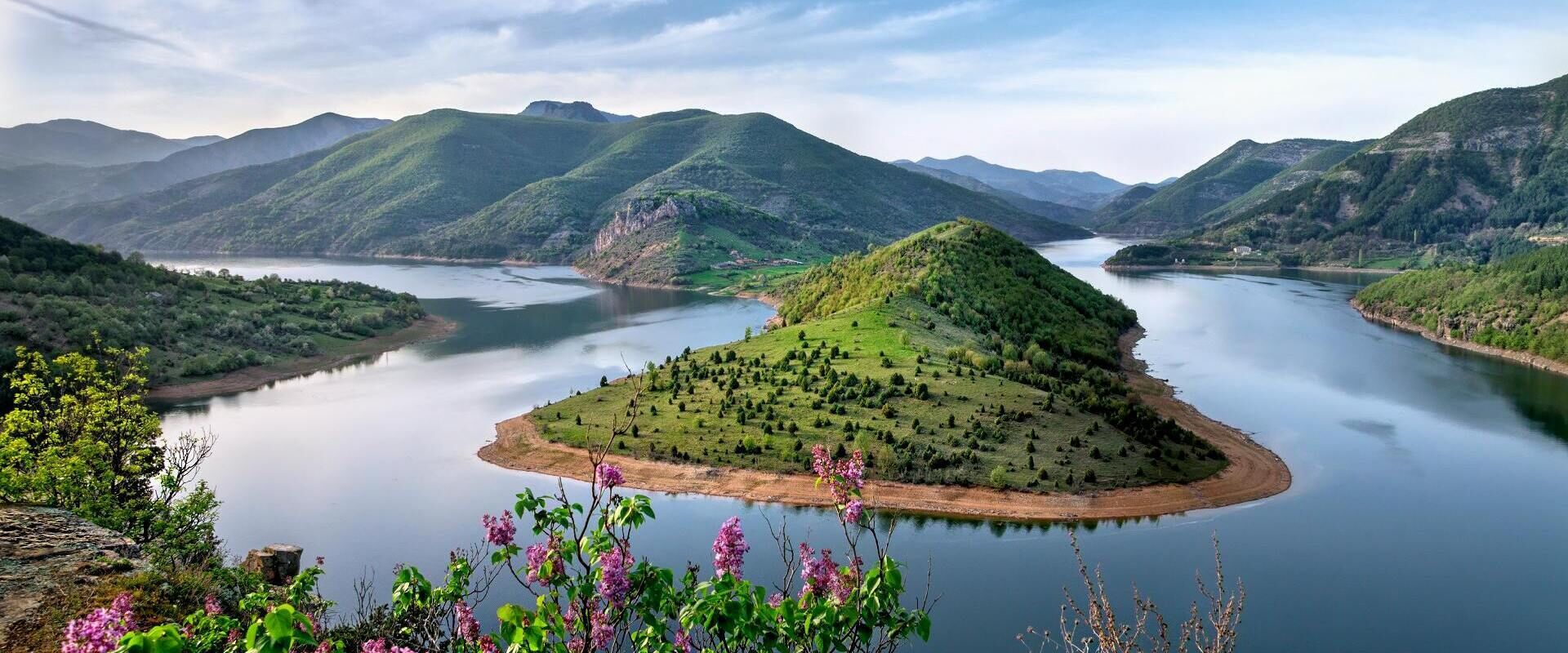
Bulgaria has emerged as one of Europe’s most practical and cost-efficient destinations for international film, television, and commercial production. Positioned at the intersection of Eastern and Western Europe, the country combines experienced crews, competitive production economics, and streamlined permitting with visual diversity that can double for multiple regions. The line producer manages the execution framework while film fixers in Bulgaria handle day-to-day on-ground operations — location access, logistics, permits, and crew coordination — across Sofia, Plovdiv, and the wider national network. Both functions operate within the broader Europe line producer guide network connecting Bulgaria to the wider European production corridor.
Unlike purely incentive-driven markets, Bulgaria offers operational reliability. Budgets remain predictable, crews are technically strong, and regulations are stable. Productions benefit from EU-aligned legal frameworks without Western Europe’s cost pressure. International feature films, OTT series, commercials, and factual productions use Bulgaria specifically because it delivers scale without volatility. The line producer aligns creative intent with compliance, labour structures, and financial control from pre-production through wrap.
Bulgaria as a Filming Destination
Plovdiv has become one of the country’s most valuable production centres. As one of Europe’s oldest continuously inhabited cities, it offers layered architecture — Roman ruins, Ottoman-era streets, socialist blocks, and modern infrastructure — within compact distances. Film fixers in Plovdiv give productions efficient access to this range. Location permissions, municipal coordination, crowd control, and local crew sourcing move faster when handled by fixers embedded in the city rather than coordinated remotely from Sofia.
Sofia and National Infrastructure
At the national level, film fixers in Bulgaria function as operational problem-solvers across logistics, permits, transport, casting coordination, and regional crew engagement. The line producer controls budgets, schedules, and contracts. Fixers execute the daily mechanics that keep production moving. This division of responsibility allows international producers to maintain strategic oversight while ensuring local execution remains smooth and compliant across every territory the shoot enters.
Bulgaria also benefits from mature studio infrastructure, post-production capacity, and proximity to other European territories. Productions base core operations in Sofia while executing location-heavy schedules in Plovdiv and surrounding regions. The line producer structures these movements efficiently. Fixers manage on-ground realities — road access, municipal approvals, regional coordination — ensuring that productions scale across the country without operational fragmentation.

Plovdiv — Architecture, Visual Range and Fixer Access
Plovdiv stands apart from Bulgaria’s capital-centric production model. While Sofia anchors studios and infrastructure, Plovdiv operates as a high-value filming city with distinct visual and logistical advantages. Its layered history translates directly into screen value — Roman amphitheatres, Ottoman-era houses, neoclassical streets, socialist blocks, and contemporary districts coexist within a compact footprint. Productions achieve multiple visual periods without relocating units, reducing company moves and the costs that accompany them.
What makes Plovdiv operationally valuable is not just the visual range but the scale at which it is manageable. The city is compact enough that a fixer embedded in the region can move between heritage zones, municipal locations, and residential neighbourhoods within the same shooting day without the logistical overhead that a capital city imposes. Location permissions, crowd control, police coordination, and municipal approvals move faster here than in Sofia — not because the system is less rigorous, but because the volume of competing demands on local authorities is lower. For productions that need architectural depth without capital-city friction, Plovdiv is the correct operational choice.

Plovdiv as a Production Base — Operations and Crew
Plovdiv’s operational advantages over Sofia are practical rather than theoretical. Traffic control is simpler. Municipal authorities are accustomed to filming without the congestion of a capital city competing for the same resources. Permit approvals move faster. Police coordination for road access and crowd control runs on shorter lead times. For commercials, short-form projects, and schedule-sensitive shoots where a single delayed approval day costs more than the location fee, this responsiveness is the deciding factor.
Heritage locations in Plovdiv require precise management. The Old Town is a protected zone with strict rules governing equipment placement, lighting loads, and physical contact with heritage surfaces. Restoration guarantees are required before access is granted at the most sensitive sites. The line producer plans these shoots with compliance embedded into the schedule — not retrofitted after location confirmation. The fixer handles on-site supervision and authority liaison during shooting, ensuring that the conditions specified in the permit are the conditions being observed on the day.
Plovdiv’s visual range extends well beyond its Old Town. The Old Town itself stands in for Southern Europe, the Balkans, or parts of the Middle East depending on framing, art direction, and which architectural layer the camera favours. Industrial outskirts replicate post-Soviet or Eastern European settings. Surrounding rural areas offer vineyards, plains, and mountain foothills within short driving distances. The fixer coordinates land access, landowner permissions, and local labour across these locations while the line producer maintains budget and schedule discipline at the production level.
Crew Availability and Cost Containment in Plovdiv
Crew availability in Plovdiv is strong for a regional city, though smaller in depth than Sofia. Department heads and senior technicians typically travel from the capital for Plovdiv-based shoots, while local crews cover logistics, construction, transport, and background casting. The line producer structures this hybrid model — confirming Sofia-based HODs in advance and coordinating their movement with the Plovdiv shooting schedule. The fixer manages accommodation, daily transport, and on-location operations once the unit is in the city.
Cost containment is a genuine Plovdiv advantage. Location fees, municipal charges, and local service rates are lower than their Sofia equivalents. Productions allocate more budget to production value rather than overhead. The fixer negotiates these local terms directly with vendors and authorities, while the line producer validates all agreements against contracts and insurance requirements before commitments are made.
Plovdiv works best as part of a national execution framework rather than as a standalone production base. Strategic planning, budget control, and contractual oversight stay with the line producer at the national level. City-specific execution — permits, location access, local crew, vendor relationships, municipal coordination — flows through the fixer embedded in Plovdiv. This structure allows productions to extract full value from the city without the fragmentation that comes from treating Plovdiv as a separate operational unit from the rest of the Bulgaria shoot.

Visual Range and Production Doubling Capabilities
Bulgaria’s visual range extends the operational advantages. Urban environments stand in for Eastern Europe, Central Europe, or post-Soviet settings depending on framing and art direction. Rural landscapes shift from alpine terrain to Mediterranean-like environments within short travel distances. The line producer structures these visual substitutions into the shooting schedule while fixers secure location access, landowner agreements, and logistics on the ground.
For international productions seeking efficiency without creative compromise, Bulgaria delivers consistency. Strategic oversight stays centralised at the line producer level while operational detail is handled locally by embedded fixers. This layered structure explains why Bulgaria continues to attract long-form series, feature films, and high-volume commercial work.

Production Services — Crew, Costs and Incentives
Bulgaria’s strength as a filming destination lies in its balanced production ecosystem. Skilled crews, competitive costs, and regulatory stability combine without the administrative friction that characterises many emerging production markets. The line producer plans with confidence within this environment while film fixers in Bulgaria manage execution at ground level — activating local networks, vendor relationships, and municipal access that require embedded knowledge to navigate efficiently.
Crew Depth and Technical Standards
Crew depth is Bulgaria’s most consistent operational advantage. The country has supported international productions for over two decades, producing technicians who are fluent in global production workflows across camera, lighting, grip, art, construction, costume, and production departments. English is widely spoken on set. This reduces communication risk, speeds up decision-making, and minimises the onboarding time that international producers lose when working with crews unfamiliar with their production culture. Local and international crew integrate without the friction that less experienced markets impose.
Cost Structure and Vendor Management
Cost structure remains a primary draw. Labour rates sit significantly below Western European equivalents while delivering professional output at European technical standards. Equipment rental, location fees, transport, and accommodation stay predictable and transparent throughout the production period. The line producer structures budgets using confirmed rate cards rather than assumptions. Film fixers in Bulgaria ensure local vendors deliver within agreed terms — preventing the cost creep and last-minute renegotiation that erodes margins when local procurement is managed without established relationships.
EU Legal Alignment and Equipment Vendor Standards

Regulatory Framework and Production Advantages
Bulgaria’s EU membership aligns its labour and legal frameworks with Western European standards — working hours, contracts, insurance, and safety regulations follow consistent rules across the country. Productions operating across multiple European territories can structure Bulgaria within the Europe controlled compliance hub for film production without requiring separate legal structuring for the Bulgarian component. This predictability allows the line producer to build realistic schedules and contractual structures without navigating regulatory uncertainty. Fixers manage day-to-day compliance at the local level, ensuring that on-ground operations stay within the approved framework without disrupting production momentum. How this EU-aligned compliance architecture applies to international productions entering Bulgaria is covered in full through the guide to filming compliance for foreign films.
Sofia anchors the country’s production infrastructure. Studios, sound stages, post-production facilities, and equipment houses are concentrated in the capital, providing the base from which productions move efficiently into Plovdiv and regional locations. A line producer in Plovdiv, supported by a local fixer, manages regional execution while central production control remains intact in Sofia. This division keeps logistical complexity manageable across multi-city schedules.
Regional differences require local knowledge. While national regulations remain consistent, municipalities vary in approval timelines, access rules, and local expectations. Fixers navigate these differences daily — securing permits, coordinating with police and municipal offices, managing extras, and resolving access issues before they reach the line producer’s desk. This separation of responsibility keeps production moving without fragmenting decision-making.
Cash Rebate and Incentive Framework
| Country | Incentive Type | Rebate Percentage | Minimum Spend (approx. €) | Project Cap (approx. €) | Annual Cap (approx. €) | Key Notes |
|---|---|---|---|---|---|---|
| Bulgaria | Cash Rebate | 25% | Not specified | 1M | 10M | First-come-first-served; eligible costs up to 20% from EU/Swiss entities. |
| Czech Republic | Cash Rebate | 25% (live-action); 35% (animation/digital) | 720K (feature film) | 18M | None | Cultural test; requires Czech service company; max 80% of budget eligible. |
| Hungary | Tax Credit | 30% | Not specified | None | 175M (payable 2026) | Cultural test; local production company; extended through 2030. |
| Romania | Rebate | 35%-45% (10% uplift for promoting Romania) | 100K | 10M | 50M | Cultural test; local company; first-come-first-served. |
| Poland | Cash Rebate | 30% | 930K (film) | 3.45M | 4.6M | Cultural test; CPA audit; 10% of annual budget for animation. |
| Serbia | Rebate | 20%-30% (30% if spend >5M) | 300K (film) | None | 16.5M | Local company required; apply anytime; no VAT on qualified spend. |
Line Producer and Film Fixer Operations
Fixer services in Bulgaria are a core execution layer, not a secondary add-on. Outside Sofia this is especially true. The line producer controls budgets, schedules, and compliance strategy at the production level. The fixer handles real-time ground operations — the hour-by-hour decisions that determine whether a shoot runs smoothly or stalls waiting for a resolution that should have been anticipated in pre-production.
A fixer in Bulgaria operates as the local authority interface across municipalities, police, heritage offices, transport departments, landowners, and private stakeholders. Regulations vary by region and city. Permits that look straightforward on paper carry location-specific conditions that only surface when someone with local knowledge reads them correctly. The fixer identifies these variables during the permit application process rather than on the shooting day.
In Plovdiv, this interface work becomes continuous rather than periodic. Historic districts, residential zones, and protected sites require active coordination throughout the shooting period — not just at the permit stage. Access windows shift. Residents raise concerns. Heritage supervisors enforce conditions that were not flagged at application. The fixer manages these developments in real time, adjusting on-ground logistics while keeping the line producer informed of anything that requires a budget or schedule decision rather than an operational one.

LP and Fixer Division — Roles, Boundaries and Accountability
In Plovdiv, the division of responsibility between line producer and fixer becomes most visible. The line producer locks shooting dates, allocates departmental budgets, and finalises permit scopes. The fixer executes ground-level coordination — liaising with municipal offices, police departments, heritage authorities, and local communities to ensure that the approved plan works in real-world conditions, not just on paper.
This dual-layer approach prevents overlap and confusion. Fixers do not negotiate budgets or alter schedules independently. They flag operational constraints early and relay them to the line producer, who adjusts timelines or resources at the production level. Decisions remain centralised while execution stays agile.
For commercials and short-format productions this structure enables rapid deployment. Fixers secure locations, crew access, and logistics quickly. The line producer maintains cost discipline and contract integrity throughout. Brands and agencies work at speed without sacrificing control.
Fixer Scope — Labour, Logistics and Regional Coordination
Fixers manage local labour at scale across roles that rarely appear in production decks but determine whether a shooting day starts on time. Daily workers, drivers, runners, crowd marshals, and background talent coordination all route through the fixer’s network. In Bulgaria many of these roles operate through established informal local networks. The fixer activates them quickly and reliably. Without this access, productions face delays, staffing gaps, or inflated last-minute costs that no contract clause recovers.
Location logistics sit alongside labour as a core fixer responsibility. Unit parking, base camp setup, catering placement, waste management, power access, and equipment loading zones all require local knowledge to execute without friction. A fixer’s familiarity with each location’s physical constraints prevents the bottlenecks that surface at call time when the solution is too late to implement cleanly.
When productions move across regions, fixer coordination becomes layered. A senior fixer may supervise multiple city-based fixers while reporting to the line producer — maintaining operational consistency as the unit moves from Sofia to Plovdiv or into rural locations. Workflows do not reset at each geography change. The same reporting structure, the same communication protocols, the same escalation logic carries across the full shooting schedule.
Cultural Navigation and Emergency Handling
Cultural navigation is a fixer function that productions consistently underestimate until it goes wrong. Bulgaria has clear local sensitivities around heritage sites, religious locations, and residential privacy. The fixer advises on what is acceptable, what is negotiable with the right approach, and what is prohibited regardless of what the permit says. This guidance protects productions from community complaints, authority interventions, and forced shutdowns that no amount of permit documentation resolves once community relations have broken down.
Emergency handling operates on the same principle. Weather changes, equipment delays, access conflicts, and last-minute local objections require immediate on-site resolution. The fixer acts in real time while the line producer manages the contractual and financial implications at the production level. Minor issues stay minor when the fixer is present and experienced. Without that presence, minor issues reach the line producer as major disruptions.
For international productions unfamiliar with Bulgarian systems, fixer services are not optional. Language barriers, administrative nuances, and informal local processes create friction that no amount of advance research removes without local mediation. Fixers translate intent into action — keeping approvals, payments, and operations aligned across a system that rewards local knowledge and penalises assumptions.
Emergency Handling: Weather, Equipment and On-Set Contingency

Long-Form Productions and Rural Location Access
In long-form productions — feature films and series with multi-week schedules — the line producer and fixer relationship deepens considerably. Fixers manage location continuity across shooting days, repeat access permissions, local crew rotations, and neighbourhood relations over extended periods. The line producer oversees cumulative costs, overtime exposure, and compliance across departments as the schedule unfolds.
When productions move beyond Plovdiv into rural Bulgaria, the fixer becomes the operational bridge between what the schedule assumes and what the location actually provides. Remote areas lack standardised filming infrastructure — access roads, power availability, accommodation capacity, and emergency services vary significantly between locations. The fixer assesses these realities and reports accurate information to the line producer before decisions are finalised, not after the unit has arrived.
This communication loop protects productions from unrealistic assumptions. Adjustments happen during planning rather than on shoot day. Schedules remain intact and contingency spending stays controlled.
Payments, International Interface and How the Structure Scales
Payments and local vendors require a specific division of responsibility. Fixers source services through trusted regional suppliers with whom they have established working relationships. The line producer validates all contracts, payment terms, and compliance requirements before commitments are made. This separation reduces financial risk while preserving the local efficiency that comes from working through known networks rather than cold vendor approaches.
On international shoots, the line producer acts as the primary interface for foreign producers, studios, and insurers. The fixer focuses on Bulgarian systems, language, and local authority relationships. Together they eliminate the friction caused by miscommunication or administrative gaps between international production expectations and local operational reality.
This structure scales cleanly regardless of project size. Whether the production involves a single city or multiple regions across Bulgaria, the division of responsibility remains consistent. Producers know where decisions are made. Crew members know who resolves operational issues. Authorities know who holds accountability for compliance and conduct. In Bulgaria, that clarity is what distinguishes professional productions from fragmented ones — and what makes the country a reliable execution territory rather than a speculative one.
International Interface: Foreign Currency and Contract Structures

Production Planning for Foreign Shoots in Bulgaria
For international producers, the line producer and fixer structure reduces uncertainty in concrete ways. Decision-making remains transparent — producers know who holds authority over which decisions. Costs stay traceable through the line producer’s budget framework. Operational risks surface during planning rather than on the shooting day. Bulgaria becomes a dependable production territory rather than a speculative one precisely because the execution architecture is defined before the shoot begins.
Plovdiv specifically supports repeat production. Local authorities recognise professional workflows and respond accordingly. Communities that have hosted organised shoots engage more cooperatively with productions that return. Crew bases deepen through repeated engagement. Over time, productions benefit from faster approvals, stronger vendor relationships, and a local knowledge base that does not need rebuilding from scratch on each project.
Shoot Planning, Visual Range and Production Scale
Bulgaria supports both precision planning and flexible execution across production types — international feature films, OTT series, commercials, and factual content. This balance comes from the coordinated structure between line producer oversight and locally embedded fixer services rather than from any single logistical or incentive advantage.
Plovdiv functions as a practical execution city rather than a symbolic hub. Its compact geography allows productions to move quickly between historical districts, industrial zones, residential neighbourhoods, and open landscapes. Travel times remain short. Municipal access is predictable. Crew availability stays consistent. These conditions reduce downtime and improve schedule reliability — making Plovdiv the correct operational base for productions that need architectural depth and location variety without capital-city friction.
The line producer leverages Plovdiv’s efficiency by designing shoot plans that minimise friction. Locations are sequenced logically. Equipment movement stays controlled. Crew hours remain within regulated limits. The fixer ensures that permissions, neighbourhood coordination, and on-ground logistics align with daily realities — not just with the approved plan.
Beyond Plovdiv, Bulgaria offers diverse visual and operational range. Mountain regions, Black Sea coastlines, rural villages, and modern urban districts sit within manageable travel distances. This geographic diversity supports multi-look productions without cross-border complexity. The line producer structures these movements into the schedule, while fixers activate access and logistics across each region.
Regulatory Environment, Compliance and Why Bulgaria Works at Scale
Bulgaria’s regulatory environment rewards proactive management. Permits follow defined processes. Labour frameworks remain stable. Insurance and safety expectations are clear and consistent with EU standards. When these systems are engaged correctly in pre-production they support smooth production rather than creating barriers. The line producer interprets the frameworks strategically at the production level. Fixers ensure adherence at ground level, city by city, location by location.
This approach benefits productions at different scales. Commercial shoots gain speed without losing compliance. OTT series achieve consistency across episodes. Feature films maintain budget discipline across long schedules. In each case execution remains centralised while local responsiveness stays intact — which is precisely the combination that makes Bulgaria a reliable production territory rather than a speculative one.

Why the Line Producer and Fixer Partnership Scales Without Breaking
Fixer services in Plovdiv and across Bulgaria do not replace the line producer function — they strengthen it. Fixers provide localised intelligence and execution capacity at ground level. The line producer maintains strategic control and financial accountability at the production level. Together they create a system where operational complexity increases without the structure fragmenting, because each layer of complexity routes to the correct level of the execution chain.
This positions Bulgaria competitively within Europe. Cost efficiency without sacrificing structure. Visual diversity without logistical overload. Creative ambition within a stable regulatory framework. For producers evaluating European locations, Bulgaria stands out as a territory where planning translates cleanly into execution — and where that translation holds across short-form commercials, long-form series, and high-budget features alike. Productions approaching Bulgaria as part of a broader international execution framework can access the full film production services network covering Bulgaria within the wider European and global production corridor.
