
A line producer Morocco engagement carries the budget, contracts, crew and equipment chain, and coordinates the permit dossier for an international shoot through the Moroccan production structure regulated by the Centre Cinématographique Marocain (CCM). Film fixers in Morocco work inside that structure on the ground: recce, location access, local liaison, crew calls, transport and shoot-day problem-solving. This page sets out both layers, how the CCM permit route works for a foreign production, what the main locations are used for, how crew and equipment are arranged, and how to engage the team.
Global Producers provides the line producer in Morocco role as part of its MENA line production hub and coordinates with the appropriately accredited Moroccan production company on every project. That company is the applicant of record to CCM; our role is to hold the production plan, the budget and the client relationship, and to run the fixing and execution layer alongside it.

Film Fixers in Morocco: Location Access, Permits and Shoot-Day Support
Film fixers in Morocco handle the local execution layer: recce, location access, local liaison, crew calls, transport and shoot-day problem-solving. They work within the applicable Moroccan production structure; they do not replace the accredited Moroccan production company or the line producer responsible for the budget, contracts and overall production control.
What Film Fixers in Morocco Handle
In practice a film fixer in Morocco is the person who scouts to the brief and returns options with their access conditions, agrees terms with site owners and local authorities, briefs the community where a shoot touches a village or a medina quarter, books local crew and vehicles, meets the unit and moves it, and resolves on the day whatever the day produces. Because Morocco runs a formal permit system, the fixer’s work sits inside the permission the accredited company has obtained: the call sheet that CCM requires the evening before each filming day comes from the same plan the fixer is executing.
When a Film Fixer in Morocco Is Enough, and When You Need a Line Producer
A recce, a stills or second-unit day, a small documentary crew or a short commercial insert with its own producer attached can run on a film fixer Morocco engagement alone: the visiting team keeps the budget and the decisions, and the fixer opens the locations and runs the days, working under the accredited company’s permit. Once the brief carries a budget the client wants held locally, multiple locations across regions, a crew and equipment chain to contract, or a CCM dossier to assemble from scratch, it needs a line producer Morocco engagement, with film fixers in Morocco working inside it. The two are not alternatives on a larger shoot; they are layers.
Line Producer Morocco: Budget, Contracts and Production Control
The line producer holds what the fixer does not: the budget and cash flow, the schedule, the crew and vendor contracts, the equipment chain from origin to re-export, the permit dossier prepared with the accredited company, and the reporting to the commissioning producer, platform or agency. On a Morocco shoot that means one accountable plan across the CCM application, the crew quota and professional-card requirements, the temporary-admission route for equipment, and the location and travel logistics between Casablanca, Marrakech, Ouarzazate and the coast.
Keeping the two roles distinct is what makes the operation reliable. The fixer manages local access and day-to-day execution; the line producer remains responsible for the wider budget, schedule, supplier structure and client reporting. Where a brief is access-only, a recce, a second unit, a small documentary crew, the fixing layer can be engaged on its own; where a brief carries a budget, the line producer carries it.
CCM Permits: Working Through an Approved Moroccan Production Company
Filming in Morocco requires a filming permit from CCM. For a foreign production, the CCM filming-permit guidance requires the application to be made by a Moroccan company approved for executive production or service provision, with a signed accreditation from the foreign company in favour of that Moroccan company, repatriation undertakings signed by both, the script or brief in Arabic or French, the technician list respecting the 25 percent Moroccan-technician quota under Law 20-99, contracts with the Moroccan technical team, a Moroccan production manager holding a professional identity card, the work schedule, evidence of the permit fee, and, after the shoot, a bank attestation of the turnover achieved in Morocco. Approval of Moroccan production companies is itself a CCM process, described under operating permits and accreditation.
CCM publishes processing periods by format, counted from the day after a complete application is submitted, and states that incomplete applications cannot be processed. For foreign productions the published periods are 15 days for a feature film or docu-fiction feature, 15 days for a television film, series or sitcom (30 days for series over 120 minutes), 7 days for medium-length and short films and fiction documentaries, 7 days for clips and musical variety, 3 days for advertising spots and institutional films, and 21 days for documentaries and reports. Those are the statutory windows for a complete file; the working timeline for a project also depends on the location set and any other authority a shot draws in, so we plan backward from the longest applicable period rather than the shortest.
Two operational rules follow from the published requirements. First, the dossier is assembled complete before it is filed, because a missing contract, quota shortfall or unsigned undertaking stops the clock rather than starting it. Second, the daily call sheet goes to CCM the evening before each filming day, which means the schedule the fixer runs and the schedule the regulator sees are the same document.

Documentaries, Commercials and Series
The format sets the file. A documentary or report carries the longest published period and needs a concept and, where there is no broadcaster, the accredited company’s undertaking about the project; an advertising spot carries the shortest period and needs the brief, storyboard and concept; a television series needs the broadcaster’s name and, for longer series, the 30-day window. We confirm the CCM category with the accredited company before the dossier is built, because the category determines the required documents and published processing period.
Sensitive and Restricted Locations
Some locations are feasibility questions before they are applications. Areas adjacent to military installations, parts of the southern desert corridor and the Atlantic coast, protected heritage sites such as the Aït Benhaddou ksar and the Fez and Marrakech medinas, and any aerial work each involve authorities beyond CCM, and their requirements and timing are confirmed with the relevant authority for the specific shoot. Drone use has its own aviation approval separate from the filming permit. We treat every such location as a separate track with its own lead time, and we do not schedule a unit into one until the permission is in hand.
Morocco Locations: Production-Use Summaries
Morocco’s location range lets a production assemble desert, mountain, coast, medina and studio work through one central CCM route, with additional location approvals confirmed where the brief requires them. In production terms, and without repeating the location guides:
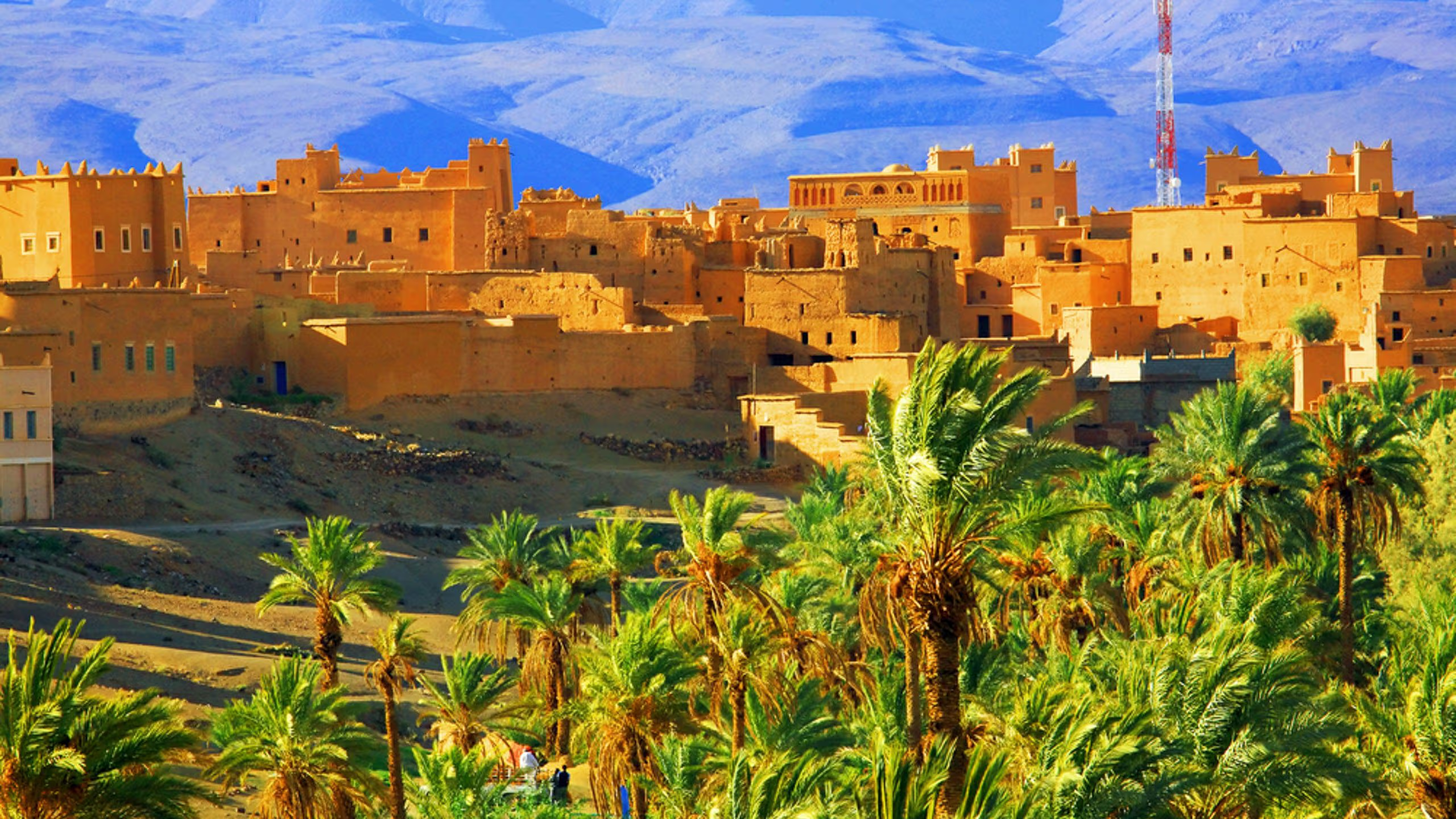
- Ouarzazate and the desert corridor: the studio base for desert and period work, with Atlas and CLA studio facilities, kasbahs and fortified villages nearby and dune and mountain-pass terrain within a day’s reach; the natural anchor for any schedule with desert footage.
- Marrakech: medina, souks, Djemaa el-Fna and the Ville Nouvelle, with the Palmeraie and the High Atlas foothills close by; a base for commercials and features that need city texture and quick access to mountains.
- Fez: the most intact medieval urban environment in North Africa, a UNESCO medina that adds a coordination layer and rewards a small, well-briefed unit.
- Chefchaouen: the blue town, used for travel, fashion and brand work and as a stand-in for older Mediterranean urbanism; narrow lanes and verticality favour a light crew.
- Essaouira and the Atlantic coast: ramparts, a working harbour and coastal light, used across features, series and commercials; wind and season shape the schedule.
- Casablanca and Rabat: the crew, rental and administrative base, and the contemporary city grid.

Crew, Equipment and Temporary Admission
Morocco has an experienced production crew base centred on Casablanca, Rabat and Ouarzazate, built through decades of international features and series, and CCM’s professional identity card system defines who counts toward the Moroccan-technician quota on a permit. Camera, grip and lighting equipment for mid-sized productions is available through Casablanca rental houses, with a smaller specialised inventory in Ouarzazate; larger or broadcast-specific packages are often brought in by the production.
Equipment brought into Morocco is commonly admitted under an ATA carnet or another customs-approved temporary-admission procedure, with the inventory, broker and re-export formalities confirmed before the unit travels. Equipment added after the carnet is issued may need revised or separate documentation. Customs treatment is decided by the customs authority on the day against the paperwork presented, so the file is prepared to that standard rather than to an assumed clearance. A reference checklist for carnet preparation and airport clearance is in our Airport Cargo and Customs Checklist for Film Equipment.

Commercials and Short-Schedule Work
Advertising and branded work often runs on compressed schedules, sometimes across two or three locations. The CCM advertising-spot category carries the shortest published processing period, but the dossier still has to be complete, the talent and location agreements still have to be in place, and product or brand clearances still have to be confirmed. For commercial work the fixing and line-production layers are usually engaged together under one plan, since there is no slack in the schedule for a separate permit consultant and a separate ground team to reconcile.
Morocco Film Rebate
Whether a production qualifies for Morocco’s incentive for foreign productions, and on what thresholds, formats and claim terms, is assessed against the budget at planning stage and owned on our Morocco film incentives page. This service page does not restate the rates or conditions; it builds the qualifying structure into the production plan where the owner page says a project is eligible.
Work With Film Fixers in Morocco for Your Shoot
Desert and mountain work is most comfortable from roughly October to April; coastal and city work runs year-round, with summer heat in Marrakech and the interior affecting crew welfare and camera packages; Ramadan dates move each year and are checked against the schedule for working hours and location availability. None of these is a rule, but each shapes a budget and a call sheet.
To engage our film production services in Morocco, whether a fixing scope or a full line producer in Morocco engagement, send the project brief, format, intended locations, shoot dates, crew plan and equipment list. We will confirm with the accredited Moroccan production company the CCM category and the published processing period that applies, the location permissions the brief triggers, the crew and equipment route, and the fixing scope, before the budget is locked.
