
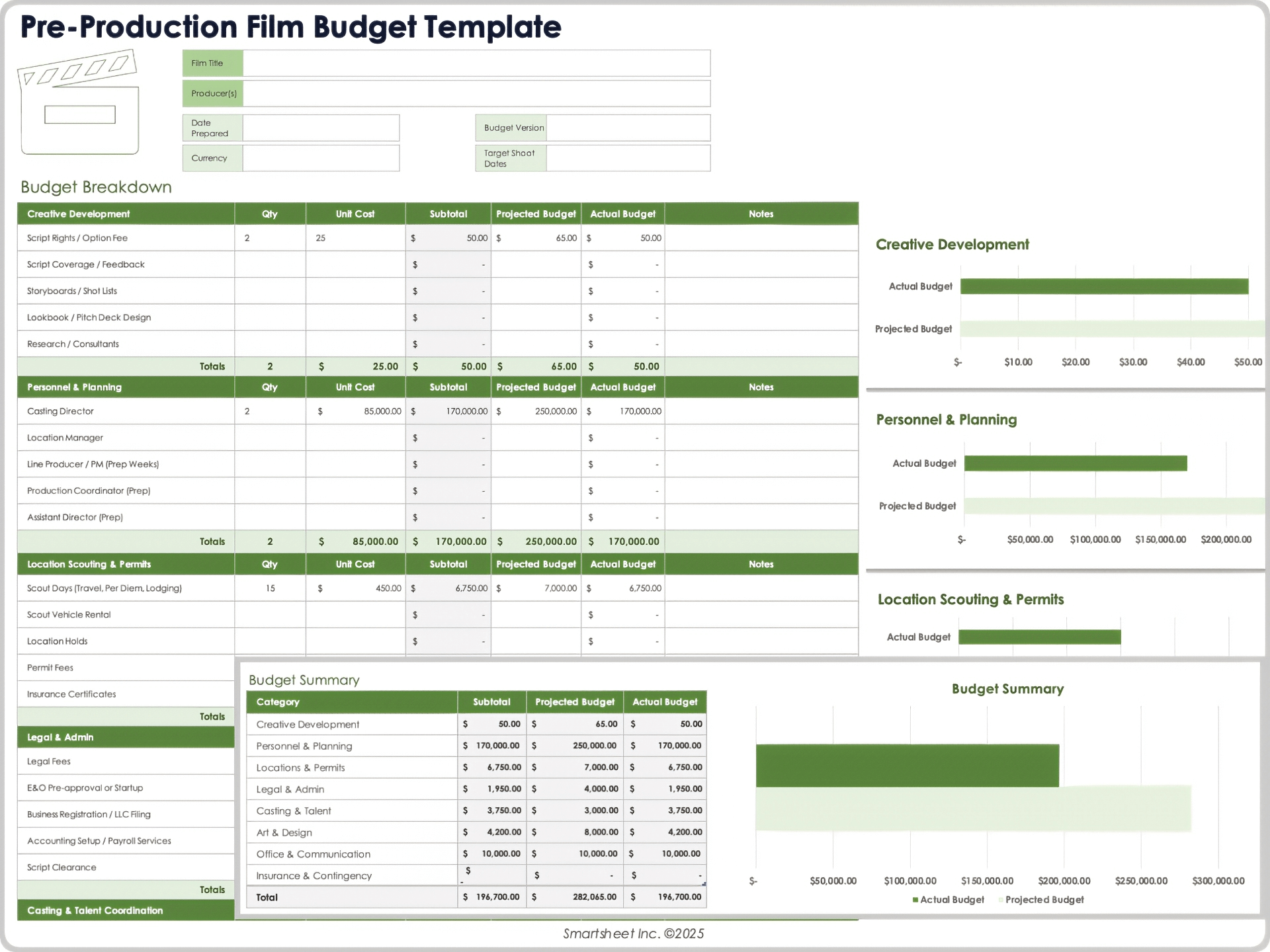
Cost Coding as Financial Control Infrastructure
Film cost coding architecture defines how every production expense is classified, structured, and traced within a controlled reporting system. It is not a bookkeeping formality. It is the structural layer that translates operational activity into governed financial data. Within multi-country film budget consolidation systems, film cost coding functions as the connective layer between territory-level execution and centralised studio oversight. Without disciplined classification logic, consolidation becomes aggregation without control.
Budgeting defines projected allocations. Accounting records transactions after they occur. Film cost coding sits between these disciplines. It governs how costs are categorised at the point of commitment and entry. If budgeting answers “how much” and accounting answers “what happened,” coding answers “where does this cost structurally belong.” That distinction determines whether reporting remains analytically reliable across multiple jurisdictions.
In international productions, film cost coding architecture must align with studio reporting templates, incentive eligibility thresholds, contractual segmentation, and audit comparability requirements. Each expense must enter a predefined classification hierarchy. That hierarchy must remain consistent across currencies, territories, and departments. When coding discipline weakens, financial clarity deteriorates quickly.
Film cost coding therefore operates as financial control infrastructure. It establishes traceability before variance appears. It ensures department heads operate within controlled classification boundaries. It allows consolidation engines to aggregate comparable data rather than distorted inputs. In cross-border production systems, classification integrity directly determines reporting credibility.

Coding Logic vs Budget Structure
Budget structure represents planned allocation across departments. Coding logic represents the operational taxonomy that captures actual spend. They must align, but they cannot be identical.
A production budget may allocate a single line to art department construction. Film cost coding architecture may subdivide that allocation into materials, contracted fabrication, labour, equipment hire, logistics, and contingency utilisation. This layered taxonomy enables diagnostic variance isolation. Without that structure, cost movement hides within broad departmental envelopes.
Effective film cost coding mirrors budget intent while adding analytical depth. It isolates incentive-eligible expenditure from non-qualifying items. It separates fixed contractual commitments from variable operational exposure. It differentiates base currency tracking from local denominated spend where required.
If coding merely replicates budget headings without structural refinement, reporting loses precision. Variance analysis becomes retrospective rather than preventative. Film cost coding architecture must anticipate scrutiny and enable interrogation at any classification level.
Misclassification Risk in Multi-Territory Shoots
Misclassification is not a clerical oversight. It is a systemic control failure. In multi-territory production, inconsistent film cost coding can distort consolidated financial visibility within a single reporting cycle.
For example, payroll recorded under vendor services in one jurisdiction and under labour categories in another creates artificial variance during central reporting. Incentive claims may become misaligned. Audit reconciliation may require manual intervention. Bond oversight may intensify due to perceived structural inconsistency.
Error propagation accelerates in cross-border systems. A mis-coded vendor milestone can affect burn analysis, rebate eligibility segmentation, contract compliance mapping, and liquidity forecasting simultaneously. When consolidation layers aggregate flawed inputs, inaccuracies scale upward.
Robust film cost coding architecture mitigates this exposure through predefined mapping standards, restricted code creation protocols, and central governance over classification adjustments. It treats coding as a control layer, not an administrative task. In global film production finance, classification discipline determines whether financial oversight remains predictive or collapses into correction.
Chart of Accounts Design in Global Production
A chart of accounts in global film production is not a static accounting template. It is the structural framework that governs how financial data is classified, segmented, and consolidated across territories. In cross-border environments, chart design must support comparability, incentive compliance, and studio-level reporting requirements simultaneously. Poor design creates distortion long before audit review begins.
Standardised chart architecture begins with a unified top-level hierarchy. Primary account groups typically mirror major production categories such as above-the-line (ATL), below-the-line (BTL), post-production, contingency, and financing costs. However, global productions require more than broad segmentation. Each category must allow structured sub-coding to capture operational granularity without fragmenting reporting logic.
Territory-specific sub-coding enables local precision while preserving global consistency. For example, labour classifications may differ between jurisdictions due to statutory frameworks. The master chart must therefore accommodate territory nuances without altering top-level alignment. This ensures that consolidated reporting reflects structured comparability rather than regional improvisation.
ATL and BTL segmentation discipline is central to this design. Studios often monitor ATL exposure separately due to contractual sensitivity and reputational implications. BTL categories, by contrast, may require incentive isolation and departmental variance tracking. The chart of accounts must preserve these distinctions at every coding level. When segmentation blurs, analytical clarity degrades.

Incentive-Compliant Coding Layers
Incentive-eligible cost isolation demands structural precision. Many rebate jurisdictions require strict separation between qualifying and non-qualifying expenditure. If incentive tagging occurs after aggregation, verification risk increases.
Effective chart design embeds eligibility flags within coding layers. Each account allows for structured tagging that distinguishes local spend, imported services, and excluded categories. This ensures that incentive reporting derives directly from classified data rather than manual adjustment.
Segregated coding layers also protect productions during verification review. When incentive claims align directly with ledger architecture, audit preparation becomes procedural rather than corrective. Reporting consistency across departments reinforces compliance credibility.
Comparative Reporting Across Jurisdictions
Global studios require cross-territory comparability. A production shooting across three countries cannot present materially different reporting logic in each region. Chart of accounts design therefore enforces a harmonised financial language.
Mid-cycle variance reviews often reference frameworks similar to a hot cost film production finance audit. In such reviews, comparability between projected exposure and actual coded expenditure determines governance confidence. If one territory codes transport under logistics while another embeds it within departmental spend, variance analysis becomes unreliable.
Comparative integrity depends on disciplined mapping between local accounting practices and central reporting structure. Standardisation does not eliminate regional specificity; it regulates it within a controlled hierarchy.
Territory-Level Sub-Ledger Isolation
Sub-ledger isolation provides structural containment for jurisdiction-specific complexity. Each territory may maintain its own statutory requirements, vendor tax structures, and payroll obligations. Rather than allowing these variations to distort the master ledger, the chart design isolates them within controlled sub-ledgers.
These sub-ledgers map upward into unified reporting categories. This approach preserves local compliance without compromising consolidated visibility. It also enables audit traceability by maintaining clear lineage from invoice to top-level category.
In global production finance, chart of accounts design is governance architecture. It defines how information travels from territory execution to studio oversight. When structured correctly, it ensures that coding discipline, incentive compliance, and comparative reporting operate within one coherent financial system.

Real-Time Cost Capture and Reporting Compression
Real-time cost capture determines whether film cost coding architecture operates as a control system or a retrospective record. In global production, expense velocity is high. Crew payroll, vendor deposits, equipment rentals, and location fees accumulate daily. If cost entry lags behind operational activity, reporting integrity degrades before variance becomes visible.
Daily cost entry discipline is therefore non-negotiable. Departments must submit coded expenditures within predefined reporting windows. This includes petty cash reconciliation, purchase order matching, milestone billing confirmation, and payroll uploads. When entries are delayed, financial visibility compresses into artificial spikes. What appears as sudden overspend may simply be reporting backlog.
Departmental submission cadence governs stability. A structured cycle—daily for high-volume departments and weekly for controlled categories—maintains analytical continuity. Without cadence discipline, cost flow becomes irregular. Variance analysis then reflects timing distortion rather than structural deviation from budget.
Reporting compression occurs when multiple delayed entries enter the ledger simultaneously. This creates the illusion of cost escalation within a single reporting cycle. Studio dashboards may interpret this as uncontrolled burn. In reality, the distortion originates from latency rather than actual overspend.
Reporting Latency and Variance Drift
Reporting latency is the time gap between cost commitment and ledger entry. Even short delays can distort variance logic in fast-moving productions. When commitments remain uncoded, projected balances appear artificially stable. Once entered, variance shifts abruptly.
Variance drift emerges when repeated latency accumulates across departments. Each delay compounds forecast inaccuracy. Cash flow projections may remain aligned while cost reports understate exposure. This divergence undermines executive oversight and weakens predictive control.
Real-time capture reduces this drift. Structured submission cutoffs, automated integration from payroll systems, and purchase order pre-approval mapping limit discretionary delay. The objective is not speed for its own sake. It is the preservation of reporting symmetry between operational reality and financial representation.
Departmental Coding Accountability
Departmental accountability reinforces real-time discipline. Each department head must understand not only budget limits but also coding precision requirements. Misclassified or delayed entries affect consolidated dashboards and studio reporting.
Clear accountability matrices define who codes, who reviews, and who approves entries. Finance controllers validate category alignment before final posting. Escalation triggers activate when departments exceed submission windows or introduce recurring classification errors.
Studio dashboard integration depends on this structure. Executive reporting tools draw directly from coded ledgers. If data integrity weakens at entry level, dashboard outputs lose credibility. Real-time cost capture therefore links operational discipline with executive transparency.
In global film production, reporting compression is avoidable. Structured cadence, latency control, and departmental accountability transform cost capture from reactive bookkeeping into continuous financial governance.

Cross-Border Cost Mapping and Contract Symmetry
Cross-border cost mapping ensures that contractual commitments align structurally with film cost coding architecture. In international production, vendors operate under jurisdiction-specific contracts, currencies, and regulatory frameworks. Without disciplined alignment between contract structure and ledger coding, financial reporting fractures across territories. This is where cross-border contract symmetry film production becomes operational rather than theoretical.
Mapping vendor contracts to coding categories begins at commitment stage. Each contract line item—crew rate, equipment rental, location access, service retainer—must correspond to a predefined coding classification within the chart of accounts. If contracts are drafted without reference to coding logic, reconciliation later requires interpretation. Interpretation introduces error. Error propagates through consolidation systems.
Currency denomination introduces a second layer of complexity. Contracts may be denominated in local currency, while reporting occurs in a base production currency. Cost coding must therefore preserve original currency values while linking to exchange-adjusted reporting layers. Without this dual-layer capture, base-currency dashboards obscure real exposure and distort variance interpretation.
Contract symmetry alignment refers to structural mirroring. Vendor agreements across territories must follow comparable classification logic, even if legal wording differs. A lighting equipment contract in one country should map to the same coding architecture as its equivalent in another. Structural symmetry enables comparability, audit clarity, and incentive validation.
Compliance documentation traceability reinforces this symmetry. Each coded entry must trace back to a contract, invoice, and approval record. If documentation cannot be matched directly to its coded classification, audit defensibility weakens. In cross-border environments, this risk multiplies due to language, tax, and regulatory variation.

Contract Line Items vs Coding Categories
Contract line items reflect negotiated obligations. Coding categories reflect reporting architecture. The two are not automatically identical.
For example, a vendor invoice may bundle transport, crew overtime, and equipment insurance under a single billing description. Coding discipline requires disaggregation into appropriate categories. If bundled costs are coded under a single heading for convenience, reporting precision deteriorates.
Misalignment often occurs when contracts are drafted by operational teams without financial architecture oversight. Early finance review prevents downstream recoding and classification disputes. Proper mapping therefore begins before signatures are executed, not after invoices arrive.

FX Translation and Reporting Integrity
Foreign exchange translation introduces reporting volatility. Even when operational costs remain stable, exchange movements alter base-currency totals. Coding systems must preserve three elements: contracted currency, transaction currency, and reporting currency.
Failure to isolate these layers creates artificial variance. A budget overrun may reflect FX fluctuation rather than cost escalation. If coding does not separate FX impact from operational spend, executive interpretation becomes unreliable.
Real-time exchange tracking integrated into coding architecture maintains reporting integrity. Variance analysis then distinguishes between currency exposure and operational deviation. In global film production, cross-border cost mapping is therefore not an accounting formality. It is structural financial governance that preserves clarity across contractual, currency, and compliance layers.

Audit Readiness and Escalation Governance
Audit readiness in film cost coding architecture is not a post-production activity. It is embedded governance operating in parallel with cost capture. Variance threshold governance defines when financial movement shifts from monitoring to intervention. These thresholds must be predetermined at budget lock stage. Without defined triggers, escalation becomes discretionary and reactive.
Coding error detection systems function as internal safeguards. Automated exception reporting, duplicate vendor detection, category deviation alerts, and threshold breach flags reduce dependency on manual review. When coding discipline integrates with real-time dashboards, irregularities surface before consolidation cycles close. This compresses corrective timelines and protects reporting integrity.
Escalation protocols define who intervenes and at what level. Department heads address minor misallocations. Line producers manage structural category drift. Executive producers and studio finance intervene when aggregate variance breaches predefined tolerance bands. Governance fails when escalation is informal or personality-driven rather than threshold-driven.
Bond and studio audit layering introduces an additional compliance tier. Completion guarantors require continuous oversight of budget integrity. In this framework, completion bond in international film production operates as a financial safeguard that intersects directly with coding transparency. Bond auditors evaluate not only total spend but category accuracy, commitment tracking, and deviation patterns. Studio finance teams apply parallel scrutiny to ensure alignment with greenlit financial models.
Documentation traceability matrices reinforce this layered structure. Every coded transaction must link to an approval, contract reference, invoice, and payment confirmation. The traceability matrix maps these elements vertically. When a variance appears, investigators should isolate its origin without interpretive ambiguity. Absent documentation symmetry weakens audit defensibility and extends resolution cycles.
Escalation Triggers in Cost Variance
Escalation triggers operate through quantitative thresholds and qualitative indicators. Quantitative triggers include percentage deviation from budget category, accelerated burn rate relative to schedule, or concentration of spend within high-risk departments. Qualitative triggers include inconsistent vendor descriptions, repeated reclassification, or delayed invoice submission.
When triggers activate, governance requires structured response. Reclassification must be documented. Revised forecasts must update consolidation systems. If variance persists, escalation elevates to executive oversight. Without structured triggers, financial drift normalizes and erodes predictive control.
Documentation Chain of Custody
Documentation chain of custody ensures that each cost moves through defined approval and validation stages. Contracts authorize commitment. Purchase orders confirm intent. Invoices validate execution. Coding entries record classification. Payment records close the loop.
Breakdown at any stage creates audit exposure. Missing approvals undermine contractual legitimacy. Incorrect coding distorts reporting. Delayed documentation compresses review timelines and increases error probability. Chain integrity therefore underpins both studio audit and bond compliance.
Structural Integrity Through Coding Discipline
Film cost coding and reporting architecture functions as a control layer that stabilizes global production finance. It separates budgeting assumptions from real-time execution data. When coding remains disciplined, reporting becomes reliable rather than interpretive.
Liquidity systems depend on accurate classification. Consolidation engines depend on category symmetry. Audit processes depend on traceable documentation. If coding deteriorates, all dependent systems weaken. Variance expands, liquidity projections distort, and executive oversight becomes reactive.
Predictability is the currency studios value most. Coding discipline enables that predictability. It clarifies burn rate, isolates incentive-eligible expenditure, distinguishes FX impact from operational drift, and supports cross-border consolidation accuracy. In multi-territory environments, this structural clarity becomes the difference between controlled execution and financial opacity.
Cost coding therefore extends beyond accounting mechanics. It operates as financial governance infrastructure. When embedded correctly, it aligns departments, territories, contracts, and oversight layers into a single coherent reporting spine. Structural integrity is not achieved at audit stage. It is built daily through disciplined coding architecture.
