
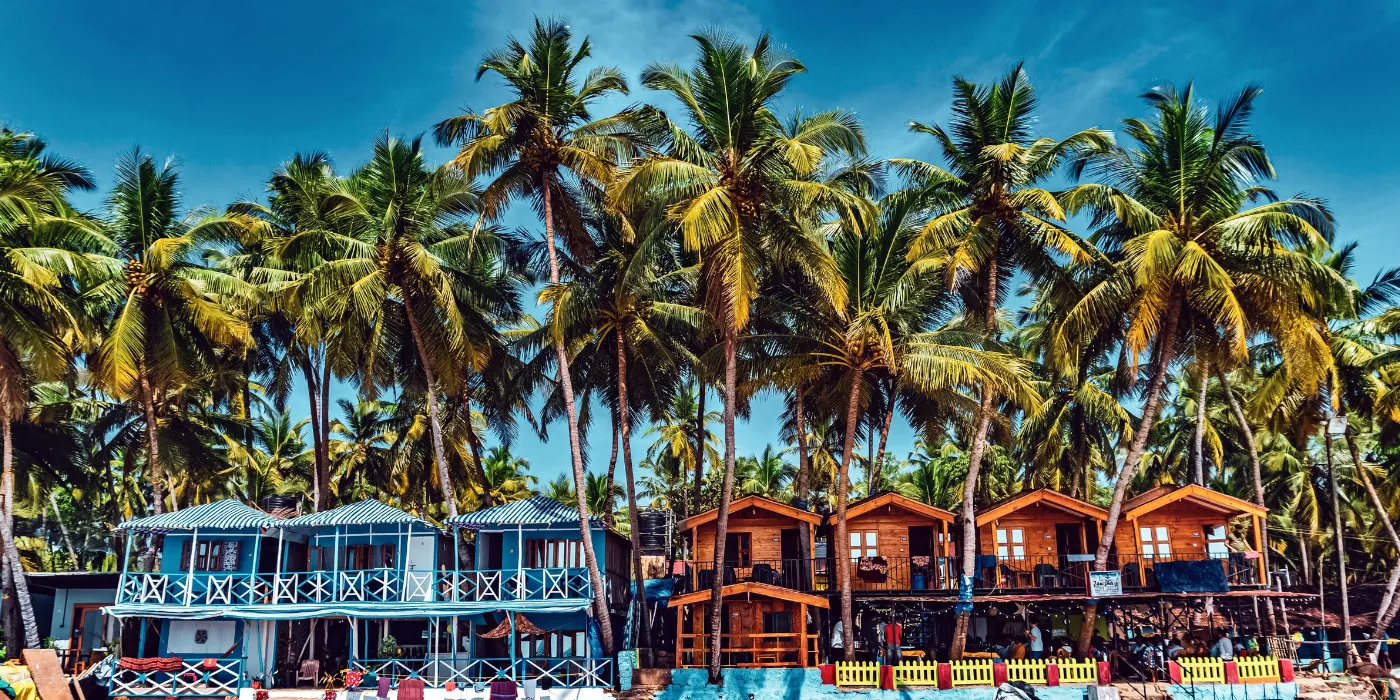
The cost of filming in Goa is shaped by one fact that sets the state apart from the rest of India’s shooting map: it is a premier location but not a production base. Goa offers beaches, Portuguese heritage, forts and waterfalls inside a compact radius, yet it carries a thin local technical crew and equipment pool, and unlike Madhya Pradesh, Uttar Pradesh or Gujarat, it runs no state film subsidy. The practical result is that a Goa shoot is a logistics-import exercise: the location is here, but the unit, the kit and most heads of department travel in, primarily from Mumbai.
That import-and-permit reality is what a line producer in Goa plans a budget around. Costing Goa accurately means holding three things in view at once: the price of importing a crew and equipment package, the permissions the state’s film-shooting rules require, and the way peak tourist season moves accommodation and transport rates. This guide sets out each so a production can cost Goa on paper rather than discovering the real numbers on the ground.
What Drives a Goa Film Budget
A Goa budget is driven less by the day rate of a standing local unit than by what a production has to carry with it. Four variables move the number more than any others: the absence of a state rebate, the cost of importing crew and kit, the permit route, and the season a shoot lands in. The first two decide the size of the below-the-line spend, and the second two decide how predictable it is.
What You Bring Versus What Goa Supplies
The split is the single most useful thing to fix early. Goa reliably supplies the location layer and the ground layer: filming locations, junior and support crew, production assistants, transport, accommodation liaison, security coordination and local fixers who hold the civic relationships. What it does not supply at depth is the technical layer, so cinematographers and other heads of department, along with camera, lighting, grip and generator packages, are brought in. Deciding what to source locally and what to import is the largest single swing in an early Goa budget, because every imported role adds travel, transport and per-diem lines on top of its day rate.
Where the Money Actually Goes
On a typical Goa schedule the below-the-line weight sits in a handful of places. The imported crew carries a day rate plus travel, accommodation and per-diems for the shoot length. The equipment package carries rental plus cartage from Mumbai and insurance in transit. Accommodation and unit base are a larger line than in most Indian shoots because Goa prices move with tourism rather than with production. Location fees, permit charges, transport within the state and security round out the picture. Because none of these is offset by a rebate, discipline on the imported footprint, bringing what the frame genuinely needs and no more, is the main lever a producer holds over the final figure.
A Practical Budgeting Sequence
The order of operations keeps a Goa budget honest. Lock the location plan first, because it decides the base and the moves. Fix the local-versus-imported split next, since that sizes the travel and per-diem load. Then take firm Mumbai quotes for the crew and kit package, so the largest imported lines are real numbers rather than estimates. Set the shoot dates against the season calendar before booking accommodation, because the same rooms cost very different amounts in December and in February. Finally, map the location-specific permits and their lead times, and hold a contingency line for weather and access. Run in that sequence and the figure firms up early; run out of order and the imported and accommodation lines tend to drift.
Crew and Equipment: The Mumbai Import Model
Goa does not carry a deep standing crew or a full rental ecosystem of its own, so the working model for anything beyond a small shoot is to base the unit locally and bring the technical package in. In practice that package comes from Mumbai.
Kit and Heads of Department from Mumbai
Mumbai is the nearest full-service production hub, and its rental houses hold the current camera, lighting and grip inventory, including international-standard bodies and glass, that a feature or high-end commercial expects. Specialist heads of department are typically engaged there too, usually through or alongside a line producer Mumbai team, and dispatched to Goa on a schedule. This means lead times govern the plan: kit and key crew have to be confirmed and moved from Mumbai in advance, so a Goa shoot is built backwards from Mumbai availability as much as from the Goa locations themselves.

What Staffs Locally
Goa does supply a working ground crew. Production assistants, spot and support staff, security, catering, transport teams, local location managers and junior camera and lighting hands are available in the state, along with the fixers who carry the panchayat, municipal and police relationships that clear a beach or a heritage lane. The rule of thumb is that Goa staffs the departments that do not need to travel and imports the ones that do. Hiring that local layer well also trims the imported footprint, which is where the savings on a Goa shoot are found.
Connectivity Keeps the Import Affordable
Goa’s saving grace is that the import is a short hop rather than a long haul. Mumbai and Goa are linked by fifteen to twenty direct flights a day at roughly seventy minutes, by the Konkan railway and the Vande Bharat service, and by a ten to twelve hour road route for vehicles and heavy kit. That density keeps crew mobilisation and equipment cartage cheaper and faster than importing to a remote location, and it lets a production stage a Mumbai to Goa move without an overnight gap. South India, chiefly the Bengaluru and Hyderabad pools, serves as a secondary source when Mumbai is stretched.
Accommodation and the Unit Base
Accommodation is a heavier line in Goa than in most Indian shoots, because the state prices its rooms for tourism, and it swings hard by season. The first decision is where to base. A north Goa base, around the Baga to Anjuna belt, sits close to the busy beaches, the nightlife locations and Fontainhas, and suits energy and commercial work; a south Goa base, around Palolem or Cavelossim, sits closer to the quieter beaches and reads calmer and cleaner on camera. Rooms range from guesthouses and mid-tier hotels to resort rates that climb steeply in peak weeks, so unit size and base choice interact directly with the budget.
The practical move is to fix the base early against both the location plan and the calendar, keep the unit compact, and book ahead of the year-end crush. A base chosen for proximity to the day’s locations also cuts the transport and turnaround time that a spread-out Goa schedule otherwise loses to road moves between the north and the south.
Moving the Unit Within Goa
Goa is small, but its geography still shapes a schedule. The state runs roughly a hundred kilometres north to south, and the busiest locations sit at opposite ends: Fontainhas and the northern beaches around Panaji and Baga, the quieter southern beaches past Margao, and the Western Ghats interior toward Dudhsagar. A unit based at one end loses real time reaching the other, and the single-lane stretches and river crossings slow a convoy carrying camera and grid.
Two practical points follow. First, group the shot list by zone and move the base once rather than shuttling daily across the state, the same corridor logic that keeps any spread-out schedule efficient. Second, build the ferries and bridges into the plan: the river islands of Divar and Chorao are reached by short ferry crossings that are charming on camera but need timing for a vehicle-heavy unit. In the monsoon, add margin to every road move, because the coastal routes slow noticeably in heavy rain.

Filming Locations in Goa
Goa’s value on camera is the range of registers packed into a small area: tropical coastline, Portuguese-era heritage, hilltop forts, river islands and a Western Ghats waterfall, most within a day’s reach of a single base. Each register carries its own access and permit note.

Beaches and Coastline
The beaches are the obvious draw and split by character. The northern strip, Baga, Calangute, Anjuna and Arambol, reads busy and commercial and suits energy, nightlife and crowd work; the southern beaches, Palolem and Agonda among them, read calmer and cleaner and suit romance, fashion and quiet coastal frames. Tidal timing, public access and lifeguard and municipal coordination shape a beach shoot day more than anything else, and a fixer who knows which stretches clear quickly is worth the day rate.

Portuguese Heritage: Fontainhas and Old Goa
Goa’s colonial layer has no real substitute in India. Fontainhas, the Latin Quarter of Panaji, gives narrow lanes and coloured Portuguese facades that have stood in for old European streets, seen in films including Dilwale. Old Goa and Panaji carry the churches, the white Mary Immaculate church above Panaji and the basilicas of Old Goa, that have appeared across Hindi cinema from Khamoshi to Josh. Several of these are heritage and, in Old Goa, nationally protected sites, so access runs on booked windows and conservation conditions rather than open filming.
Forts, Islands and the Western Ghats
The forts add scale and vantage. Aguada and Chapora sit over the coast and deliver panoramic and period frames; the friendship scene at Chapora in Dil Chahta Hai remains one of Goa’s most recognised film moments. The river islands of Divar and Chorao, and the spice country inland, give quiet rural and green registers a short ferry or drive from Panaji. Further out, the Dudhsagar falls in the Western Ghats give a natural-wonder location that has carried sequences from Chennai Express, while Goa’s coast and streets have doubled for international work such as the Bourne Supremacy. The further and higher locations carry their own transport, forest and safety lines that belong in the budget from the start.

Permits and the Film-Shooting Rules
Goa filming permissions run under the Goa (Regulation of Film Shooting) Act, 2021 and the Rules made under it in 2023, administered through the state’s single-window film cell as the competent authority. A producer applies through an authorised representative, who is empowered to file the application and handle the documentation, and permission is granted subject to conditions rather than as a blanket clearance.
Because Goa is a tourist state, several of those conditions bear on a schedule. Filming is not permitted in prohibited or restricted areas; shoots at tourist places must avoid nuisance, disturbance or obstruction to the public; and sound is constrained, with only low-volume static loudspeakers allowed to limit noise. Layered on top are the clearances a specific location needs: the Archaeological Survey of India for the protected monuments of Old Goa, the forest department for Dudhsagar and the sanctuary around it, panchayat or municipal sign-off for beaches and public streets, police coordination for crowd and traffic control, and drone permissions for an aerial unit. The competent authority can withdraw a permission where terms are breached, so planning these in, rather than meeting them on the day, is what keeps a permitted Goa shoot on schedule. A compliance checklist for Indian shoots sets the documentation out in full.

The Incentive Reality: No State Rebate
This is where Goa differs most from the states productions often compare it against. Goa runs no general production cash rebate of the kind subsidised states offer. That does not mean nothing is available: a foreign production shooting in Goa can still claim the national incentive, the central cash rebate on qualifying Indian spend, routed through the India Cine Hub single-window under the Ministry of Information and Broadcasting. The national scheme rebates a share of qualifying Indian expenditure up to a cap, with additional bonuses for employing Indian manpower and for significant Indian content, but it excludes overseas costs and applies chiefly to foreign productions.
The budget consequence is concrete. A comparable shoot in a subsidised state can recover a state share of eligible spend that a Goa shoot cannot, and an Indian domestic production in Goa has no state offset at all. So Goa competes on location value and on its proximity to Mumbai rather than on incentives. Where each state stands is set out in our film incentives across Indian states comparison, and the state-by-state position is detailed in the statewise incentives reference for India. For most productions the honest read is that Goa is chosen for what it looks like and how quickly a unit reaches it, not for what it pays back.
Season and Timing
When a shoot lands moves a Goa budget almost as much as what it shoots. The December to January peak is festival and tourist season, and it is expensive: accommodation runs to premium resort rates, and local transport surges well above official fares, in some cases by several times, as year-end demand peaks. November adds its own pressure, when the International Film Festival of India fills Panaji and its hotels. The shoulder windows, roughly October and February to March, hold stable weather with far lower accommodation and transport pressure, which is where a cost-controlled schedule usually sits. The June to September monsoon greens the state and drives Dudhsagar at its most dramatic, but it slows outdoor coastal work and road moves. Locking dates against this calendar early is one of the cleaner ways to hold a Goa budget down.
For daylight-dependent coastal work the usable window matters too: the winter months give clean, even light and calm seas that suit beach and aerial work, while the pre-monsoon heat of April and May is harder on outdoor units and crowds. Most productions target the shoulder-into-winter window for the balance of workable light, manageable cost and reliable access, and treat the deep peak weeks and the monsoon as trade-offs to plan around rather than defaults.
How a Line Producer in Goa Runs the Budget
Put together, a Goa shoot rewards a production that treats it as an import-and-timing exercise rather than a place with a large local unit to hire. The job is to fix the local-versus-imported split early, confirm and move the Mumbai crew and kit package on a schedule, secure the location-specific permissions under the 2021 rules before the day, base the unit sensibly against the location plan, and time the shoot away from the peak-season surge. That coordination is exactly what line producers in Goa handle: assembling the imported package, holding the local ground layer, and building the budget backwards from crew availability, permit timelines and the calendar. Costed that way, the cost of filming in Goa stays predictable, and the absence of a state rebate becomes a number a production plans around rather than one that surprises it at wrap.
