
A script sets its story in the Hindu Kush, a Pakistani border town or a part of western China, and the location scout confirms that the real place looks right. Then the conversation moves from the creative team to the people who have to insure the shoot, staff it, and get the footage home. That is often where the plan changes. The question is rarely whether the original location is beautiful. It is whether a crew, a camera package and a cast can work there for the length of the schedule without the production stalling. When the answer is no, many such productions consider India as a stand-in and rebuild the look here, which is where a line producer in India enters the decision.
This page is written for that moment: the producer, the studio risk officer, or the production manager weighing a difficult original location against an India shoot that recreates it. It is not an argument that India is safer in the abstract. It walks through the practical reasons productions reconsider parts of Pakistan, Afghanistan and western China, the question that tends to settle it, and how the same frames get built in Ladakh, Kashmir, Rajasthan and Indian cities.
Why Productions Reconsider Pakistan, Afghanistan and Western China
The reasons are operational rather than visual. A production needs a location that its cast and crew can travel to, that its insurers and financiers will accept, and where permits, equipment movement and data handling can be planned with sufficient certainty. Afghanistan, security-sensitive parts of Pakistan and restricted areas of western China can each present serious obstacles across one or more of those tests. The assessment has to be made against the exact region, subject matter, nationality of the crew and current advisory position rather than against the country name alone.
Insurance and completion-bond terms are often the first constraint. Government travel advice, the precise location, the nationality and profile of the cast, security provision and evacuation planning can all affect whether cover is available and what exclusions apply. Where the required cover or completion protection cannot be secured on acceptable terms, studio and broadcaster financing may no longer support the original location. Producers who have run these questions before tend to reach a familiar shortlist of workable substitutes, which is the ground the safe filming alternatives discussion covers in detail.

Access and moving equipment
Access is a second constraint. Permits for foreign crews can be slow or conditional, and some of the western Chinese areas most relevant to frontier or Central Asian settings are also among those where foreign filming can face closer scrutiny and more restrictive access. The third is temporary equipment import and the handling of production data. A camera and lighting package has to be admitted under the applicable carnet or temporary-import procedure, used within its conditions and re-exported on schedule, and in a restricted region that round trip and the movement of data can be exactly what cannot be planned with confidence. When insurance, access or equipment movement cannot be settled, the location fails on grounds that have nothing to do with how it photographs. How productions weigh these trade-offs against schedule and money is the subject of how global productions really choose locations.
The Question That Actually Decides It
Strip away the mood boards and the decision comes down to one question: can this location be insured, staffed and cleared for the length of the shoot? If the answer is yes, the original place usually wins, because nothing recreates a real location perfectly. If the answer is no, the production is weighing an India shoot against a schedule that could collapse mid-way when a permit is withheld or cover falls through.
The choice is also not always all-or-nothing. Many productions run the bulk of the schedule in India and send a small second unit to the original location for plates, or fill the gap with archive, licensed footage or virtual-production set extensions. A feasibility pass early, before the location is locked, is what keeps this from becoming an expensive discovery in pre-production, and a location fixer running that check on the ground is cheaper than a bond that will not close two weeks before the first shoot day.
When India Is Chosen Instead
India generally offers a more established insurance, crewing and production-services environment than the regions it stands in for, though cover and pricing still depend on the project, its locations and the activities involved. Foreign productions can staff locally at scale, so a unit does not travel every hand it needs, and temporary equipment import and data handling run through established, plannable procedures. On top of that, the country holds a genuine range of terrain, from high-altitude cold desert to tropical coast, and full film production services exist end to end, so a production is not assembling a supply chain from scratch.
The look is the part producers worry about, and it is the part that turns out to be solvable. Much of what reads on screen as the Hindu Kush, a Central Asian steppe or a western Chinese frontier is landscape grammar: bare mountains, cold light, high passes, mud-brick settlements, desert scale. India carries that grammar in several places, which is why the next section is the practical heart of the decision.
The range is not a talking point, it is a working reality. A single production can shoot cold-desert mountains in Ladakh, alpine valleys in Kashmir, sand country in Rajasthan and a modern city block near Delhi across one schedule, moving units by road and short domestic flights rather than across borders and customs regimes. That is the practical advantage a producer is buying: several looks within one national production framework, with one lead contracting structure, a coordinated insurance programme and a single temporary-import strategy for any travelling equipment.

Recreating the Look Without Leaving the Country
This is not a claim that India can double for anywhere. It is a short, honest map of which originals it recreates well and where the shoot would base. The table below is the version a production actually uses, and each region links to the people who run shoots there.
| Original the script wanted | Where it gets built in India | What the location delivers |
|---|---|---|
| Afghan or Pakistani high-altitude border, Central Asian steppe | Ladakh, Kargil, Zanskar, Spiti and Kinnaur | Bare cold-desert mountains, high passes, mud-brick villages, monasteries |
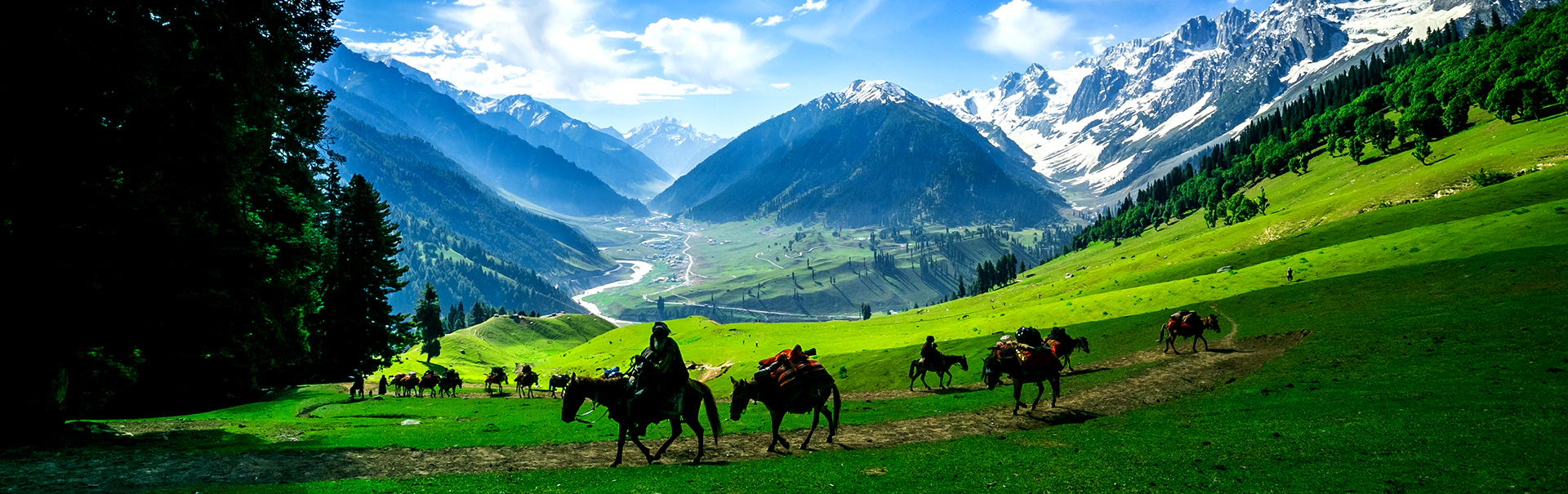
| Kashmiri valleys, alpine meadow, frontier settings | Kashmir valley, Sonamarg, Gurez, Aru | Green alpine valleys, deodar forest, river gorges, snow lines |
| Middle Eastern or Central Asian desert, dune country | Rajasthan: Jaisalmer, Thar, Osian | Sand dunes, fortified towns, caravan and desert-scale exteriors |
| Generic modern Asian or Chinese city, embassy district | Gurgaon, Delhi, Mumbai | Glass towers, wide boulevards, mixed-era streetscapes and interiors |
Borderlands and high-altitude regions
For anything that wanted the Afghan or Pakistani high country, a line producer in Ladakh covers the workhorse region. Kargil and the Leh road corridor give bare, cold-desert mountains and mud-brick settlements that read as Central Asian frontier, and the crews there understand altitude. Access is real but governable: parts of Ladakh need inner-line and protected-area clearances, which the Leh and Ladakh filming permits process handles when it is started early rather than treated as a formality.

When the script wanted green valleys, deodar slopes and snow lines rather than cold desert, a line producer in Kashmir carries it, working from Sonamarg to the meadows above Pahalgam. The two regions together cover much of the Himalayan and Central Asian visual register a production may need, within an established Indian production framework, subject to location-specific security, protected-area and permit conditions.

Desert and frontier towns
Middle Eastern and Central Asian desert, dune fields and walled caravan towns sit in Rajasthan, where a line producer in Rajasthan runs shoots around Jaisalmer, the Thar and villages like Osian. They give sand scale, fortified stone architecture and the frontier-town texture that stands in for a wide arc of the region, with an established base-camp and vendor network around Jaipur and Jodhpur to support a large unit.

Cities and modern exteriors
When the original was a generic modern Asian city, a Chinese business district or an embassy quarter, the substitution happens across the capital region, where a line producer in Delhi handles Gurgaon and central-Delhi exteriors while Mumbai supplies period streets. Gurgaon’s glass towers and wide roads photograph as a contemporary Chinese or Gulf city, and Mumbai’s mixed-era streetscapes cover the older ones; the practical mechanics of that swap are the subject of using Mumbai as a stand-in.
A city double has limits, and it is worth naming them. For anything that genuinely needs mainland Chinese landscape, signage and crowd texture rather than a business-district exterior, a line producer for China filming locations is the honest route. Knowing when the double will not hold is as useful as knowing when it will, and a good stand-in plan is specific about which shots move to India and which few, if any, still need a plate from the original city.

The full catalogue of what India can and cannot double is worth reading before a location is locked; the range of Indian locations that stand in for global settings covers more than most first-time producers expect, but it has edges, and the value is in knowing them early.
What the India Route Costs and Saves
The India decision has a real budget shape, not just a safety one. The savings are concrete: cover and completion protection that can be secured on commercially acceptable terms can allow financing to proceed; local crewing means a smaller travelling unit and fewer international per-diems; and plannable access means the schedule holds instead of absorbing standby days waiting on a clearance. The single largest saving is usually the one that never appears as a line item: the cost of a shoot that would have collapsed at the original location and had to be rescheduled with cast held over.
It helps to be specific about where the money actually moves when a high-risk original is on the table. The line items a producer weighs are concrete, not theoretical:
- Completion bond and cast insurance that may not be issued for the original region, or that carry exclusions which weaken their protection
- Standby and idle-crew days when movement or a permit is held up on location
- Extended accommodation and per-diems for a travelling unit waiting out a delay
- Camera, lighting and grip packages rented and held while the schedule stalls
- Rescheduling and holding fees when principal cast have to be moved to a new window
- Second-unit or plate photography still budgeted for the few shots a double cannot supply
In India most of those risks shrink to a more normal, plannable cost, which is the real comparison a producer is making, not the headline day-rate.
What recreating the look adds
The costs are honest too. Recreating a look takes art-department and location work the original would not have needed. High-altitude bases in Ladakh add acclimatisation days and altitude-rated logistics. And no double is free of compromise, so second-unit or plate photography at the real location is sometimes still budgeted for the few shots India cannot supply. A production weighing the two is comparing a known, buildable cost against an uncertain one, and that is why the India number often wins even when it is not the cheapest line on paper.
Permits, Access and Logistics in India
India is not permit-free, and treating it that way is how a schedule slips. Foreign feature, television and web productions use the India Cine Hub national-permission route before applying for the relevant local permissions, while documentaries, commercials and other formats may follow different central-clearance routes, so the project format is identified before the application strategy is set. Several of the best stand-in regions then add their own layer: Ladakh’s protected-area clearances, forest and wildlife permissions in parts of Kashmir, and monument access through the archaeological authorities. The route is established and materially more manageable when it is mapped during pre-production rather than discovered on arrival.

Logistics scale the same way. Temporary equipment import is an established process when the manifest, carnet or alternative customs procedure, port of entry and re-export responsibility are settled before shipment, and footage and production data can be handled through a workflow agreed with the production and its post or broadcaster requirements. The crew base for each region, Jaipur and Jodhpur for the desert, Leh for the high country, Srinagar for the valley, is developed enough to support a large unit. Aerial work runs through the country’s drone-permission framework, which is worth clearing early for the landscape shots these substitutions lean on. None of this is frictionless, but the routes can usually be mapped and costed in advance, which may offer greater planning certainty than the original location under consideration.
When to Still Shoot the Original Location
There are films the India route should not take. A documentary whose subject is the real place, a story that depends on a specific and unrepeatable piece of architecture, or a production with the security budget and insurance appetite to work in the original region are all cases where the double is the wrong call. Honesty about this protects the work: a stand-in that the audience clocks as fake costs more in credibility than it saves in logistics.

The useful test is whether the location is the story or the setting. When the place functions primarily as a setting, India may be able to recreate the required visual language within a more manageable production structure. When the place itself is the subject, no double is likely to be sufficient, and the honest course is to build the security and insurance case for the original rather than assume a substitute will hold.
Common Questions
Can foreign productions actually shoot in Pakistan, Afghanistan or western China?
It depends heavily on the exact region. Afghanistan is an exceptionally high-risk environment where official travel advice can itself affect insurance. Much of Pakistan is not off-limits, but security-sensitive border and regional areas are, and parts of western China are closely controlled. The workable answer comes from assessing the specific location, the crew’s nationality and the current advisory position, not the country name.
Can Ladakh double for Afghanistan or the Pakistani border?
For the high-country and cold-desert look, yes. Crews working around Kargil, Leh and Zanskar find terrain that reads as Central Asian frontier, with mud-brick settlements and high passes. It will not double for a specific, recognisable Afghan or Pakistani landmark, but for the landscape grammar of the region it holds up on screen.
Does India require permits for foreign film crews?
Yes. Foreign feature, television and web productions run through the India Cine Hub national-permission route, and several stand-in regions add their own layer, such as Ladakh’s protected-area clearances or monument access through the archaeological authorities. Documentaries and commercials may follow a different route, so the format is settled before the application strategy is.
Is shooting in India cheaper than the original location?
Often, but the saving that matters is not the day-rate. It is the removal of the costs a high-risk shoot can carry: cover that cannot be secured, standby days, held equipment and cast rescheduling. Recreating a look adds art-department and location work, so the honest comparison is a known, buildable cost in India against an uncertain one at the original.
When should a production still shoot the real location?
When the place itself is the story rather than the setting, when a specific unrepeatable landmark is central, or when the production genuinely has the security budget and insurance appetite to work there. If the audience would clock the double as fake, the substitution costs more in credibility than it saves in logistics.
Making the Call
Choosing between India and a higher-risk territory is rarely a question of visuals alone. It is a question of whether the production can finish on schedule, within budget and without avoidable disruption. If the story genuinely requires the original location, producers accept and plan for that risk. If the landscape can be recreated without compromising the narrative, many choose India because it offers the same production objective with greater operational certainty. The decision is not about replacing one country with another. It is about choosing the location that gives the production the best chance of finishing successfully, made early as a production call rather than late as a safety compromise.
