
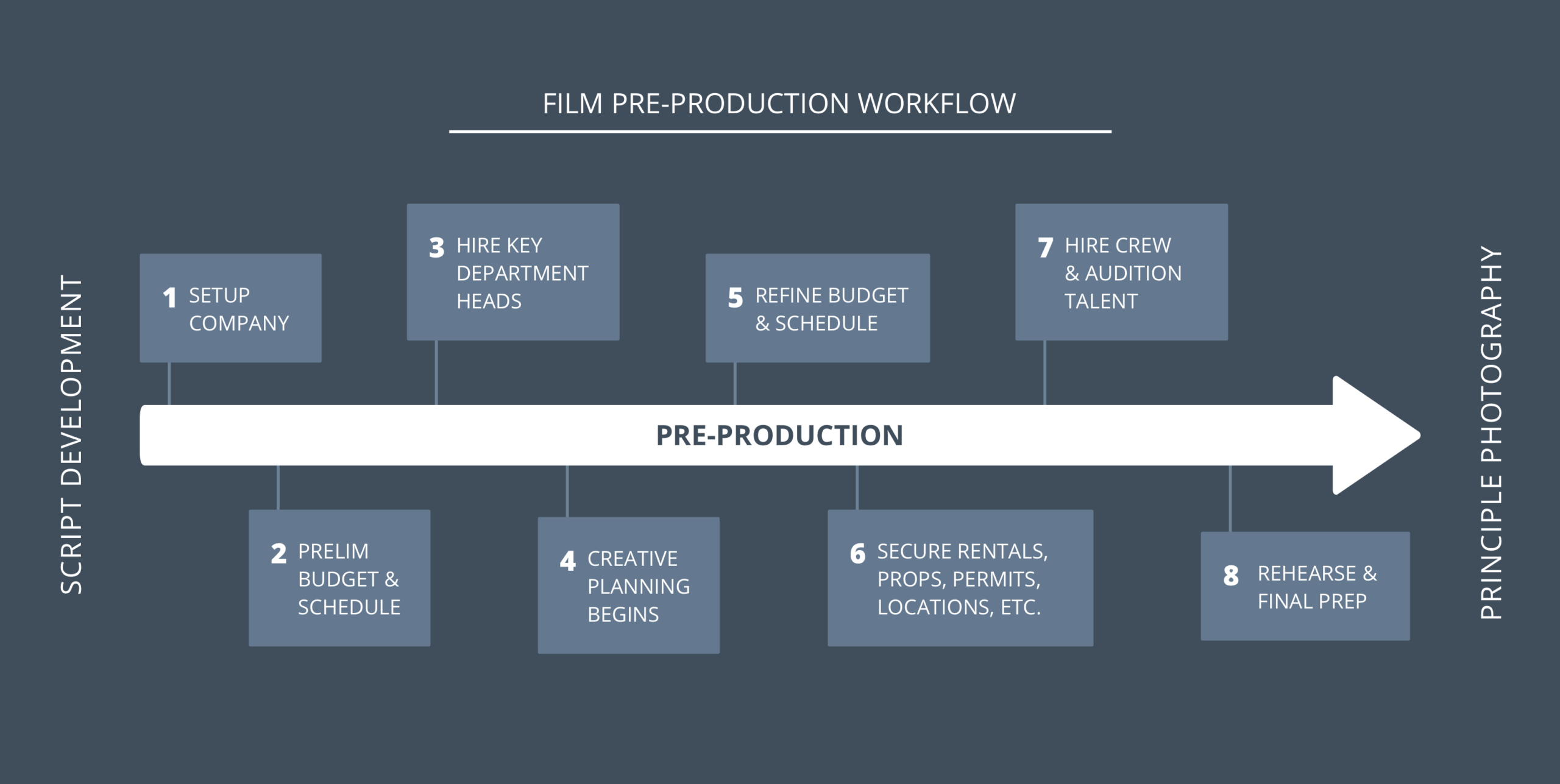
Early Line Production Roles in Indian Cinema
In the early phases of Indian cinema, line production existed primarily as an execution-support function rather than a structured system of control. The role was largely confined to facilitating on-ground requirements, ensuring that daily shooting needs were met within the constraints of limited budgets and localized production environments. Productions were typically centralized within single cities or controlled studio setups, which reduced the need for complex coordination systems or multi-layered decision frameworks.
At this stage, the line producer operated closer to a logistics coordinator than a strategic authority. Responsibilities were reactive and immediate, focused on arranging locations, managing basic crew requirements, and ensuring that production schedules were followed in a linear manner. The absence of large-scale multi-location shoots meant that most decisions were made within a contained operational environment, limiting both risk exposure and the need for structured escalation systems.
Understanding this phase requires a broader look at how early production systems operated in Indian cinema, where production workflows were simpler, less fragmented, and heavily dependent on localized networks rather than integrated execution frameworks.

Execution-focused responsibilities in traditional production systems
Execution during this period was defined by immediate problem-solving rather than forward-planned systems. Line producers were expected to manage daily shooting logistics, including location readiness, crew availability, equipment arrangements, and basic vendor coordination. However, these responsibilities were carried out without the support of formalized processes or standardized workflows.
Budgets were relatively constrained, and financial tracking systems were minimal. As a result, cost control was managed through approximation rather than detailed reporting mechanisms. Scheduling followed a linear structure, with limited contingency planning, as productions operated under predictable environmental and logistical conditions.
Communication channels were also simplified. Most coordination occurred within small teams, often relying on direct interpersonal interactions rather than structured communication hierarchies. This reduced complexity but also limited scalability, as systems were not designed to handle expansion across multiple locations or departments.
The role, therefore, remained execution-driven, with success measured by the ability to keep production moving on a day-to-day basis rather than ensuring long-term operational stability.
Limitations of role scope in early film production environments
While effective within smaller production environments, this execution-focused model imposed clear limitations as the industry began to expand. The absence of structured systems meant that line producers had limited control over broader production variables such as financial governance, regulatory compliance, and cross-departmental alignment.
One major limitation was the lack of integrated planning. Without pre-defined frameworks for risk management or contingency design, productions were vulnerable to disruptions that could not be absorbed efficiently. Environmental changes, location constraints, or resource shortages often resulted in delays because systems were not built to adapt dynamically.
Additionally, the role lacked decision authority. Line producers operated within instructions rather than influencing production strategy. This restricted their ability to optimize workflows or reallocate resources in response to emerging challenges.
As production scales increased and projects began moving beyond single-location setups, these limitations became more pronounced. The execution-only model was no longer sufficient to manage the growing complexity of film production. This gap set the foundation for the transition toward more structured, coordination-based roles that could handle expanding operational demands.
Transition from Execution to Coordination-Based Roles
As Indian film production expanded beyond controlled studio environments into diverse geographic locations, the role of the line producer began to evolve. Increasingly, productions required coordination across cities, states, and varied regulatory frameworks, introducing layers of complexity that could not be managed through purely execution-driven approaches. This shift marked the beginning of a transition toward coordination-based roles, where system design started to complement on-ground execution.
The growing scale of productions exposed structural inefficiencies in earlier models. Scheduling was no longer linear, vendor networks expanded significantly, and logistical dependencies became interlinked across departments. These changes required line producers to move beyond reactive problem-solving and begin managing interconnected systems that influenced the entire production pipeline.
This evolution is closely tied to how production environments became more complex across regions and scale, where operational challenges began to emerge not from isolated tasks but from the interaction between multiple moving components within a production.

Expansion into logistics, vendor management, and scheduling systems
The first visible shift in this transition was the expansion of responsibilities into structured logistics and vendor management systems. Line producers began building networks of suppliers, transport providers, equipment vendors, and local authorities, ensuring that resources could be mobilized efficiently across different locations.
Scheduling also evolved from a simple timeline into a coordinated framework involving multiple units operating simultaneously. This required synchronization between departments such as camera, art, costume, and transport, each with its own dependencies and timelines.
Vendor relationships became strategic rather than transactional. Instead of arranging services on demand, line producers developed long-term partnerships that improved reliability and cost predictability. This marked a shift toward system-based execution, where outcomes were influenced by pre-established networks and structured planning rather than ad hoc decision-making.
Logistics planning also incorporated early-stage considerations such as travel routes, equipment movement, and location accessibility. These elements required foresight and coordination, signaling a gradual move toward integrated production management.
Increasing complexity with multi-location and large-scale shoots
As productions scaled further, complexity increased exponentially. Multi-location shoots introduced challenges related to regulatory differences, environmental variability, and logistical synchronization across regions. Each location brought its own permitting requirements, local workforce dynamics, and infrastructural constraints.
This complexity required line producers to think in terms of systems rather than isolated tasks. Decisions in one location could directly impact timelines, budgets, and resource allocation in another. As a result, coordination became a continuous process rather than a pre-production activity.
Parallel unit operations added another layer of difficulty. Multiple teams working simultaneously across locations required centralized oversight to maintain consistency and prevent misalignment. Communication systems had to evolve to ensure that information flowed accurately between departments and locations.
These changes fundamentally altered the nature of the role. The line producer was no longer just executing tasks but managing a network of interdependent processes. This transition laid the groundwork for the emergence of structured production systems and, eventually, executive-level control over production environments.

Emergence of Structured Production Systems and Control Layers
As film production in India continued to scale across regions and budgets, the need for structured systems became unavoidable. The earlier coordination-based model, while effective for managing complexity at a surface level, lacked the depth required to control financial exposure, regulatory risk, and execution stability. This gap led to the emergence of formal production systems that introduced measurable control layers across the entire production lifecycle.
Line producers began operating within defined frameworks rather than flexible coordination models. Budget planning, cost tracking, compliance management, and documentation processes were integrated into production workflows. These systems were not isolated functions but interconnected layers designed to ensure predictability, accountability, and transparency.
The role of the line producer evolved accordingly. Instead of managing individual tasks or coordinating departments, the focus shifted toward maintaining system integrity. This included ensuring that financial data aligned with operational decisions, that permissions were secured in accordance with timelines, and that production execution adhered to structured processes rather than reactive adjustments.
Introduction of budgeting frameworks and financial tracking systems
One of the most significant developments in this phase was the introduction of structured budgeting frameworks and financial tracking systems. Productions began moving away from approximation-based budgeting toward detailed cost planning, where every department was assigned specific allocations, timelines, and reporting responsibilities.
Financial tracking became continuous rather than retrospective. Line producers were required to monitor cost flows in real time, ensuring that deviations were identified early and corrected before escalating into larger financial risks. This required the integration of accounting systems with on-ground execution, creating a direct link between operational decisions and financial outcomes.
The adoption of these systems is closely aligned with how financial tracking and cost systems operate in film production, where structured accounting practices enable productions to maintain cost discipline across multiple locations and departments.
Budget control also introduced accountability across departments. Each unit became responsible for adhering to financial limits, while the line producer ensured that these constraints did not compromise execution quality. This balance between cost control and operational efficiency became a defining feature of modern line production systems.

Integration of compliance, permissions, and regulatory coordination
Alongside financial systems, compliance and regulatory coordination became critical components of structured production environments. As productions expanded into multiple jurisdictions, each location introduced its own permitting processes, legal requirements, and administrative procedures. Managing these variables required a systematic approach rather than ad hoc coordination.
Line producers began incorporating compliance planning into early stages of production. Permissions were no longer treated as isolated approvals but as part of a broader timeline that influenced scheduling, budgeting, and logistical planning. This ensured that regulatory delays did not disrupt execution or create cascading inefficiencies across departments.
Documentation systems also became more robust. Contracts, insurance requirements, safety protocols, and legal clearances were integrated into production workflows, reducing ambiguity and ensuring that all stakeholders operated within defined frameworks.
Regulatory coordination further required alignment with local authorities, government bodies, and institutional stakeholders. This introduced a layer of external dependency that had to be managed through structured communication and planning systems.
These developments marked a transition from coordination to control. Line producers were no longer just facilitating production but ensuring that all operational, financial, and regulatory systems functioned cohesively within a controlled environment.

Evolution Toward Executive Line Production Roles
With the establishment of structured production systems, the role of the line producer underwent a fundamental transformation. The focus shifted from managing systems to designing and controlling them. This marked the emergence of executive-level line production roles, where authority extended beyond execution into strategic decision-making and production governance.
At this stage, the distinction between operational and executive roles became clearly defined. Operational line producers continued to manage on-ground execution within established systems, while executive line producers assumed responsibility for shaping those systems. This included defining financial strategies, structuring workflows, and establishing escalation mechanisms that governed how productions responded to uncertainty.
The evolution was driven by increasing production scale, higher financial stakes, and the need for consistent execution across fragmented environments. As a result, leadership within line production became less about coordination and more about control over decision frameworks.
Shift from operational execution to strategic production leadership
The transition toward strategic leadership was characterized by involvement in early-stage planning and system design. Executive line producers began participating in budget structuring, location feasibility assessments, and risk mapping before production commenced. Their role extended into defining how execution would be carried out, rather than simply managing it once underway.
This shift introduced a forward-looking approach to production management. Instead of reacting to problems, executive line producers designed systems that anticipated and mitigated risks. This included creating contingency plans, optimizing resource allocation, and ensuring alignment between creative and operational objectives.
Strategic leadership also required cross-functional coordination at a higher level. Executive line producers operated across finance, creative direction, logistics, and compliance, ensuring that decisions made in one domain did not negatively impact another. This holistic view of production systems distinguished them from operational roles that remained focused on specific execution areas.
Control over decision systems, escalation frameworks, and risk management
A defining feature of executive line production roles is control over decision systems and escalation frameworks. These systems determine how productions respond to disruptions, allocate resources under pressure, and maintain continuity across changing conditions.
Decision authority is not limited to approving actions but extends to defining the structure within which decisions are made. This includes setting thresholds for budget adjustments, establishing escalation hierarchies, and determining how conflicts between departments are resolved.
Understanding this layer requires examining how decision authority operates across film production environments, where control mechanisms influence both immediate execution and long-term production outcomes.
Risk management also becomes systematic rather than reactive. Executive line producers design frameworks that identify potential failure points, assess their impact, and implement safeguards before issues arise. This proactive approach ensures that disruptions are contained within controlled limits rather than escalating into systemic failures.
This stage represents the highest level of role evolution. The line producer is no longer defined by execution capability alone but by the ability to control and adapt production systems under varying conditions.

Role Evolution in the Context of Global Film Production Systems
As Indian film production became increasingly integrated with global markets, the role of the line producer evolved beyond national frameworks into internationally aligned systems. Productions were no longer confined to domestic execution environments but extended across multiple countries, requiring compatibility with global standards of budgeting, compliance, scheduling, and reporting. This shift introduced a new layer of complexity, where local execution had to align with international expectations without compromising efficiency.
Line producers began operating within standardized production architectures used by global studios and co-production networks. This required an understanding of cross-border workflows, financial structuring across currencies, and compliance with varying regulatory systems. The role expanded from managing local execution to ensuring that production systems could integrate seamlessly into international pipelines.
Globalization also introduced higher expectations of predictability and accountability. International productions demanded transparency in cost reporting, consistency in execution timelines, and adherence to structured governance models. As a result, line producers were required to operate within clearly defined frameworks that could withstand scrutiny across multiple stakeholders, including studios, investors, and international partners.

Alignment with international production structures and co-production models
One of the most significant developments in this phase was alignment with international production structures and co-production models. Line producers began working within frameworks that required coordination between multiple production entities, often spanning different countries with distinct operational practices.
Co-productions introduced shared financial responsibility, where budgets were distributed across partners and required consolidated reporting systems. This demanded a higher level of financial discipline, ensuring that expenditures in one region aligned with overall production objectives. Line producers had to navigate varying cost structures, tax incentives, and funding mechanisms while maintaining consistency across the project.
Operational alignment also became critical. Production schedules, creative requirements, and logistical plans had to be synchronized across regions to prevent fragmentation. This required line producers to engage in early-stage planning alongside international partners, ensuring that execution strategies were compatible from the outset.
Additionally, cultural and operational differences between regions introduced new challenges. Line producers had to bridge these gaps by adapting global frameworks to local conditions without disrupting overall production continuity. This balance between standardization and adaptability became a defining aspect of the role.
Integration into multi-country execution systems and global workflows
The evolution reached its most advanced stage with the integration of line producers into multi-country execution systems and global workflows. Productions began operating as interconnected networks, where multiple locations functioned simultaneously within a unified production framework.
This level of integration required sophisticated coordination systems that could manage dependencies across regions. Equipment movement, crew deployment, and scheduling had to be synchronized in real time, ensuring that delays in one location did not disrupt the entire production pipeline. Communication systems also evolved to support centralized oversight, allowing stakeholders to monitor progress across multiple territories.
Understanding this layer is closely tied to the operational systems used in complex multi-country production execution, where structured workflows enable productions to maintain control across geographically dispersed environments.
Risk management became increasingly systemic. Instead of addressing issues locally, line producers had to consider how disruptions would impact the broader network. Contingency planning extended across locations, ensuring that alternative strategies could be implemented without compromising overall timelines or budgets.
At this stage, the line producer operates within a global execution architecture. The role is defined not just by local expertise but by the ability to integrate, manage, and control production systems across multiple countries within a unified operational framework.
Conclusion
The evolution of line production roles in Indian cinema reflects a clear transition from execution-focused responsibilities to structured systems of control. What began as a role centered on managing immediate on-ground requirements has developed into a function defined by governance, financial discipline, and system-wide coordination.
This transformation has been driven by increasing production scale, rising financial stakes, and the globalization of film production. As projects expanded across regions and countries, the need for structured frameworks became essential to maintain stability, predictability, and efficiency. Line producers adapted by moving from reactive coordination to proactive system design and control.
Today, executive-level line producers operate at the intersection of decision-making and execution. They define production architecture, establish financial and operational systems, and ensure that workflows remain stable under pressure. Their role extends beyond managing production to shaping how production functions as an integrated system.
Within the broader content structure, this article serves as a foundational layer. It establishes context and understanding, enabling deeper evaluation of roles, capabilities, and hiring decisions in subsequent articles.
